
“`html
Not every tensile structure manufacturer can deliver a retail walkway canopy with the wind rating and documentation your project requires. Here's what to verify before signing.
Why Retail Walkway Canopy Manufacturer Selection Matters
Selecting the right retail walkway canopy manufacturer is a critical decision that directly impacts project safety, longevity, and budget. A poorly chosen supplier can lead to significant delays, cost overruns, and, most importantly, structural failures that compromise public safety and your company's reputation. For contractors and procurement managers, due diligence isn't just a best practice; it's a necessity. The structural integrity of a retail walkway canopy, especially in high-traffic commercial environments, demands meticulous attention to engineering, material quality, and manufacturing precision.
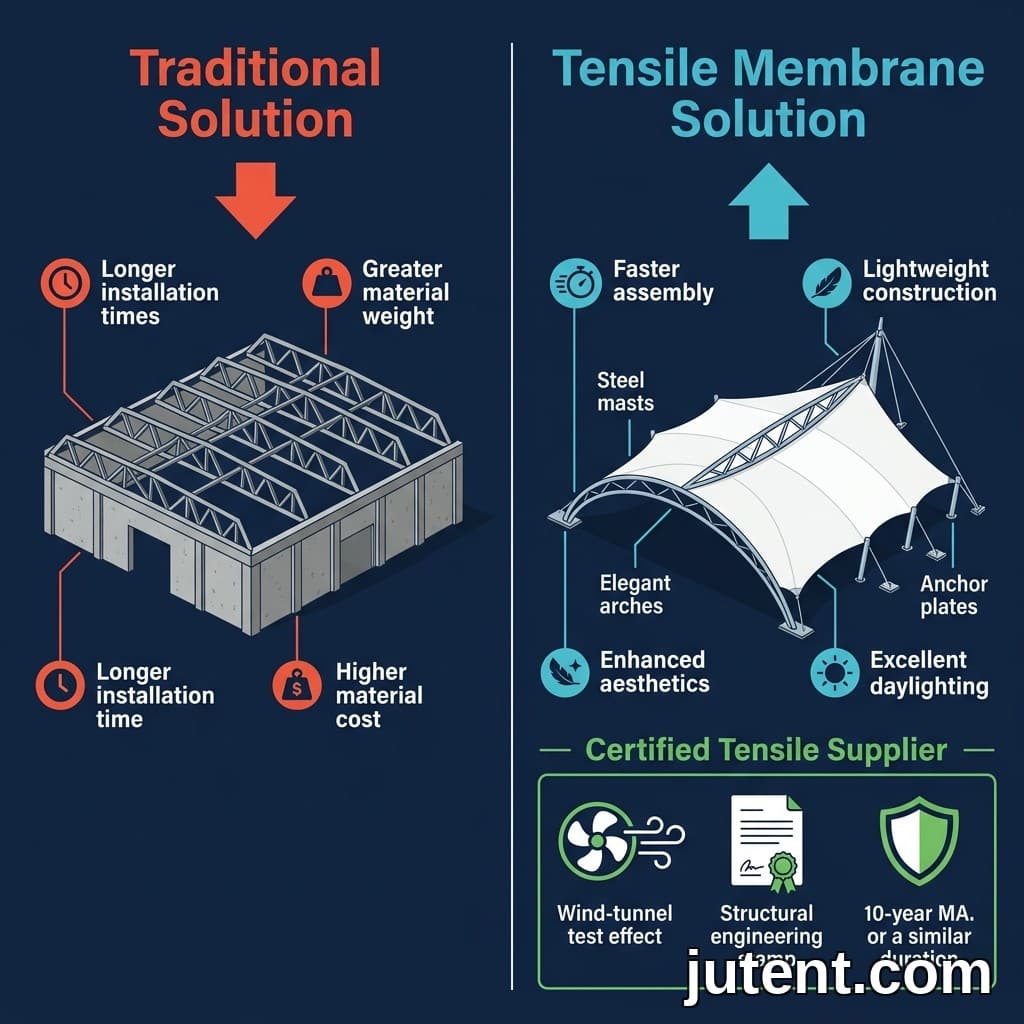
Consider the diverse environmental conditions these structures must withstand – from heavy snow loads in temperate climates to hurricane-force winds in coastal regions. Without a manufacturer capable of meeting these specific demands, your project faces unacceptable risks. A thorough vetting process ensures that the chosen partner can provide the necessary certifications, guarantees, and technical support. This isn't merely about finding the lowest price; it's about securing a reliable, compliant, and durable solution that protects your investment and the public. Retail Walkways
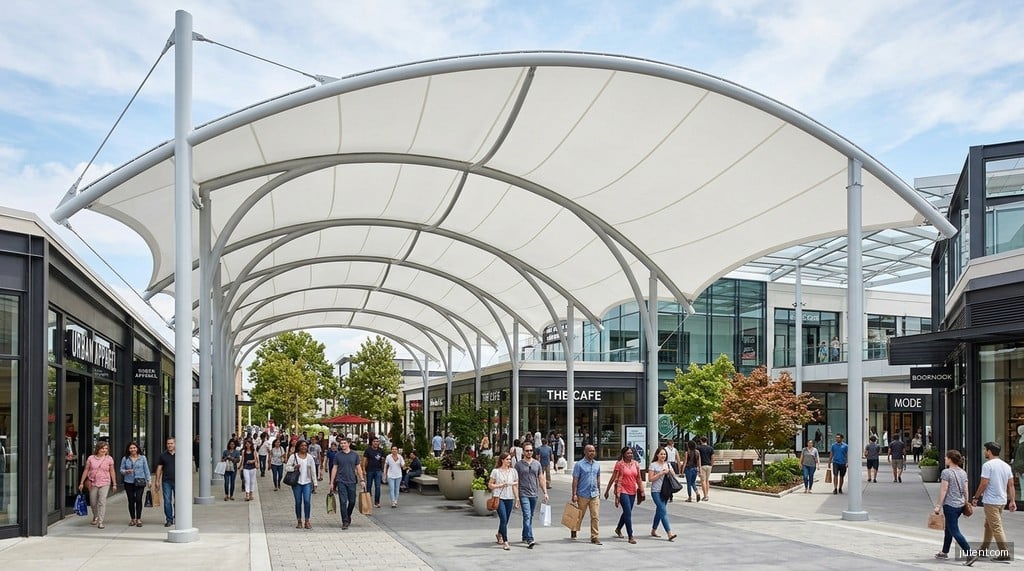
Why This Applies to School Walkway Canopies Too
While this checklist focuses on retail walkway canopies, the same vetting criteria apply to school walkway canopies, school covered walkways, and campus shade structures. Contractors bidding on educational facility projects should use this same supplier evaluation process.
Engineering Capability: Wind Load and Structural Calculations
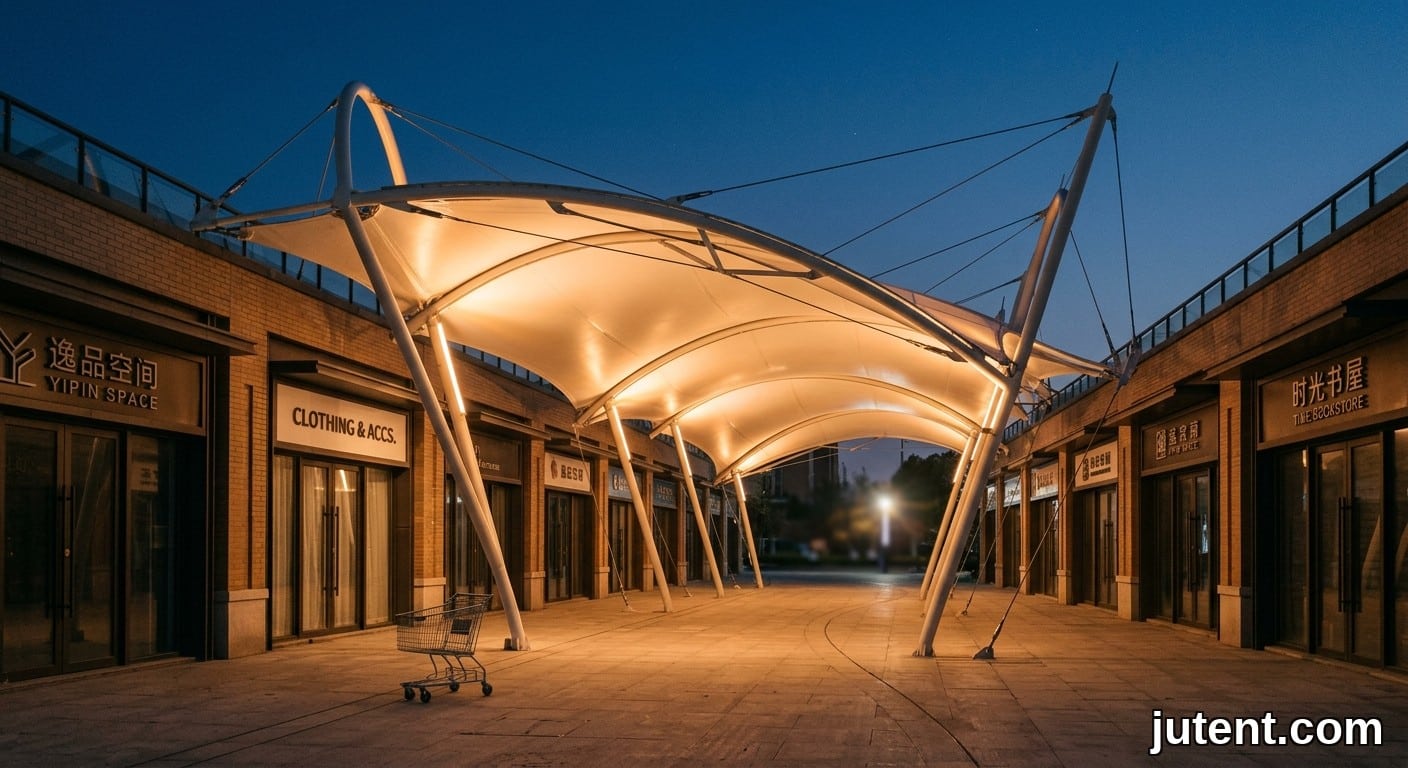
The structural integrity of any tensile structure, particularly a retail walkway canopy, hinges entirely on reliable engineering. When evaluating a potential retail walkway canopy manufacturer, their engineering capability is paramount. You must verify their ability to provide thorough structural calculations that account for all relevant environmental loads, including wind, snow, and seismic forces specific to your project's location. A reputable manufacturer will not only perform these calculations but will also provide them in a clear, verifiable format.
Request detailed design drawings and engineering reports stamped by a qualified structural engineer. These documents should clearly outline the steel grades used (e.g., Q235B, Q355B), connection details, and membrane tensioning specifications. For projects in regions prone to high winds, specific wind load calculations are non-negotiable. Ensure the manufacturer can demonstrate experience with projects requiring high wind ratings, providing evidence of successful installations in similar conditions. Based on Jutent's experience across 400+ tensile membrane structure projects in 30+ countries, we understand the critical importance of localized wind load analysis. Always work with a local registered engineer to review and approve these calculations for local building code compliance. About
Membrane Brand and Test Certificates: What to Ask For
The membrane is the most visible and often the most vulnerable component of a retail walkway canopy. Its quality directly impacts the structure's lifespan, aesthetic appeal, and performance. When evaluating a retail walkway canopy supplier, demand specific information and documentation regarding the membrane material.
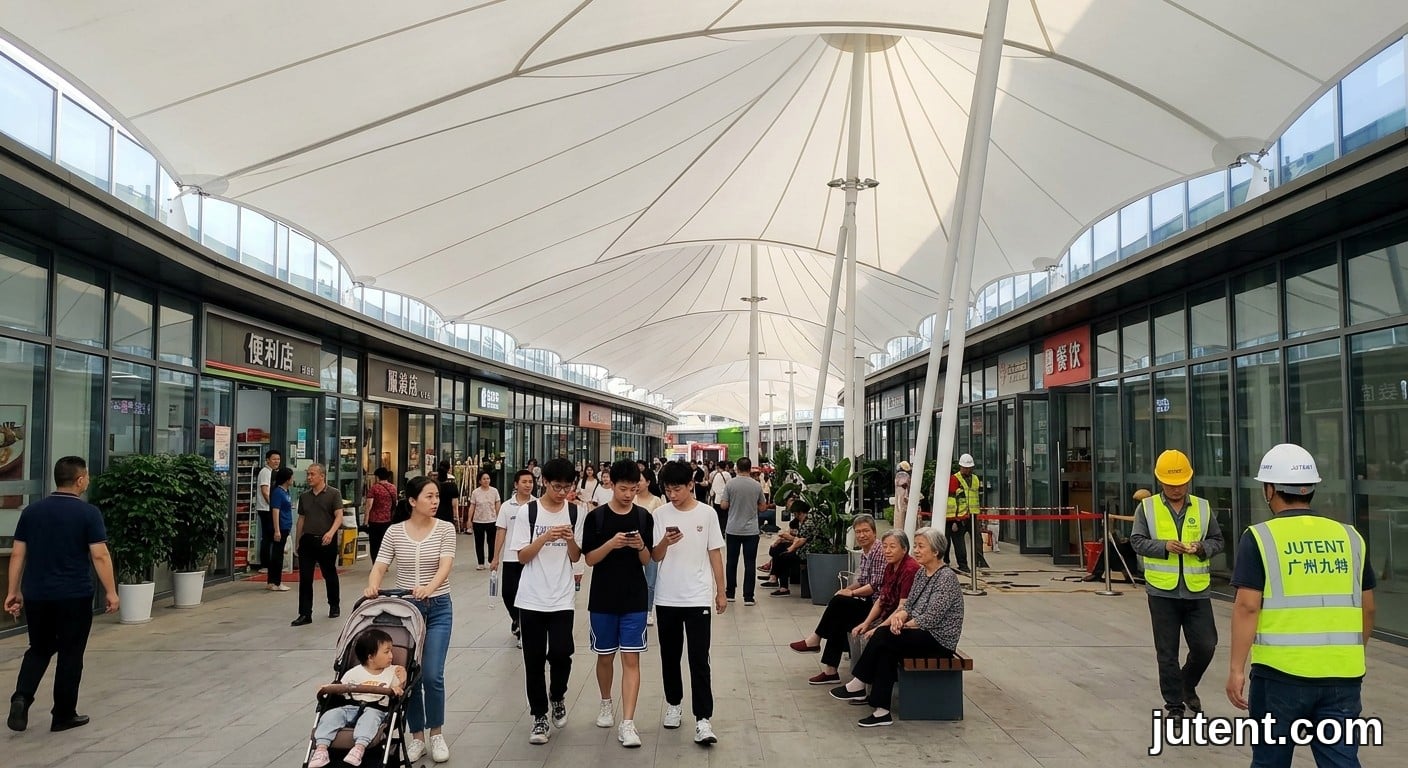
First, identify the membrane type. PVDF (Polyvinylidene Fluoride) and PTFE (Polytetrafluoroethylene) are standard choices for tensile structures, each with distinct properties. Standard PVDF-coated polyester membranes typically offer a 5-7 year warranty and a 10-12 year service life. Higher-grade PVDF membranes (e.g., Ferrari Précontraint 502) can offer up to a 10-year warranty. Always verify the specific membrane brand and grade being proposed. PTFE fiberglass membranes typically offer a 20-25 year warranty and a 30+ year service life, making them the premium choice for permanent retail walkway canopies. Ask for the manufacturer and brand of the membrane material. A reputable retail walkway canopy factory will use well-known, certified brands, not generic alternatives.
Crucially, request test certificates for the specific membrane material being proposed. These certificates should verify key properties such as tensile strength, tear strength, fire rating (e.g., B1, A2), UV resistance, and anti-fungal treatments. Ensure the certificates are current and issued by independent, accredited testing laboratories. For example, a standard membrane like 1050 g/m² PVDF or PTFE should have corresponding documentation. Do not accept vague assurances; specific, verifiable documentation is essential for quality assurance and warranty validation.
Production Lead Time and Logistics
Efficient project execution relies heavily on predictable production lead times and reliable logistics. When engaging a retail walkway canopy manufacturer, especially a retail walkway canopy manufacturer China, understanding their capabilities in these areas is crucial for project scheduling and budget management.
Begin by requesting a detailed production schedule that outlines each stage, from design approval to fabrication and pre-shipment inspection. Clarify the
“`