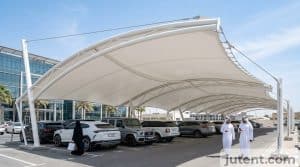

Tensile Carport Structures: A Property Developer's Guide to Design & Specification
When considering vehicle shading for a new development or an existing property upgrade, property developers and contractors face a critical decision: what structure offers the best balance of aesthetics, durability, and cost-effectiveness? Traditional solid roofs or basic metal canopies often fall short on modern design appeal or long-term value. This guide introduces tensile carport structures as a superior alternative, explaining their mechanics, types, costs, and when they are the optimal choice for your project.
What a Tensile Carport Structure Is and What It Isn't
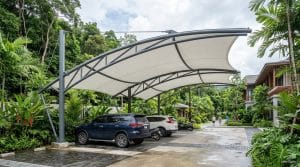
A tensile carport structure is a permanent, architecturally designed membrane cover engineered to provide reliable protection for vehicles against UV radiation, rain, and hail, while simultaneously enhancing the visual appeal of a property. At its core, it consists of a high-strength fabric membrane tensioned over a supporting steel framework. Unlike conventional rigid carports, which rely on heavy, opaque materials and often present a utilitarian appearance, tensile carports utilize the inherent strength of tensioned fabric to create lightweight, elegant, and often sculptural forms.
What it isn't, is a temporary tent or a flimsy shade sail. These structures are engineered for long-term performance, designed to withstand local weather conditions, including significant wind loads and heavy rainfall. They are not simply “fabric roofs”; they are sophisticated architectural systems where every component, from the steel grade to the membrane's specific weave, is selected for durability and structural integrity. The result is a durable, low-maintenance solution that offers both functional utility and a distinct modern aesthetic, making them ideal for commercial, residential, and public parking applications. Carports
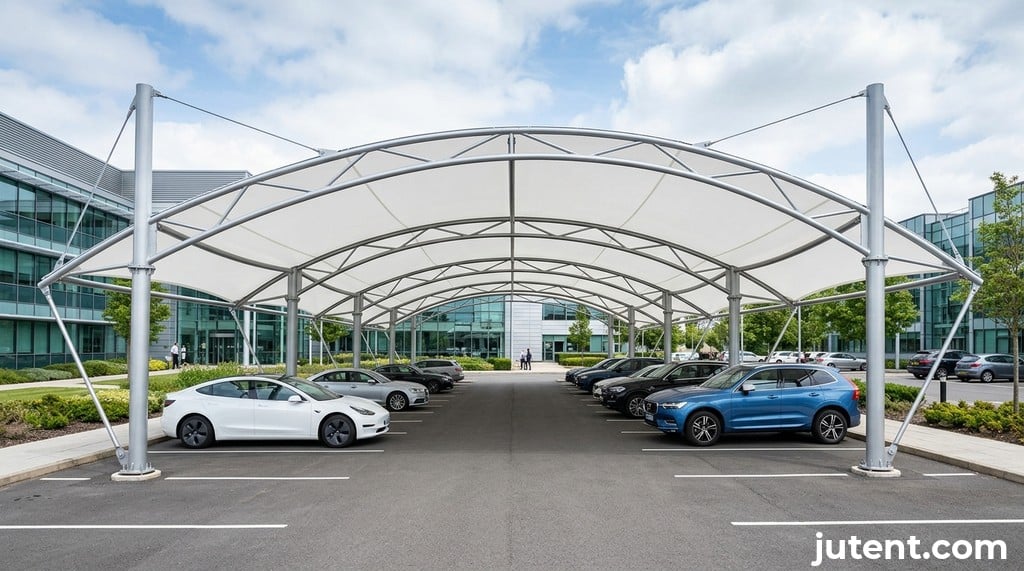
How Tensile Carport Structures Work: Steel, Membrane, and Drainage
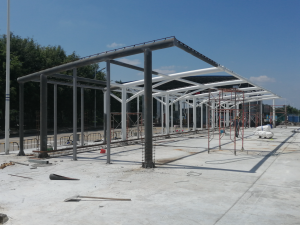
The operational principle of a tensile carport structure hinges on the symbiotic relationship between its steel framework and the tensioned membrane. The steel structure, typically fabricated from high-grade Q235B or Q355B steel, provides the primary support and defines the overall shape. This framework is meticulously engineered to resist external forces, with all steel components treated with either an epoxy zinc-rich primer and acrylic topcoat, an epoxy zinc-rich primer and fluorocarbon topcoat, or hot-dip galvanizing for superior corrosion resistance.
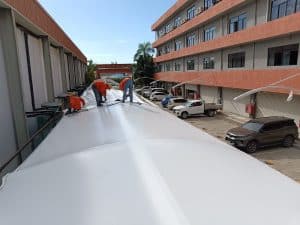
The membrane, usually a 1050 g/m² PVDF (Polyvinylidene Fluoride) or PTFE (Polytetrafluoroethylene) coated fabric, is then stretched and tensioned across this framework. This tension is crucial; it gives the membrane its structural rigidity, allowing it to resist wind uplift and shed water effectively. The specific geometry of the membrane, often a hyperbolic paraboloid or conic form, is designed to create natural drainage paths. Rainwater flows along the membrane's curves to designated low points, where it is collected and channeled away, preventing ponding and ensuring the longevity of the structure. This integrated design approach ensures that the structure not only provides shade but also manages water efficiently, a critical factor for any permanent outdoor installation. Tensile Carport Structure Guide
Types of Tensile Carports: Single Post, Cantilever, and Multi-Bay
Tensile carport structures offer a versatile range of designs, each suited to different site constraints and aesthetic preferences. Understanding these types is key to selecting the right solution for your project.
Single Post Carports: These designs feature a central support column from which the membrane canopy extends. They are highly effective for individual parking spaces or small clusters, offering excellent maneuverability around the vehicle without multiple obstructive columns. The single post design often creates a striking visual statement, appearing to float above the parking area.
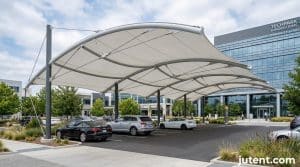
Cantilever Carports: In a cantilever design, the support columns are positioned at the rear or side of the parking space, allowing the canopy to extend outwards without any front-facing obstructions. This is particularly advantageous in high-traffic areas or where maximum vehicle access is required, as it eliminates the risk of vehicles colliding with support posts. Cantilever structures are often favored for their clean lines and open feel.
Multi-Bay Carports: For larger parking areas, multi-bay tensile carports are the most efficient solution. These structures utilize a series of interconnected bays, often sharing common support columns, to cover multiple vehicles. They can be configured in various layouts, such as parallel rows or expansive grids, to accommodate dozens or even hundreds of vehicles. Multi-bay designs are highly scalable and cost-effective for large-scale developments like shopping centers, corporate campuses, or residential complexes. Each type offers distinct advantages in terms of footprint, aesthetics, and functional utility, allowing for tailored solutions to diverse project requirements.
What a Tensile Carport Costs: A Realistic Range
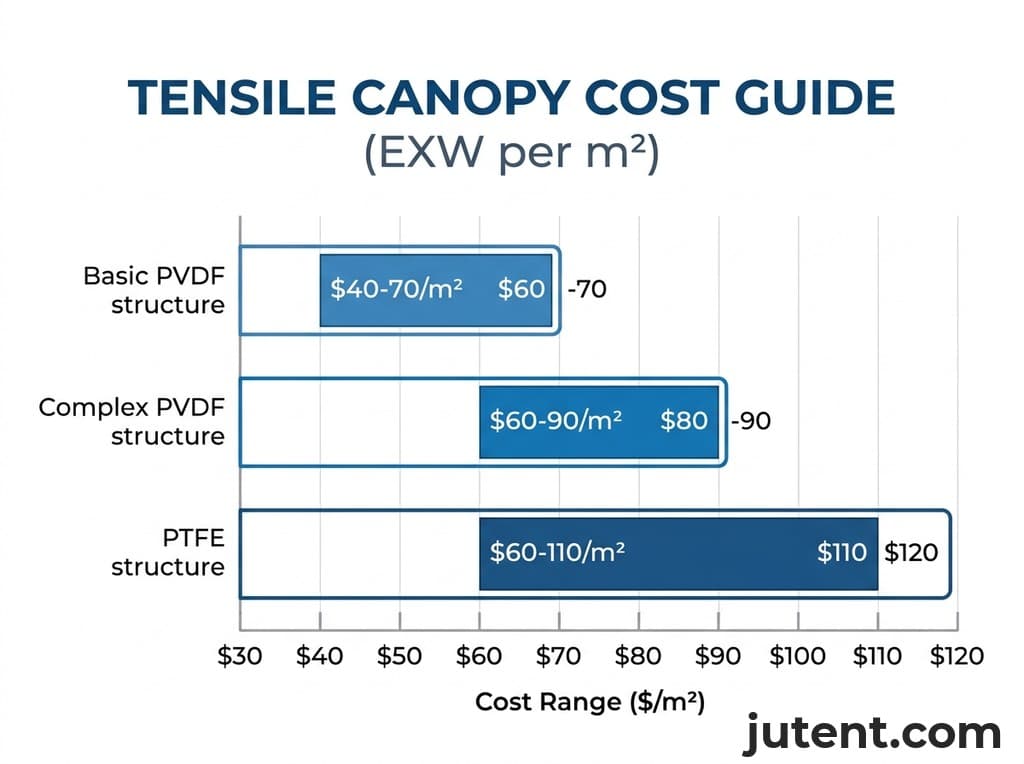
Understanding the cost implications of a tensile carport structure is vital for accurate project budgeting. Pricing for these structures is typically quoted on a per square meter (m²) basis, and several factors influence the final cost. Based on Jutent's experience across 400+ projects in 30+ countries, a realistic range for a standard tensile carport structure, covering a minimum project scope of 100 m², is as follows:
- Tensile membrane structure (minimal steel): $30–$50/m²
- PVDF membrane, simple form: $40–$70/m²
- PVDF membrane, complex form: $60–$90/m²
- PTFE membrane: Add approximately $20/m² to the PVDF range.
These figures are EXW (Ex Works) and do not include shipping, installation, or local taxes. The primary drivers of cost include the type of membrane (PTFE being more expensive than PVDF due to its superior durability and lifespan), the complexity of the design (more complex forms require more intricate steelwork and membrane fabrication), and the overall project size. Larger projects often benefit from economies of scale, potentially bringing the per-square-meter cost down within the given ranges. It's important to remember that these are initial material and fabrication costs; site preparation, foundation work, and installation (whether remote guidance or on-site supervision) will be additional considerations.
When a Tensile Carport Makes Sense for Your Project
Deciding whether a tensile carport structure is the right fit for your development involves weighing its benefits against project-specific needs. These structures are particularly advantageous in several key scenarios:
Firstly, when aesthetic appeal and modern design are paramount. Unlike traditional rigid carports, tensile structures offer a sleek, contemporary look that can significantly elevate the visual identity of a property. They are ideal for high-end residential complexes, commercial centers, hotels, or corporate campuses where first impressions matter.
Secondly, for projects requiring large-span, unobstructed coverage. Cantilever and multi-bay tensile designs can cover extensive parking areas with fewer support columns, maximizing vehicle maneuverability and optimizing space utilization. This is a significant benefit for developments with high parking demands or where an open, airy feel is desired.
Thirdly, in environments where durability and low maintenance are critical. With PVDF membranes offering a 10-year warranty and 15+ years service life (PTFE even longer), and steel structures lasting 25–30 years, these carports represent a long-term investment. Their resistance to UV degradation, heavy rain, and wind makes them suitable for diverse climates.
Finally, when cost-effectiveness over the lifespan is a consideration. While initial costs might be comparable to some traditional options, the extended lifespan, minimal maintenance requirements, and enhanced property value often result in a superior return on investment. For export projects, Jutent can provide design drawings, calculations, material specifications, installation manuals, and free remote guidance, subject to project scope and contract terms, further streamlining the process for developers and contractors.
FAQ
- Q: How long does a tensile carport structure last?
- A: The lifespan of a tensile carport structure is determined by its primary components. PVDF membrane, a common choice for carports, has a typical service life of 15–20 years and comes with a 10-year warranty. For enhanced longevity, PTFE membrane offers a 15-year warranty and a service life exceeding 25 years. The supporting steel structure, fabricated from high-grade Q235B or Q355B steel and properly treated, is designed for a service life of 25–30 years, ensuring the overall durability of the installation.
- Q: Is a tensile carport suitable for heavy rain environments?
- A: Yes, tensile carports are specifically engineered to perform exceptionally well in heavy rain environments. Their unique architectural forms, such as hyperbolic paraboloids or conic shapes, are designed to create natural slopes and channels that efficiently shed rainwater. This prevents water from pooling on the membrane surface, which is crucial for structural integrity and longevity. The tensioning of the membrane also ensures it remains taut, preventing sagging and promoting effective drainage even during intense downpours.
If you're considering a tensile carport structure, send us your project brief for a free consultation.