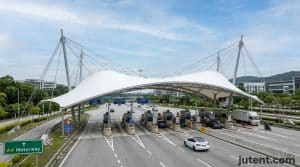

When evaluating infrastructure projects, particularly those involving high-traffic areas like toll stations, the decision to incorporate a canopy structure requires careful consideration. Developers and contractors must weigh factors such as long-term durability, cost-effectiveness, aesthetic integration, and functional benefits against potential complexities. This guide aims to provide a clear framework for understanding toll station canopies, helping you make informed choices that align with project goals and budget constraints. From defining what these structures are to breaking down their components, costs, and ideal applications, we'll equip you with the essential knowledge to specify the right solution.
What a Toll Station Canopy Is and What It Isn't
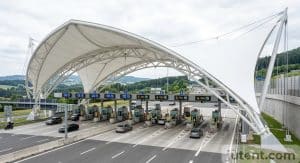
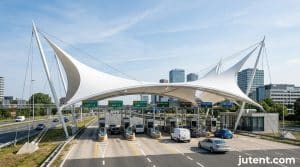
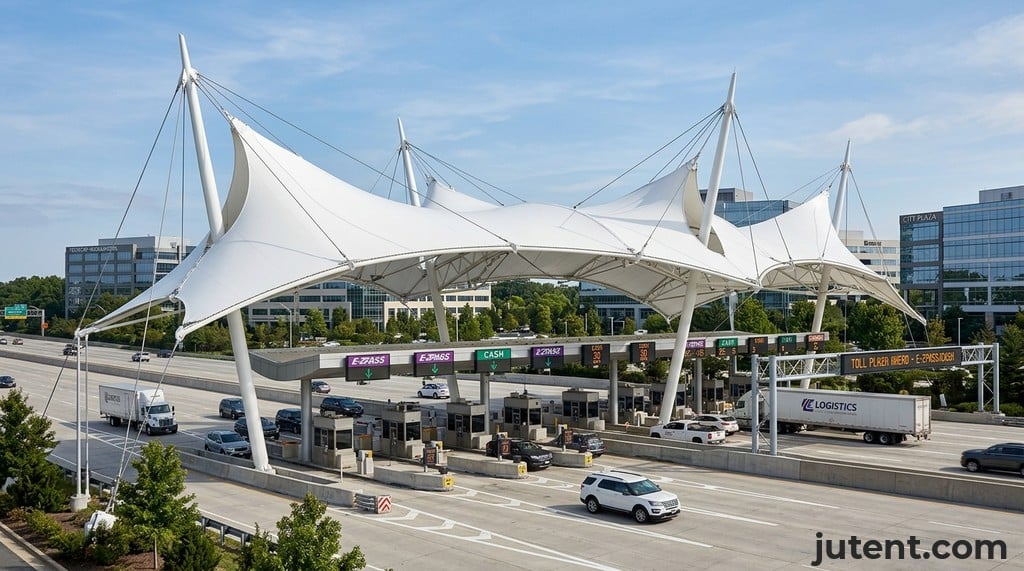
A toll station canopy is a permanent tensile membrane structure specifically engineered to provide shelter and visual prominence at highway toll plazas, border crossings, and similar access points. Its primary function is to protect vehicles, personnel, and electronic equipment from adverse weather conditions such as sun, rain, and snow, while also enhancing the architectural identity of the facility. These structures are characterized by their lightweight yet incredibly strong fabric membranes, supported by a reliable steel framework.
What a toll station canopy isn't, however, is a temporary tent or a conventional rigid roof structure. Unlike temporary solutions, these canopies are designed for decades of service, built to withstand significant environmental loads. They differ from traditional concrete or metal roofs in their material properties, construction methodology, and aesthetic appeal. The membrane's translucent nature often allows for natural light diffusion, reducing the need for artificial lighting during the day. They are also distinct from structures like Toll Gas Stations, which serve a different commercial purpose, though both may utilize similar tensile membrane technology.
How Toll Station Canopy Structures Work: Steel, Membrane, and Drainage
The operational integrity of a toll station canopy hinges on the synergistic interaction of its core components: the steel support structure, the tensile membrane, and an integrated drainage system.
The steel framework, typically constructed from high-grade Q235B or Q355B steel, forms the backbone of the canopy. This framework is meticulously engineered to bear the tension of the membrane, as well as external loads from wind, snow, and seismic activity. The steel undergoes rigorous surface treatment, such as epoxy zinc-rich primer with an acrylic or fluorocarbon topcoat, or hot-dip galvanizing, to ensure exceptional corrosion resistance and a long service life, often exceeding 25–30 years.
The tensile membrane, usually a 1050 g/m² PVDF (Polyvinylidene Fluoride) or PTFE (Polytetrafluoroethylene) coated fabric, is stretched taut across the steel frame. This tension is crucial; it provides the membrane with its structural rigidity and allows it to resist external forces without sagging or flapping. PVDF membranes typically offer a 10-year warranty and a 15+ year service life, while PTFE membranes come with a 15-year warranty and a 25+ year service life, making them suitable for long-term infrastructure investments.
An effective drainage system is paramount for managing rainwater. The membrane's inherent curvature and tension are designed to direct water flow towards integrated gutters and downspouts, preventing ponding and ensuring efficient runoff. This design is particularly critical in heavy rain environments, where the structure must reliably channel water away from the toll booths and traffic lanes. For a deeper dive into these technical aspects, refer to our Toll Station Canopy Guide.
Types of Toll Station Canopy: Common Structural Forms
Toll station canopies come in various structural forms, each offering distinct aesthetic and functional characteristics. The choice of type often depends on the specific site requirements, desired architectural impact, and budget.
One common type is the Conical Canopy. These structures feature a central mast or series of masts from which the membrane radiates outwards and downwards, creating a tent-like or conical shape. They are highly effective for large spans and offer excellent drainage due to their inherent slope. Conical forms can be adapted to create multiple individual canopies over each toll lane or a single, expansive structure covering an entire plaza.
Another prevalent form is the Barrel Vault Canopy. This design utilizes a series of arches or trusses to support a curved membrane, resembling a half-cylinder. Barrel vaults are often used to cover multiple lanes in a linear fashion, providing a continuous, sheltered pathway. They offer a clean, modern aesthetic and are efficient in shedding water.
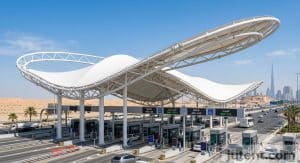
Hypar (Hyperbolic Paraboloid) Canopies are characterized by their saddle-like, double-curved surfaces. These structures are highly efficient in tension and compression, allowing for elegant, lightweight forms with significant spans. Hypar designs can be particularly striking and are often chosen when a distinctive architectural statement is desired. They are excellent for managing water flow due to their complex curvature.
Finally, Custom-Designed Canopies combine elements from these basic forms or incorporate unique geometries to meet specific project demands. Based on Jutent's experience across 400+ projects in 30+ countries, custom designs are frequently employed to integrate the canopy seamlessly with existing infrastructure or to achieve a signature look for a major transportation hub. The selection of SS304 as standard hardware, with SS316 available as an optional upgrade, further ensures the longevity and structural integrity of these diverse forms.
What a Toll Station Canopy Costs: A Realistic Range
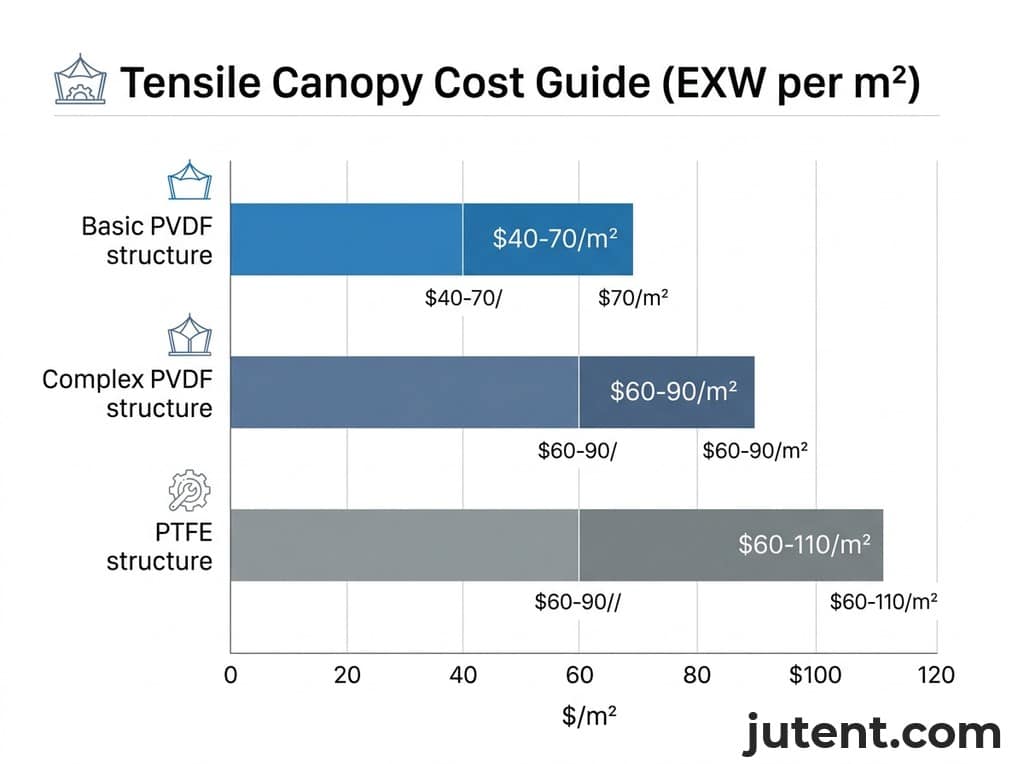
Understanding the cost implications of a toll station canopy is crucial for project budgeting. Pricing for tensile membrane structures is typically quoted per square meter (m²) and is influenced by factors such as membrane type, structural complexity, project size, and specific design requirements. It's important to note that these are EXW (Ex Works) prices and do not include shipping, installation, or local taxes.
For a tensile membrane structure with minimal steel, such as a very simple, small-scale canopy, you can expect a range of $30–$50/m². This category usually applies to basic, functional designs where the membrane is the dominant structural element.
When specifying a PVDF membrane with a simple form, such as a basic conical or barrel vault design, the cost typically falls between $40–$70/m². This is a common choice for many toll station applications, balancing durability with cost-effectiveness.
For PVDF membrane with a complex form, such as intricate hypar designs or large, multi-faceted structures, the price range increases to $60–$90/m². The added complexity in engineering, fabrication, and installation contributes to this higher cost.
If your project requires the superior longevity and performance of a PTFE membrane, you should add approximately ~$20/m² to the corresponding PVDF range. For example, a simple form PTFE canopy would be in the $60–$90/m² range, while a complex form PTFE canopy could be $80–$110/m².
It's important to remember that these ranges are for projects with a minimum scope of 100 m². Smaller projects may incur higher per-square-meter costs due to fixed overheads. For export projects, Jutent can provide design drawings, calculations, material specifications, installation manuals, and free remote guidance, subject to project scope and contract terms, which can help manage overall project costs.
When a Toll Station Canopy Makes Sense for Your Project
Deciding whether a toll station canopy is the right fit for your project involves evaluating several key benefits against project specific needs. A tensile membrane canopy makes significant sense in scenarios where:
Weather Protection is Paramount: In regions experiencing intense sun, heavy rainfall, or significant snowfall, a canopy provides essential protection for drivers, toll booth operators, and sensitive electronic equipment. This reduces maintenance costs for equipment and improves the working conditions for staff, contributing to operational efficiency.
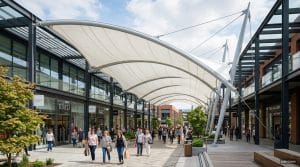
Aesthetic Enhancement is Desired: Tensile structures offer a modern, sophisticated aesthetic that can elevate the visual appeal of a toll plaza. Their unique forms and often translucent membranes create a distinctive architectural statement, enhancing the overall image of the infrastructure project. This is particularly valuable for major gateways or prominent transportation corridors.
Long-Term Durability and Low Maintenance are Priorities: With steel structures lasting 25–30 years and PVDF membranes offering 15+ years of service life (PTFE even longer), these canopies are built for longevity. The materials are inherently resistant to UV degradation, corrosion (especially with specified surface treatments like hot-dip galvanizing), and environmental wear, leading to lower long-term maintenance requirements compared to other roofing solutions.
Natural Light and Energy Efficiency are Important: The translucent nature of PVDF and PTFE membranes allows for significant natural light penetration, reducing the need for artificial lighting during daylight hours. This can lead to energy savings and create a brighter, more pleasant environment.
Branding and Visibility are Key: A well-designed canopy can serve as a prominent landmark, enhancing visibility for drivers approaching the toll station and reinforcing the branding of the operating authority.
Typical technical values should always be written conservatively and described as subject to project design, ensuring that the canopy is precisely engineered for its specific environment and functional demands.
FAQ
- Q: How long does a toll station canopy last?
- A: The lifespan of a toll station canopy depends on its components. The PVDF membrane typically has a service life of 15–20 years, backed by a 10-year warranty. For enhanced durability, PTFE membranes offer a 25+ year service life with a 15-year warranty. The reliable steel support structure, treated with methods like hot-dip galvanizing or epoxy zinc-rich primer with a fluorocarbon topcoat, is engineered to last 25–30 years, ensuring a long-term investment.
- Q: Is a toll station canopy suitable for heavy rain environments?
- A: Yes, toll station canopies are specifically designed to perform exceptionally well in heavy rain environments. The tensile membrane is engineered with precise curvatures and tension to ensure efficient rainwater runoff, preventing ponding. Integrated gutter systems and downspouts are incorporated into the design to effectively channel water away from the structure, protecting vehicles, personnel, and equipment below.
If you're considering a toll station canopy, send us your project brief for a free consultation.