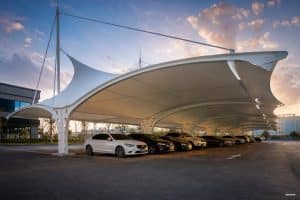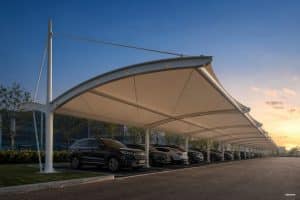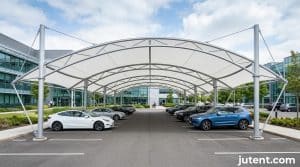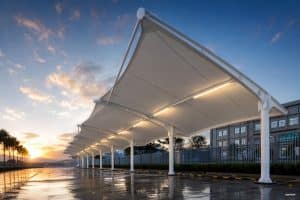

In a typical Gulf summer, ambient temperatures routinely exceed 48°C, driving asphalt surface temperatures above 65°C. For contractors tasked with engineering a 50-bay commercial parking facility, protecting vehicles from extreme thermal degradation and high UV irradiance is a strict baseline. Specifying a tensile carport structure Middle East developers trust requires moving beyond standard commercial catalogs and generic high-density polyethylene (HDPE) shade netting. These regional installations demand specific architectural membrane weights (such as heavy-duty PVC or PTFE), specialized anti-corrosive steel coatings, and rigorous wind load calculations to survive the harsh climate. Whether the site is a coastal retail mall, a corporate campus in an inland desert city, or a logistics hub near a port, the environmental constraints are unforgiving. This guide details the critical specifications that contractors in Gulf region markets must implement to secure municipal approvals, prevent premature structural failure, and deliver a facility that performs reliably for decades without requiring constant membrane replacement or steel remediation.
Gulf Climate: Why Standard Tensile Carport Structure Specs Don't Apply
Standard commercial Carports designed for temperate zones fail rapidly in the Gulf. The primary failure mechanisms are not structural overload from snow or heavy rain, but severe thermal degradation and abrasive wear.
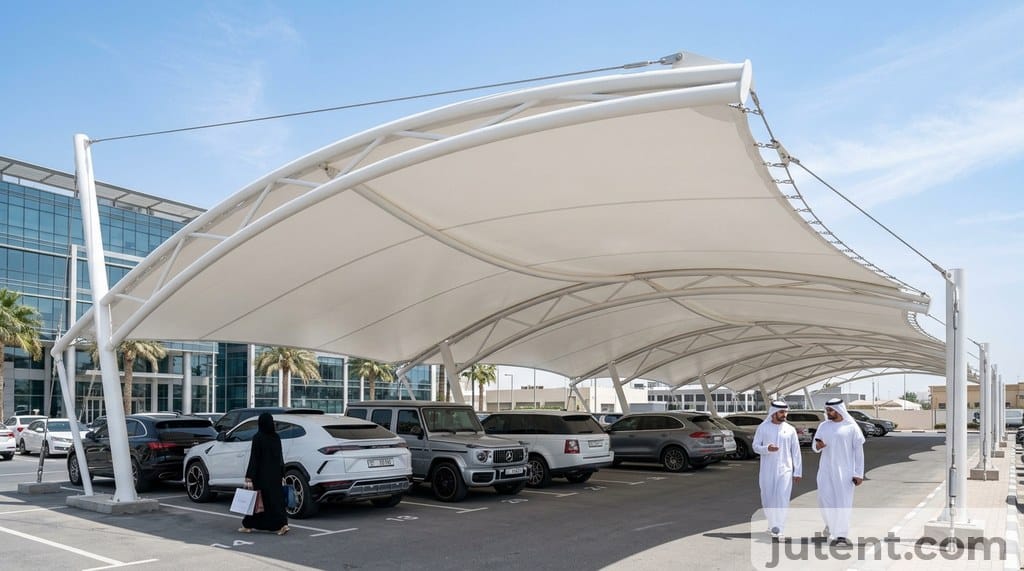
In a typical carport shade Qatar project, the structure faces a UV Index consistently hitting 11+, combined with airborne sand that acts as a continuous abrasive on the membrane surface. When contractors import standard 650g/㎡ PVC membranes without specialized topcoats, the plasticizers migrate to the surface within 18 to 24 months. The fabric becomes brittle, discolors, and eventually tears under basic wind loads. When ambient temperatures reach 48°C, the surface temperature of a dark, unprotected membrane can exceed 75°C, accelerating polymer breakdown and causing micro-cracking along the tension lines.
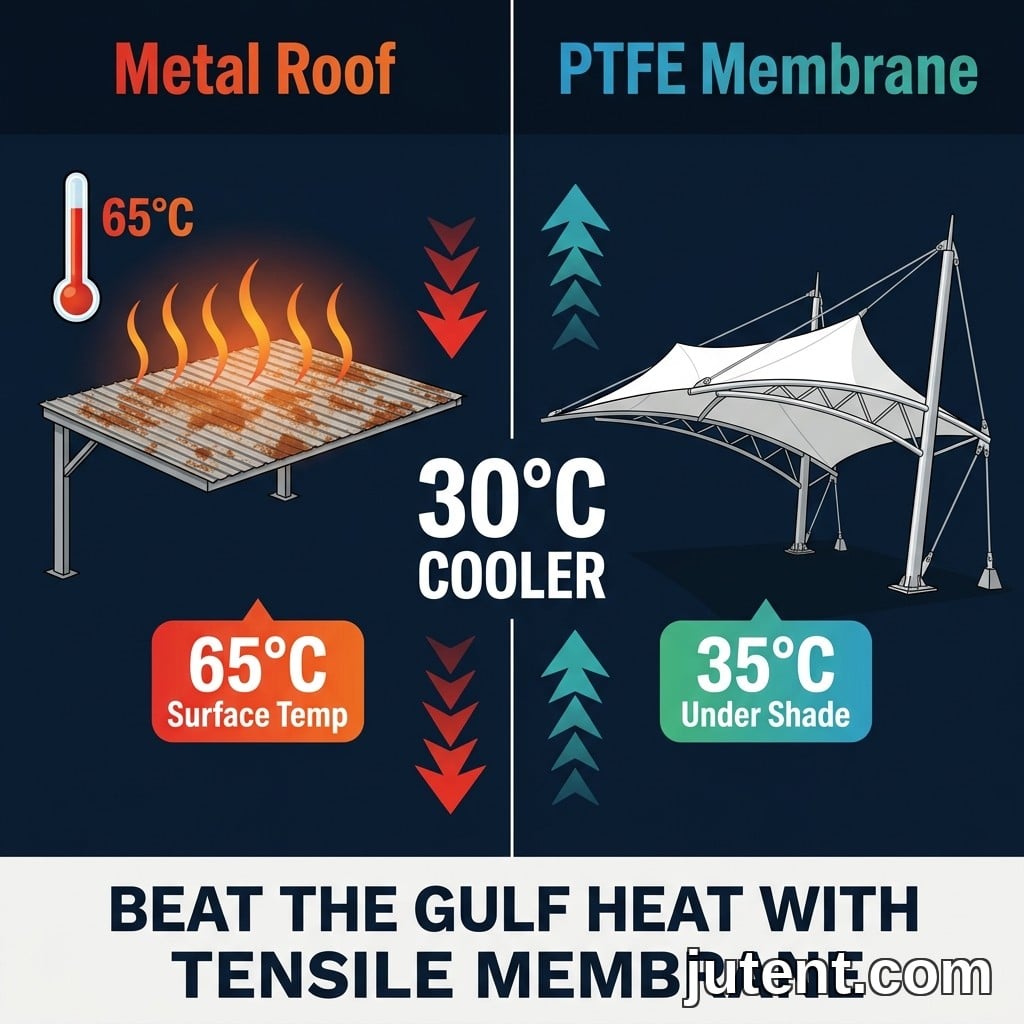
Typical specifications use Q235B or Q355B steel, 1050 g/㎡ PVDF or PTFE membrane as standard, and SS304 stainless accessories, with higher grades available when the project requires them.
Clearance heights also require adjustment. While 2.2 meters is standard globally, Gulf projects frequently accommodate larger SUVs and lifted commercial vehicles, dictating a minimum clearance of 2.6 to 2.8 meters. Proper clearance specification prevents daily mechanical damage to the membrane's underside.
UV and Heat Protection: Membrane Grade for Gulf Carport Projects
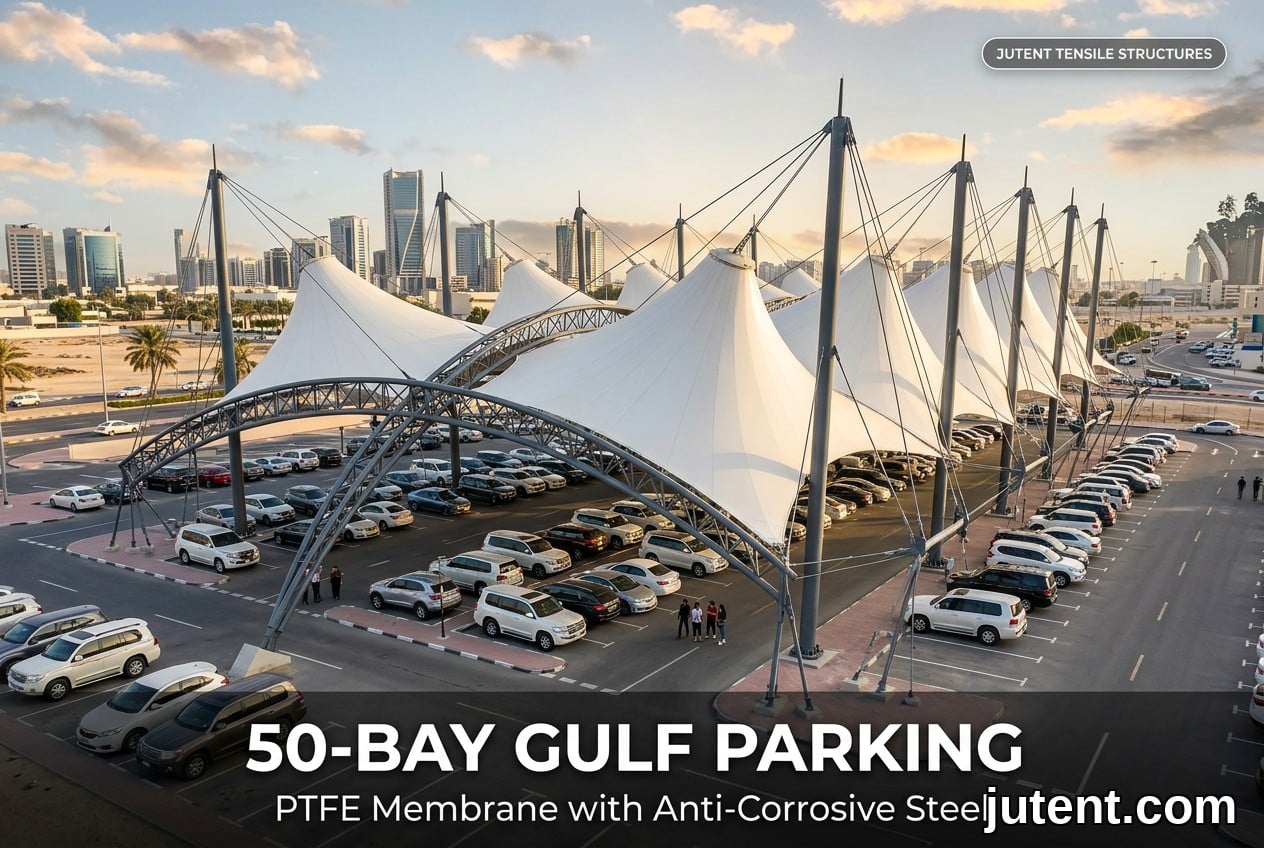
A heat resistant carport tensile system relies entirely on the chemical composition of its membrane. For Gulf applications, standard PVC is a liability. The baseline specification must be high-grade PVDF (Polyvinylidene Fluoride) coated fabric.
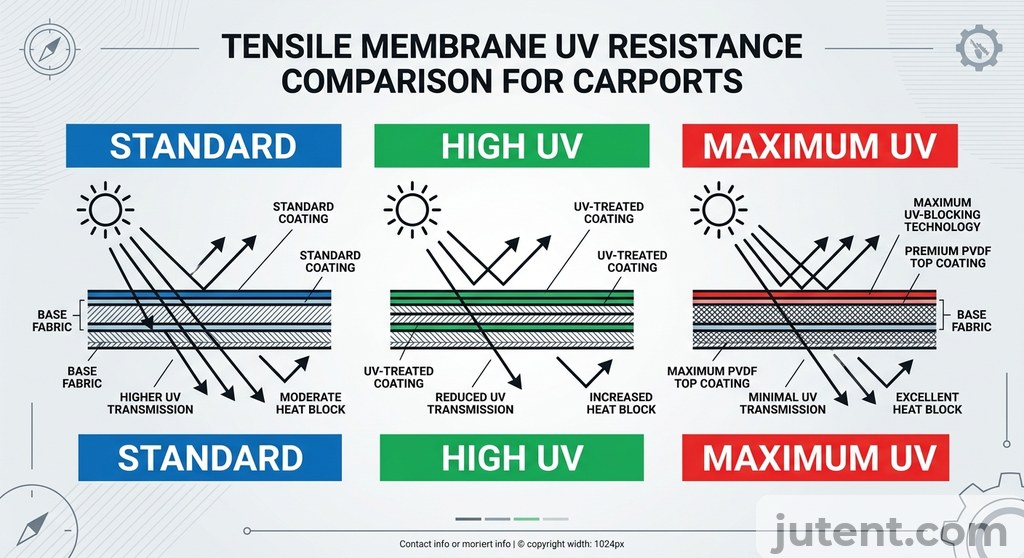
The PVDF topcoat reflects UV radiation rather than absorbing it, significantly lowering the thermal transfer to the vehicles below. For a standard commercial parking lot, specifying a 900g/㎡ to 1050g/㎡ PVDF membrane is mandatory. Lighter fabrics lack the necessary tensile strength to maintain pre-stress under extreme thermal expansion. When temperatures fluctuate from 45°C during the day to 25°C at night, the membrane expands and contracts. If the fabric weight is too low, it loses tension, resulting in wind flutter and eventual mechanical failure at the connection plates.
Budget planning should be based on structure type, clear span, wind rating, membrane grade, steel tonnage, and project scope. For an accurate EXW, FOB, CIP, or DDU quotation, the project dimensions and engineering requirements should be reviewed first.
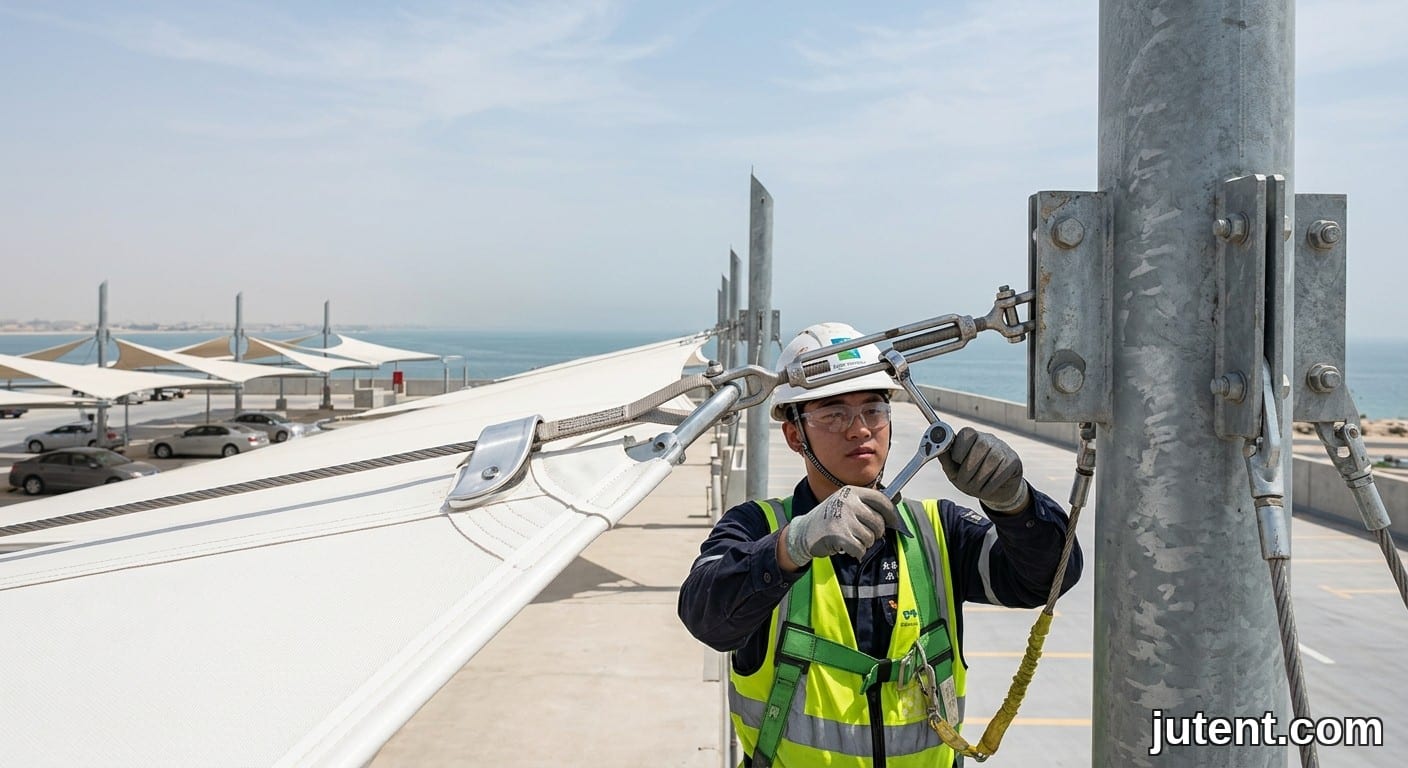
For Gulf applications, the membrane weight must be at least 900 g/m² for PVDF or 800 g/m² for PTFE, depending on the specific project requirements.
Wind Load: UAE and Saudi Standards for Carport Structures
Wind load engineering for a tensile carport Saudi Arabia or UAE project dictates the sizing of the primary steel and the foundation depth. Gulf coastlines and open desert plains experience sudden, severe wind events, known locally as Shamal winds, which generate significant uplift forces on cantilevered structures.
Based on Jutent's experience across 400+ projects in 30+ countries, similar specification issues often appear when early-stage assumptions are made before the engineering conditions are confirmed.
For projects in Gulf coastal regions, municipalities typically require engineering calculations based on a basic wind speed of 45 m/s (160 km/h) for a 3-second gust. In inland desert regions, local building codes dictate wind load parameters based on the specific terrain category. A standard double-bay cantilever carport (typically 5m x 5m per bay) requires primary columns of at least 200x200x8m