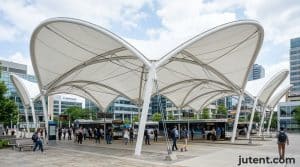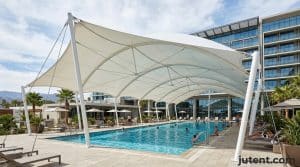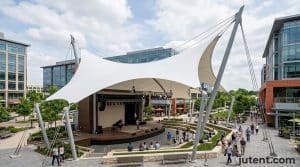

The inverted umbrella tensile structure has evolved from a basic environmental shield into a technically sophisticated asset within modern membrane architecture. Driven by the necessity to merge rigid engineering with striking aesthetics, these concave canopies transform commercial plazas, outdoor seating roofs, and institutional courtyards into spatially dynamic environments. Rather than relying on traditional flat profiles, the inverted layout utilizes high-tension fabric roofing—typically PVDF-coated PVC or architectural PTFE membrane—supported by robust Q355B steel central masts. This specific configuration commands visual authority while executing precise environmental control over the designated footprint.
Structural Integrity & Dynamic Load Mitigation
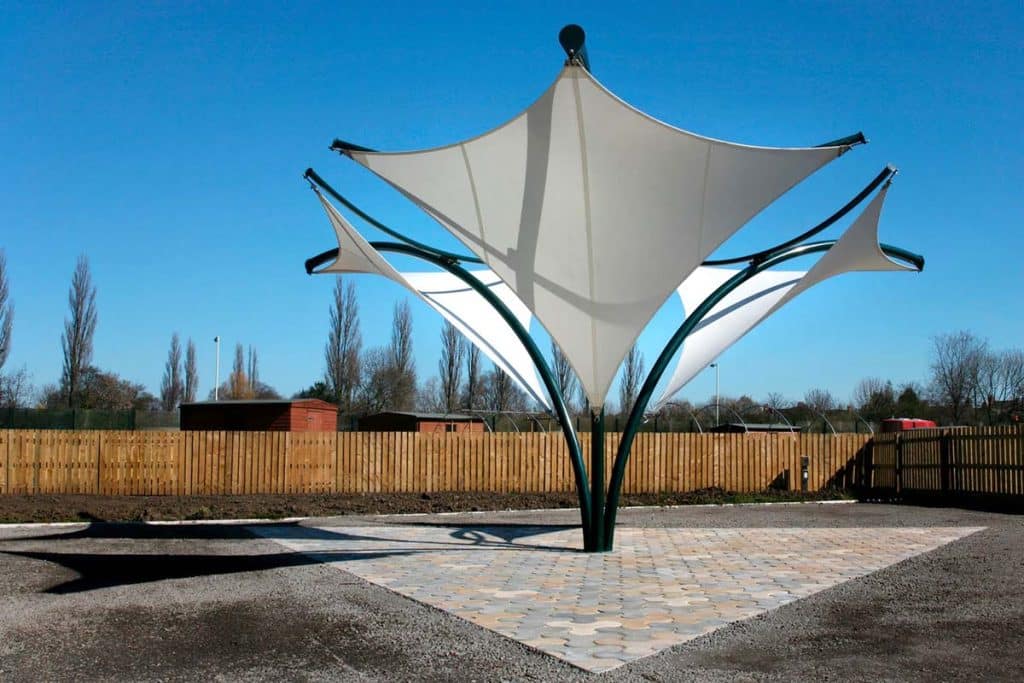
A persistent challenge when engineering a commercial membrane roof is managing wind uplift and dynamic aerodynamic loading. The concave typology of the inverted umbrella presents an inherent mechanical advantage. The radial cable systems extending from the central mast impose a calculated, balanced prestress across the tensioned fabric. This precise biaxial tensioning minimizes fabric flutter and ensures long-term structural stability, even in severe wind zones.
Rainwater management is similarly engineered for optimal performance. The funnel-like geometry organically channels precipitation toward the central steel column, where integrated internal drainage pipes discreetly divert runoff directly to subterranean storm drains. This design eliminates the edge-dripping and water-pooling vulnerabilities frequently associated with conventional plaza shading structures.
Material Specification & Light Transmission
Specifying the correct architectural membrane dictates both the aesthetic longevity and the operational lifecycle of the installation. For high-traffic retail shading systems and pedestrian walkways, heavy-duty PVC membranes reinforced with advanced PVDF lacquers are the industry standard. This low-energy surface treatment actively resists UV degradation, airborne pollutants, and biological growth, enabling the tensile system to maintain its structural appearance with minimal maintenance.
For projects demanding maximum durability—such as luxury resort canopies or premium transport hubs—woven fiberglass PTFE membrane is specified. This material offers an expected lifespan exceeding 30 years and superior Class A fire resistance. Crucially, the inherent translucency of these fabrics facilitates diffused, glare-free daylighting, drastically reducing the thermal load and improving the microclimate beneath the canopy.
Spatial Organization & Aesthetic Integration
Beyond raw structural performance, inverted umbrellas function as powerful architectural instruments for spatial zoning. In sprawling commercial developments, an orchestrated array of these structures establishes a discernible visual rhythm. They serve as effective wayfinding markers for mall entrances and outdoor seating roofs without obstructing crucial ground-level sightlines.
As daylight fades, the integration of strategically placed up-lighting utilizes the canopy’s concave underside as a vast, luminescent reflector. The interplay between the rigid geometry of the space frame and the sweeping curves of the membrane creates a compelling architectural dialogue, transitioning the installation from a highly functional daylight shelter into an atmospheric nighttime focal point.