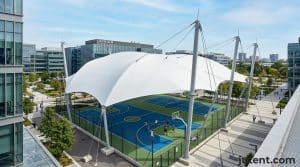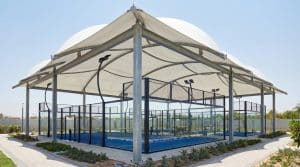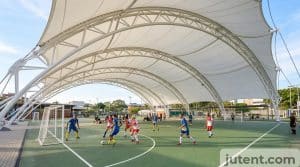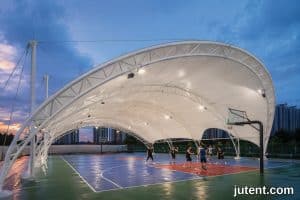

Australia's intense sun and unpredictable weather demand that every outdoor structure, especially those covering sports courts, is built to withstand extreme conditions. For contractors, this means navigating a complex landscape of local building codes, environmental specifications, and material requirements. Ensuring a sports court shade structure not only provides essential protection but also complies with Australian and New Zealand (AS/NZS) standards is paramount for project success and long-term safety. This guide will walk Australian contractors through the critical compliance checks, UV protection standards, and sourcing considerations for sports court shade structures, helping to deliver projects that are both safe and durable.
AS/NZS Compliance for Sports Court Shade Structures
When specifying a sports court shade structure in Australia, adherence to AS/NZS standards is non-negotiable. The primary standard governing structural design is AS/NZS 1170.2: Structural design actions – Wind actions. This standard dictates how structures must be designed to resist wind loads, which vary significantly across Australia's diverse climatic zones. For tensile structures, this is particularly critical, as their lightweight and flexible nature requires precise engineering to prevent uplift and structural failure during high winds.
Beyond wind loads, other AS/NZS standards may apply depending on the specific components and location. These can include standards for steelwork (AS 4100), concrete foundations (AS 3600), and even specific material properties. For contractors, this means requiring detailed engineering documentation from manufacturers, including structural analysis reports and material certifications, all referencing the relevant AS/NZS codes. An overseas manufacturer supplying to Australia must demonstrate a clear understanding of these local requirements and be able to provide documentation that can be verified by an Australian-registered engineer. Based on Jutent's experience across 400+ projects in 30+ countries, ensuring this foundational compliance is the first and most crucial step in any Australian sports court shade project.
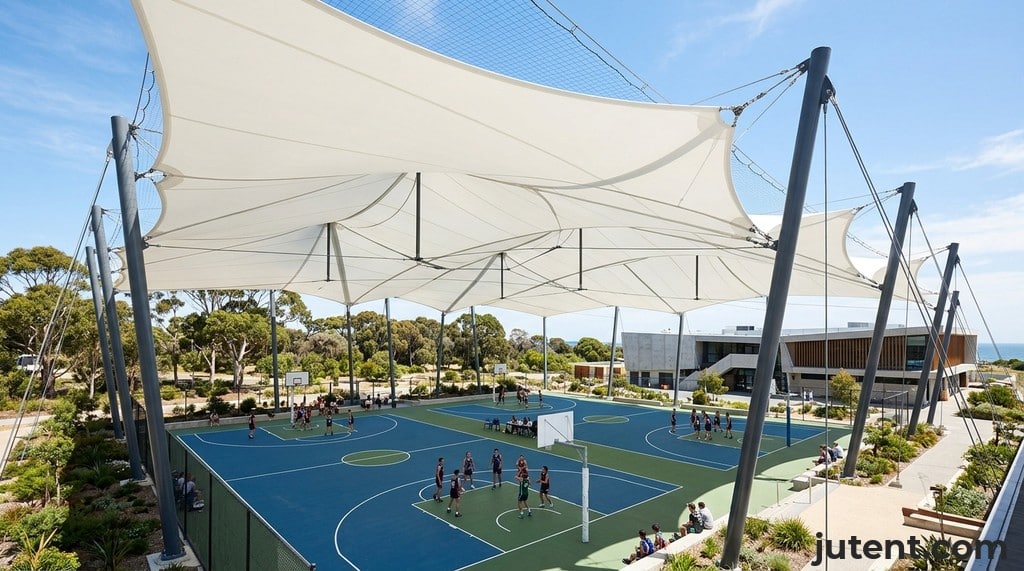
Sport Court Shade
Padel, Tennis & Pickleball Court Canopy Wind Load Requirements for Australia
Australia is prone to severe weather events, including cyclones and strong gales, making wind load calculations a critical component of any sports court canopy design. AS/NZS 1170.2 provides the methodology for determining characteristic wind speeds and subsequent design pressures. This involves considering several factors:
- Regional Wind Speeds: Australia is divided into wind regions (A, B, C, D), each with specific basic design wind speeds. Regions C and D, covering cyclone-prone areas, demand significantly higher design pressures.
- Terrain Category: The surrounding environment (e.g., open terrain, suburban, urban) influences how wind interacts with the structure.
- Topography: Hills, ridges, and escarpments can accelerate wind flow, requiring adjustments to design loads.
- Shielding: Nearby structures can offer some shielding, reducing wind loads, but this must be carefully assessed.
- Importance Level: Sports courts, especially those in schools or public spaces, are typically classified as Importance Level 2 or 3, dictating higher reliability requirements and lower probabilities of failure.
For a tensile structure, the membrane's interaction with wind is complex. The design must account for both positive and negative pressures (uplift) and dynamic effects. Manufacturers must provide detailed wind load calculations, often performed using computational fluid dynamics (CFD) or equivalent methods, demonstrating compliance with the specific AS/NZS 1170.2 parameters for the project's exact location. These calculations should be presented in a format that can be readily reviewed and stamped by an Australian structural engineer, ensuring local accountability.
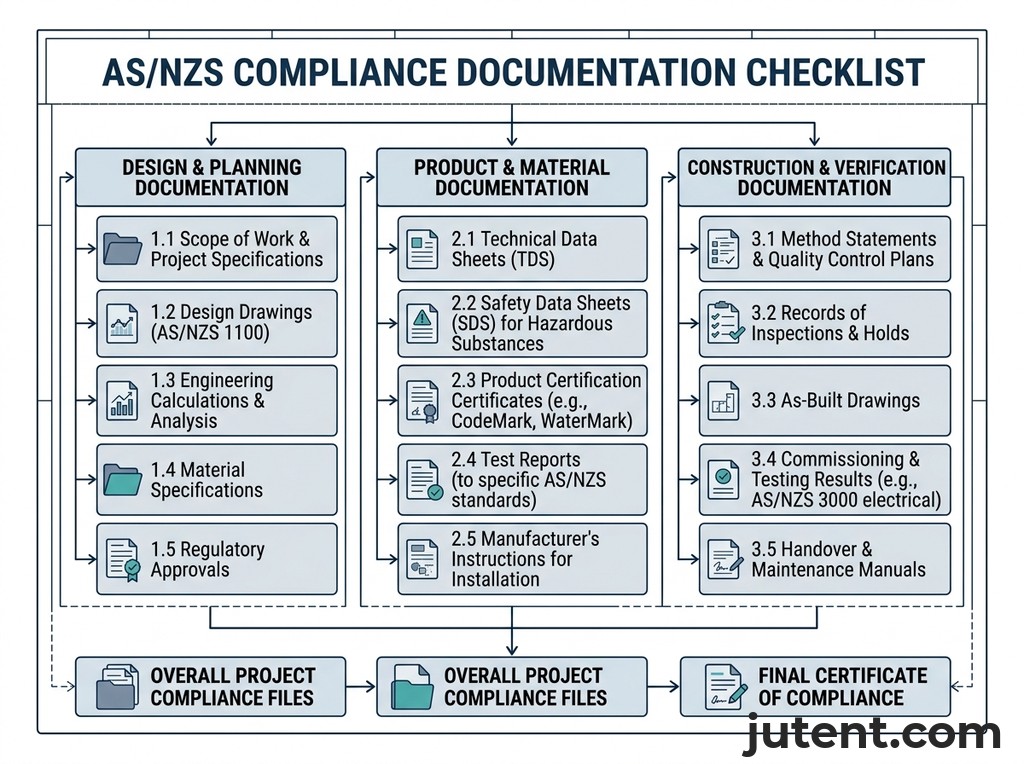
Download Our Complete Sports Court Shade Structure Engineering Guide (PDF)
UPF 50+ UV Protection: What Australian Standards Require
Given Australia's high UV index, particularly during peak daylight hours, the primary purpose of a sports court shade structure is to provide effective UV protection. The Cancer Council Australia strongly recommends shade structures that offer a Ultraviolet Protection Factor (UPF) of 50+. This rating indicates that the fabric blocks at least 98% of harmful UV radiation.
For tensile membrane structures, the choice of membrane material is crucial for achieving this standard. High-quality PVDF (Polyvinylidene Fluoride) coated polyester fabric, commonly used in sports court canopies, is engineered to provide excellent UV resistance and filtration. When specifying, contractors must request UPF test certificates from the membrane manufacturer. These certificates should clear