
“`html
A successful playground shade structure installation hinges on clear communication and a precise division of labor between the manufacturer and the contractor's site team. This guide clarifies what the manufacturer provides and what your site team needs to prepare, ensuring a smooth process from foundation to final tensioning. Understanding these responsibilities upfront is crucial for efficient project execution and a safe, durable outcome.
The Three Phases of a Playground Shade Sail Structure Installation
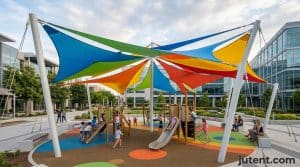
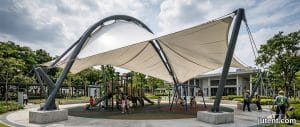
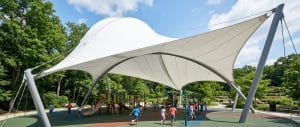
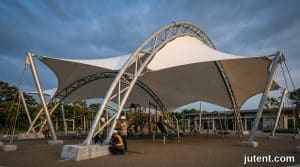
Installing a playground shade sail structure is a structured process, typically broken down into three distinct phases: foundation work, post setting and frame assembly, and membrane attachment. Each phase requires specific expertise and careful coordination to ensure the structural integrity and aesthetic appeal of the final product. The initial phase, foundation work, involves preparing the ground and pouring concrete footings that will anchor the entire structure. This is a critical step, as the stability of the shade relies entirely on a well-executed foundation.
Following the foundation, the site team moves to post setting and frame assembly. This involves erecting the main support posts and connecting any pre-fabricated steel components to form the skeletal structure. Precision in this phase ensures that the frame is plumb, level, and correctly aligned to receive the tensile membrane. Finally, the membrane attachment phase involves carefully lifting, positioning, and tensioning the fabric membrane onto the assembled frame. This stage requires specialized techniques to achieve the correct tension, which is vital for the membrane's longevity and performance against environmental factors. Understanding these phases is key to a successful Playground Shade installation.
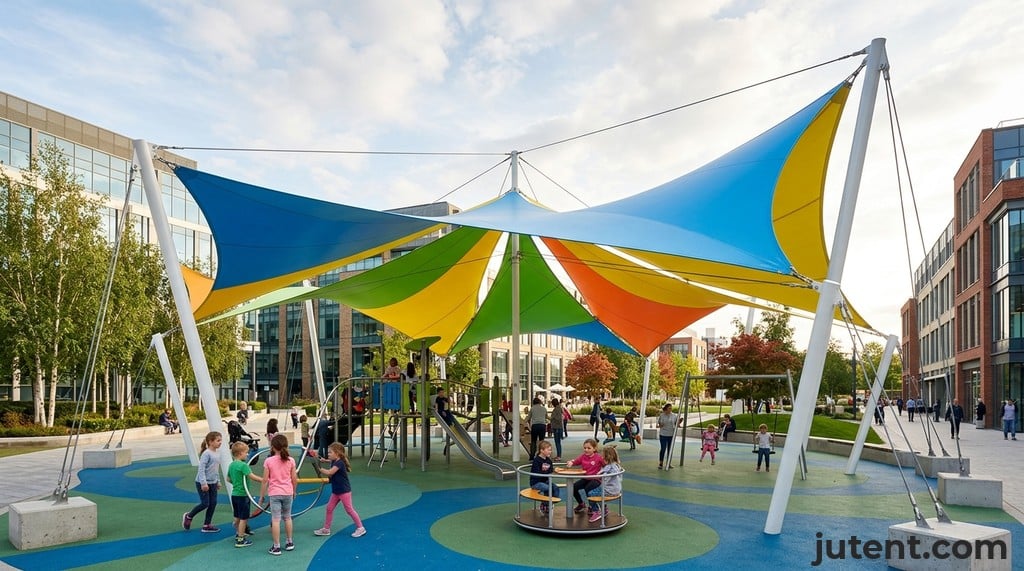
Foundation Work: Post Footings and What Your Civil Team Needs to Prepare
The foundation is the bedrock of any tensile structure, and playground shade structures are no exception. Your civil team's primary responsibility is to prepare the post footings according to the detailed engineering drawings provided by Jutent. These drawings will specify the exact dimensions, depth, and reinforcement requirements for each footing, tailored to the specific design and local soil conditions. Typically, this involves excavating the footing locations, installing rebar cages as per the structural engineer's design, and pouring concrete to the specified strength and finish. Proper curing of the concrete is essential before any steel posts are set.
It is imperative that the civil team adheres strictly to these specifications, as any deviation can compromise the stability and safety of the entire structure. Factors such as soil bearing capacity, wind loads, and seismic considerations are all accounted for in the foundation design. Your team will also need to ensure that the anchor bolts or embedded plates, which will connect the steel posts to the foundation, are precisely positioned and level before the concrete sets. Based on Jutent's experience across 400+ projects in 30+ countries, meticulous attention to detail during this phase is non-negotiable for a long-lasting installation. For a deeper dive into design considerations, refer to our Playground Shade Structure Installation Guide.
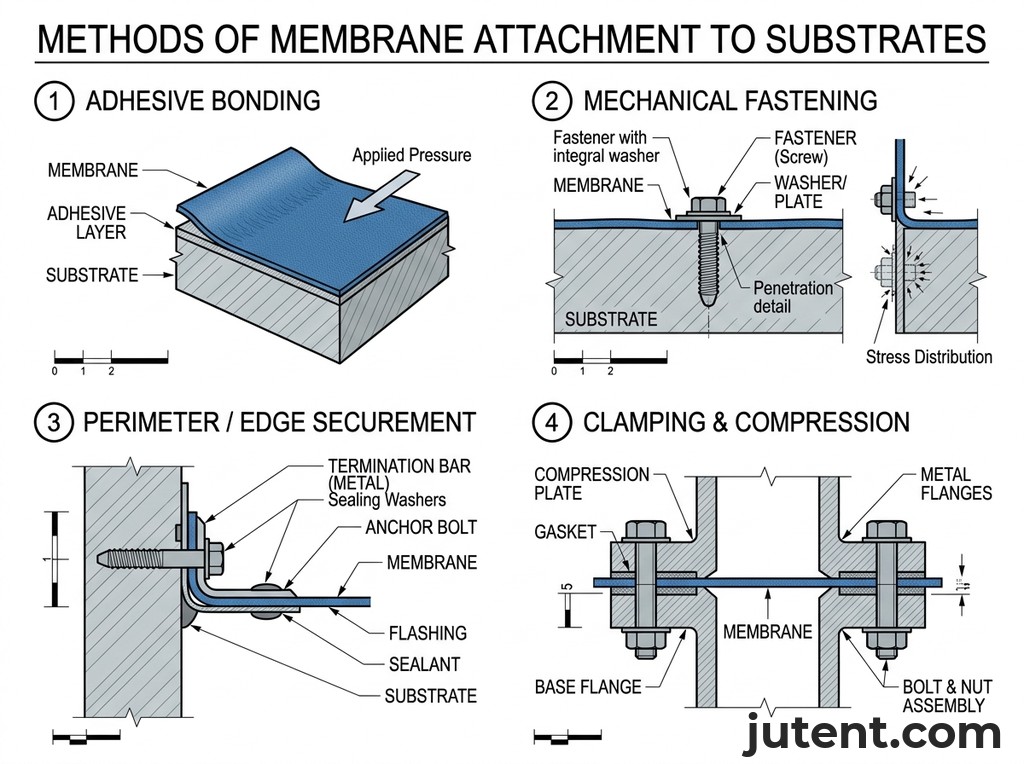
Post Setting and Frame Assembly: What Arrives Pre-Fabricated
Once the foundations are cured and ready, the next phase involves setting the support posts and assembling the steel frame. Jutent Engineering prides itself on providing highly pre-fabricated components to streamline this process on-site. The steel posts, typically constructed from Q235B or Q355B grade steel, arrive pre-cut, pre-drilled, and with the specified surface treatment – either epoxy zinc-rich primer with an acrylic or fluorocarbon topcoat, or hot-dip galvanizing. This pre-fabrication significantly reduces on-site cutting, welding, and painting, saving valuable time and labor.
The contractor's site team will be responsible for carefully lifting and positioning these posts onto the anchor bolts or embedded plates in the foundations. Accurate plumbing and leveling of each post are critical at this stage. Once the posts are secured, any connecting beams or secondary steel elements, which also arrive pre-fabricated, will be bolted into place according to the assembly drawings. All connection points are designed for straightforward mechanical fastening, minimizing the need for complex on-site fabrication. This modular approach ensures a faster, more precise assembly, leading to a reliable and aesthetically pleasing frame ready for the membrane.
Tensile Membrane Installation: Tensioning and Fixing Details
The final and arguably most visually impactful phase is the attachment and tensioning of the tensile membrane. Jutent typically supplies either a 1050 g/m² PVDF or PTFE membrane, depending on project specifications, which arrives pre-cut and pre-fabricated with all necessary edge details, corner plates, and attachment points. The contrac
“`