
“`html
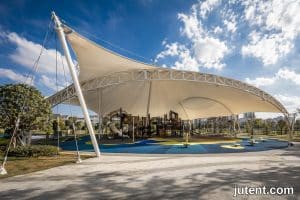
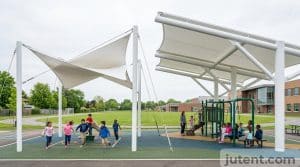
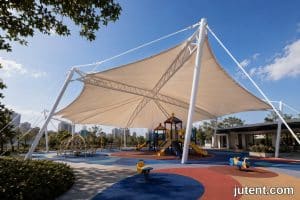
The afternoon sun beat down on the newly installed playground, its vibrant colors a stark contrast to the harsh glare. A young architect, reviewing the final plans, pointed to the expansive open area where children would soon be playing. “We need substantial shade here,” she stated, “something that can truly protect them from the UV, withstand the elements, and integrate with the modern aesthetic.” The contractor nodded, already weighing the options. While shade sails offered a quick solution, the sheer scale of the playground, combined with the desire for long-term durability and maximum UV protection, immediately brought a more engineered solution to mind: a playground tensile canopy. This choice, though requiring more upfront design, promised a superior outcome for this ambitious project.
How Tensile Membranes Deflect Extreme Heat: Solar Reflectance and Thermal Comfort
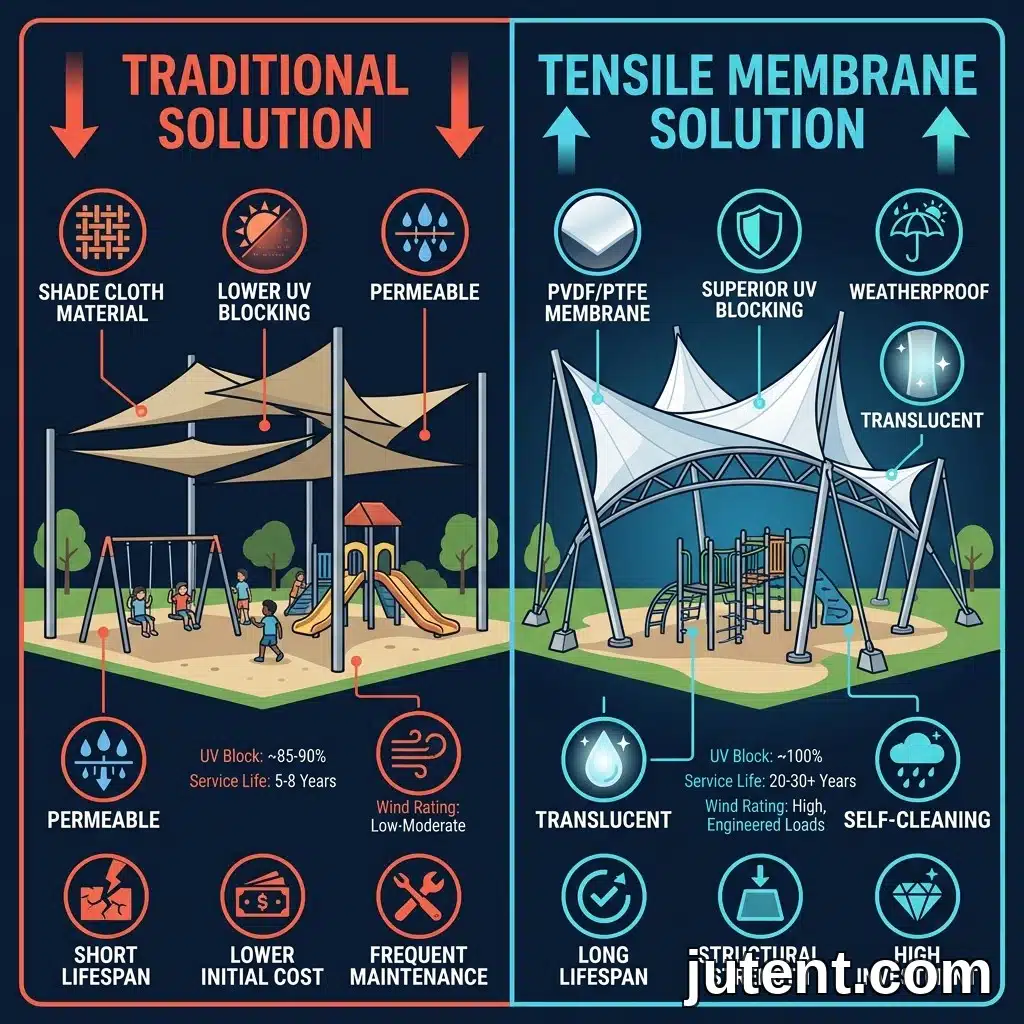
PVDF and PTFE membranes used in playground tensile canopies are engineered to deflect extreme heat through high solar reflectance and low thermal emissivity. These architectural membranes reflect 70–80% of incoming solar radiation, significantly reducing the amount of heat absorbed by the structure and the ground beneath. In direct comparison to standard shade cloth, which can trap heat and allow radiant heat to pass through, tensile membranes maintain a cooler microclimate underneath.
Field measurements show that surface temperatures under a PVDF or PTFE membrane can be 15–20°C lower than under conventional shade cloth during peak summer conditions. This is because the membrane's low thermal emissivity prevents re-radiation of absorbed heat downward, keeping the play area more comfortable. For children and caregivers, this translates to a safer, more enjoyable environment even on the hottest days, making tensile canopies a superior choice for extreme heat deflection in playground applications.
When Tensile Canopies Outperform Shade Sails for Playground Shade
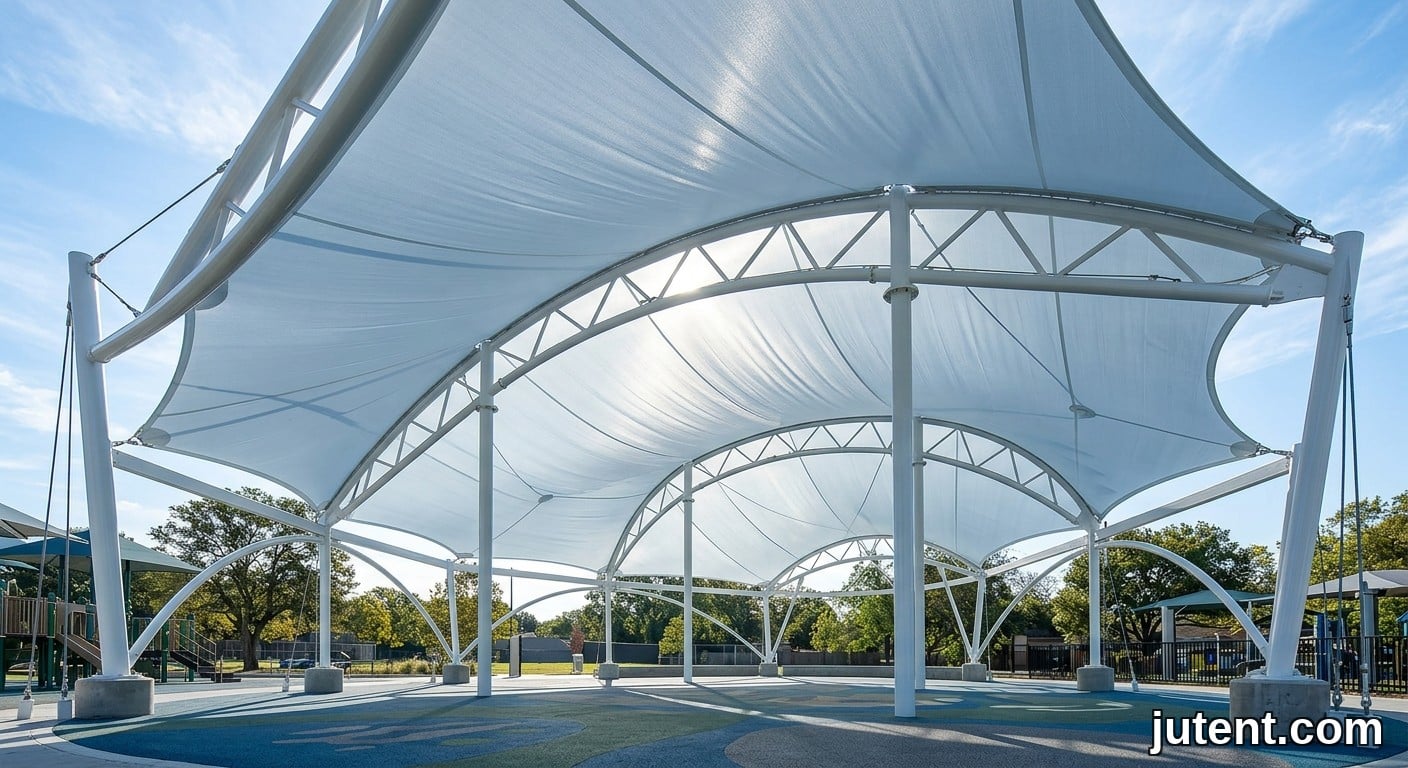
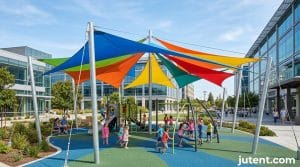
When considering shade solutions for playgrounds, the choice often comes down to tensile canopies or traditional shade sails. While shade sails offer a cost-effective and relatively simple installation for smaller areas, playground tensile canopies present a compelling alternative when specific performance criteria are paramount. Tensile structures excel in situations demanding larger spans, superior UV protection, and a significantly longer service life. Unlike shade sails, which are typically fabric panels tensioned between multiple attachment points, tensile canopies are engineered structures with a rigid steel framework supporting a tensioned membrane. This fundamental difference allows for greater design flexibility, enhanced structural integrity, and the ability to cover expansive play areas without numerous intermediate supports. For projects where long-term value, minimal maintenance, and maximum user comfort are priorities, a tensile canopy often proves to be the more judicious investment. Playground Shade
Span Options: What Tensile Canopies Can Cover That Shade Sails Can't
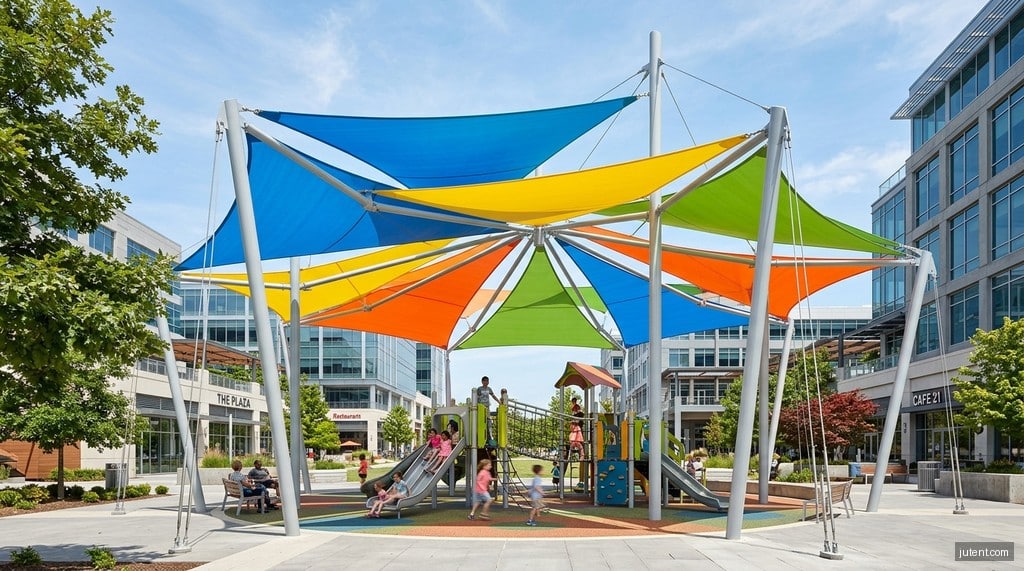
The ability to cover significant areas with minimal obstruction is a key differentiator for playground tensile canopies. Shade sails, by their nature, are limited in their span capabilities due to the inherent flexibility of the fabric and the need for multiple anchor points to maintain tension and prevent sagging. As the desired coverage area increases, so does the complexity and number of support columns required for shade sails, potentially creating more obstacles within the play space. Tensile canopies, conversely, are designed as integrated structural systems. Their reliable steel frameworks (typically Q235B or Q355B grade steel (Chinese standard grades; Q235B ≈ ASTM A36, Q355B ≈ ASTM A572 Grade 50 — equivalent to international standards available on request)) allow for impressive clear spans, often exceeding 10-20 meters in a single bay. For even larger playgrounds, multi-bay tensile configurations can be engineered to cover vast areas, providing continuous, uninterrupted shade. This capability is crucial for large-scale commercial or municipal playgrounds where maximizing usable play space and minimizing visual clutter are important design objectives. Playground Shade Structures Guide
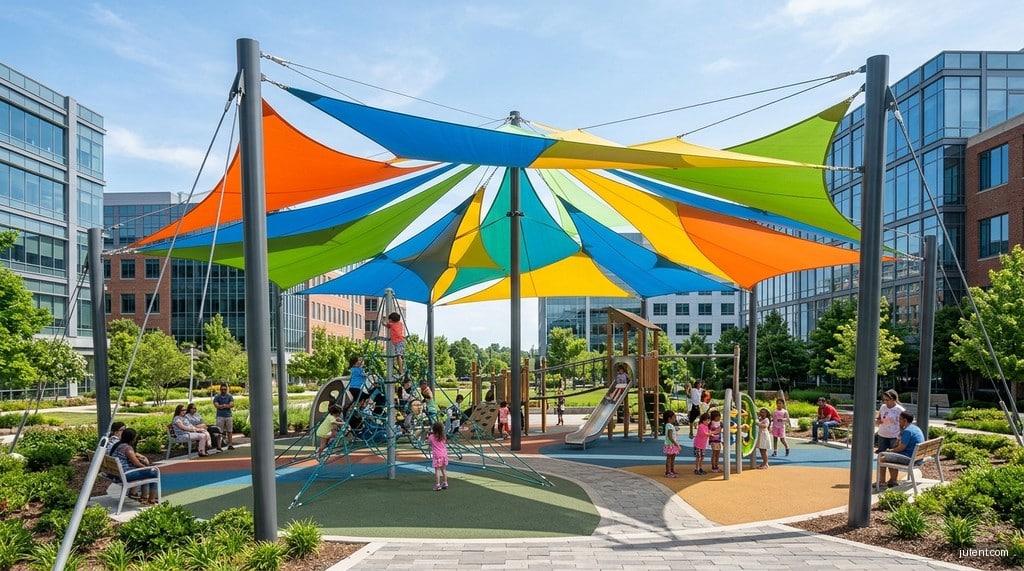
Membrane Grade for Playground Tensile Canopies: PVDF vs Shade Cloth
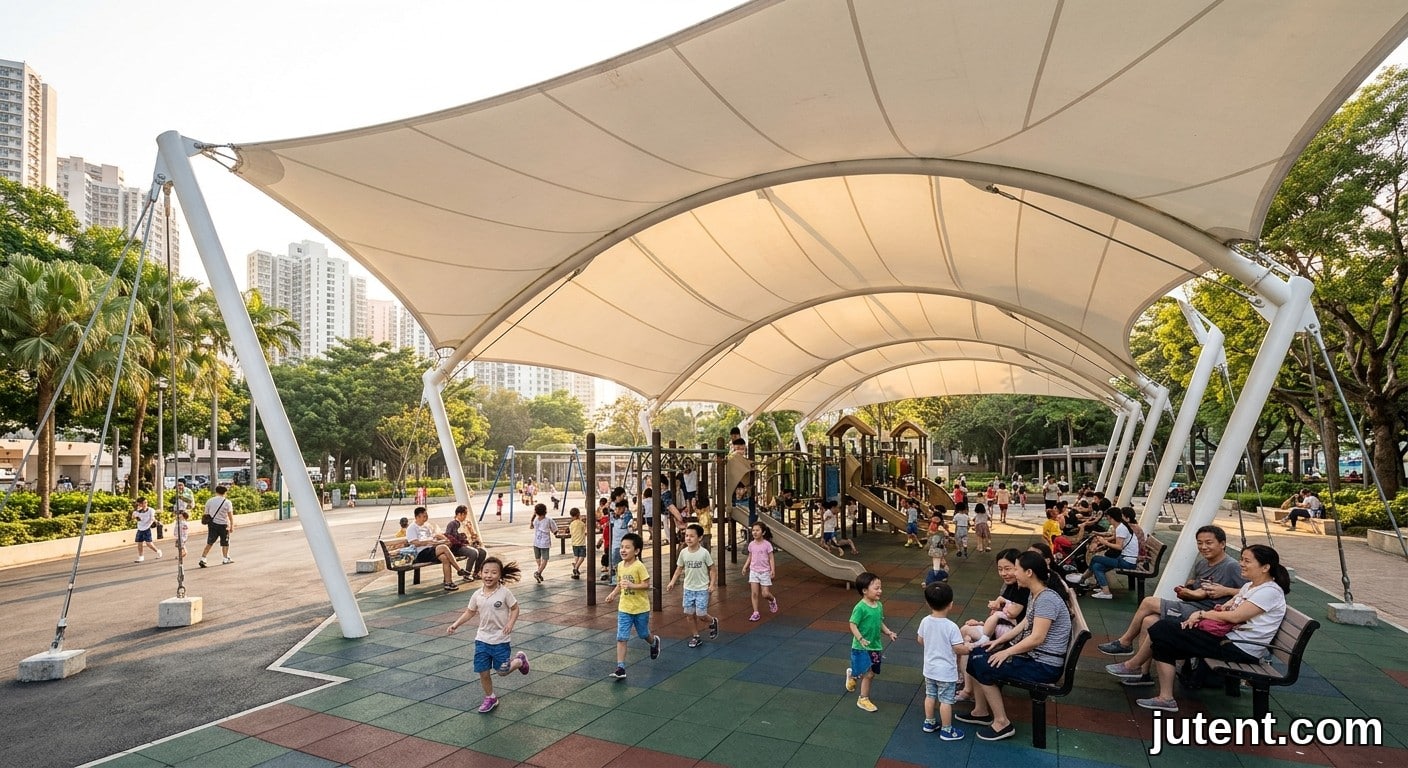
The choice of membrane material is critical for the performance and longevity of a playground shade structure. For shade sails, woven shade cloth is the standard, offering good UV protection but with a relatively shorter lifespan and susceptibility to tearing or fraying over time. For playground tensile canopies, the primary membrane options are PVDF (Polyvinylidene Fluoride) coated architectural fabric or, for ultimate durability, PTFE (Polytetrafluoroethylene) coated fiberglass. For a detailed comparison of these materials, see our PVDF vs PTFE Membrane Comparison guide.
PVDF membranes, such as Jutent's standard 1050 g/m² material, offer excellent UV resistance, high tensile strength, and a smooth, self-cleaning surface. They come with a 10-year warranty and a service life exceeding 15 years, making them a highly practical choice for most playground applications. The PVDF coating helps resist dirt accumulation and environmental degradation, reducing maintenance needs. PTFE membranes, while a higher initial investment (adding approximately $20/m² to the PVDF range), provide unparalleled durability, a 15-year warranty, and a service life often exceeding 25 years. They are exceptionally re
“`