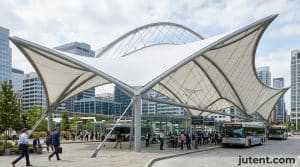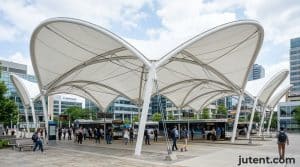

Urban transit infrastructure has definitively shifted away from rigid, heavy-mass construction. In modern municipal planning, bus shelters must function as highly efficient, low-maintenance nodes that visually integrate with the surrounding cityscape. Tensile membrane architecture provides a precise engineering solution to these demands, replacing traditional materials with a sophisticated balance of high-strength structural steel and pre-tensioned fabric.
Designing an optimal transit canopy requires more than drawing a curved roof. It demands a rigorous understanding of wind load parameters, pedestrian flow, and material longevity. By leveraging tension rather than mass, architectural membranes offer spans and geometries that are physically impossible to achieve with concrete or standard metal roofing.
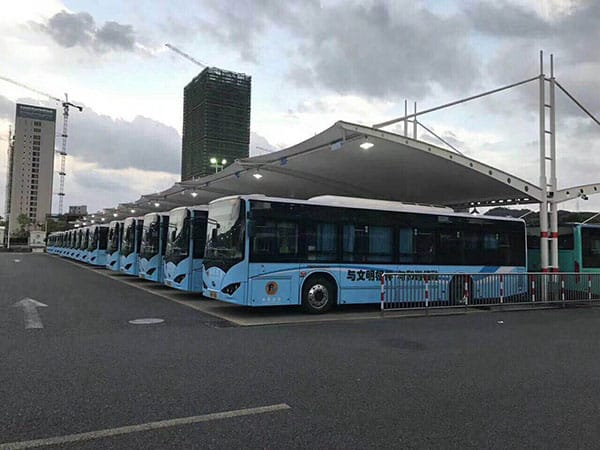
Structural Dynamics and Load Distribution
The core advantage of a tensile fabric bus stop lies in its structural reliability. These systems are engineered using a primary framework of Q355B structural steel, supporting a membrane that is mechanically pre-tensioned. This bi-axial tension ensures the fabric acts as a load-bearing element rather than a simple aesthetic cover.
When subjected to dynamic environmental forces—such as sudden wind gusts or heavy rainfall—the pre-tensioned surface works synergistically with the steel columns and cable assemblies. The flexibility inherent in the membrane allows for controlled micro-deformations, absorbing and dissipating kinetic energy far more effectively than rigid polycarbonate or glass shelters. This results in superior seismic performance and an exceptional capacity to withstand high wind loads.
Engineering Note: The tension applied to the membrane during installation must be precisely calculated based on regional weather data. Insufficient tension leads to material fatigue and ponding, while optimal pre-tensioning guarantees a lifespan exceeding 20 years for premium PTFE or PVDF materials.
Advanced Material Science: PVDF and Thermal Performance
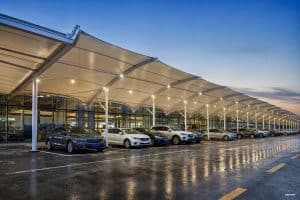
Public infrastructure demands passive environmental control. Unlike glass, which acts as a greenhouse, or solid metal, which radiates heat, architectural membranes offer superior thermal performance. High-grade membranes coated with PVDF (Polyvinylidene Fluoride) or titanium dioxide reflect up to 70% of solar radiation. This drastically reduces the heat island effect beneath the canopy, ensuring thermal comfort for waiting passengers.
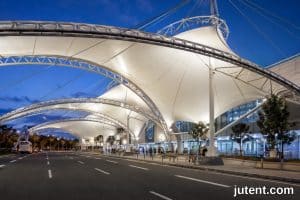
Simultaneously, the material permits a specified percentage of natural light transmission. This diffused, glare-free illumination creates a safe, bright environment during daylight hours, completely eliminating the need for daytime artificial lighting. As night falls, the highly reflective underside of the fabric can be utilized as a massive reflector for uplighting, creating a luminous architectural landmark with minimal energy expenditure.
Streamlined Fabrication and Civic Deployment
Municipal projects are often constrained by the necessity to minimize traffic and pedestrian disruption. Tensile membrane structures excel in this arena due to their highly prefabricated nature. The structural steel frames and the membrane panels are precision-cut, welded, and sealed in controlled factory environments.
This off-site manufacturing model guarantees strict quality control and condenses the on-site installation cycle. Once delivered, the modular components can be erected and tensioned in a fraction of the time required for traditional construction. Furthermore, the inherent self-cleaning properties of PVDF coatings—often referred to as the lotus effect—ensure that urban dust and particulate matter are naturally washed away by rainfall, drastically reducing the ongoing maintenance burden for city municipalities.