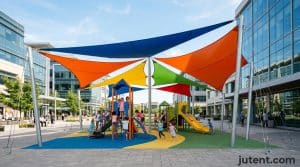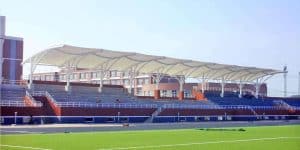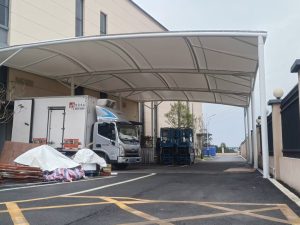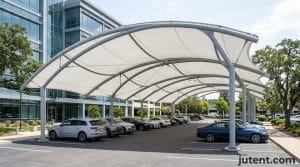

A playground shade structure is not just a fabric cover over play equipment. For contractors, schools, and council buyers, it is a safety-critical package that must balance UV protection, structural stability, equipment clearance, post placement, and budget control from the start. Specifying a playground shade structure usually involves five decisions that cause the most tender-stage mistakes: UV rating, structural form, commercial-grade compliance, clearance, and cost scope. This guide covers those decisions in a direct specification sequence so you can reduce redesign risk before procurement and installation begin. It also helps project teams compare like-for-like quotations before they commit to membrane grade, post layout, and foundation scope. That is why a playground shade structure should be specified as an engineered system rather than as a simple shade accessory.
What Makes Playground Shade Structure Specification Different
Playground shade structures must balance UV protection, structural resilience, and safety clearances in a way that differs from typical commercial canopies. Unlike standard shade sails or tensile canopies used in hospitality or residential settings, playground structures require a minimum UPF 50+ rating to meet Australian and international sun protection standards. This ensures children are shielded from harmful UV radiation during peak exposure hours.
Structurally, playground shade systems must withstand local wind loads often exceeding 100 km/h, depending on the region, and accommodate dynamic loads from children interacting with the structure. This necessitates robust column sizing—commonly 150×150×6mm SHS steel posts—and secure foundations designed for uplift and lateral forces.
Clearance height is another unique factor. A minimum of 2.4 meters clearance is required beneath the canopy to allow safe use of playground equipment and prevent head injuries. Post placement must avoid interfering with play zones while maintaining structural integrity.
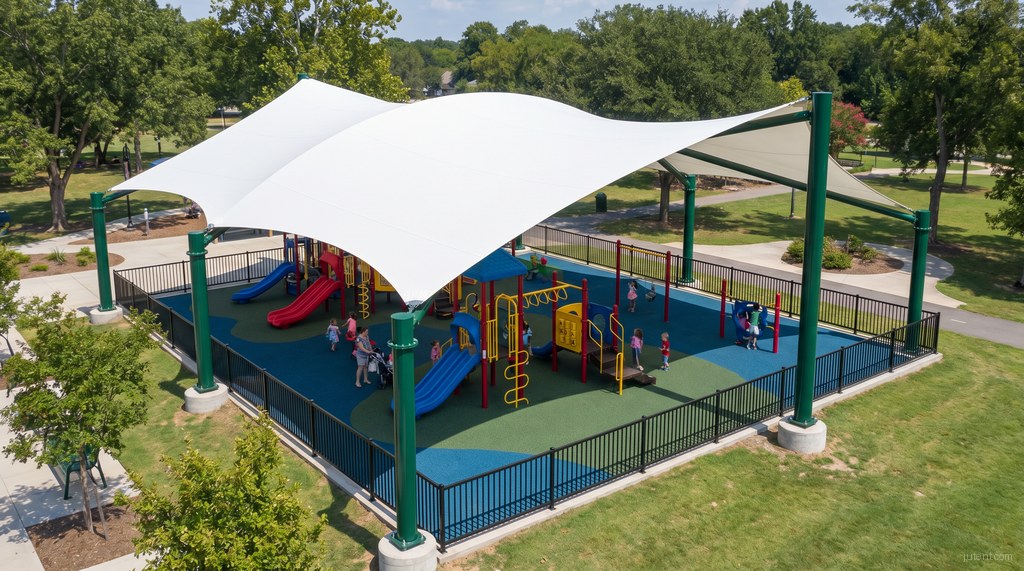
These combined factors make playground shade structures a specialized subset of commercial playground shade. For detailed product options, see Playground Shade.
UPF 50+ UV Protection: What Australian and International Standards Require
The Australian Cancer Council and comparable international bodies mandate a minimum UPF (Ultraviolet Protection Factor) of 50+ for playground shade structures. This rating blocks at least 98% of UV radiation, significantly reducing the risk of skin cancer and sunburn in children.
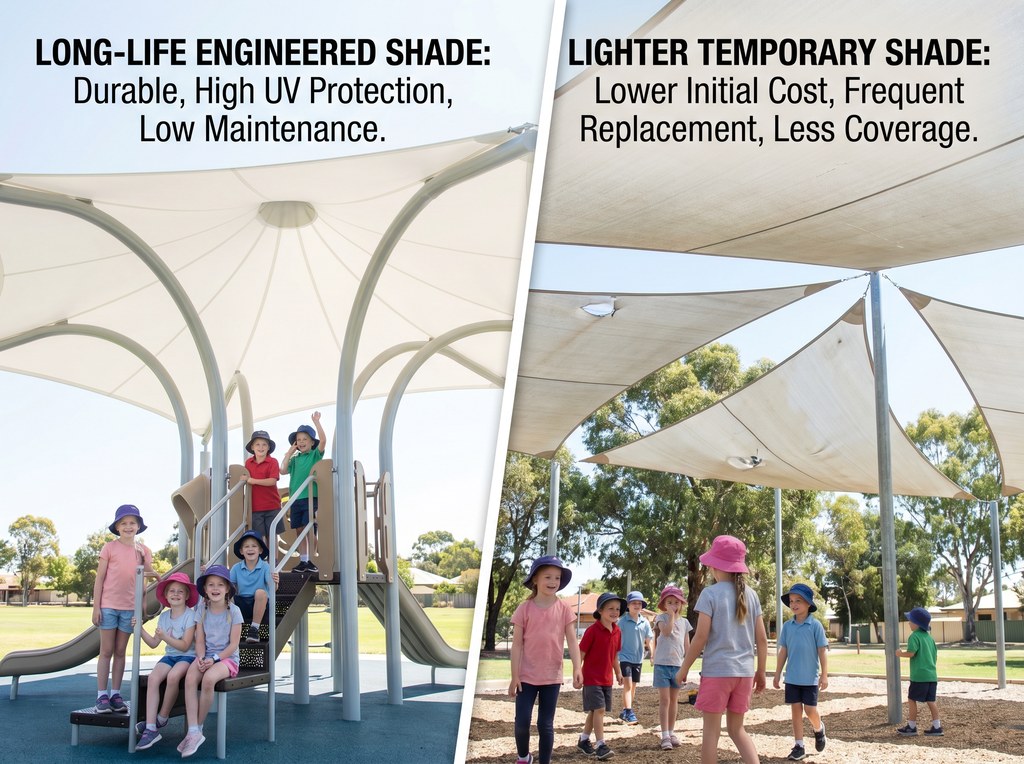
Achieving UPF 50+ requires selecting a membrane with specific material properties and weight. Typically, a PVDF-coated fabric at 1050g/㎡ meets this standard reliably. Lighter membranes around 650–800g/㎡ often fail to maintain UPF 50+ after prolonged UV exposure, reducing effective lifespan to under 8 years in tropical climates.
The membrane must also maintain tensile strength and color stability under UV Index levels of 12–13, common in Australia and Southeast Asia. A high-grade membrane retains over 90% of its tensile strength after 15 years of exposure.
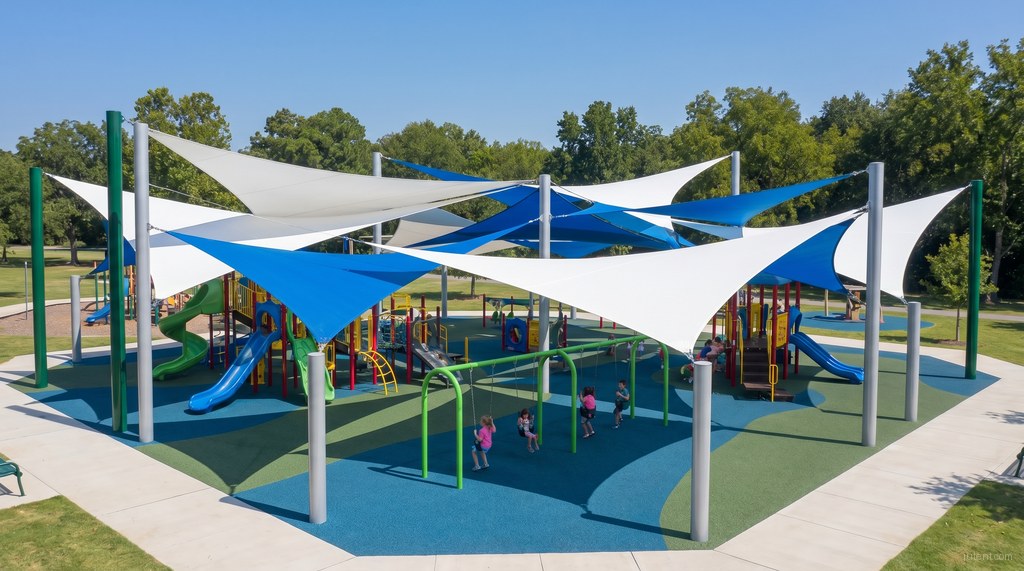
For a technical comparison of membrane types and their UV performance, see Pvdf Vs Ptfe Membrane Comparison.
Structural Forms: Shade Sail, Tensile Canopy, and Hip Roof Options
Playground shade structures primarily come in three structural forms, each with distinct engineering implications:
| Structural Form | Typical Span (m) | Post Size (mm) | Wind Rating (km/h) | Typical Membrane Weight (g/㎡) | Notes |
|---|---|---|---|---|---|
| Shade Sail | Up to 15 | 100×100×4 SHS | 90–110 | 650–800 | Cost-effective; less rigid |
| Tensile Canopy | 15 to 30 | 150×150×6 SHS | 120–150 | 1050 | Clear spans; high wind rating |
| Hip Roof Canopy | Up to 20 | 150×150×6 SHS | 100–130 | 900–1050 | Traditional look; higher cost |
The tensile canopy form is preferred for larger playgrounds requiring clear spans without intermediate columns, especially in wind-prone areas. Shade sails are suitable for smaller playgrounds with moderate wind exposure but require more posts and tensioning points.
The hip roof option offers a classic architectural aesthetic and can integrate gutters for rainwater management but typically costs 15–20% more than tensile canopies for similar coverage.
Commercial Playground Shade: What ‘Commercial Grade’ Actually Means
The term “commercial grade” in playground shade structures refers to compliance with structural, material, and safety standards suitable for public use. This includes:
- Structural steel posts with minimum 6mm wall thickness and galvanised or powder-coated finish to resist corrosion.
- Membranes with certified UPF 50+ rating and fire retardancy compliant with AS 1530.2.
- Design wind loads aligned with local building codes, typically 100–150 km/h for coastal or exposed sites.
- Post placement ensuring no obstruction to play equipment or pedestrian flow, with foundation embedment depths of 600–900mm depending on soil conditions.
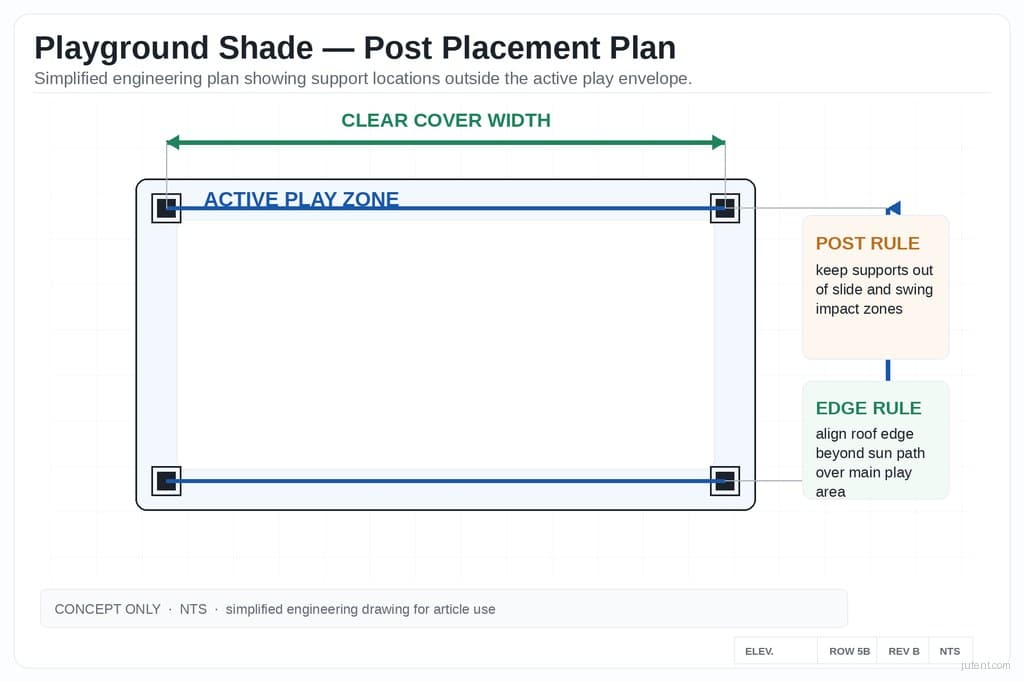
Commercial-grade certification also implies documented testing and engineering drawings stamped by a qualified structural engineer. This ensures the playground shade structure can withstand the expected environmental and user loads over a 15–20 year design life.
School Playground Shade Structure: Safety, Clearance, and Budget Considerations
School playground shade structures require careful attention to safety and clearance to comply with regulatory guidelines and protect children.
- Clearance Height: Minimum 2.4 meters under the canopy to accommodate climbing frames, slides, and other equipment.
- Safety Zones: Posts must be located outside fall zones and play areas to prevent injury risks.
- Material Selection: Fire-retardant membranes with UPF 50+ rating are mandatory.
- Budget: Typical supply-only costs range from $120 to $180 per square meter, depending on membrane weight and structural complexity. Installation costs vary by site access and foundation requirements.
Balancing these factors requires early coordination between contractors, school authorities, and designers to optimize the structure for both safety and cost-effectiveness. Early layout review also helps avoid post conflicts with play equipment and circulation paths.
Playground Tensile Canopy: When Tensile Is the Right Choice
A tensile canopy is the preferred solution when the playground requires:
- Large clear spans exceeding 15 meters without intermediate columns.
- High wind resistance up to 150 km/h, common in coastal or cyclone-prone regions.
- A modern aesthetic with smooth, wrinkle-free membrane surfaces.
- Longevity of 15+ years with minimal maintenance.
Tensile canopies use 150×150×6mm SHS steel posts with moment-resisting base plates and high-tension cables to pre-stress the membrane. The membrane weight is typically 1050g/㎡ PVDF, balancing UV protection and durability.
This form reduces site obstructions, improving sightlines and play space usability. However, tensile systems require precise engineering and installation to achieve correct membrane tension and avoid ponding or premature wear. They are most effective where the site needs larger clear spans and cleaner movement zones.
Playground Shade Structure Cost: What Drives the Budget
Several factors influence the cost of a playground shade structure:
| Cost Driver | Impact on Budget |
|---|---|
| Membrane Weight | $3–5/㎡ increase per 100g/㎡ increase |
| Structural Complexity | Additional 10–20% for complex spans or shapes |
| Wind Rating | Higher wind rating requires thicker posts/foundations |
| Post Quantity | More posts increase material and installation cost |
| Installation Location | Difficult access or soil conditions add 15–25% |
| Documentation & Certification | Engineering drawings and testing add fixed costs |
Typical supply-only costs for commercial playground shade range from $120 to $180 per square meter. Installation can add 30–50% depending on site conditions.
Early specification of wind rating and clearance requirements prevents costly redesigns or structural failures. Jutent’s experience shows that specifying a 1050g/㎡ PVDF membrane adds $3–5/㎡ but extends lifespan by 5–8 years compared to lighter membranes.
What Jutent Provides: Factory Supply, Documentation, and Logistics
Jutent supplies playground shade structures as factory-prepared kits, including:
- Pre-cut and pre-drilled structural steel components, typically 150×150×6mm SHS posts.
- High-grade PVDF membrane panels with certified UPF 50+ rating.
- Detailed engineering drawings stamped by a registered structural engineer.
- Step-by-step installation manuals with numbered components to streamline assembly.
- Logistics coordination for sea freight, with typical lead times of 20–30 days production plus 7–14 days shipping to Southeast Asia.
This approach minimizes on-site welding and fabrication, reducing installation time to 3–5 days for typical playground canopies. Jutent’s quality control ensures compliance with Australian and international standards for safety and durability. It also helps contractors shorten site disruption in operating schools and public parks while keeping documentation control clearer.
FAQ
- What UPF rating is required for a playground shade structure?
- For playground shade structures, a UPF 50+ rating is the recommended standard, as advised by organizations like Cancer Council Australia. This high level of protection is crucial for safeguarding children from harmful UV radiation during extended outdoor play. Reputable manufacturers of tensile membrane structures typically offer high-grade PVDF membrane materials that inherently achieve a UPF 50+ rating as a standard feature, ensuring compliance with health and safety recommendations without requiring additional treatments or specialized specifications. When sourcing, contractors and specifiers should verify this rating in product datasheets to ensure optimal sun protection for their projects.
- What clearance height is required under a playground shade structure?
- A minimum 2.4m (approximately 8 feet) clear height is generally required under a playground shade structure. This standard ensures sufficient vertical clearance for the safe operation of most playground equipment, including swings, slides, and climbing structures, and accommodates the movement of children and supervising adults. Contractors and specifiers should always verify local building codes and accessibility standards, as these may mandate greater clearances depending on the specific equipment installed and the intended age group for the play area. Considering future equipment upgrades or modifications during the design phase can also prevent costly adjustments later.
- What is the typical lead time for a playground shade structure from Jutent?
- For a typical playground shade structure, factory production generally requires 20–30 days from the final design approval. Following production, sea freight to destinations within Southeast Asia typically adds another 7–14 days. Therefore, contractors and project managers should anticipate a total lead time of approximately 5–8 weeks for many export projects from the point of order confirmation to delivery at the port of destination. This timeframe allows for efficient manufacturing and reliable international shipping logistics.
Send us your playground dimensions and we’ll provide a UPF-compliant specification and indicative cost within 48 hours.