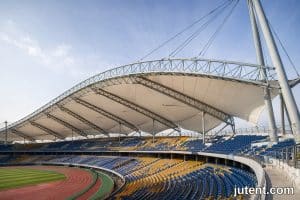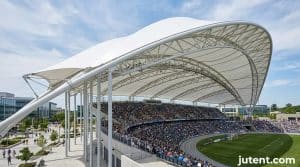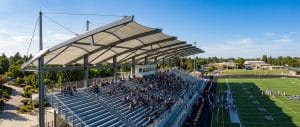

The afternoon sun beat down on the school oval, glinting off the metal bleachers. Parents, teachers, and students squinted, trying to catch a glimpse of the final sprint. While the excitement was palpable, the lack of shade made the experience less than ideal, particularly for younger children and the elderly. A well-designed school grandstand canopy could transform this scene, offering much-needed respite from the elements while enhancing the overall comfort and safety of spectators. For contractors and school facility managers, understanding the unique requirements of these structures is key to successful project delivery.
Why School Grandstand Canopies Have Different Priorities
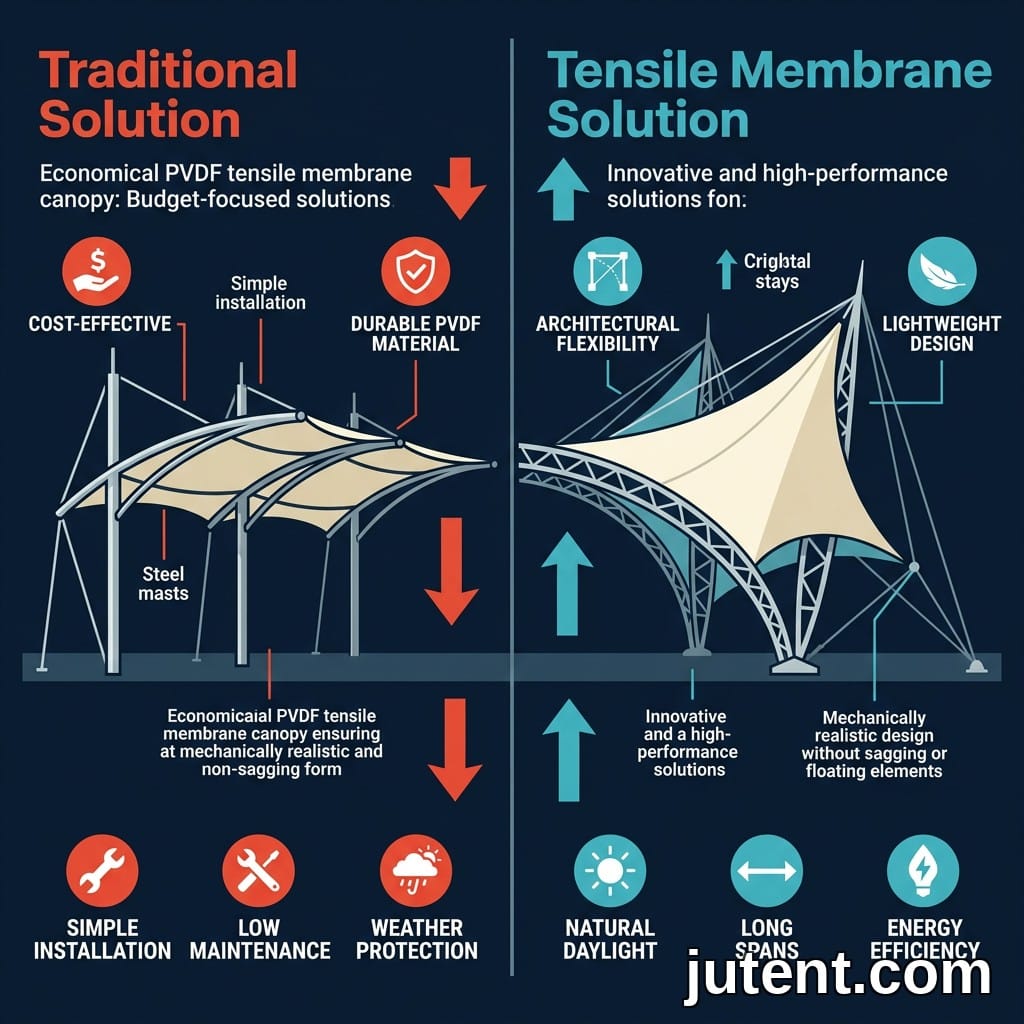
Unlike large-scale professional stadium projects where architectural grandeur and complex aesthetics often take precedence, a school grandstand canopy prioritizes practicality, safety, and cost-effectiveness. The primary function is to provide reliable UV protection and shelter for students, staff, and visitors during sporting events, assemblies, and outdoor performances. This focus shifts the design emphasis towards functional efficiency, durable materials, and straightforward construction.
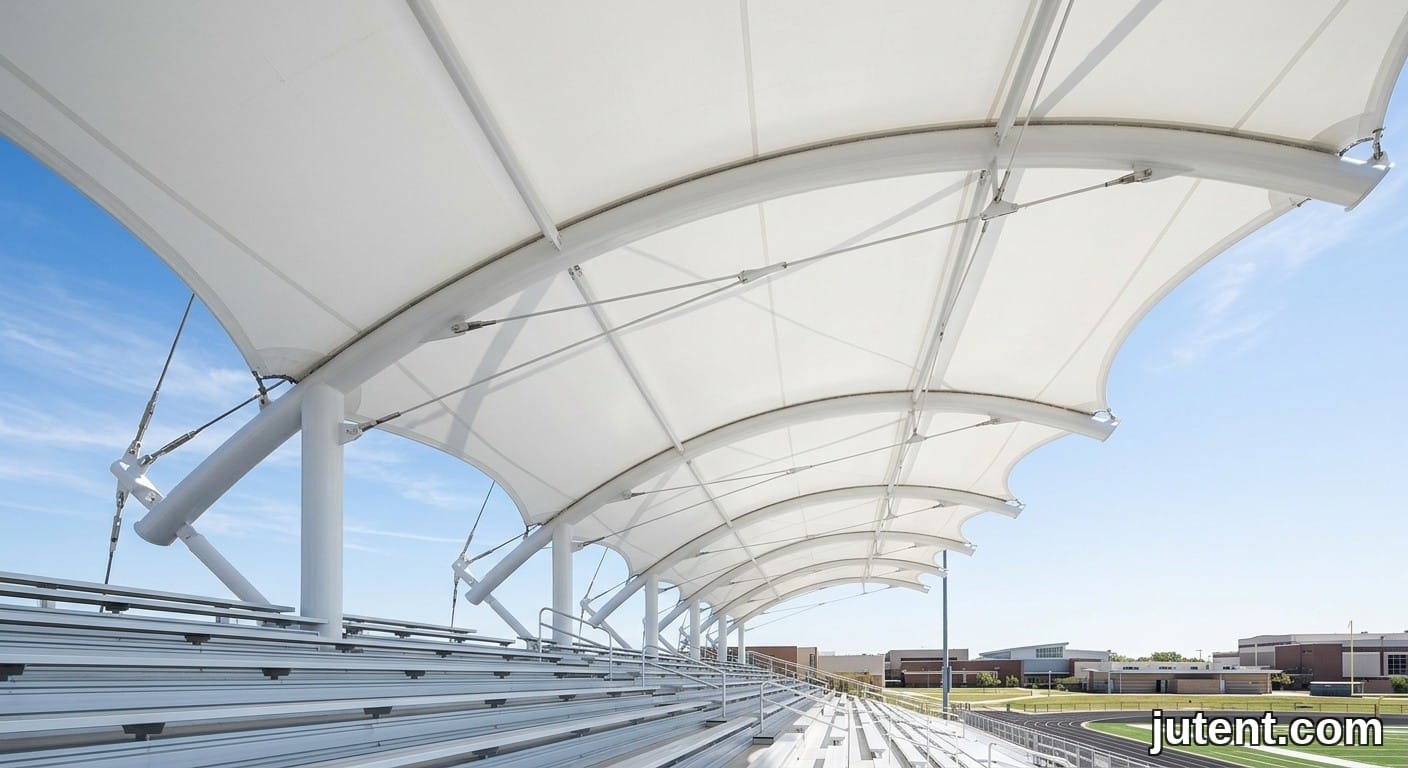
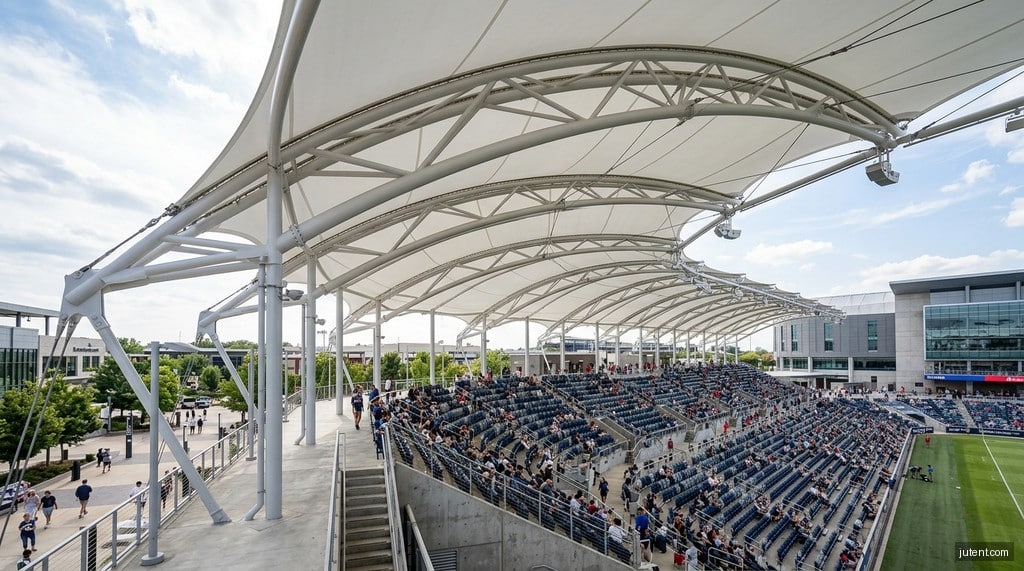
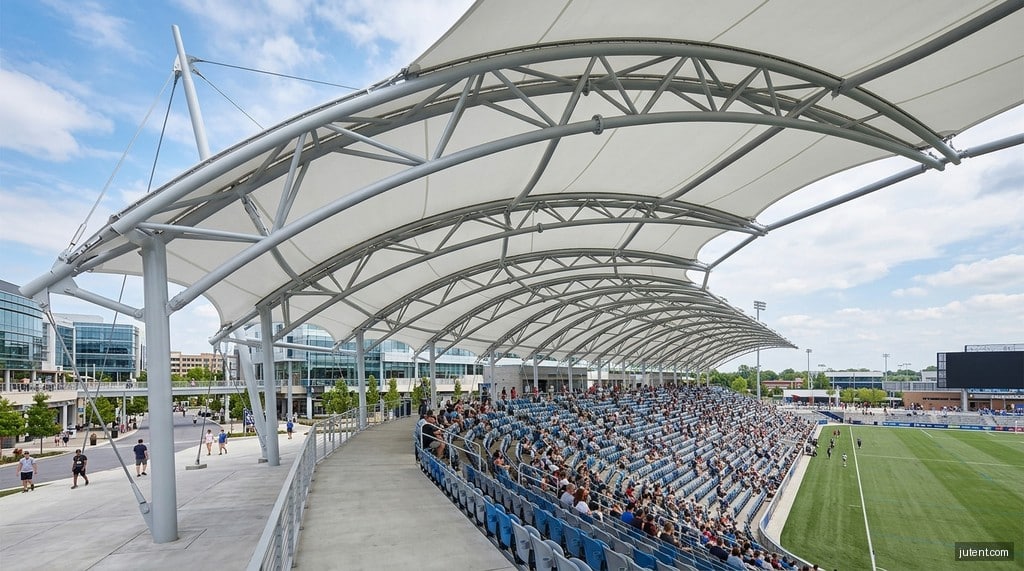
Budgetary constraints are a significant factor for educational institutions, meaning that elaborate designs or premium finishes often take a back seat to essential performance. The long-term safety of students is paramount, dictating specific considerations for material choices, structural integrity, and edge details. the operational context of a school means the canopy must be low-maintenance and resilient to everyday wear and tear. Based on Jutent's experience across 400+ projects in 30+ countries, these priorities consistently guide successful school grandstand projects. Grandstand Canopy
UV Protection: UPF Rating Requirements for School Shade Structures
Providing effective UV protection is arguably the most critical function of a school grandstand canopy. Prolonged exposure to the sun's harmful UV rays can lead to sunburn, premature skin aging, and an increased risk of skin cancer. For school environments, specifying materials with a high Ultraviolet Protection Factor (UPF) rating is non-negotiable.

The Cancer Council Australia, a leading authority on sun protection, recommends a minimum UPF 50+ rating for all school shade structures. This ensures that the fabric blocks at least 98% of UVA and UVB radiation. While some shade cloths offer lower UPF ratings, these are generally not considered adequate for the sustained protection required in an educational setting where children may be exposed for extended periods.
High-grade PVDF (Polyvinylidene Fluoride) coated architectural membranes, such as Jutent's standard 1050 g/m² PVDF, consistently achieve a UPF 50+ rating. This material not only excels in UV blocking but also offers excellent durability, tear resistance, and a service life of 15+ years, backed by a 10-year warranty. PTFE (Polytetrafluoroethylene) membrane is another premium option, offering even greater longevity (25+ years service life, 15-year warranty) and superior UV resistance, though at a higher initial cost.
| Membrane Type | Typical UPF Rating | Service Life | Warranty | Suitability for Schools |
|---|---|---|---|---|
| PVDF Membrane | 50+ | 15+ years | 10 years | Excellent (Standard) |
| PTFE Membrane | 50+ | 25+ years | 15 years | Excellent (Premium) |
| Shade Cloth | 15–30 | 5–10 years | Varies | Not Recommended |
For more detailed information on membrane characteristics, refer to our detailed guide on school grandstand canopy structures and tensile membrane design.