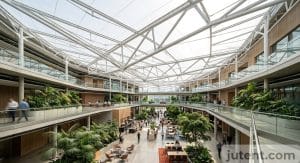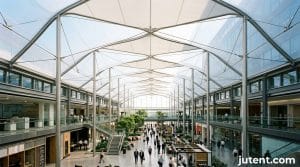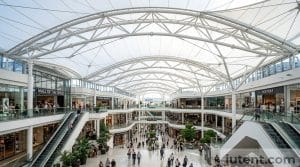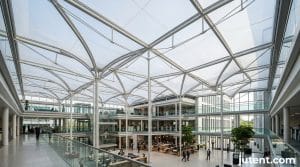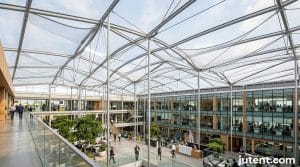

Not every tensile structure manufacturer can deliver an atrium tensile skylight with the wind rating and documentation your project requires. Here's what to verify before signing.
Why Atrium Tensile Skylight Manufacturer Selection Matters
Selecting the right atrium tensile skylight manufacturer is a critical decision that directly impacts project timelines, budget, and, most importantly, structural integrity and safety. A poorly chosen supplier can lead to costly delays, non-compliance with local building codes, and even structural failure. For contractors and procurement managers, the due diligence process must extend beyond just competitive pricing. It involves a deep dive into the manufacturer's engineering capabilities, material sourcing, production processes, and logistical efficiency. The unique demands of an atrium tensile skylight – often large-span, exposed to significant environmental loads, and integral to a building's aesthetic and functional design – necessitate a partner with proven expertise. Based on Jutent's experience across 400+ projects in 30+ countries, overlooking key verification steps can result in significant rework and reputational damage. Prioritizing a manufacturer's ability to provide verifiable documentation and adhere to international standards is paramount. This ensures that the final structure not only meets design specifications but also stands the test of time and environmental challenges.
Engineering Capability: Wind Load and Structural Calculations
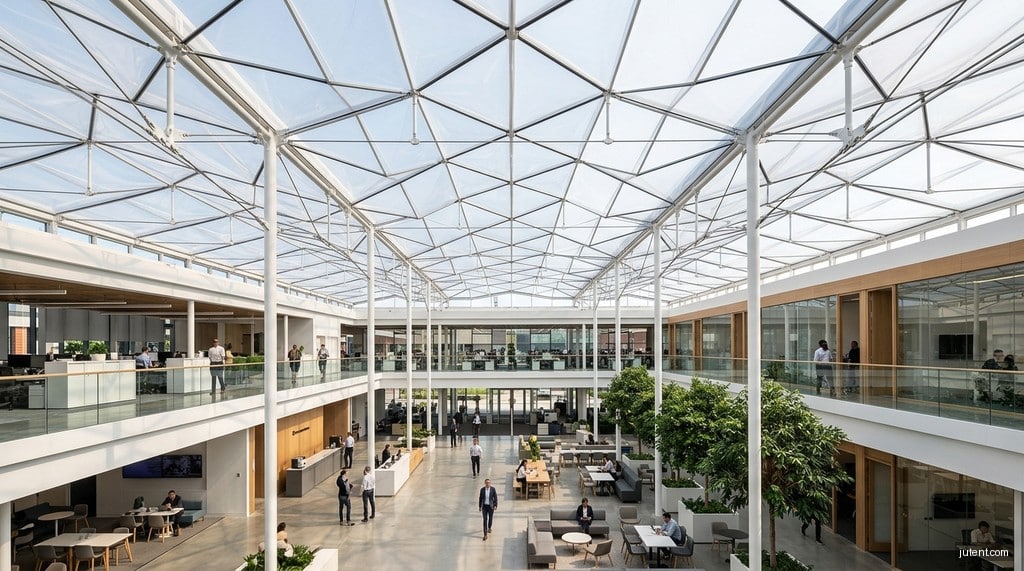
The structural integrity of an atrium tensile skylight hinges entirely on precise engineering. Wind load calculations are particularly critical, as these structures often present large surface areas susceptible to significant uplift and downforce. A reputable atrium tensile skylight manufacturer must demonstrate reliable in-house engineering capabilities, including the use of advanced finite element analysis (FEA) software. Contractors should request detailed structural calculations, not just for the membrane, but for the entire supporting steel framework. These calculations should account for local wind speeds, snow loads, seismic activity, and any specific environmental factors relevant to the project site. The steel used, typically Q235B or Q355B, must be appropriately sized and treated with epoxy zinc-rich primer and an acrylic or fluorocarbon topcoat, or hot-dip galvanizing, to ensure longevity and corrosion resistance. Verification should include reviewing the qualifications of the engineering team and their experience with similar large-span tensile structures. For export projects, Jutent can provide design drawings, calculations, material specifications, installation manuals, and free remote guidance, subject to project scope and contract terms.
About
Membrane Brand and Test Certificates: What to Ask For
The membrane is the defining feature of any atrium tensile skylight, and its quality directly impacts performance and lifespan. When evaluating an atrium tensile skylight supplier, it is imperative to verify the membrane brand and request thorough test certificates. Do not accept generic “tensile fabric” claims. Reputable manufacturers will specify the exact brand and type of membrane, such as 1050 g/m² PVDF or PTFE. For PVDF membranes, expect a 10-year warranty and a service life of 15+ years. For PTFE, expect a 15-year warranty and a service life of 25+ years. Key test certificates to request include:
* Tensile Strength: Verifies the membrane's ability to withstand pulling forces.
* Tear Strength: Important for preventing propagation of small tears.
* Fire Rating: Essential for building code compliance (e.g., B1, A2).
* UV Resistance: Confirms the membrane's ability to resist degradation from sunlight.
* Self-Cleaning Properties: For PVDF, this relates to the surface coating's ability to shed dirt.
* Light Transmittance: Crucial for managing natural light within the atrium.
* Manufacturer's Warranty: A clear statement of coverage and duration.
Always cross-reference the membrane brand and specifications with independent industry standards. An atrium tensile skylight factory should be transparent about its material sourcing and provide documentation directly from the membrane manufacturer.
Production Lead Time and Logistics
Efficient production lead time and reliable logistics are non-negotiable for contractors managing tight project schedules. When engaging an atrium tensile skylight OEM, inquire about their typical production capacity and current workload. A clear, itemized production schedule should be provided, detailing each stage from design approval to fabrication and pre-assembly. Factors influencing lead time include the complexity of the design, the volume of steel fabrication, and membrane patterning. For a standard atrium tensile skylight project (minimum 100 m²), a typical lead time might range from 4-8 weeks, but this is subject to project specifics and the manufacturer's queue.
Logistics are equally vital, especially when dealing with an atrium tensile skylight manufacturer China. Discuss shipping methods (sea freight, air freight), packaging standards for protection during transit, and estimated delivery times to your project site. Clarify Incoterms (e.g., EXW, FOB, CIF) to understand responsibility for shipping costs, insurance, and customs clearance. A reliable supplier will have established relationships with international freight forwarders and provide clear communication regarding tracking and delivery updates. They should also detail their process for handling potential shipping damage or delays.
References from Similar Projects
One of the most effective ways to vet an atrium tensile skylight supplier is to request references from similar projects. This allows contractors and procurement managers to gain insights into the manufacturer's real-world performance, reliability, and problem-solving capabilities. Ask for project names, locations, and contact information for the main contractor or client. Focus on projects that match your scope in terms of size, complexity, and environmental conditions.
When contacting references, inquire about:
* Project Execution: Was the project delivered on time and within budget?
* Quality of Work: How was the quality of the engineering, fabrication, and materials?
* Communication: Was the manufacturer responsive and clear in their communication?
* Problem Resolution: How did they handle unexpected challenges or design changes?
* Documentation: Was all required documentation (engineering calculations, material certificates, installation manuals) provided accurately and promptly?
* Post-Installation Support: What was their level of support after delivery?
A reputable atrium tensile skylight manufacturer will be eager to share their success stories and provide verifiable contacts. Be wary of any supplier unwilling or unable to provide relevant references, as this can be a significant red flag.
FAQ
- What is the advantage of sourcing an atrium tensile skylight from a Chinese manufacturer?
- Sourcing an atrium tensile skylight from a Chinese manufacturer, like Jutent, typically offers a significant cost advantage, with supply costs often 30–50% lower than local fabricators in many Western markets. This is due to economies of scale, efficient production processes, and competitive labor costs. Despite the lower price point, leading Chinese manufacturers adhere to international quality standards, offering ISO 9001 and SGS certified products, ensuring that cost savings do not compromise structural integrity or material quality.
- How do I verify wind load compliance for an atrium tensile skylight from China?
- To verify wind load compliance for an atrium tensile skylight from China, you should request a complete set of engineering calculations from the manufacturer. These calculations must be specific to your project's location, incorporating local wind speeds, snow loads, and seismic data. It is highly recommended to then engage a local registered structural engineer to review and approve these calculations against your local building codes. This two-step process ensures both the manufacturer's adherence to engineering principles and compliance with specific regional regulatory requirements for your project.
Considering an atrium tensile skylight for your next project?