
Pool Tensile Shade Structures in Southeast Asia: Design for Typhoon Loads & Tropical UV
Contractors in the Philippines, Malaysia, and Indonesia understand the unique challenges of building in Southeast Asia. The region’s intense tropical sun and frequent, powerful typhoons demand a different approach to outdoor structures, especially for aquatic facilities. A pool tensile shade structure Southeast Asia must be engineered not just for comfort and aesthetics, but for extreme durability against relentless UV radiation and formidable wind loads. Specifying the right materials and design principles is paramount to ensuring longevity, safety, and client satisfaction in this demanding environment.
Typhoon Wind Load Requirements for Pool Shade in Southeast Asia
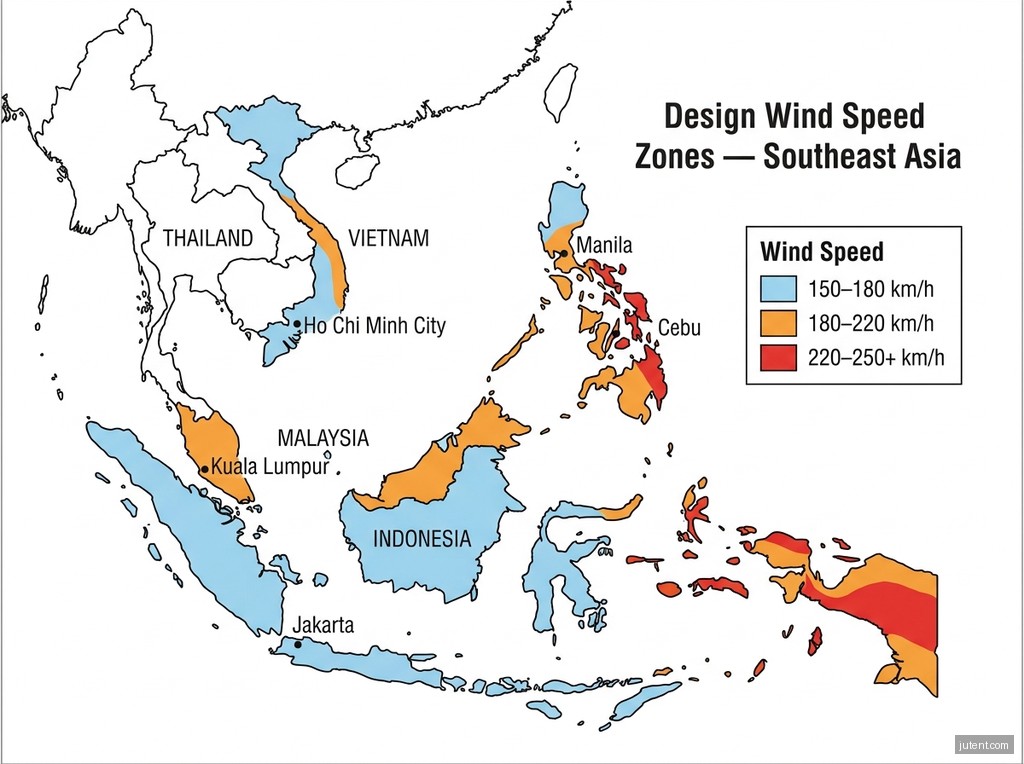
Designing a pool shade structure for Southeast Asia means confronting some of the world’s highest wind speeds. The Philippines, in particular, is highly susceptible to typhoons, with average wind speeds often exceeding 200 km/h during major events. Malaysia and Indonesia, while generally less prone to direct typhoon landfalls, still experience significant cyclonic activity and monsoon winds that require reliable engineering.
Local building codes, such as the National Structural Code of the Philippines (NSCP), specify stringent wind load requirements. These codes dictate the minimum design wind speeds and corresponding pressures that structures must withstand. For a pool shade Philippines project, this often means designing for ultimate wind speeds in the range of 200–250 km/h, depending on the specific location and exposure category. Similarly, a swimming pool canopy Malaysia or pool shade Indonesia must adhere to their respective national and regional standards, which typically account for high wind pressures.
Tensile structures, by their very nature, are highly efficient in distributing wind loads. However, this efficiency relies on precise engineering of the membrane tension, cable systems, and supporting steel framework. The steel structure, often fabricated from Q235B or Q355B grade steel, must be designed with sufficient strength and rigidity to prevent buckling or excessive deflection under extreme wind pressure. Connections are critical; bolted or welded joints must be meticulously detailed to transfer forces effectively. Based on Jutent’s experience across 400+ projects in 30+ countries, we consistently specify structural designs that exceed minimum code requirements, providing an additional margin of safety.
Pool Shade
UV Protection in Tropical Climates: Membrane Grade for Pool Environments
The tropical sun in Southeast Asia is notoriously intense, with high UV indices year-round. This relentless solar radiation poses a significant threat to the longevity of any outdoor material, especially the membrane of a tropical pool shade structure. Without adequate UV protection, membranes can degrade rapidly, leading to discolouration, loss of strength, and premature failure.
For a pool tensile shade structure Southeast Asia, the choice of membrane material is critical. Standard membranes like 1050 g/m² PVDF (Polyvinylidene Fluoride) coated polyester are highly recommended. PVDF coatings offer excellent UV resistance, reflecting a significant portion of solar radiation and preventing the underlying fabric from deteriorating. This translates to a longer service life and better colour retention. PVDF membranes typically come with a 10-year warranty and offer a service life of 15+ years, making them a cost-effective choice for the region.
For projects demanding even greater longevity and performance, PTFE (Polytetrafluoroethylene) coated fibreglass membranes are the premium option. PTFE offers superior UV stability, chemical resistance, and non-combustibility. While the initial investment is higher (add ~$20/m² to PVDF range), PTFE membranes boast a 15-year warranty and a service life exceeding 25 years, making them ideal for high-end or long-term public aquatic facilities.
Beyond UV, the membrane must also withstand the humid, often corrosive environment of a swimming pool, including exposure to chlorine vapours. Both PVDF and PTFE membranes exhibit good chemical resistance, ensuring they remain structurally sound and aesthetically pleasing over time.
Pool Tensile Shade Structure Guide
Drainage Design for High-Rainfall Pool Environments
Southeast Asia is characterised by high annual rainfall, often delivered in intense, short bursts during monsoon seasons. This necessitates meticulous drainage design for any pool tensile shade structure Southeast Asia to prevent water ponding, which can lead to structural stress, membrane degradation, and aesthetic issues.
Effective drainage for a tensile membrane structure relies on two primary principles: form and collection. The inherent curvature of tensile membranes naturally sheds water. Designers must ensure that these curves are sufficient to prevent any flat spots where water could accumulate. The slope of the membrane should be carefully calculated to direct rainwater efficiently towards collection points.
Collection systems typically involve integrated gutters and downspouts. These must be adequately sized to handle peak rainfall intensities common in the region. For export projects, Jutent can provide design drawings, calculations, material specifications, installation manuals, and free remote guidance, subject to project scope and contract terms, ensuring that these critical drainage elements are properly integrated. The supporting steel structure, which often includes columns and beams, must also be designed to accommodate these drainage pathways without compromising structural integrity or aesthetics.
the connection points between the membrane and the steel frame must be watertight. This involves careful detailing of clamping plates, flashing, and sealants to prevent water ingress into the structure or onto the pool deck below. Regular maintenance, including clearing gutters of debris, is also essential to ensure the long-term effectiveness of the drainage system in high-rainfall environments.
Case Reference: Pool Shade Projects in Southeast Asia
Jutent Engineering has extensive experience delivering high-performance tensile shade structures across Southeast Asia, addressing the specific climatic and environmental challenges of the region. Our projects range from resort swimming pools in Bali, Indonesia, to public aquatic centres in Metro Manila, Philippines, and private residential pool canopies in Kuala Lumpur, Malaysia.
One notable project involved a large-span pool shade Philippines for a resort in Palawan. The design incorporated a complex hyperbolic paraboloid form using PVDF membrane, engineered to withstand Category 4 typhoon wind loads. The steel framework received a hot-dip galvanising treatment followed by an epoxy zinc-rich primer and fluorocarbon topcoat to combat the highly corrosive coastal environment. The structure not only provided essential UV protection for guests but also became a distinctive architectural feature of the resort, demonstrating the blend of functionality and aesthetics possible with tensile architecture.
Another example is a swimming pool canopy Malaysia for a community sports complex. This project utilised a series of conical forms to create an expansive shaded area over an Olympic-sized pool. Drainage was a key consideration, with integrated internal gutters directing rainwater efficiently to ground-level drains. The selection of a high-grade PVDF membrane ensured long-term UV stability and resistance to the tropical humidity. These projects, among many others, underscore our commitment to delivering durable, code-compliant, and visually striking solutions tailored to the unique demands of Southeast Asia.
FAQ
- Q: What wind speed should a pool shade structure in the Philippines be designed for?
- A: The National Structural Code of the Philippines (NSCP) requires design wind speeds of 200–250 km/h in most Philippine locations, depending on the specific site’s exposure category and elevation. This accounts for the frequent and intense typhoon activity in the archipelago. Jutent Engineering always designs to meet or exceed these stringent local code requirements, ensuring the safety and longevity of the structure even in extreme weather events.
- Q: How does tropical humidity affect a pool shade steel structure?
- A: Tropical humidity, especially in coastal areas, significantly increases the risk of corrosion for steel structures. To combat this, standard surface treatments for Southeast Asian coastal projects include hot-dip galvanising, which provides a reliable sacrificial zinc layer. This is often followed by an epoxy zinc-rich primer and an acrylic or fluorocarbon topcoat for enhanced protection and aesthetic finish. This multi-layer approach ensures the steel’s service life is maximised against the corrosive effects of humidity and salt air.
Tell us your pool project location in Southeast Asia and we’ll provide a typhoon-rated specification.