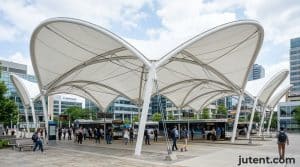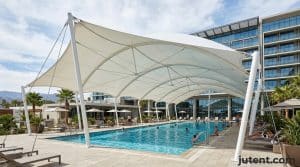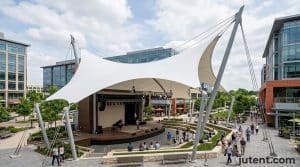

Recent advancements in membrane architecture have fundamentally shifted the structural capabilities of PVC membrane composites, establishing them as a premier engineered material for lightweight structures. By integrating highly cross-linked PVDF (Polyvinylidene fluoride) topcoats with high-tenacity, low-shrinkage polyester base yarns, modern fabric roof systems routinely achieve tensile strengths exceeding 8,000 N/5cm. This technical analysis outlines the mechanical parameters, environmental durability criteria, and pretensioning mechanics required for specifying a reliable architectural membrane system capable of withstanding extreme dynamic loads.
Mechanical Properties and Dynamic Load Capacity
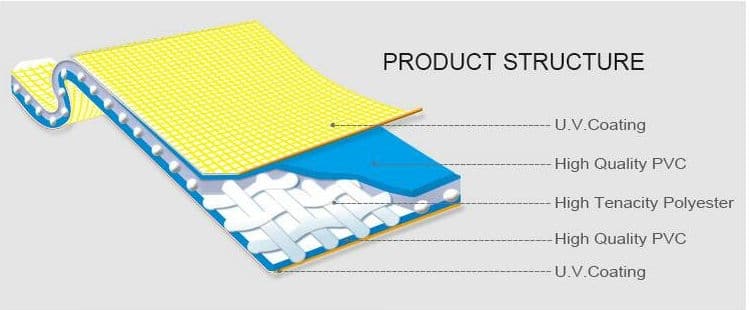
At the core of any high-performance structural membrane is the base woven textile, typically categorized from Type I to Type V based on mechanical yield and warp-weft distribution. Modern architectural designs demand fabrics engineered to exhibit minimal creep under constant biaxial stress. A Type IV or Type V PVC composite relies on a high-density polyester scrim that distributes tension evenly across the structure.
When engineering a tensile plaza roof or similar large-span canopy, structural engineers must account for dynamic environmental forces. Premium PVC fabrics are engineered with a tear strength of up to 1,500 N and are certified for a 150km/h wind resistance threshold. Furthermore, carefully calibrated pretensioning—typically ranging between 2.5 kN/m and 4.0 kN/m—ensures the membrane maintains its anticlastic curvature without ponding under a 130 kg/m² snow load.
Coating Technologies and Environmental Durability
Evaluating the impact of UV on membrane longevity is the primary limiting factor for outdoor fabric structures. To mitigate polymer degradation, industrial-grade fabric roofing utilizes advanced surface lacquer systems. A weldable PVDF topcoat, fortified with Titanium Dioxide (TiO2), acts as a radical scavenger, preventing the underlying PVC matrix from photo-oxidation and plasticizer migration.
Beyond UV radiation, moisture control is critical. Capillary action along the polyester fibers can lead to delamination and microbial growth. Premium membranes feature anti-wicking treatments injected directly into the yarn prior to weaving. When the membrane is anchored with perimeter hardware treated to a C5 marine-grade coating standard, the entire system ensures a projected operational lifespan of 20 to 25 years, even in highly corrosive coastal or industrial environments.
Technical Specification Comparison
To objectively evaluate tensile structures, a comparative material analysis against alternative systems is essential. While PTFE membrane (polytetrafluoroethylene-coated fiberglass) offers distinct advantages in specific thermal and combustibility parameters, modern PVDF-coated PVC provides superior flex fatigue resistance and processing efficiency during structural fabrication.
| Engineering Parameter | Type IV PVC Membrane (PVDF Coated) | PTFE Membrane (Fiberglass Base) |
|---|---|---|
| Base Yarn Material | High-Tenacity Polyester | Woven Fiberglass |
| Tensile Strength (Warp/Weft) | 8,000 / 7,000 N/5cm | 9,000 / 8,000 N/5cm |
| Flex Fatigue Resistance | High (Withstands continuous dynamic folding) | Low (Prone to brittle glass fiber fracture) |
| Light Transmission | 7% - 15% (Translucent) | 10% - 20% (Highly Translucent) |
| Cold Crack Temperature | -30°C to -40°C | -73°C |
| High Frequency (HF) welding; efficient fabrication | Requires specialized high-temp PTFE iron sealing |
Engineering Installation and Form-Finding
The deployment of a reliable membrane structure requires rigorous non-linear finite element analysis (FEA). The fabric must be patterned with precise compensation values—typically shrinking the cutting pattern by 1% to 2.5%—to allow the material to stretch into its final prestressed geometry. This compensation ensures the structural equilibrium of the system, transferring aerodynamic shear forces safely into the primary steel substructure and avoiding membrane flutter.