

Core Engineering Principle: The structural integrity of commercial tensile structures is fundamentally dictated by seam mechanics and boundary connections. To achieve structural compliance for dynamic wind loads up to 150km/h, weld shear strength must demonstrably exceed the baseline tensile capacity of the architectural membrane (typically >4000 N/5cm). High-Frequency (HF) welding is strictly mandated for PVC materials, while PTFE requires precision thermal platen pressing. Furthermore, all interfacing hardware must meet C5 marine-grade corrosion resistance protocols.
When executing complex membrane architecture, the primary modes of failure rarely originate within the fabric matrix itself; they are overwhelmingly localized at the seams and steel-to-fabric connection points. Adhering to rigorous structural membrane design guidelines is non-negotiable for large-scale commercial space applications. This technical breakdown evaluates the definitive welding methodologies and structural detailing required to maintain absolute canopy stability under extreme environmental stress.
Primary Welding Technologies for Fabric Roofing

High-Frequency (HF) Welding: The PVC Standard
For PVC membrane and PVDF-coated systems, High-Frequency welding (also recognized as Radio Frequency or RF welding) is the unequivocal industry standard. Unlike superficial hot-air techniques that only melt the topcoat, HF welding utilizes a precise 27.12 MHz electromagnetic field to excite the bipolar molecules within the thermoplastic polymer.
- Molecular Fusion: This internal friction generates localized, homogenous heat from the inside out, fusing the fabric roofing panels at a molecular level.
- Load Capacity: The resulting seam operates at 100% of the base fabric's tensile strength. Under standardized biaxial stress testing, failure propagates through the fabric yarns long before the welded seam yields.
- Process Parameters: Optimal fusion requires a sustained compression pressure of 0.6 MPa, coupled with controlled cooling cycles under active load to prevent micro-fissures in the exterior PVDF or TiO2 protective topcoats.
Thermal Platen Pressing for PTFE Integration
Because PTFE membrane (Polytetrafluoroethylene-coated fiberglass) functions as a thermoset-like material upon curing, it cannot be manipulated via high-frequency electromagnetic fields. Membrane construction involving PTFE requires the application of highly specialized hot platen presses.
- Thermal Baseline: The heating elements must sustain ultra-high, uniform temperatures between 380°C and 390°C across the entire seam width.
- FEP Bonding Film: Because PTFE does not melt, a layer of FEP (Fluorinated Ethylene Propylene) film must be inserted between the membrane overlaps. The FEP acts as the thermoplastic bonding agent, creating a permanent mechanical and chemical interlock with the fiberglass matrix.
- Degradation Control: Dwell time must be calibrated to the millisecond. Excessive thermal exposure will initiate degradation of the fiberglass yarns, catastrophically lowering the canopy's ultimate wind-uplift resistance.
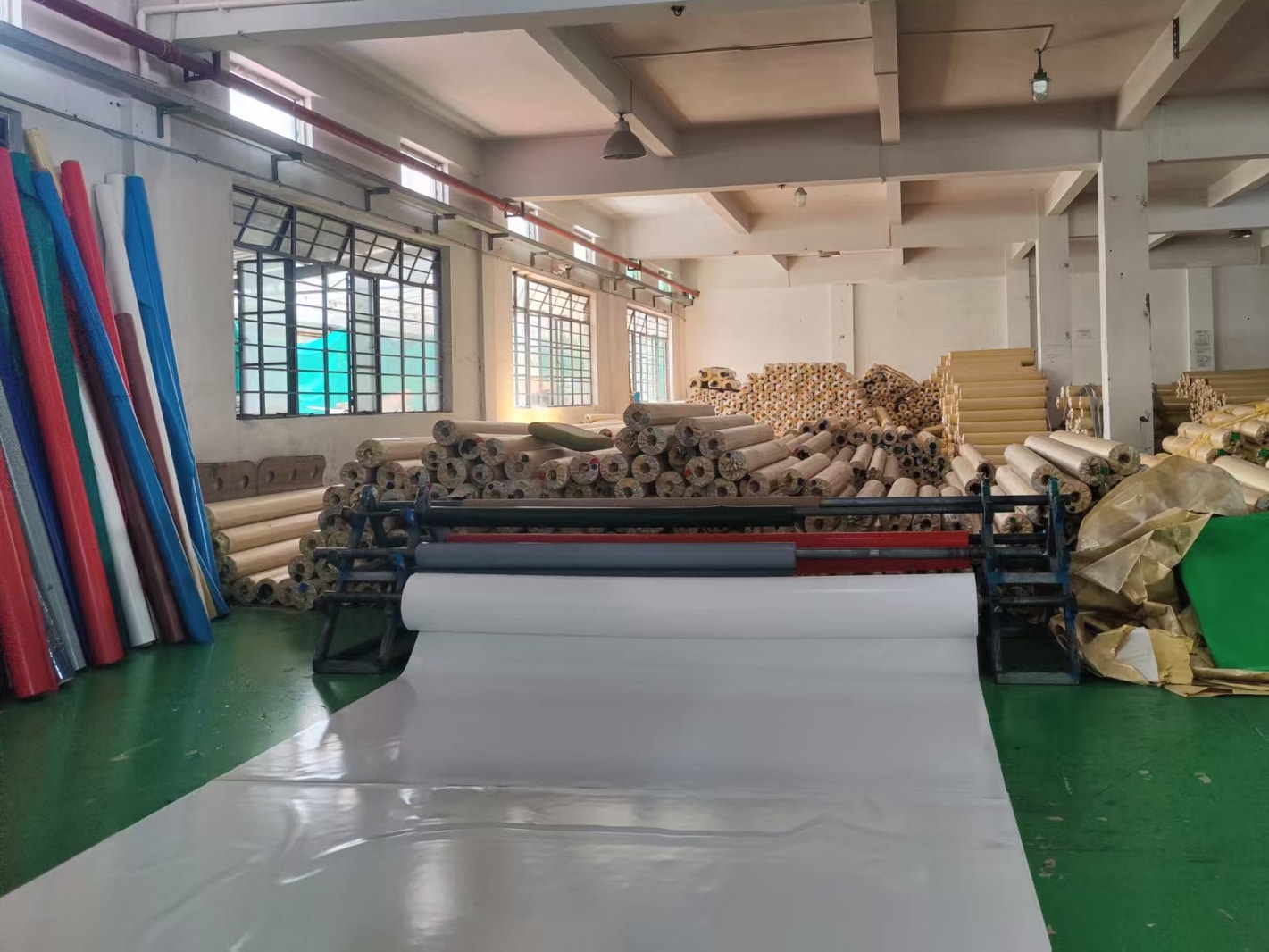
Technical Specifications: Welding Method Comparison
The selection of welding technology is strictly dictated by the polymer composition of the architectural membrane. The following matrix outlines the operational parameters and load metrics for the three primary joining methods utilized in tensile structures.
| Engineering Parameter | High-Frequency (HF) Welding | Thermal Platen Press | Hot Air / Wedge Welding |
|---|---|---|---|
| Material Compatibility | PVC, PVDF, ETFE | PTFE, Silicone-coated fiberglass | PVC (Secondary/Repair only) |
| Operating Temp / Frequency | 27.12 MHz (Internal Heating) | 380°C – 390°C | 450°C – 600°C (Surface only) |
| Compression Pressure | 0.6 MPa – 0.8 MPa | 0.4 MPa – 0.6 MPa | Roller pressure dependent |
| Seam Tensile Strength | > 4000 N/5cm (Type IV) | > 5000 N/5cm (Type IV) | Variable (Prone to peel stress) |
| Primary Application | Main structural seams, heavy load areas | Permanent PTFE architectural roofing | Field repairs, non-load bearing edges |
Boundary Connections & Edge Catenary Engineering
A flawless factory weld is rendered structurally useless without engineered boundary connections. In lightweight structures, the perimeter detailing dictates how dynamic environmental loads (aerodynamic flutter, snow accumulation) are transferred from the flexible membrane to the rigid space frame.
- Catenary Cable Tensioning: Edge cables must be manufactured from 316 or 316L stainless steel wire rope. To prevent membrane fatigue, cables are systematically pre-tensioned to 15% – 20% of their theoretical breaking load during installation.
- Anti-Corrosive Coatings: All structural steel connection nodes, clevises, and base clamping plates must undergo rigorous surface preparation (Sa 2.5) followed by a C5 marine-grade coating system. This typically consists of an epoxy zinc-rich primer and a UV-stable aliphatic polyurethane topcoat, ensuring zero rust bleeding onto the pristine membrane.
- Abrasion Isolation: Where the fabric meets the rigid support structure, extruded aluminum clamping tracks or heavy-duty Keder edges must utilize EPDM (Ethylene Propylene Diene Monomer) rubber gaskets. This isolates the membrane from the steel, eliminating friction-induced micro-tears under cyclic wind loading.