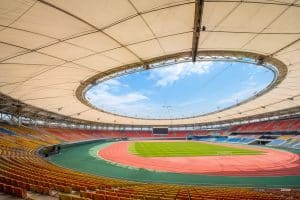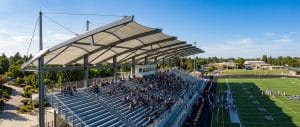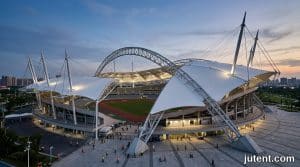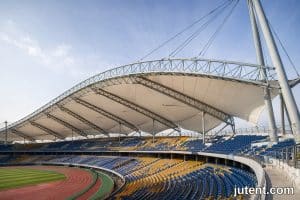

Ordering a grandstand canopy from a Chinese manufacturer can save 30–50% on supply cost — but only if you verify the right things before signing. Here are the five checks that separate reliable suppliers from the rest.
Why Manufacturer Verification Matters More for Grandstand Projects
Procuring a grandstand canopy is not merely a transaction; it's an investment in a critical piece of infrastructure that must withstand significant environmental stresses and ensure public safety. Unlike simpler shade structures, a grandstand canopy is a large-scale, engineered system. Its structural integrity directly impacts the safety of hundreds, if not thousands, of spectators. This elevated risk profile means that due diligence in selecting a grandstand canopy manufacturer is paramount, especially when sourcing internationally.
The cost savings offered by Chinese manufacturers can be substantial, often ranging from 30% to 50% compared to local fabricators in regions like Southeast Asia or the Middle East. However, these savings are only realized if the quality meets project specifications and regulatory standards. A failure in engineering, material quality, or fabrication can lead to costly delays, structural compromises, and reputational damage. Verifying a manufacturer's capabilities and quality control processes upfront mitigates these risks, ensuring that the initial cost advantage doesn't translate into long-term liabilities. Based on Jutent's grandstand canopy project portfolio across 400+ projects in 30+ countries, thorough verification is the single most important step in successful international procurement for grandstand projects. It's about securing a reliable partner, not just a cheap supplier.
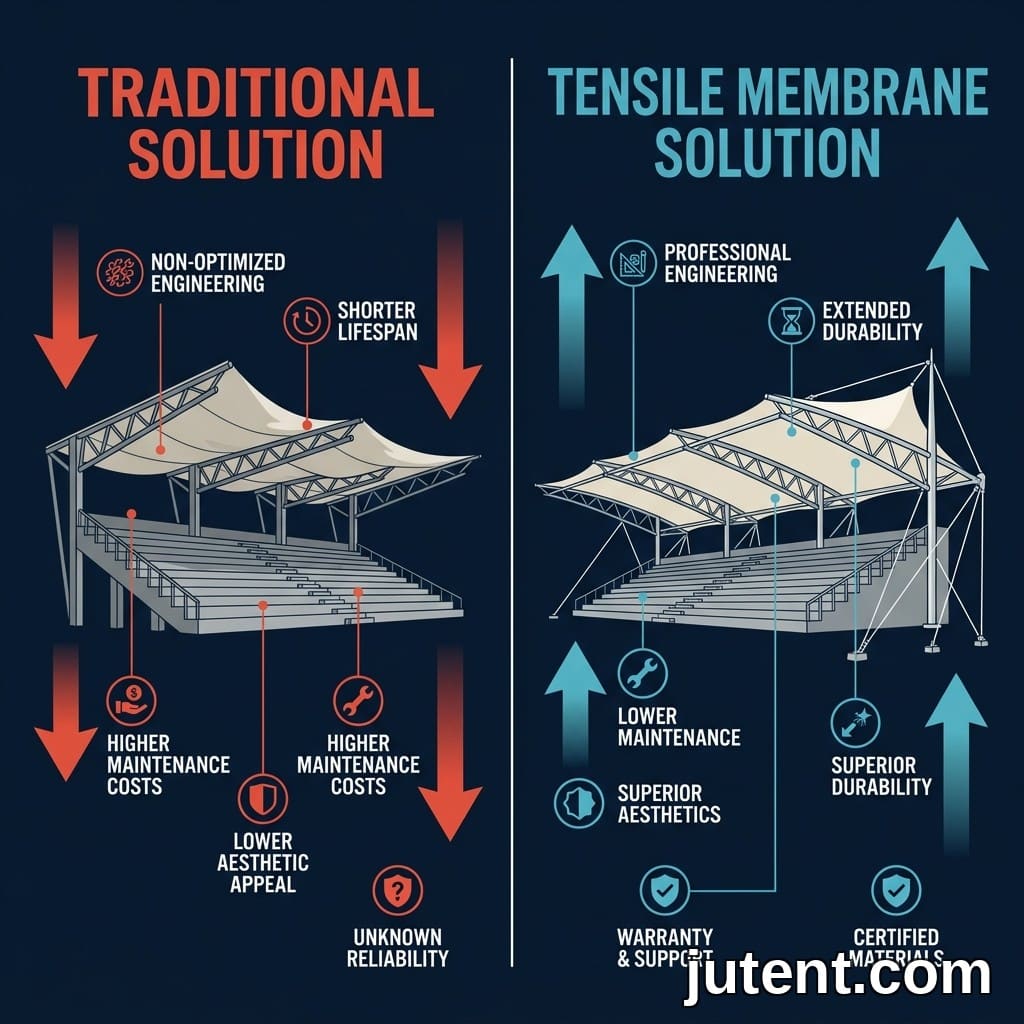
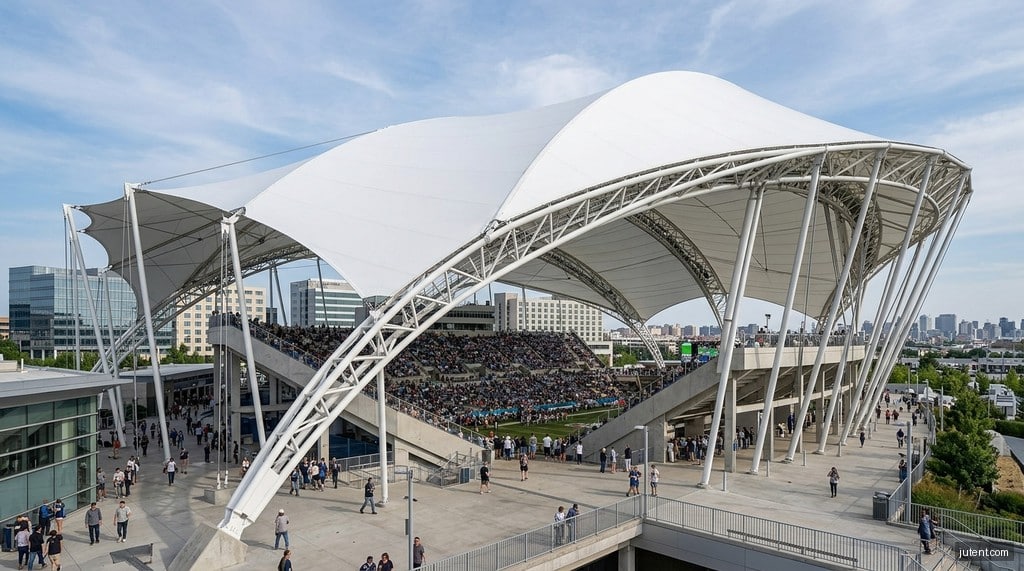
Check 1: Engineering Capability for Tensile Membrane Structures — Can They Calculate Wind Uplift for Your Location?
The structural integrity of a grandstand canopy hinges on precise engineering, particularly its ability to resist wind loads. Wind uplift, in particular, is a critical factor that varies significantly by geographical location and local building codes. A reputable grandstand canopy manufacturer must demonstrate reliable in-house engineering capabilities, not just rely on generic designs.
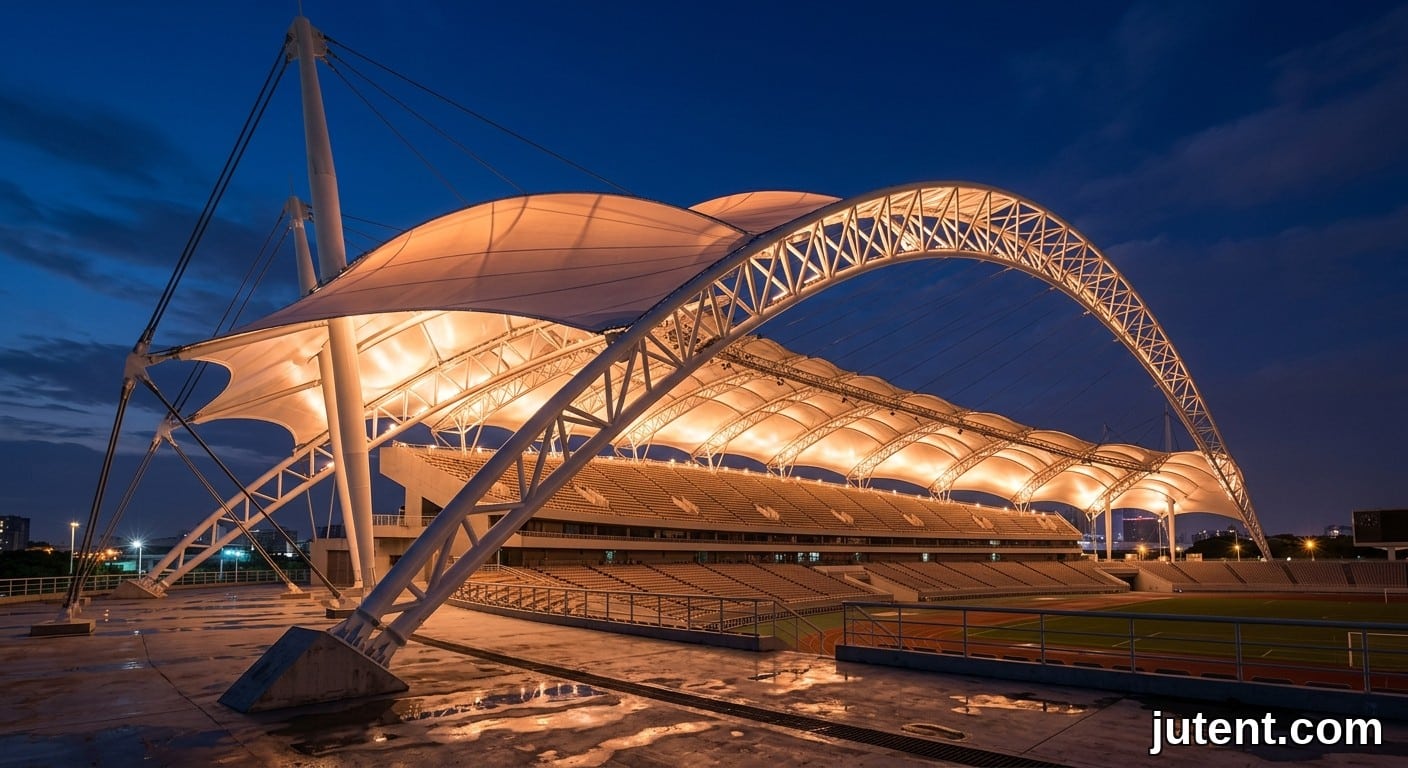
When evaluating a potential supplier, request detailed wind load calculations specific to your project's exact location. This should include:
* Design Wind Speed: Confirm they can incorporate the specific design wind speed (e.g., 45 m/s or 162 km/h) relevant to your site.
* Exposure Category: Verify their understanding of terrain categories (e.g., urban, suburban, open country) and how they apply to your project.
* Topography Factors: Ensure they account for any hills, ridges, or escarpments that could amplify wind effects.
* Building Code Compliance: Ask which international or local building codes (e.g., ASCE 7, Eurocode, local standards) their calculations adhere to.
A manufacturer should be able to provide clear, professional engineering reports, often generated using specialized software, detailing these calculations. They should also explain their safety factors and how they ensure the structure can withstand extreme weather events. A manufacturer that struggles to provide location-specific wind uplift calculations or offers only generic data is a significant red flag. For export projects, Jutent can provide design drawings, calculations, material specifications, installation manuals, and free remote guidance, subject to project scope and contract terms.
About
Check 2: Membrane Brand and Test Certificates — What to Ask For
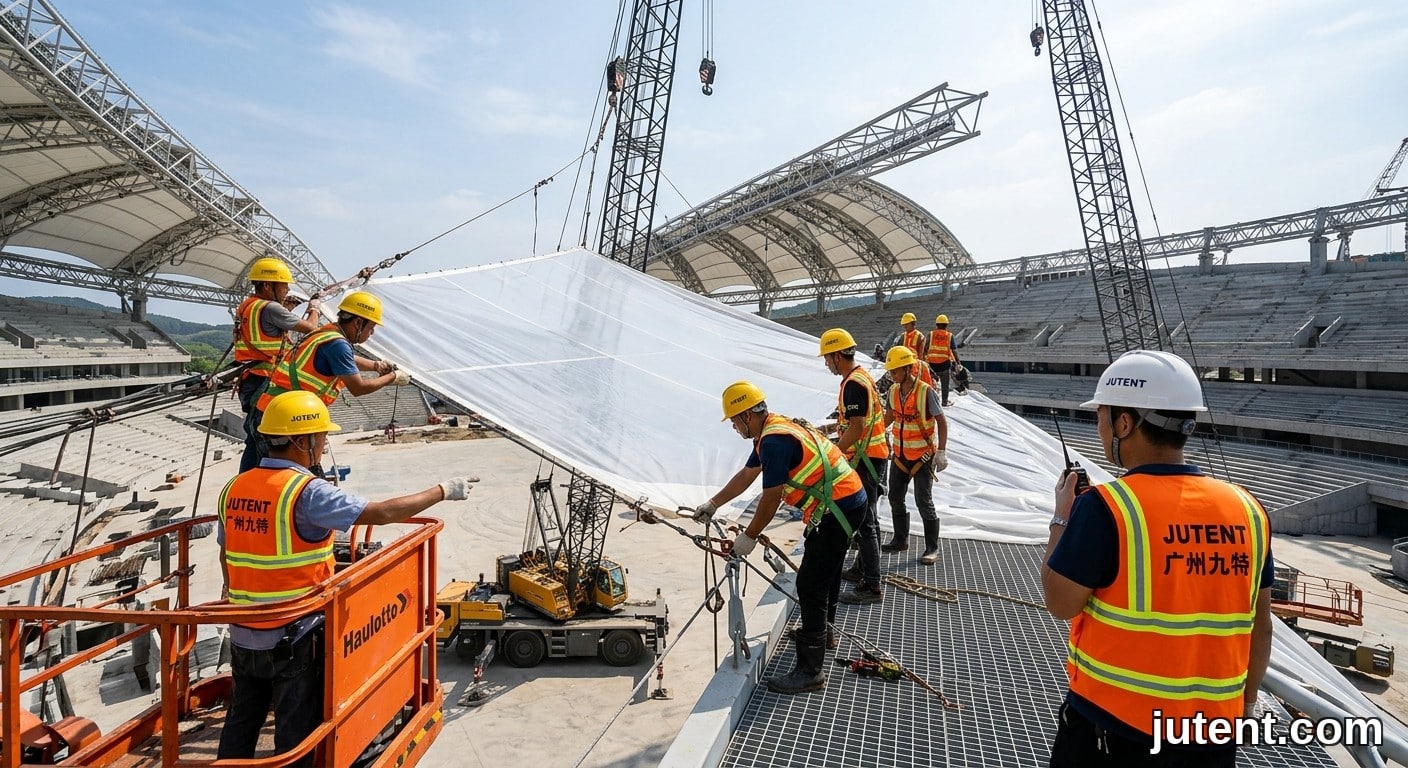
The membrane is the most visible and functionally critical component of a tensile grandstand roof supplier. Its durability, fire resistance, and UV stability directly impact the canopy's service life and safety. Generic or uncertified membranes can fail prematurely, leading to costly replacements and potential hazards.
Always demand specific information regarding the membrane material:
* Brand Name: Reputable manufacturers use membranes from established international brands. Ask for the specific brand and product series.
* Material Type: Confirm whether it's PVDF or PTFE. Standard PVDF membranes offer a 10-15 year warranty and 15-20 year service life, while PTFE membranes typically come with a 20-25 year warranty and 25-30+ year service life.
* Weight (g/m²): A standard membrane for grandstand canopies is typically 1050 g/m² for PTFE, while PVDF membranes are often in the 800-1000 g/m² range. Confirm the specific weight with your manufacturer.
* Test Certificates: Request c