
Not every shade structure manufacturer can deliver a playground canopy that meets UPF 50+ standards, local wind load requirements, and arrives on time. Here are the six questions that separate reliable suppliers from the rest.
Why Manufacturer Selection Matters for Playground Projects
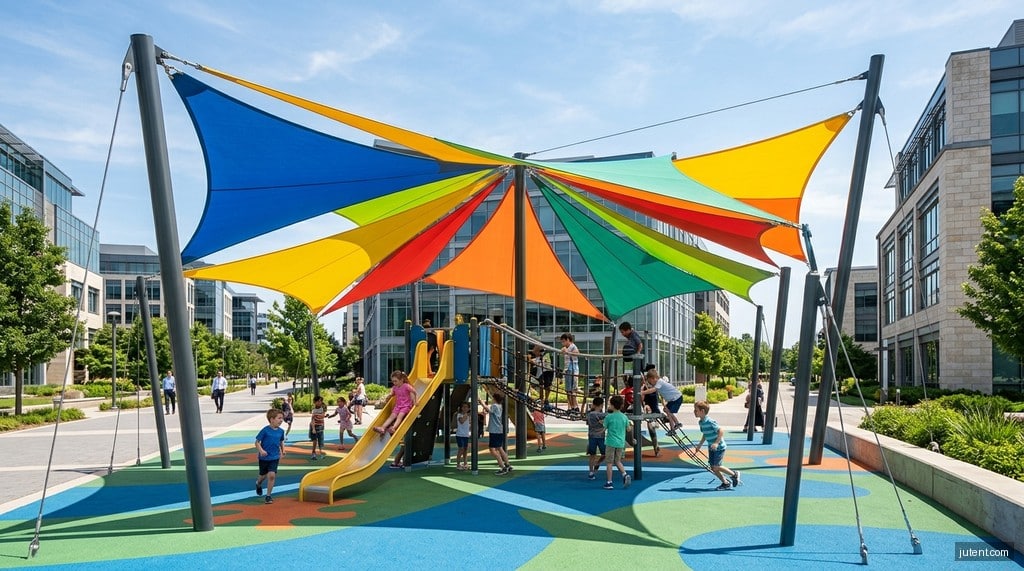
Selecting the right playground canopy manufacturer is a critical decision for contractors and procurement managers. Beyond aesthetic appeal, a playground shade structure must meet stringent safety, durability, and regulatory requirements. Failure to vet a supplier thoroughly can lead to costly project delays, non-compliance issues, and potential safety hazards for children. A poorly designed or manufactured canopy might not withstand local weather conditions, offer inadequate UV protection, or require premature replacement, impacting your project's reputation and budget.
Key considerations include the manufacturer's technical capabilities, adherence to international standards, material quality, and logistical efficiency. A reliable playground shade supplier will demonstrate transparency in their processes, provide verifiable documentation, and offer reliable support throughout the project lifecycle. This due diligence ensures the final installation is safe, compliant, and delivers the expected service life. For more information on specific playground shade structure solutions, visit our Playground Shade section.
Question 1: Do You Have UPF 50+ Certificates for Your Playground Shade Membrane?
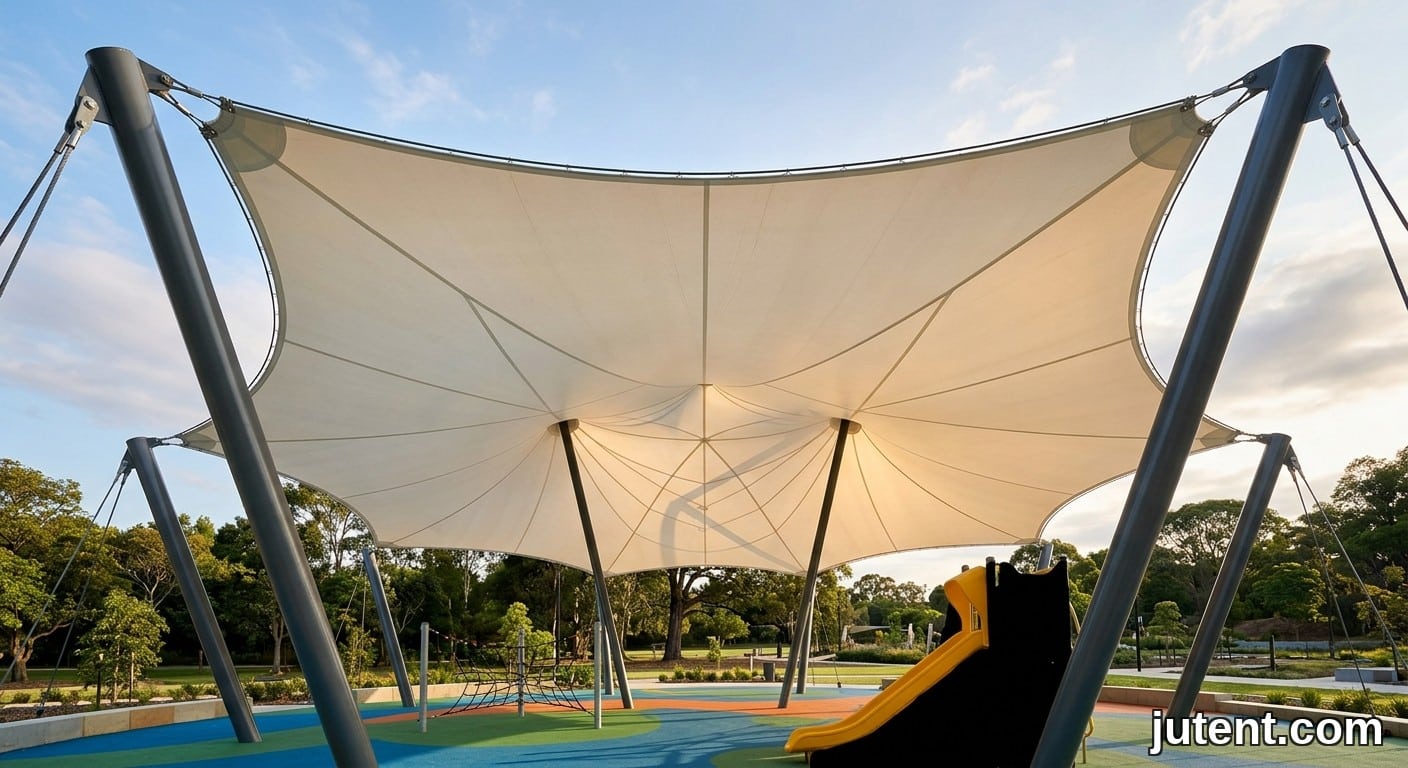
Ultraviolet Protection Factor (UPF) is paramount for playground canopies, directly impacting the safety of children. A UPF 50+ rating indicates that the fabric blocks over 98% of harmful UV radiation, offering excellent protection. When evaluating a playground canopy OEM, always request official test certificates for their membrane materials. These certificates should be issued by an accredited, independent laboratory and clearly state the UPF rating. Relying solely on a manufacturer's claim without documented proof is a significant risk.
Jutent Engineering, for instance, exclusively uses high-quality PVDF and PTFE membranes, with standard options rigorously tested to ensure UPF 50+ compliance. These materials not only provide superior UV protection but also offer exceptional durability and longevity, with PVDF membranes typically carrying a 5-10 year warranty and a 10-15 year service life, and PTFE membranes a 10-15 year warranty with a 20-25 year service life. Based on Jutent's extensive project portfolio across multiple international markets, verifying these certifications is a non-negotiable step in procurement. For more details on our commitment to quality, see About.
Question 2: Can You Provide Wind Load Calculations for My Location?
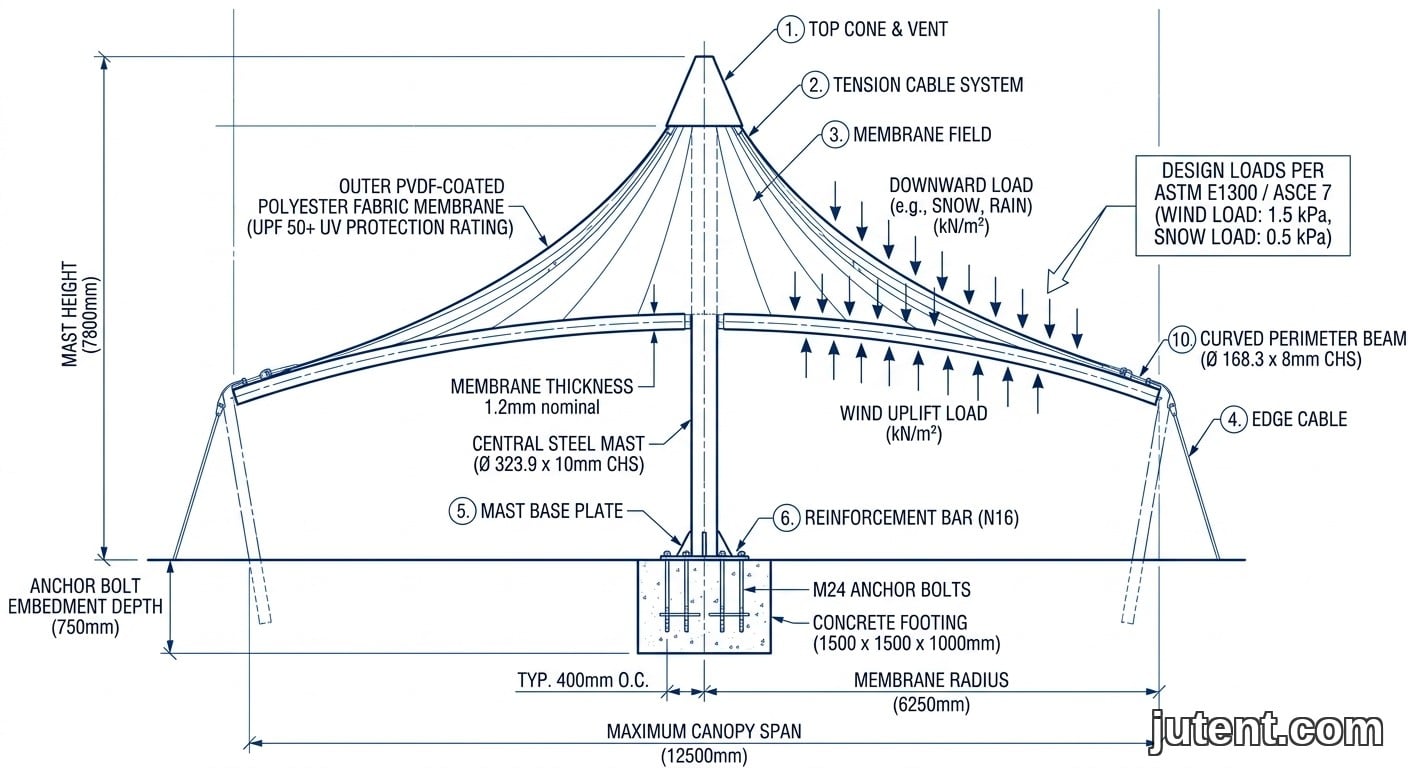
Wind load is a critical engineering consideration for any outdoor structure, especially large-span tensile canopies in playgrounds. Local building codes and environmental conditions dictate specific wind load requirements that must be met to ensure structural integrity and safety. A competent playground tensile canopy manufacturer China should be able to provide detailed structural analysis and wind load calculations tailored to your project's exact geographical location. This typically involves using engineering software to model the structure's response to anticipated wind speeds and pressures.
Request documentation that demonstrates their engineering team's capability to perform these calculations. This includes design drawings, material specifications, and structural reports. These documents should clearly outline the design parameters, including maximum wind speeds, exposure categories, and applicable building codes (e.g., ASCE 7, Eurocode). A manufacturer that cannot readily provide these calculations or demonstrate an understanding of local wind load requirements is a red flag. The structural design must account for both static and dynamic wind effects, ensuring the canopy remains stable and safe under extreme weather conditions.
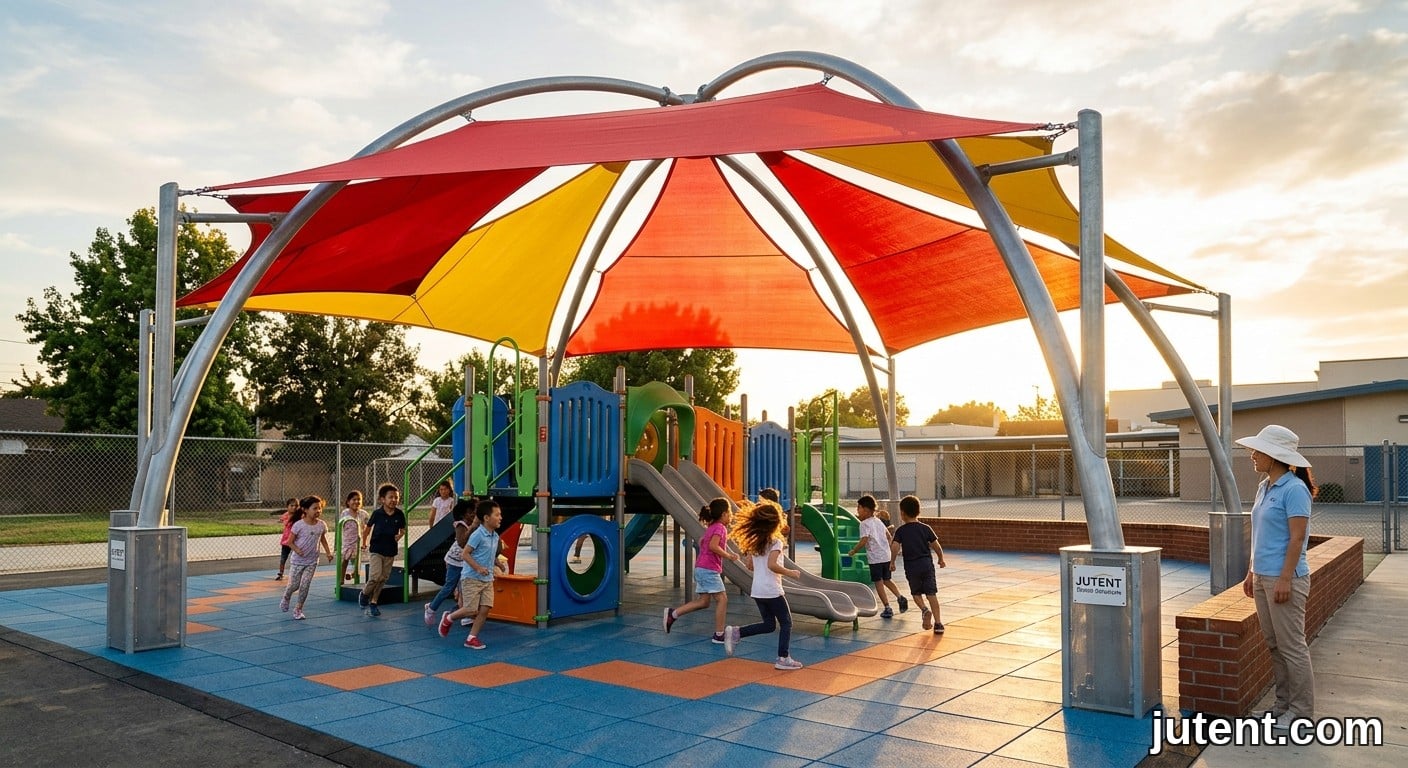
Question 3: What Steel Specification Do You Use for Commercial Playground Shade?
The quality and specification of the steel framework are fundamental to the longevity and safety of a commercial playground shade structure. For export projects, it's crucial to understand the steel grades and surface treatments employed by the play