

“`html
Not every tensile structure manufacturer can deliver a park tensile shade structure with the wind rating and documentation your project requires. Here's what to verify before signing.
Why Park Tensile Shade Structure Manufacturer Selection Matters
Selecting the right park tensile shade structure manufacturer is a critical decision that directly impacts project safety, longevity, and budget. A poorly chosen supplier can lead to significant delays, cost overruns, and, most importantly, structural failures that pose serious risks to public safety. For contractors and procurement managers, due diligence is not just good practice; it's a professional imperative. The unique demands of public park installations, including stringent wind load requirements, material durability, and aesthetic integration, necessitate a manufacturer with proven expertise.
Verifying a manufacturer's capabilities goes beyond a simple price comparison. It involves a deep dive into their engineering prowess, material sourcing, production quality, and logistical efficiency. A manufacturer that cuts corners on structural calculations or uses substandard materials might offer a lower initial bid, but the long-term costs associated with maintenance, repairs, or even replacement will far outweigh any perceived savings. Based on Jutent's experience across 400+ projects in 30+ countries, we've seen firsthand the consequences of inadequate supplier vetting. Prioritizing a park tensile shade structure manufacturer with a track record of delivering compliant, high-quality structures ensures your project meets all regulatory standards and client expectations. For more on our park solutions, visit our park tensile shade structure projects page.
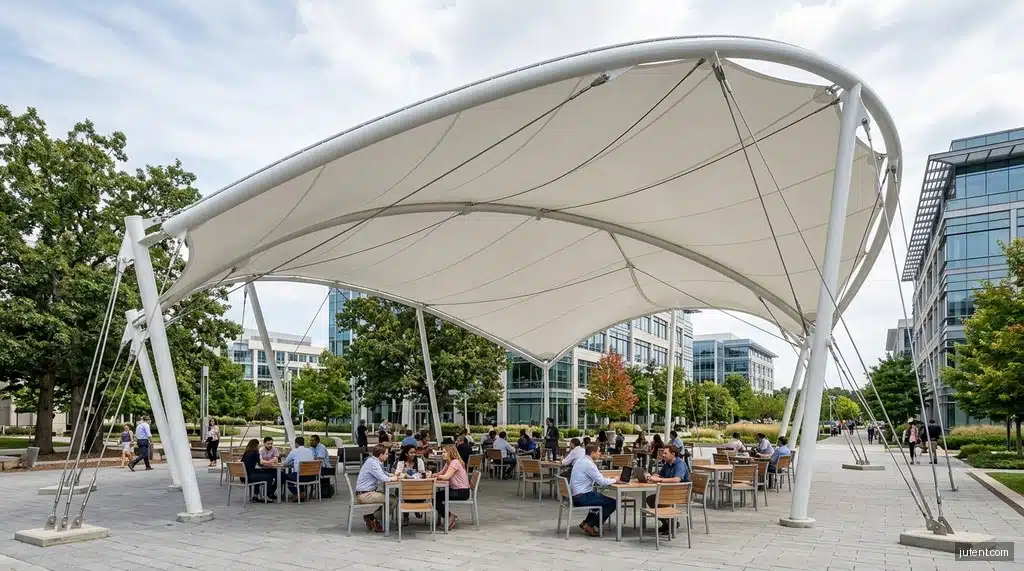
Engineering Capability: Wind Load Calculations for Park Tensile Shade Structures
The structural integrity of a park tensile shade structure hinges entirely on reliable engineering. Wind load is arguably the most critical factor, particularly for outdoor installations in varying climates. A reputable park tensile shade structure manufacturer must demonstrate advanced engineering capabilities, including the ability to perform detailed wind load analysis specific to your project's location and local building codes. This isn't a one-size-fits-all calculation; it requires specialized software and experienced structural engineers.
When evaluating a park tensile shade structure supplier, request to see examples of their engineering calculations and design methodologies. Verify that they utilize industry-standard software and that their engineers are qualified and experienced in tensile structure design. Ask how they account for uplift forces, dynamic wind effects, and snow loads if applicable to your region. A reliable manufacturer will provide thorough documentation, including detailed structural drawings, material specifications (e.g., Q235B, Q355B steel grades), and calculation reports signed by a professional engineer. For export projects, Jutent can provide design drawings, calculations, material specifications, installation manuals, and free remote guidance, subject to project scope and contract terms. This documentation is essential for local permitting and ensuring the structure can withstand environmental stresses throughout its service life. Without verifiable engineering, any park tensile shade structure is a liability. Learn more about our capabilities at About.

Membrane Brand and Test Certificates: What to Ask For
The tensile membrane is the defining feature of a park tensile shade structure, and its quality directly impacts the structure's performance, appearance, and longevity. Not all membranes are created equal, and discerning contractors must scrutinize the membrane brand and request verifiable test certificates. A reliable park tensile shade structure manufacturer will work with established, reputable membrane suppliers and be transparent about their material specifications.
When engaging with a park tensile shade structure factory or OEM, always inquire about the specific membrane brand they propose. Request original manufacturer test certificates for the membrane, not just a generic data sheet. These certificates should detail critical properties such as tensile strength, tear resistance, f
“`


