
“`html
Not every tensile structure manufacturer can deliver a loading dock canopy with the wind rating and documentation your project requires. Here's what to verify before signing.
Auditing Loading Dock Canopy Manufacturers: Weld, Rust, and Engineering Standards
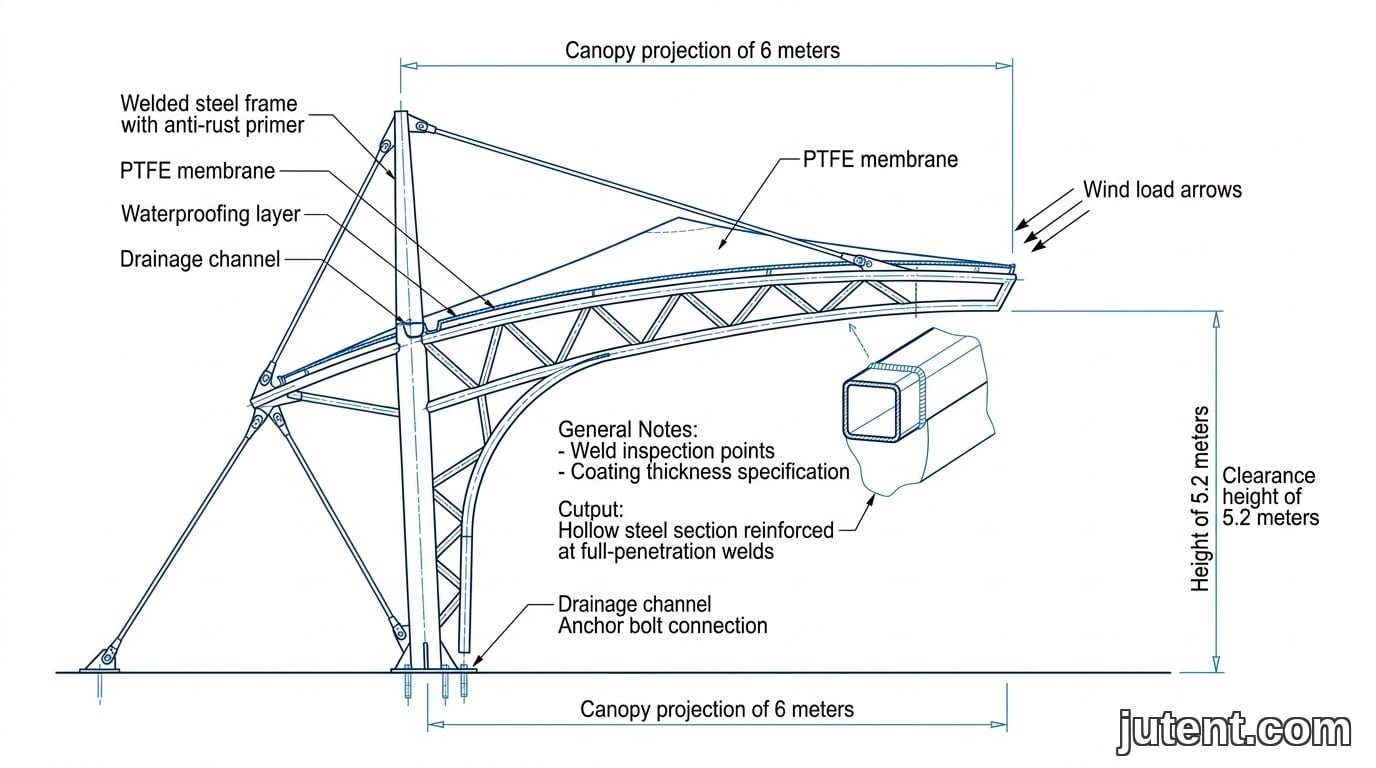
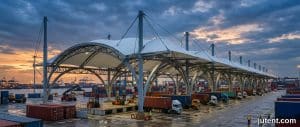
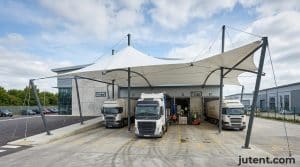
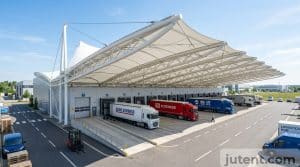
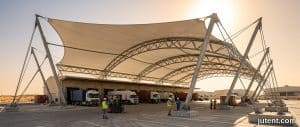
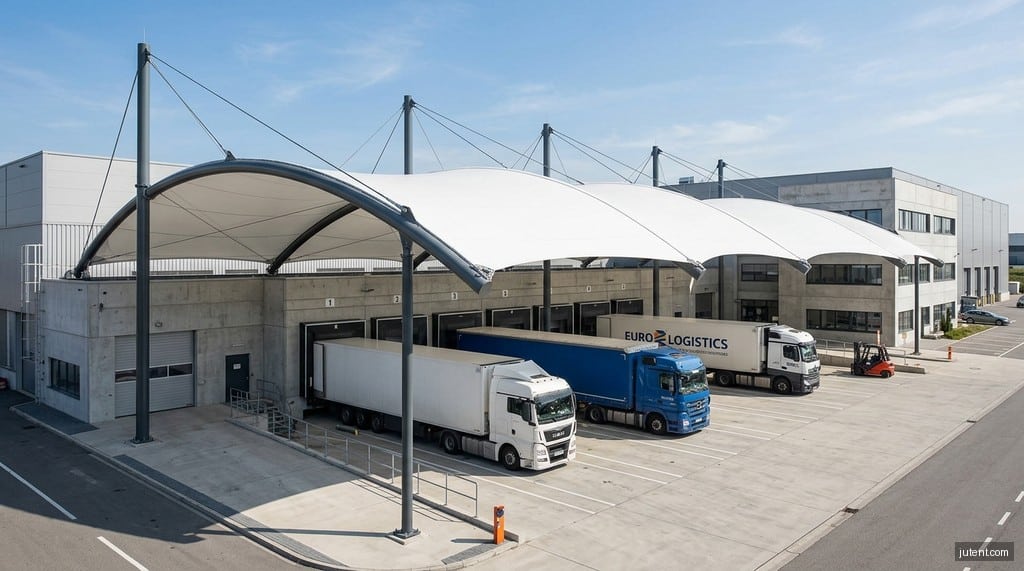
Selecting the right loading dock canopy manufacturer is a critical decision that directly impacts project timelines, budget, and long-term structural integrity. A poorly chosen supplier can lead to significant delays, costly rework, and potential safety hazards, especially when dealing with structures exposed to varying weather conditions. The primary concern for contractors and procurement managers is ensuring the canopy meets local building codes, particularly regarding wind load specifications. This requires meticulous verification of the manufacturer's engineering capabilities, material certifications, and adherence to international quality standards. Failure to conduct thorough due diligence can result in non-compliant structures that may not pass inspection or, worse, fail under adverse weather, leading to liability issues and reputational damage. Based on Jutent's experience across 400+ projects in 30+ countries, we understand the complexities of international procurement and the necessity of verifying every technical detail. A reliable manufacturer provides transparent documentation for every stage, from design calculations to material sourcing and production. This proactive approach minimizes risks and ensures the final installation aligns perfectly with project requirements and regulatory mandates. Loading Docks
This guide focuses on tensile membrane structures for loading docks, including PVDF and PTFE membrane canopies, which are lightweight yet durable solutions for industrial applications.
Engineering Capability: Wind Load and Structural Calculations
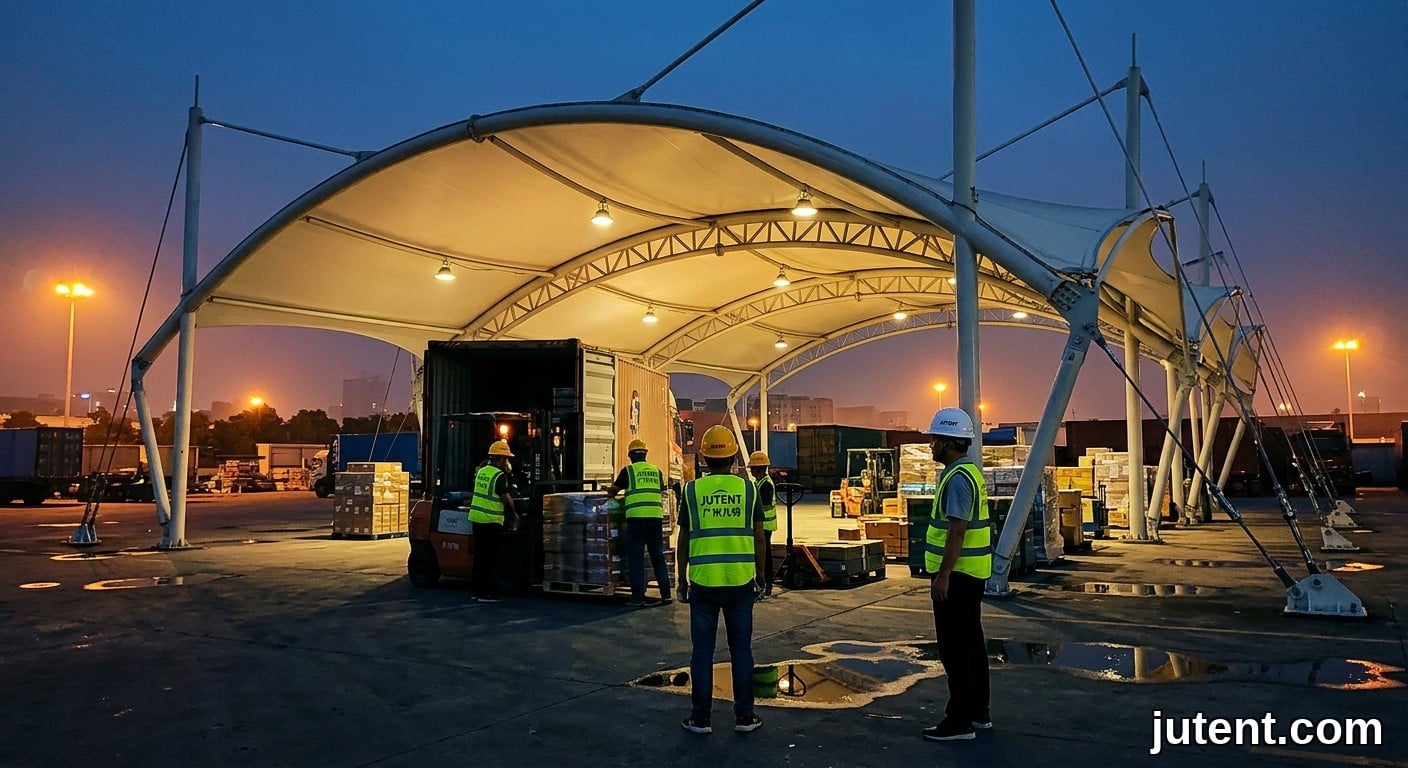
The structural integrity of a loading dock canopy hinges entirely on its engineering design, particularly its ability to withstand specified wind loads. A reputable loading dock canopy manufacturer will provide thorough structural calculations performed by qualified engineers. These calculations must account for the project's specific geographic location, local wind speed requirements, and applicable building codes. For export projects, Jutent can provide design drawings, calculations, material specifications, installation manuals, and free remote guidance, subject to project scope and contract terms.
When evaluating a manufacturer, request detailed documentation that includes:
* Structural Analysis Reports: These reports should detail the forces acting on the structure (dead loads, live loads, wind loads, snow loads where applicable) and how the steel framework (typically Q235B or Q355B) and membrane are designed to resist them.
* Wind Load Calculations: Verify that the calculations use the correct wind speed and exposure categories for your project site. These are often derived from ASCE 7 (USA), Eurocode, or local equivalents.
* Connection Details: Examine the design of all connections, ensuring they are reliable and adequately engineered to transfer loads throughout the structure.
* Foundation Requirements: The manufacturer should specify the necessary foundation design based on the canopy's structural loads.
A manufacturer's ability to provide these documents, often stamped by a professional engineer, is a non-negotiable requirement. This demonstrates their technical competence and commitment to safety and compliance. Without verifiable engineering, any claims of wind resistance are unsubstantiated. About
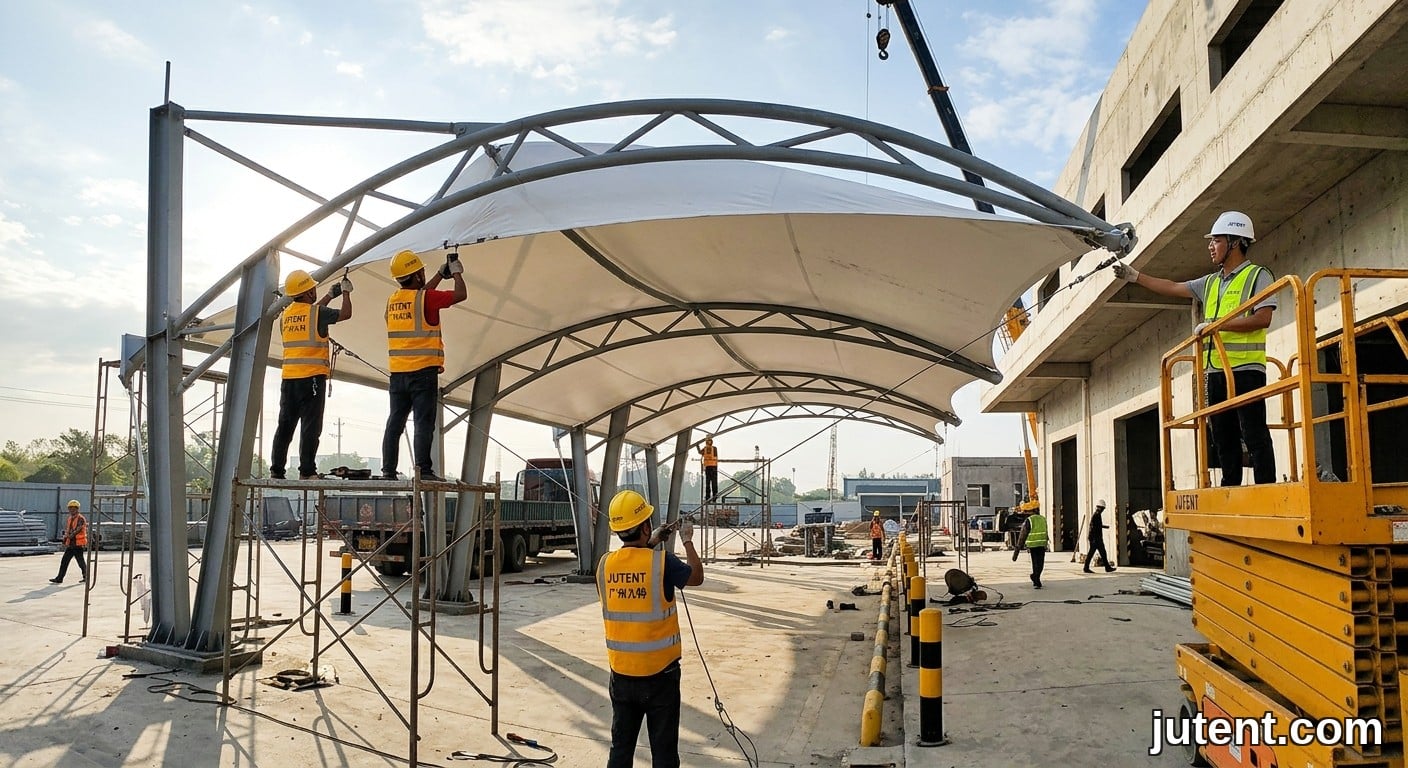
Membrane Brand and Test Certificates: What to Ask For
The membrane is a critical component of any tensile structure, directly influencing its durability, weather resistance, and lifespan. When sourcing a loading dock canopy, it is imperative to verify the membrane's quality and authenticity. Do not accept generic claims; demand specific brand names and corresponding test certificates.
Key membrane verification steps include:
* Brand Specification: Insist on knowing the exact brand and model of the PVDF or PTFE membrane. Reputable brands provide consistent quality and performance. Jutent typically uses PVDF or PTFE membrane in the 1000–1200 g/m² range, depending on project requirements.
* Material Test Certificates: Request certificates of conformity and material test reports from the membrane manufacturer. These documents should detail properties such as:
* Tensile Strength: Resistance to pulling forces.
* Tear Strength: Resistance to tearing.
* Fire Rating: Compliance with relevant fire safety standards (e.g., B1, M2).
* UV Resistance: Ability to withstand degradation from ultraviolet radiation.
* Self-Cleaning Properties: For PVDF, this indicates the surface treatment's effec
“`