
“`html
Gulf Region, July. Ambient temperatures routinely hit 48°C, while the tarmac at a commercial logistics hub can exceed 60°C. Under these punishing conditions, a standard loading dock canopy in the Middle East will suffer from UV embrittlement and plasticizer migration, degrading within just three years. Contractors and facility managers across the Gulf region cannot rely on standard European or North American specifications for tensile structures. The region's unique combination of extreme ultraviolet radiation (UV Index 11+), severe thermal cycling, and constant sand abrasion demands a highly specific, localized engineering approach.
When a canopy fails, the operational costs are immediate: temperature-sensitive freight is compromised, forklift operators face dangerous heat exhaustion, and supply chain bottlenecks multiply across the facility. This guide details the exact membrane grades—such as Type IV PVDF-coated PVC and PTFE—along with the ASCE 7-16 wind load standards and structural sizing required to specify a heat-resistant canopy that survives the Gulf climate. By applying these parameters, contractors can ensure their tender submissions are technically sound, compliant with local GCC building codes, and engineered to prevent premature failure in one of the world's harshest environments.
Gulf Climate Loading Dock Canopy: Why Standard Tensile Membrane Specs Fail
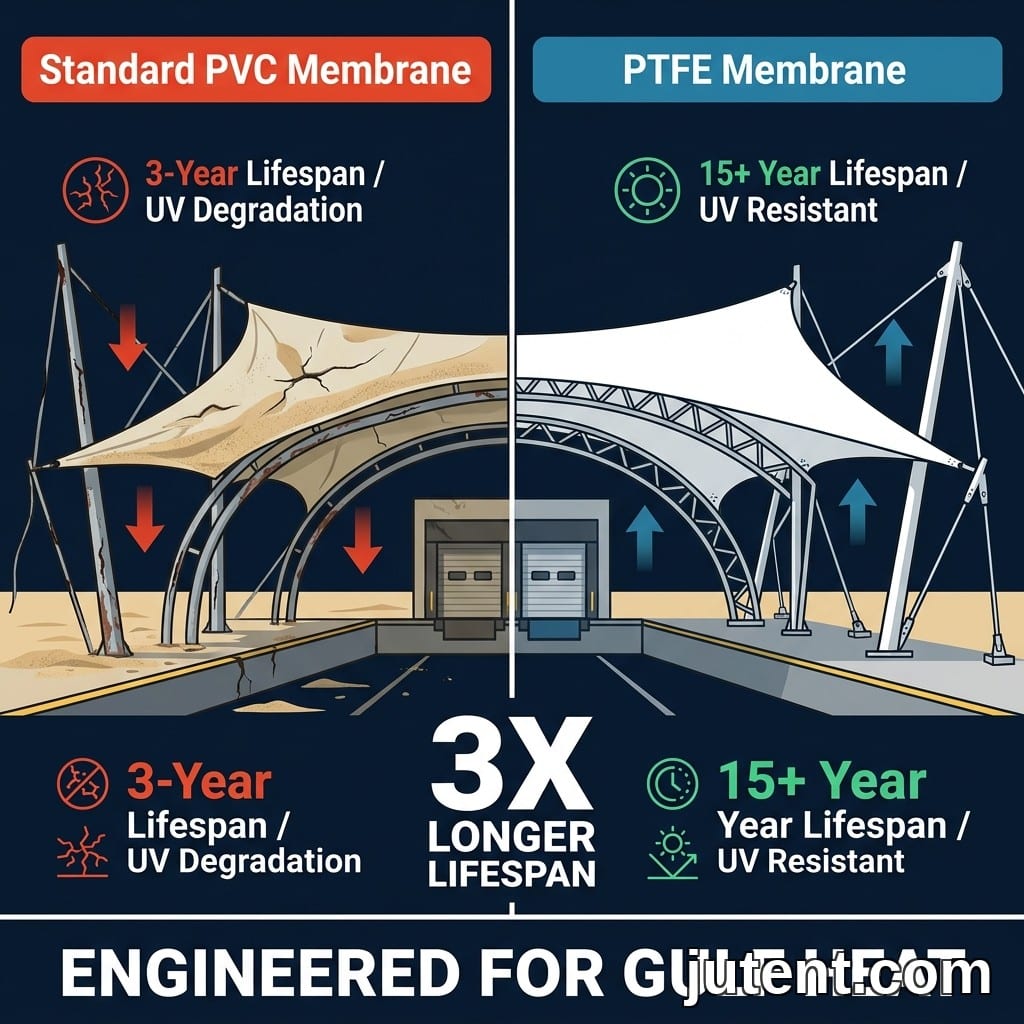
Standard commercial specifications fail in the Gulf because they do not account for accelerated plasticizer migration. When European or North American membrane specifications are applied directly to a loading dock canopy UAE project, the material hardens, discolors, and micro-cracks long before its intended design life expires.
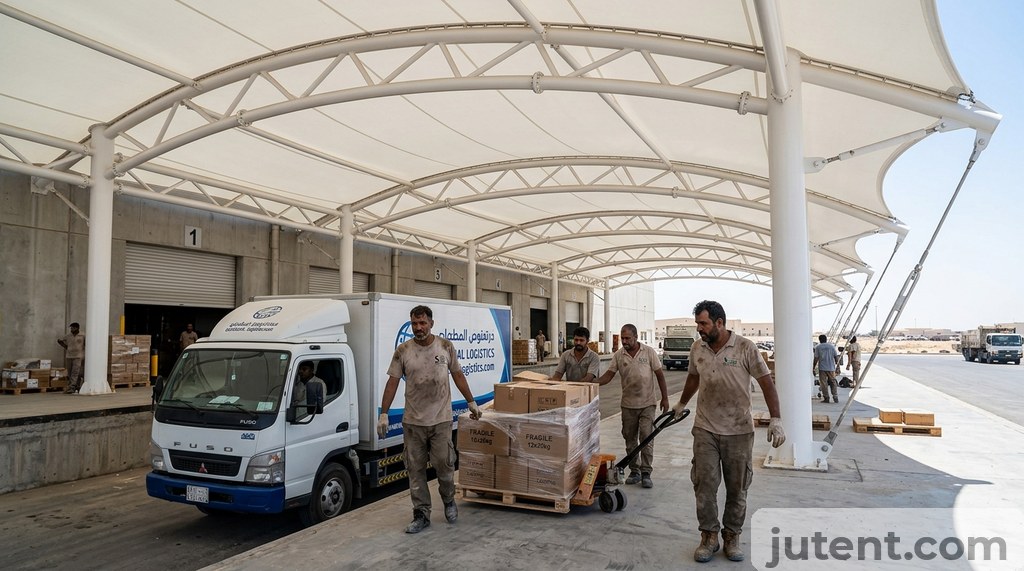
The primary mechanism of failure is thermal degradation combined with intense UV exposure. In a typical logistics facility, the canopy surface temperature regularly exceeds 75°C during peak summer months. At these extreme temperatures, the chemical plasticizers that give standard 650g/㎡ PVC its flexibility begin to migrate to the surface of the fabric. Once exposed, these plasticizers are rapidly stripped away by wind-blown sand and oxidized by ultraviolet radiation, leaving the base scrim unprotected.
Typical specifications for Gulf projects use Q235B or Q355B steel, 1050 g/㎡ PVDF or PTFE membrane as standard, and SS304 stainless accessories, with higher grades available when the project requires them.
UV and Heat Protection: Membrane Grade for Gulf Projects
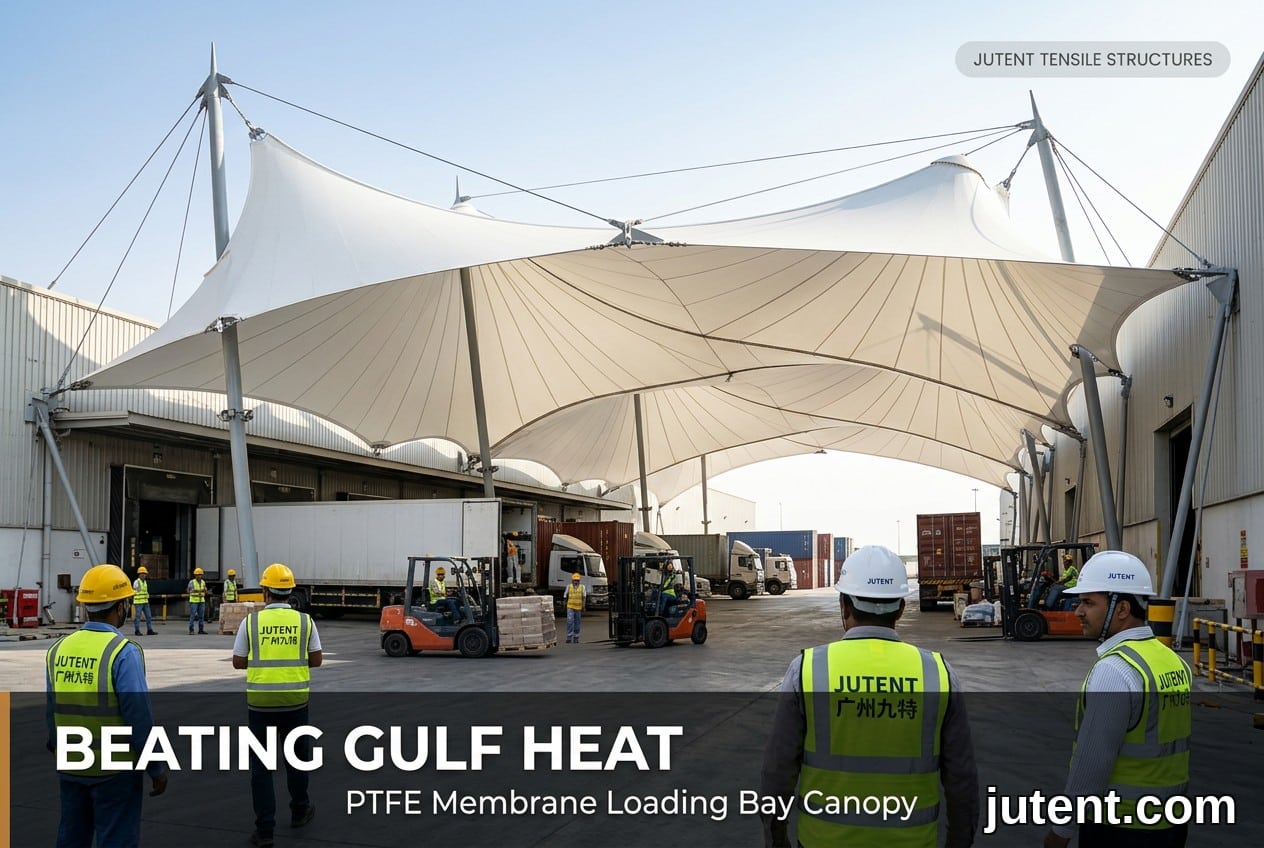
A 1050g/㎡ PVDF membrane is the absolute baseline requirement for any heat resistant loading dock canopy in the region. Lower grades or untreated fabrics will simply not survive the UV Index 11+ conditions that are typical across the Arabian Peninsula for more than half the year.
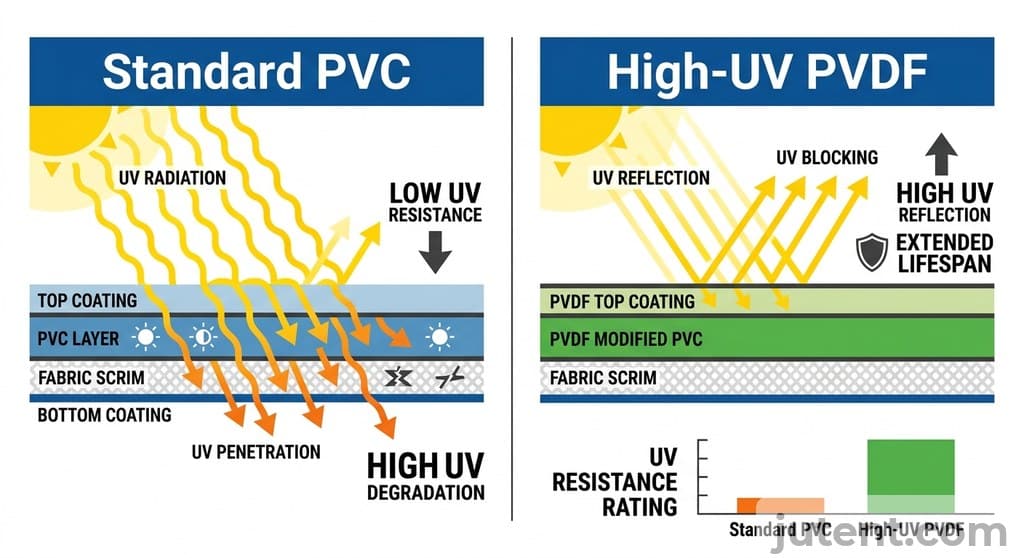
The reason PVDF outperforms standard PVC in high-UV environments is the fluorocarbon surface layer, which physically reflects UV radiation rather than absorbing it. At UV Index 12, a 1050g/㎡ PVDF membrane maintains its tensile strength within 10% of the original specification after 15 years of continuous exposure. By contrast, a standard 900g/㎡ PVC membrane in the exact same environment typically requires complete replacement at the 7-to-8-year mark due to severe embrittlement, discoloration, and tearing under wind load.
For a loading dock canopy Qatar specification, thermal comfort is equally critical to structural longevity. A high-grade white PVDF membrane offers a solar reflectance index (SRI) exceeding 80%. This high reflectivity lowers the ambient temperature directly beneath the canopy by up to 8°C compared to the exposed tarmac. This temperature differential is critical for protecting temperature-sensitive freight during the transfer process, reducing the cooling load on adjacent warehouses, and maintaining safe working conditions for forklift operators. For detailed PVDF membrane loading dock canopy configuration options and material comparisons, refer to our Loading Dock Canopy Guide.
Wind Load: UAE and Saudi Standards
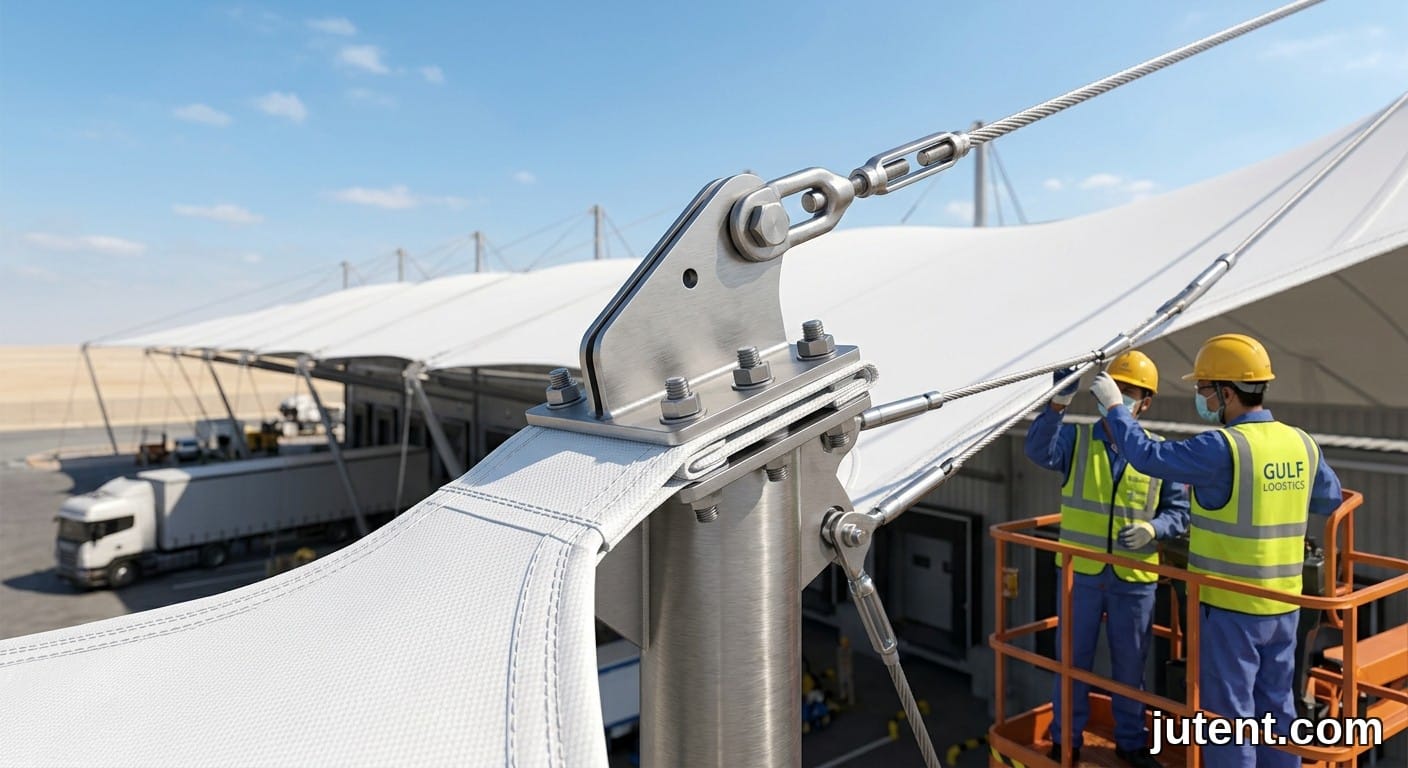
Wind loads dictate the steel tonnage and foundation sizing, not the dead load of the membrane itself. A loading dock canopy Saudi Arabia project will have entirely different structural requirements than a coastal facility in the UAE, and the engineering drawings must reflect these local codes accurately to pass municipal permitting and ensure site safety.
The final technical values should be confirmed against the project-specific engineering requirements and local code conditions.
In Saudi Arabia, the Saudi Building Code (SBC) Chapter 7 dictates the wind load calculations. Inland logistics hubs in Riyadh may have slightly lower basic wind speed requirements compared to coastal facilities in Jeddah or Dammam, but they face much higher risks of sustained seasonal sandstorms. This requires specific attention to the membrane tensioning system. The membrane must be pre-stressed to a minimum of 2.5 kN/m to prevent
“`