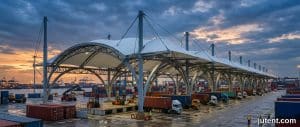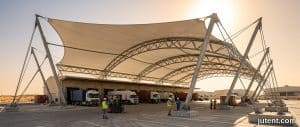

For contractors across African markets, sourcing a loading dock canopy locally often means limited options and high prices. Here's how importing from China works in practice.
In many African markets, the demand for efficient logistics infrastructure is surging, yet local fabrication capabilities for specialized tensile structures like loading dock canopies can be constrained. For contractors seeking a durable tensile membrane structure, importing from China offers a practical solution. This often translates to higher costs, longer lead times, and fewer design choices for contractors aiming to deliver modern, durable solutions. The alternative, importing from experienced manufacturers in China, offers a compelling pathway to overcome these challenges, providing access to advanced engineering, competitive pricing, and a wider range of specifications tailored to the demanding African environment. These tensile membrane structures are engineered to provide durable, weather-resistant coverage for loading docks.
Why African Contractors Source Loading Dock Canopy from China
The decision to import a loading dock canopy for Africa from China is driven by several practical considerations for contractors. Primarily, the cost-effectiveness of Chinese manufacturing is a significant draw. Local fabrication often involves higher material costs and less efficient production processes, leading to inflated project budgets. Chinese manufacturers, benefiting from economies of scale and established supply chains, can offer significantly more competitive pricing for quality-controlled structures. This is particularly true for projects requiring specific engineering or large-scale installations.
Beyond cost, the breadth of engineering expertise and product variety available from Chinese suppliers is a major advantage. Contractors can access a wider range of designs, material specifications, and structural solutions, ensuring the canopy perfectly matches the operational needs and aesthetic requirements of their clients. This includes specialized designs for heavy wind loads, intense UV exposure, and heavy rainfall common across regions like South Africa, Nigeria, and Kenya. the efficiency of production and shipping from China often results in shorter overall project timelines compared to bespoke local fabrication, a critical factor for time-sensitive construction projects. Based on Jutent's experience across 400+ tensile membrane projects in 30+ countries, importing offers a reliable path to project success.
Design and Engineering: How Loading Dock Canopies Are Customized
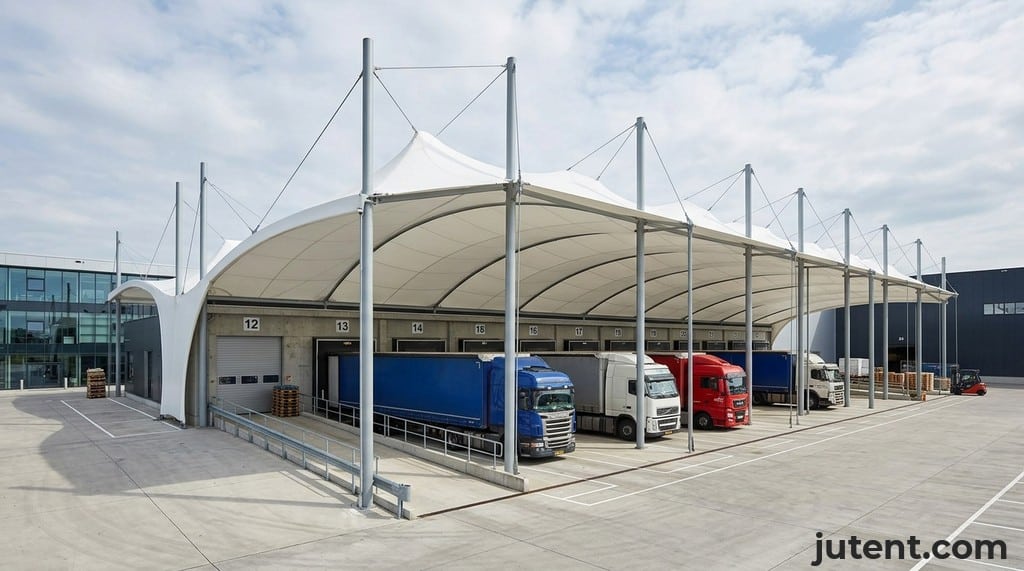
Jutent uses SAP2000 and 3D3S for structural analysis and easy software for membrane form-finding. This ensures the canopy handles local wind loads, snow loads, and seismic conditions. Each design is tailored to the project site, with cable layout optimized for minimal visual clutter and maximum tension distribution.
What to Specify When Importing: Membrane Grade, Steel, and Documentation
When importing a loading dock canopy for Africa, precise specification is paramount to ensure the structure withstands local conditions and meets regulatory requirements. The choice of membrane grade is critical. For most African climates, a typical PVDF membrane (e.g., 1000 g/m²) offers an excellent balance of durability, UV resistance, and cost-effectiveness, with a standard 10-year warranty and 15+ years expected service life, subject to project design and local conditions. For extreme conditions or longer service life expectations, PTFE membrane, with a 15-year warranty and 25+ years service life, is a superior option, though at a higher cost (add approximately $15–$25/m² to the PVDF range, depending on project specifications). These membranes are designed to resist intense solar radiation, heavy rainfall, and strong winds without degradation. For contractors seeking a shade sail structure alternative, tensile membrane canopies offer superior wind resistance and longer lifespan.
Steel specifications are equally important. Q235B and Q355B are standard grades, offering reliable structural integrity. For surface treatment, hot-dip galvanizing is highly recommended for its superior corrosion resistance in humid or coastal environments, providing long-term protection against rust. Alternatively, an epoxy zinc-rich primer followed by an acrylic or fluorocarbon topcoat offers excellent durability. Never accept powder coating or baking paint for these applications.
Documentation is another key area. For export projects, Jutent can provide design drawings, calculations, material specifications, installation manuals, and free remote guidance, subject to project scope and contract terms. These documents are essential for local permitting, customs clearance, and ensuring proper installation. Specifying SS304 for fasteners is standard, with SS316 available as an optional upgrade for enhanced corrosion resistance.
Loading Dock Canopy Guide
Shipping to African Ports: How Structures Are Packed
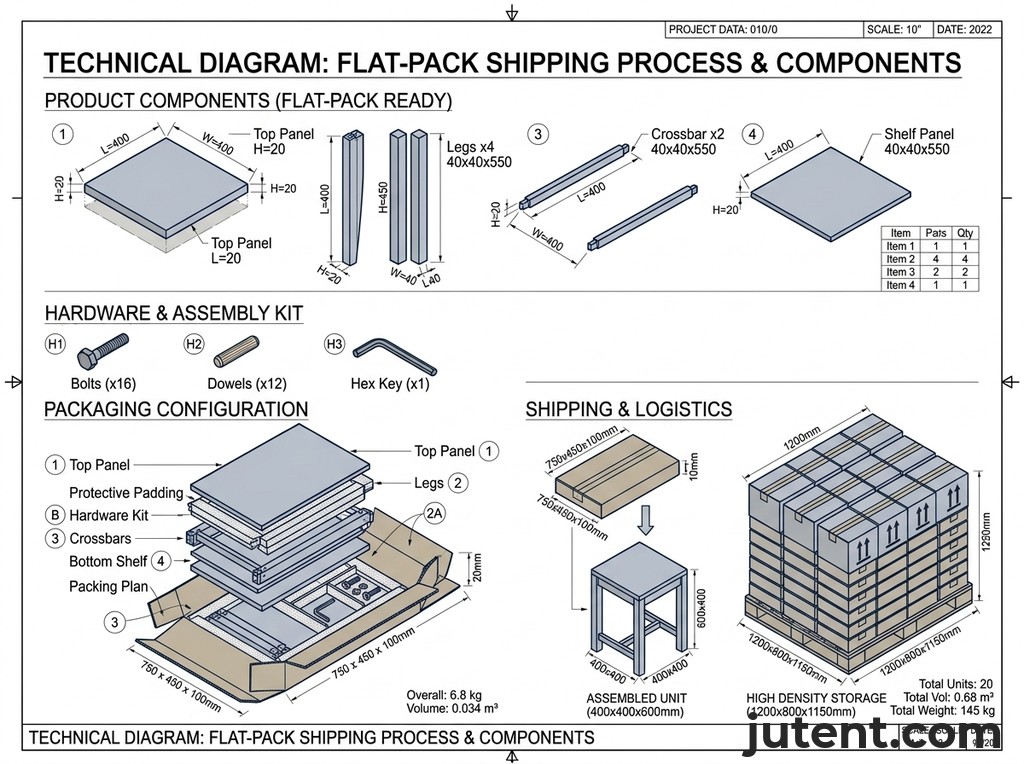
The logistics of shipping a loading dock canopy from China to African ports like Durban, Lagos, or Mombasa are carefully managed to ensure safe and cost-effective delivery. Tensile structures are designed for efficient flat-pack shipping. This means that all steel components, including columns, beams, and connection plates, are precisely cut, fabricated, and then disassembled into compact, stackable units. This method significantly reduces the volume required for shipping, optimising container space and lowering freight costs.
Membrane panels are carefully folded or rolled and protected in durable packaging to prevent damage during transit. All smaller components, such as cables, tensioning hardware (typically SS304 standard, SS316 optional), and fasteners, are securely boxed and labelled. A standard 20ft container can typically carry a 150–300m² structure, depending on the complexity and steel c