
“`html
School walkway canopy design affects UV coverage, drainage, post placement, and student safety — not just how it looks. These five decisions have the biggest impact on whether the structure actually works. For architects and contractors, understanding these critical design points from the outset ensures a functional, safe, and durable tensile structure that meets the specific demands of a school environment. While this guide focuses on schools, the same design principles apply to retail walkway canopies, shopping mall walkway canopies, and commercial walkway tensile structures for any high-traffic pedestrian zone.
Decision 1: Width — How Wide Should a School Walkway Canopy Be?
The optimal width for a school walkway canopy is a fundamental decision that directly impacts student flow, comfort, and protection. A canopy that is too narrow can create bottlenecks, especially during peak times like class changes or dismissal, while an excessively wide canopy might be an inefficient use of materials and space. Standard school walkway canopies typically range from 2.4 to 4.5 meters wide. This range accommodates varying levels of student traffic, from smaller primary school routes to busy high school corridors.
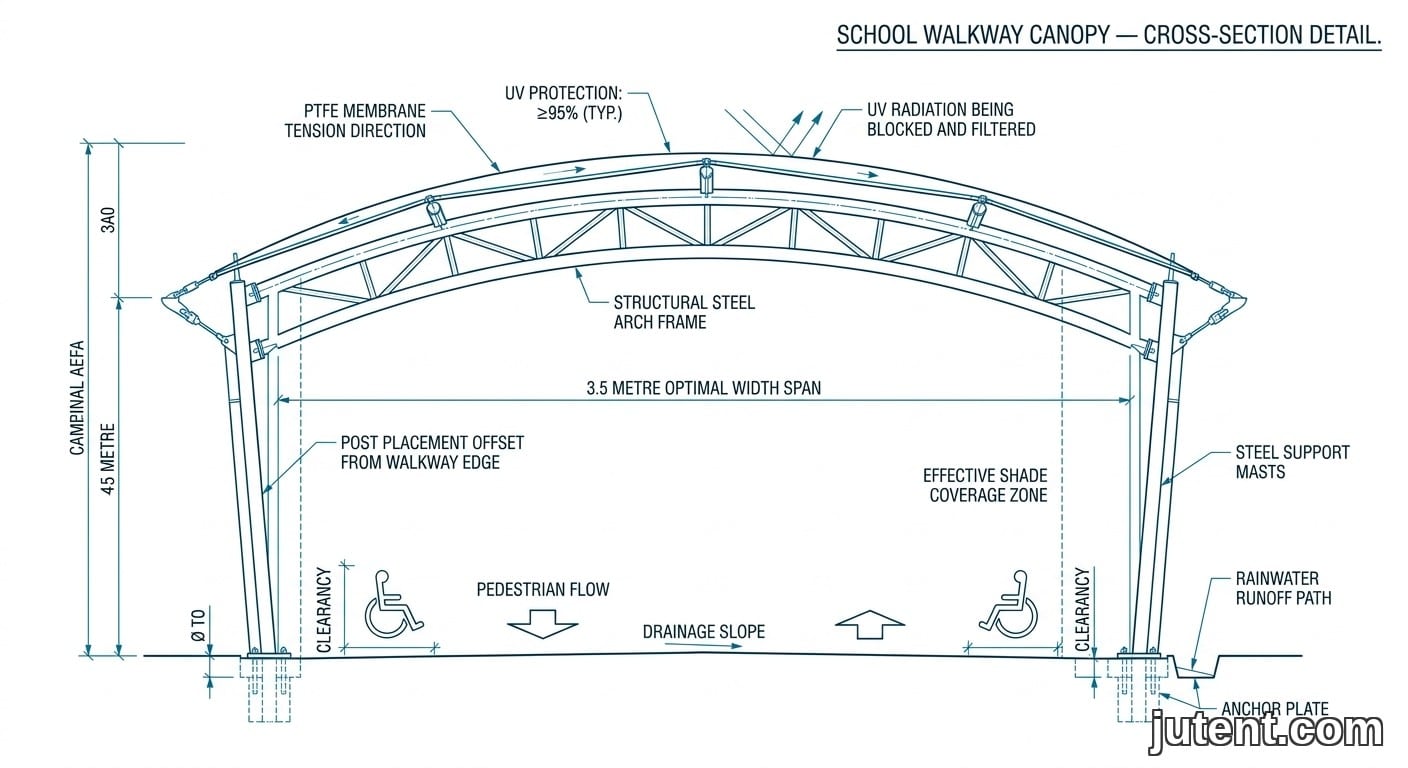
When determining the ideal width, consider the maximum anticipated student density during peak periods. Factor in space for students walking in opposite directions, as well as potential groups congregating briefly. Accessibility requirements for wheelchairs and other mobility aids must also be integrated into the minimum width. A wider canopy naturally offers a greater shaded area, enhancing UV protection, but it also increases the surface area exposed to wind, which can influence structural design. Based on Jutent's experience across 400+ projects in 30+ countries, a common mistake is underestimating future student population growth, leading to an undersized canopy. Collaborating with the school administration to project future enrollment and traffic patterns is crucial for a future-proof design.
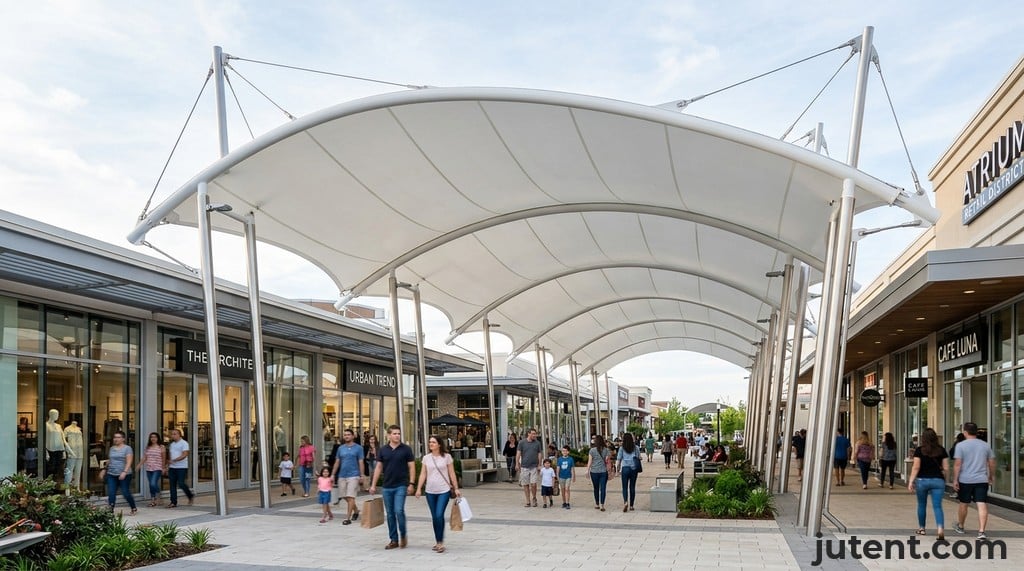
School Walkways
Decision 2: Post Placement — Keeping Posts Out of the Walkway Path
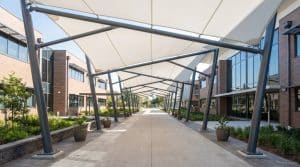
Strategic post placement is paramount for ensuring unobstructed passage and maximizing safety within a school covered walkway design. Posts that intrude into the walkway path pose tripping hazards, impede traffic flow, and can be vulnerable to accidental collisions from students or maintenance equipment. The primary goal is to position support posts entirely outside the primary pedestrian flow.
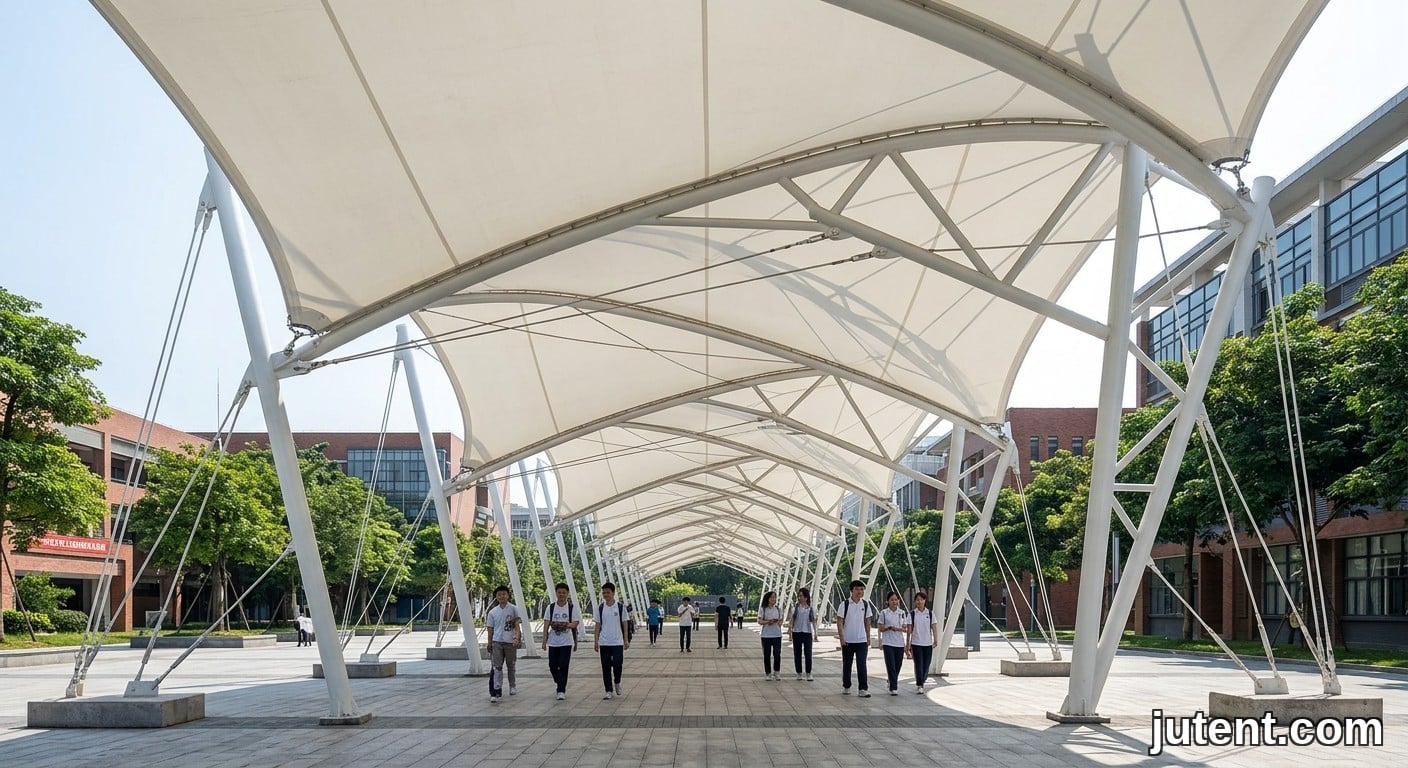
Typically, posts are set 0.3 to 0.6 meters (1 to 2 feet) outside the walkway edge. This offset provides a clear path while still offering adequate structural support for the canopy. Consider the overall site layout, including adjacent landscaping, building entrances, and existing utilities, when planning post locations. For instance, posts should not block fire exits or create blind spots near intersections. Cantilevered designs, where the membrane extends beyond the posts, can offer even greater flexibility in keeping the walkway clear, though this often requires more substantial structural steel. The choice between single-sided or double-sided post configurations also influences placement; single-sided designs are ideal for walkways adjacent to buildings, minimizing ground disruption on one side. Careful consideration of the post footprint and foundation requirements is also essential, particularly in areas with existing underground infrastructure.
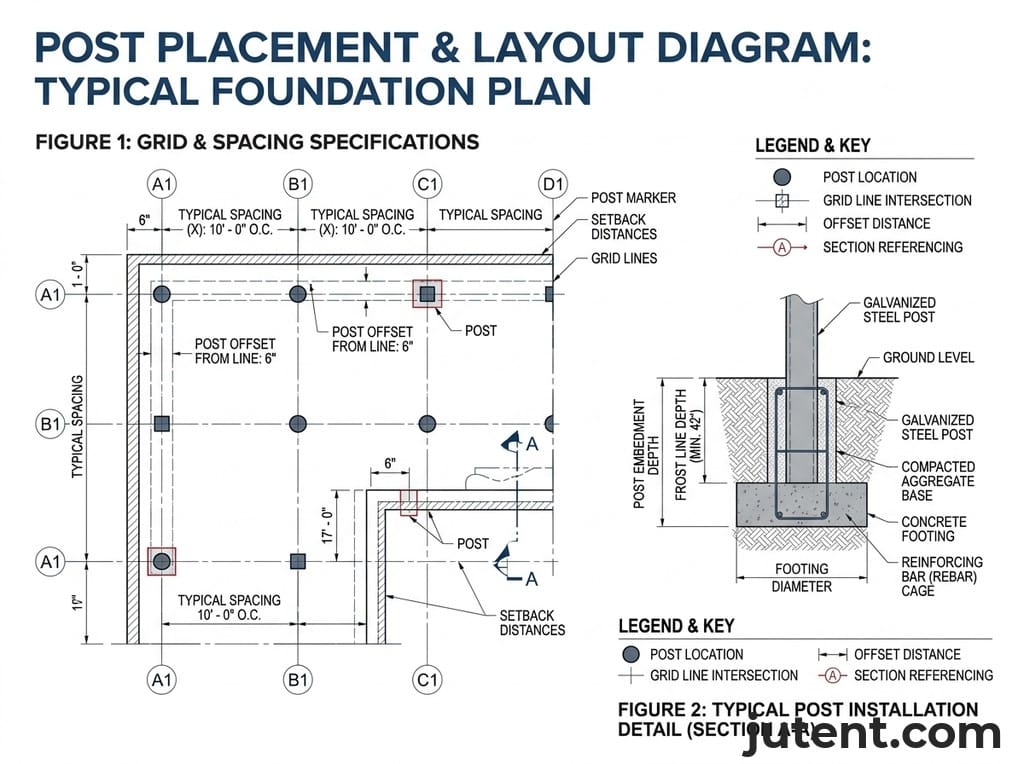
School Walkway Canopy Guide
Decision 3: Membrane Pitch — Drainage and Ponding Prevention
The membrane pitch, or the angle of the tensile fabric, is a critical factor in effective school walkway shade design, primarily dictating drainage and preventing water ponding. Insufficient pitch can lead to water accumulation on the membrane surface, causing unsightly sagging, potential structural stress, and accelerated material degradation. Ponding also creates a breeding ground for algae and mildew, impacting the canopy's aesthetic and requiring more frequent cleaning.
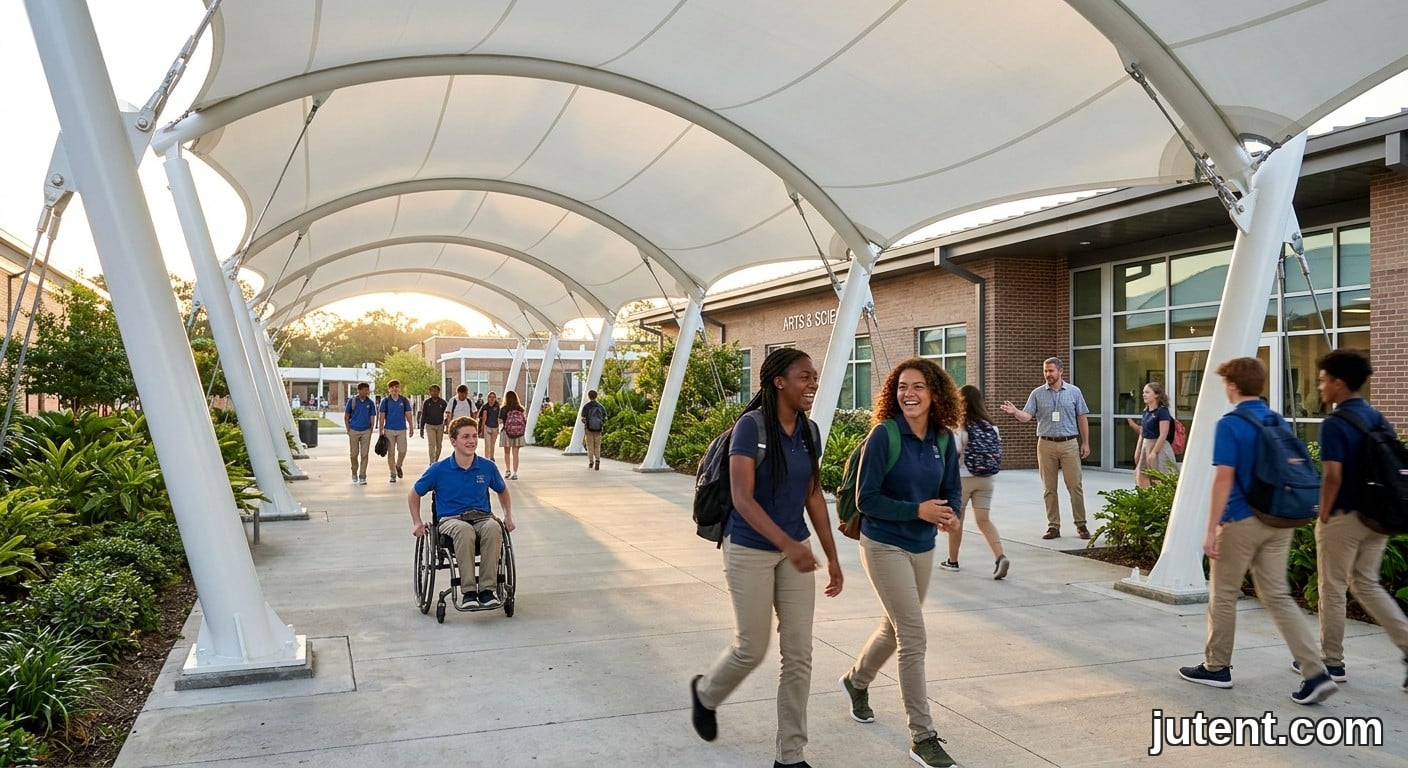
A minimum pitch of 10-15 degrees is generally recommended for PVDF and PTFE membranes to ensure proper water runoff. For more complex forms, specific design software is used to analyze water flow paths and identify potential ponding areas. The design must account for the heaviest anticipated rainfall in the region. Gutters and downspouts, integrated into the canopy's edge or structural elements, are essential for directing rainwater away from the walkway and surrounding areas. These drainage systems should be sized appropriately and positioned to prevent water from splashing onto students or creating slippery surfaces. The membrane's tension also plays a role; a properly tensioned membrane maintains its designed pitch and prevents localized sagging that could lead to ponding. Jutent's design process meticulously models these factors to ensure optimal performance.
Decision 4: Edge Height — Balancing UV Coverage and Wind Exposure
The edge height of a school walkway canopy significantly influences both the extent of UV coverage and the structure's susceptibility to wind exposure. A lower edge height provides more thorough shade, particularl
“`