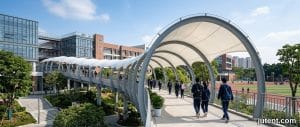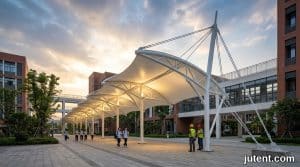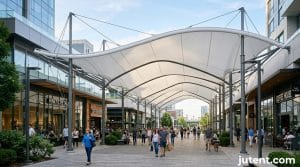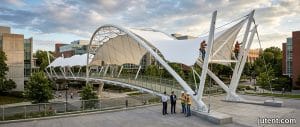

A school walkway canopy is a permanent tensile membrane structure designed to protect students from UV radiation, rain, and heat. As a leading tensile membrane structure manufacturer, Jutent specializes in PVDF and PTFE school walkway canopies that meet UPF 50+ standards. This guide explains what a school walkway canopy is, the difference between PVDF and PTFE membranes, and why UPF 50+ is mandatory for educational facilities.
What a School Walkway Canopy Is and What It Isn't
A school walkway canopy is a purpose-built, permanent overhead structure that connects school buildings, playgrounds, or car parks, creating sheltered pathways. Its primary function is to provide environmental protection, allowing students to transition between classes, lunch areas, or buses without exposure to sun, rain, or wind. These structures are typically engineered with durable materials like steel frames and high-performance membranes, designed for longevity and minimal maintenance. They are an integral part of a school's infrastructure, enhancing safety and comfort.
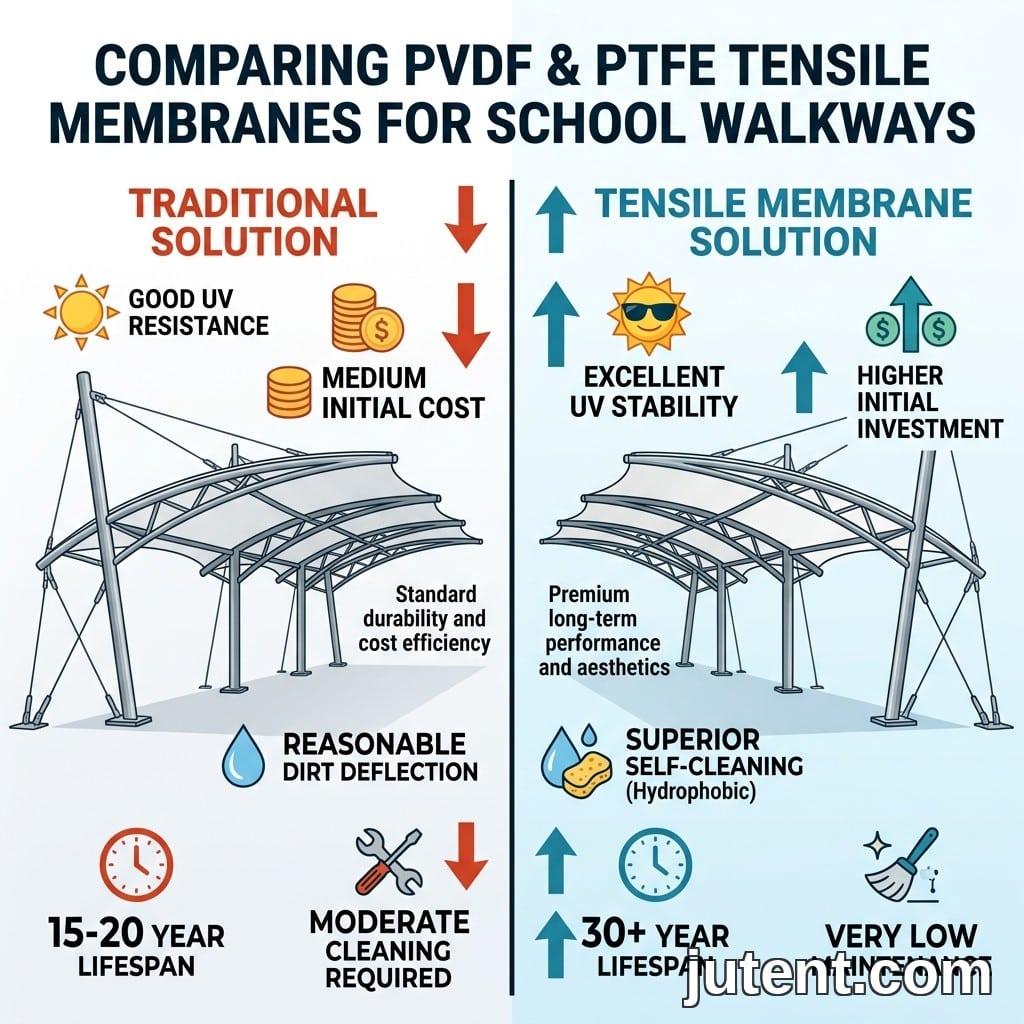
What a school walkway canopy isn't, however, is a temporary tent, a retractable awning, or a simple shade sail. While those options offer some level of protection, they lack the structural integrity, permanence, and reliable weather resistance required for a busy school environment. A true school walkway canopy is a fixed asset, designed to withstand local weather conditions, meet safety standards, and provide consistent, reliable shelter year-round. It's an investment in student well-being and the functionality of the school campus. School Walkways
Types of School Walkway Canopies: Tensile, Hip Roof, and Polycarbonate
When considering a school walkway canopy, facilities managers and council members typically evaluate three main types: tensile membrane structures, traditional hip roof designs, and polycarbonate canopies. Each offers distinct advantages in terms of aesthetics, performance, and cost.
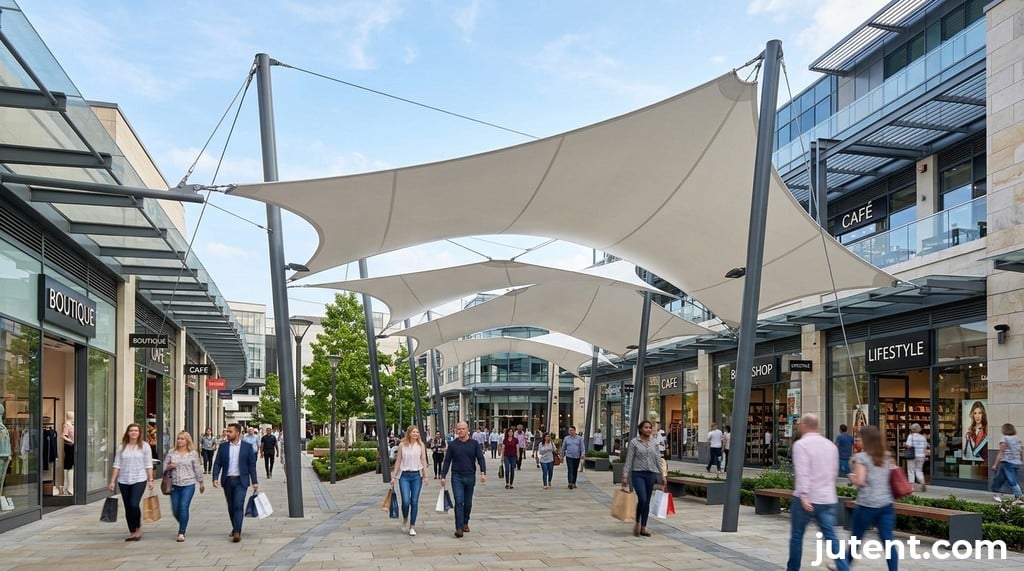
Tensile Membrane Structures utilize a fabric membrane, often PVDF or PTFE, stretched over a steel framework. These are highly versatile, allowing for creative, flowing designs that can complement modern architectural styles. They are excellent for large spans and offer superior UV protection, especially with UPF 50+ rated membranes. The lightweight nature of the membrane can also reduce the overall structural load.
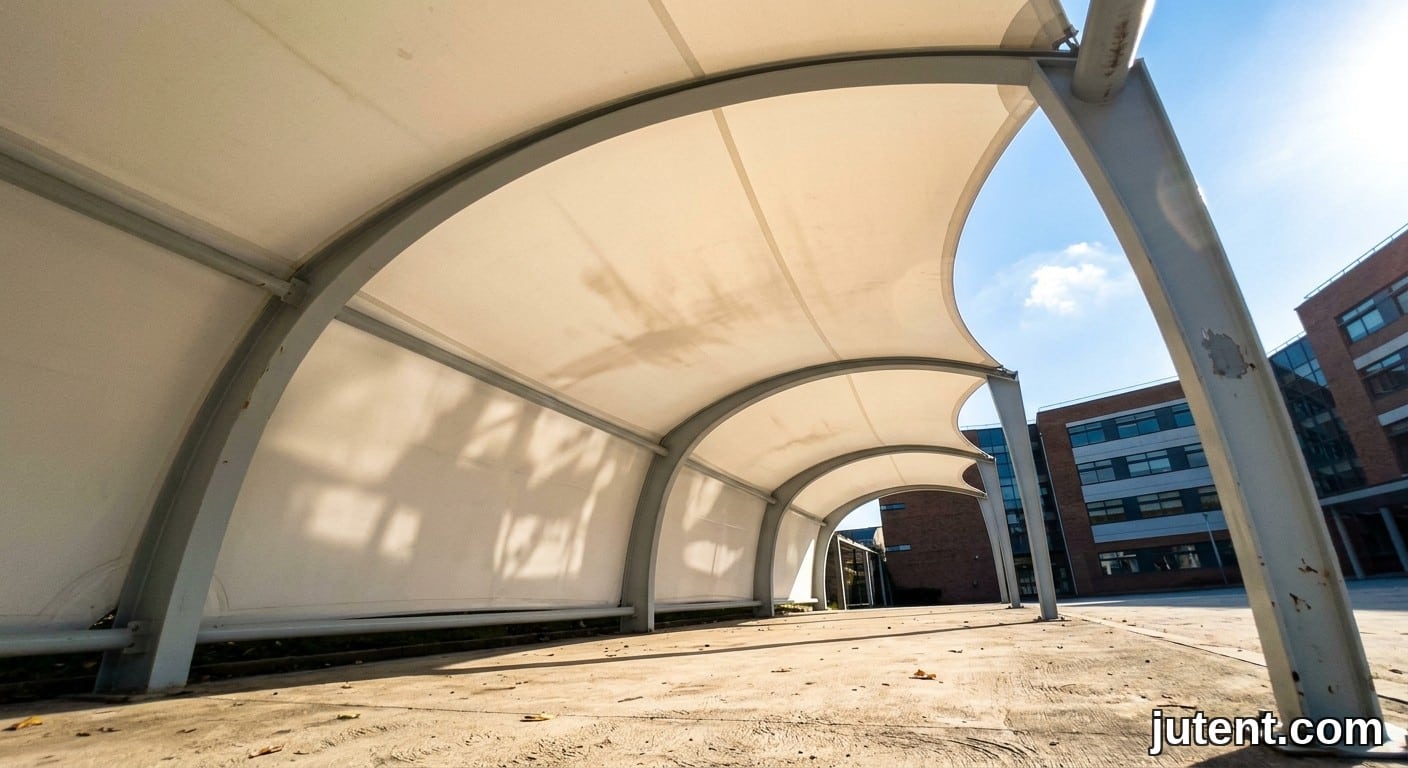
Hip Roof Canopies feature a more conventional, pitched roof design, often covered with metal sheeting or similar opaque materials. These provide reliable protection from rain and sun and can be integrated seamlessly with existing building aesthetics. While less flexible in form than tensile structures, they offer a classic, sturdy appearance.
Polycarbonate Canopies use transparent or translucent polycarbonate panels supported by a steel or aluminum frame. These are ideal for areas where natural light is desired, such as over walkways where adjacent classrooms might otherwise be darkened. While they block UV, their transparency allows infrared heat to pass through, making the area underneath potentially hotter than under a reflective PVDF or PTFE membrane.
Each type serves the fundamental purpose of shelter, but their material properties and design flexibility cater to different aesthetic and functional requirements. School Walkway Canopy Guide
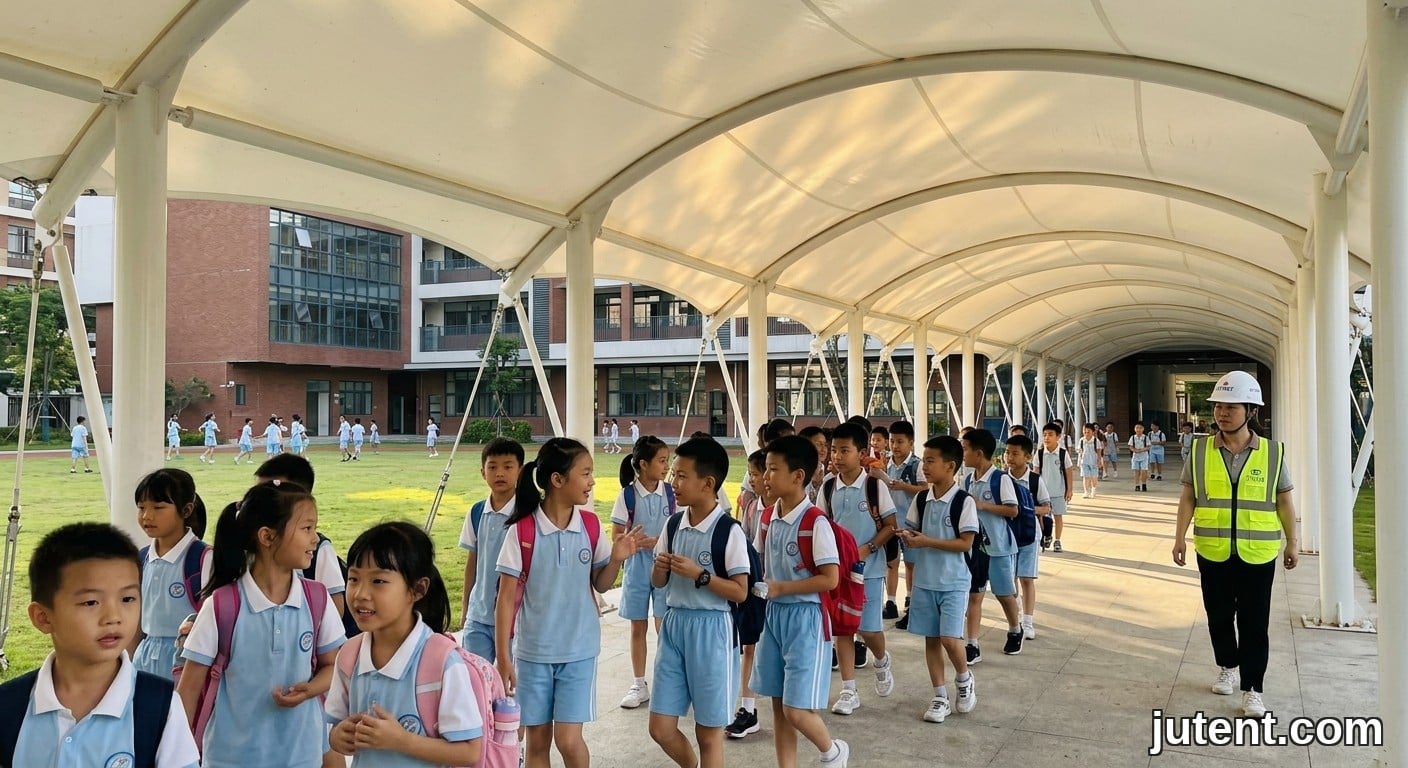
For more details on our PVDF membrane structures, visit our [PVDF tensile membrane product page].
What UPF 50+ Means and Why It Matters for School Walkways
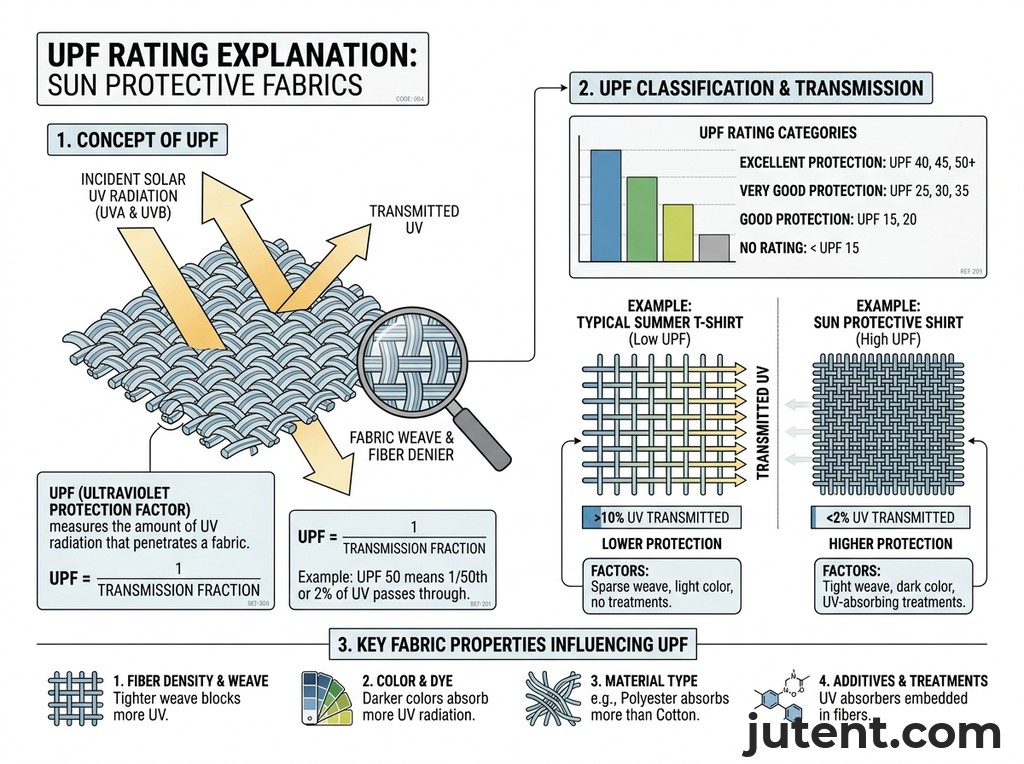
Understanding the Ultraviolet Protection Factor (UPF) rating is crucial when selecting a school walkway canopy, particularly for regions with high UV indexes. UPF 50+ is the highest achievable rating for fabrics and indicates that the material blocks over 98% of harmful UVA and UVB radiation. This means that only 1/50th (or less) of the sun's UV rays can penetrate the fabric.
For school walkways, this level of protection is paramount. Children spend significant time outdoors, and cumulative sun exposure during childhood is a major risk factor for skin cancer later in life. A UPF 50+ canopy provides an effective barrier, significantly reducing the risk of sunburn and long-term skin damage as students move between buildings. It creates a genuinely safe environment, aligning with health recommendations from organisations like Cancer Council Australia, which advocates for UPF 50+ for all school shade structures.
Beyond direct health benefits, a UPF 50+ canopy also contributes to a more comfortable learning environment. By blocking intense UV radiation, it helps keep shaded areas cooler, making transitions between classes more pleasant, especially during hot weather. This commitment to superior UV protection demonstrates a school's dedication to student well-being and provides peace of mind for parent