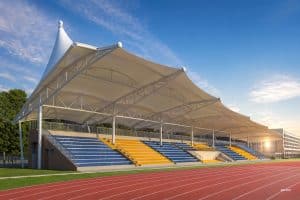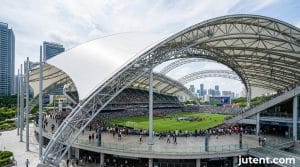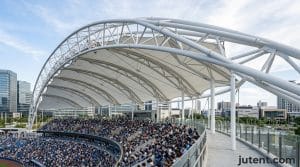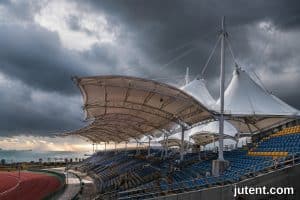

A grandstand canopy installation involves foundation work, steel erection, and membrane tensioning — each requiring different skills. This guide clarifies what the manufacturer provides and what your site team needs to prepare. Navigating a grandstand canopy installation requires a clear understanding of responsibilities. As a contractor, your site team plays a crucial role in preparing the ground, erecting the steel, and assisting with membrane installation. Jutent Engineering, with extensive experience across diverse climates and regions, understands the intricacies of these projects. Learn more about our PVDF and PTFE membrane options for grandstand canopies. This article outlines the distinct phases of a grandstand canopy installation, detailing the contractor's site responsibilities versus the manufacturer's scope of supply and support. By clearly defining these roles, we aim to ensure a smooth, efficient, and safe project execution for your next grandstand shade structure assembly.
The Four Phases of a Grandstand Canopy Installation
A successful grandstand canopy installation is a sequential process, typically broken down into four distinct phases. Each phase demands specific expertise, equipment, and meticulous planning to ensure structural integrity and aesthetic appeal. Understanding these phases is critical for your project managers and site teams to coordinate effectively and anticipate requirements.
The initial phase involves thorough foundation work. This is entirely a site responsibility, encompassing excavation, rebar placement, concrete pouring, and the precise setting of anchor bolts. The accuracy of this phase directly impacts the subsequent steel erection.
Following the cured foundations, the steel structure erection begins. This phase involves lifting and bolting together the primary and secondary steel members that form the skeletal frame of the grandstand canopy. This often requires heavy lifting equipment and skilled rigging teams.
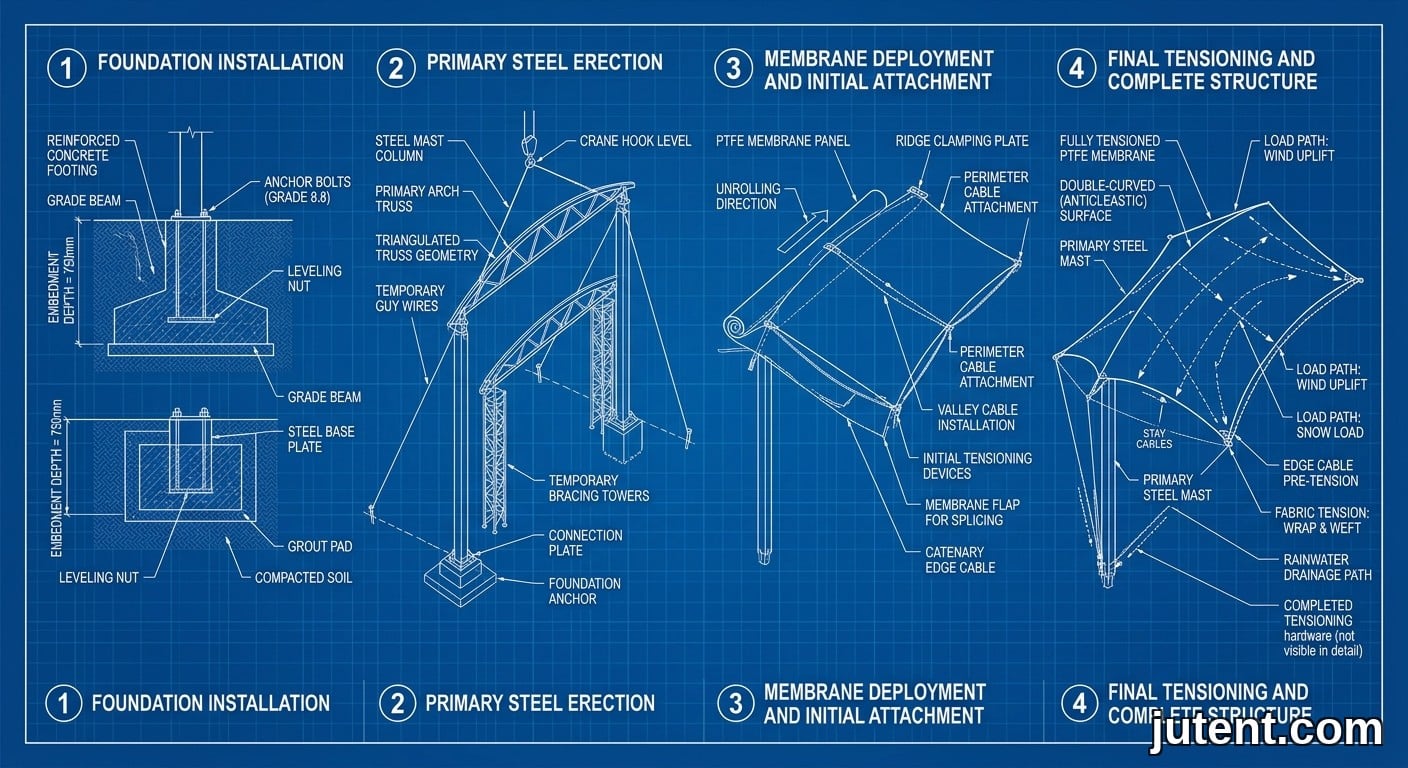
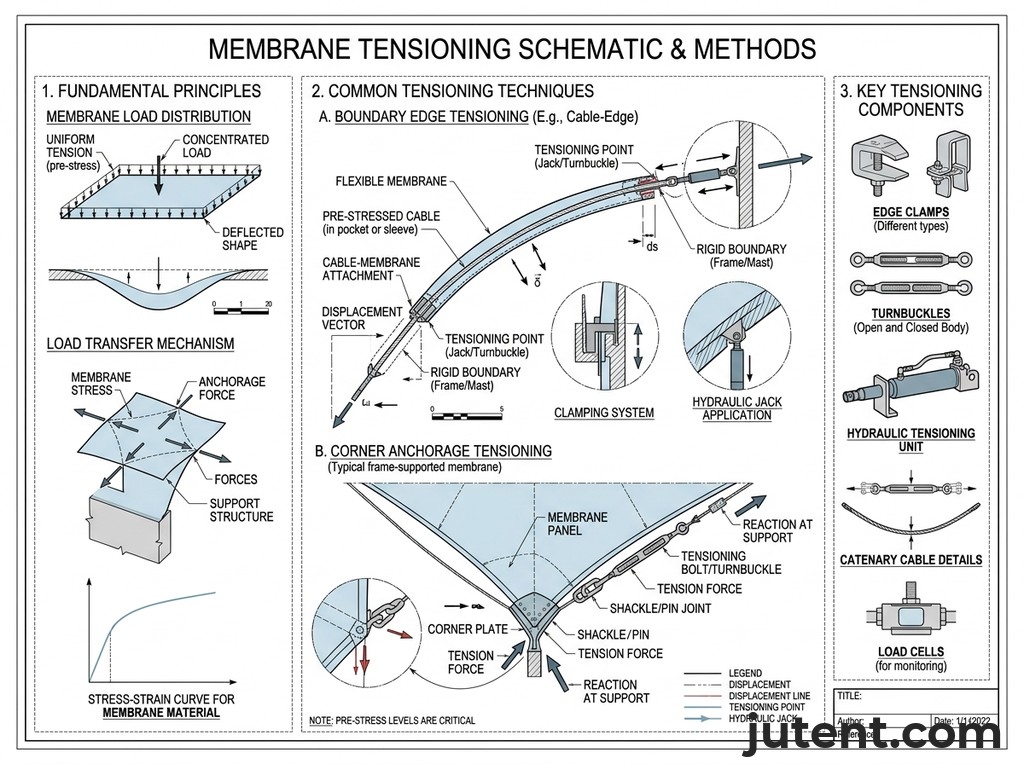
The third phase is the membrane installation. This delicate process involves lifting the pre-fabricated tensile membrane panels, securing them to the steel structure, and systematically tensioning them to achieve the designed form and rigidity. This phase is critical for the structural performance and longevity of the tensile membrane grandstand structure.
Finally, the finishing and commissioning phase includes installing any remaining architectural elements, conducting final inspections, and ensuring all components meet design specifications. Each phase builds upon the last, making precise execution at every step paramount for a durable and visually striking tensile grandstand roof installation.
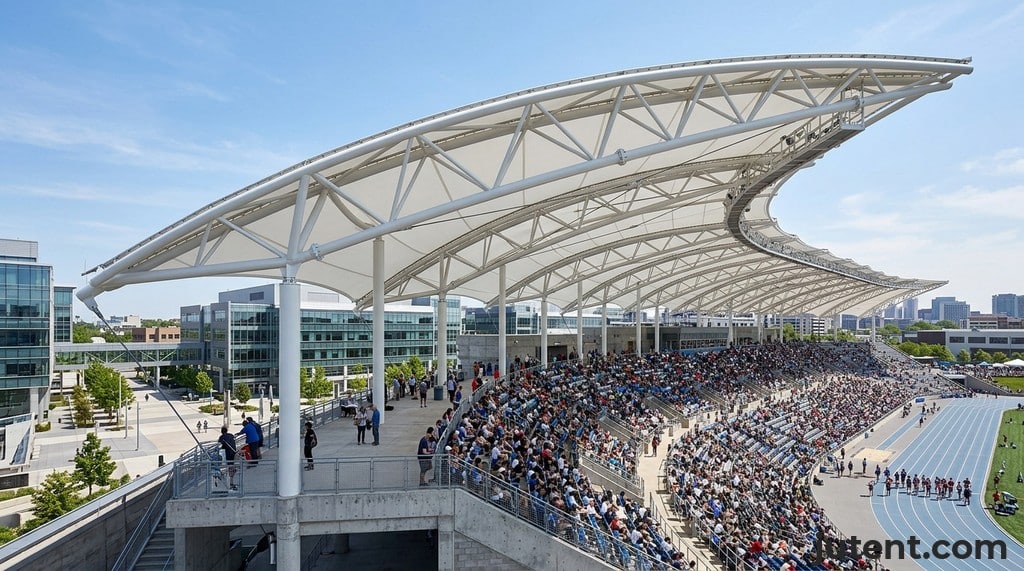
Foundation Work: What Your Civil Team Needs to Complete Before Delivery
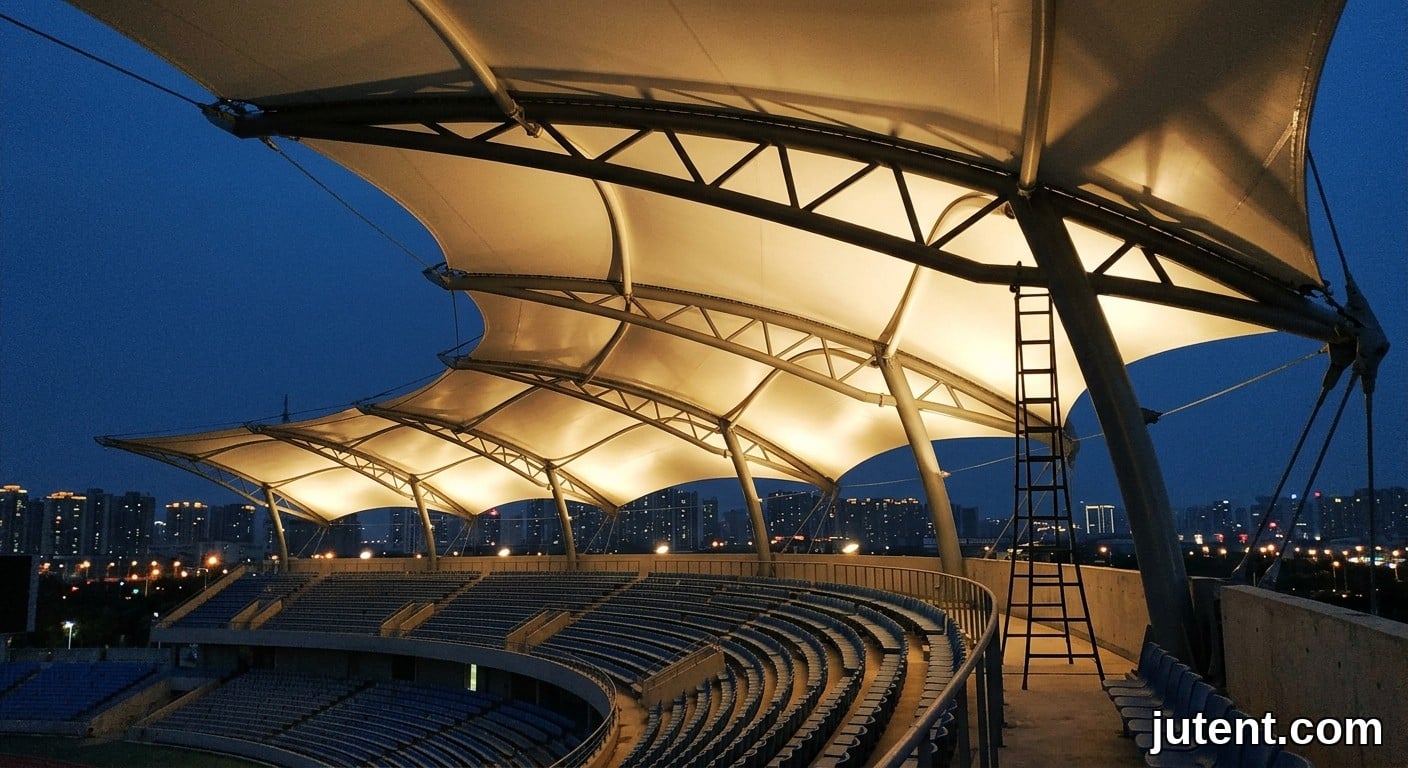
The foundation is the bedrock of any grandstand canopy structure, and its accurate completion is solely the responsibility of your civil engineering team. Before any steel components or membrane panels arrive on site, the foundations must be fully cured and ready to receive the steel structure. This preparatory work is critical for the overall stability and safety of the grandstand shade structure assembly.
Your team will be responsible for all aspects of the foundation, starting with site preparation and excavation according to the provided engineering drawings. This includes ensuring proper soil bearing capacity and drainage. Following excavation, the placement of reinforcing steel (rebar) must adhere strictly to the structural design, guaranteeing the necessary strength for the concrete elements.
The most critical aspect for the tensile structure is the precise installation of anchor bolts. These bolts, typically supplied by Jutent with the steel structure, must be set into the concrete foundations with absolute accuracy in terms of location, elevation, and projection. Any deviation can lead to significant delays and costly rework during steel erection. Jutent provides detailed foundation drawings that specify all dimensions, bolt patterns, and required concrete strengths. Your team must verify these against local codes and site conditions. A typical 500m² grandstand canopy installation will require foundations capable of resisting significant uplift and lateral forces, necessitating careful planning and execution by your civil team.
Grandstand Canopy Structures Guide
Steel Structure Erection: Sequence and Equipment Requirements
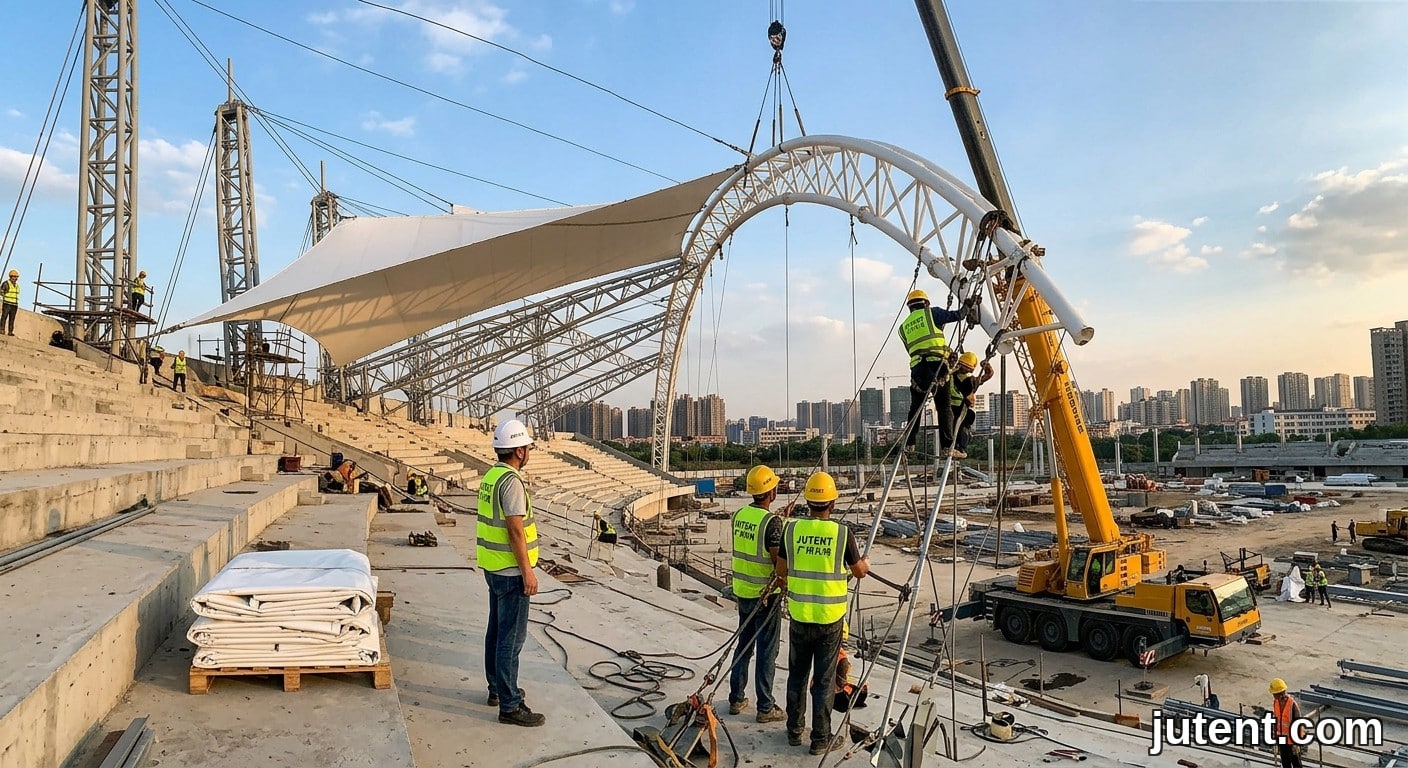
The erection of the steel structure is a pivotal phase in any grandstand canopy installation, demanding careful planning, specialized equipment, and skilled personnel. This phase typically commences once the foundations have achieved their specified strength and the anchor bolts are accurately set. The sequence of erection is crucial for safety and structural integrity.
Generally, the erection begins with the main columns, followed