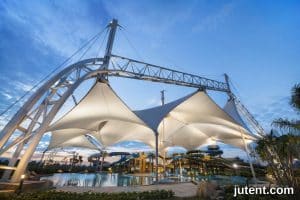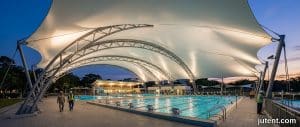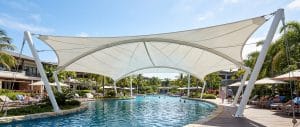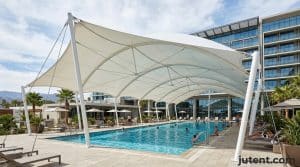

When planning a new aquatic facility or upgrading an existing one, the decision to incorporate shade is paramount. Beyond aesthetic appeal, the right shade structure offers critical protection and enhances the user experience. This guide will help aquatic facility developers and contractors understand the core components, benefits, and practical considerations of pool tensile shade structures, ensuring informed choices for long-term value and safety.
What a Pool Tensile Shade Structure Is and What It Isn't
A pool tensile shade structure is a permanent, engineered architectural system designed to provide extensive overhead coverage for swimming pools and surrounding areas. At its core, it consists of a reliable steel framework supporting a tensioned membrane fabric. This combination creates a durable, weather-resistant canopy that offers significant UV protection, reduces glare, and allows for natural ventilation. Unlike temporary solutions such as umbrellas or retractable awnings, a tensile structure is a fixed installation, engineered to withstand specific wind loads and environmental conditions, ensuring consistent protection year-round. It is not a temporary fixture, nor is it a fully enclosed building; rather, it's an open-air, semi-permanent architectural feature that integrates seamlessly with the pool environment. Its primary function is to create a comfortable, sun-safe zone without impeding airflow or the feeling of being outdoors.
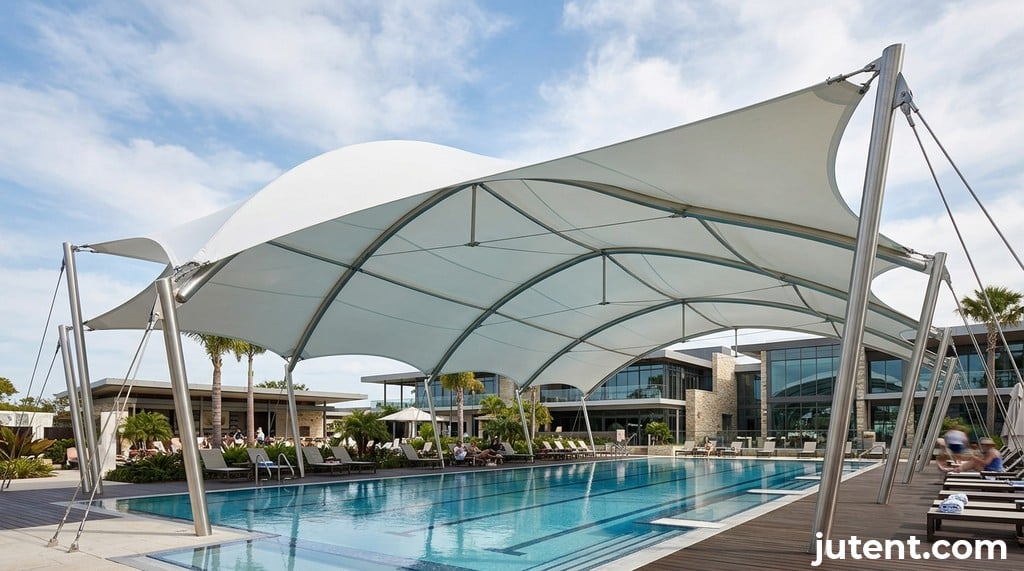
Pool Shade
How Pool Tensile Shade Structures Work: Steel, Membrane, and Drainage
The functionality of a pool tensile shade structure hinges on the synergistic interaction of its primary components: the steel support structure, the tensioned membrane, and an integrated drainage system. The steel framework, typically fabricated from high-grade Q235B or Q355B steel, provides the necessary strength and rigidity to support the membrane and resist environmental forces. This steel is treated with an epoxy zinc-rich primer followed by an acrylic or fluorocarbon topcoat, or hot-dip galvanizing, to ensure long-term corrosion resistance. The membrane, often a 1050 g/m² PVDF or PTFE fabric, is stretched taut across the steel frame, creating a dynamic, sculptural form. This tension is crucial for the membrane's stability, its ability to shed water, and its resistance to wind uplift.
Water management is critical. The inherent curvature and tension of the membrane are designed to direct rainwater towards specific low points or gutters, which then channel water away from the pool deck. This prevents pooling on the fabric and ensures efficient drainage, maintaining the structural integrity and longevity of the system. The engineering behind these structures accounts for various loads, including wind, snow (where applicable), and the weight of the structure itself, ensuring safety and performance over decades.
Pool Tensile Shade Structure Guide
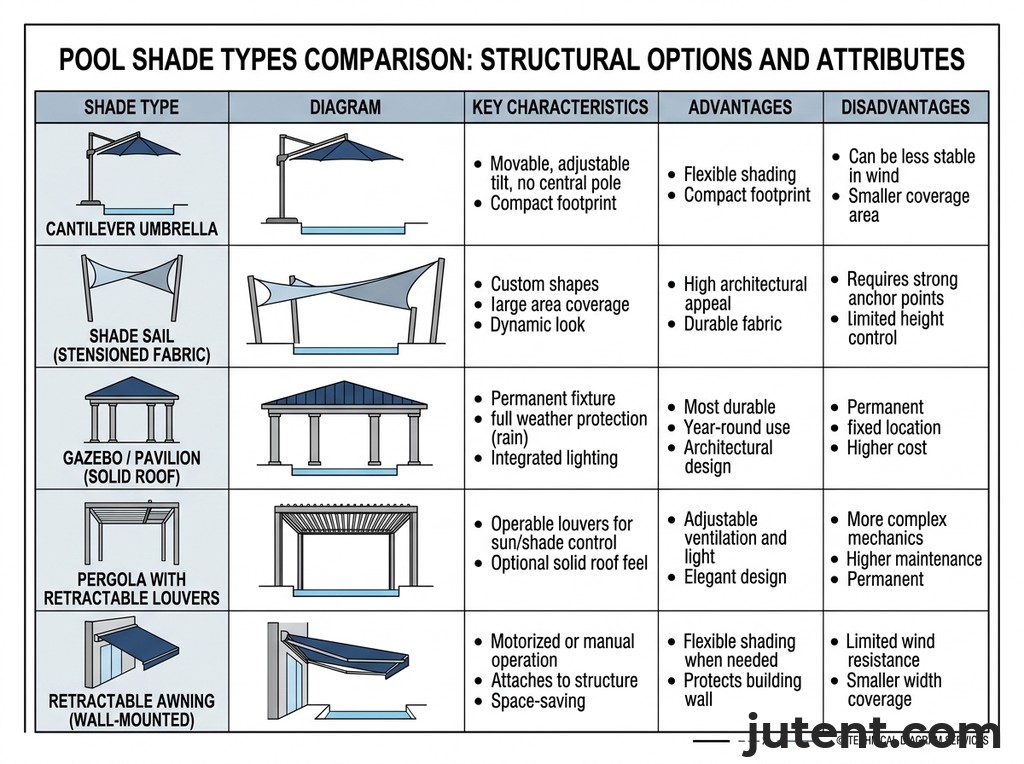
Types of Pool Shade: Tensile Canopy, Hip Roof, and Sail Shade
When considering pool shade options, several distinct types offer varying aesthetics, coverage, and structural characteristics. Understanding these differences is key to selecting the most appropriate solution for an aquatic facility.
Tensile Canopy Structures: These are the most architecturally dynamic and flexible. They utilize the tensioning of a membrane fabric over a steel frame to create expansive, often curvilinear forms. Tensile canopies are highly customizable in shape and size, making them ideal for covering large, irregularly shaped pool areas. They excel at providing broad, unobstructed shade while maintaining an open, airy feel. Their design allows for excellent natural ventilation and efficient rainwater runoff due to their inherent three-dimensional curvature.
Hip Roof Structures: While not strictly “tensile” in the same architectural sense, hip roof shade structures offer a more traditional, rectilinear aesthetic. They typically feature a four-sided roof that slopes downwards to the walls, supported by a steel frame. These structures provide consistent, uniform shade and are often chosen for their classic appearance and ease of integration with existing architecture. They are effective for rectangular pools and offer reliable protection, though they may not achieve the same expansive, column-free spans as some tensile designs.
Sail Shades: These are characterized by their minimalist design, using one or more pieces of tensioned fabric anchored at multiple points, often without a full perimeter frame. Sail shades evoke a nautical aesthetic and are excellent for creating partial or artistic shade patterns. While they offer flexibility in design and can be visually striking, they typically provide less comprehensive, continuous coverage than full tensile canopies or hip roof structures. They are often used for smaller areas or as decorative accents rather than primary, full-pool shade solutions.
Each type offers distinct advantages, and the choice often comes down to the desired aesthetic, the specific coverage requirements, and the overall architectural vision for the aquatic facility.
What a Pool Shade Structure Costs: A Realistic Range
Understanding the cost implications of a pool tensile shade structure is crucial for accurate project budgeting. Pricing for these engineered systems is typically quoted on an EXW (Ex Works) per square meter (m²) basis, and it's important to recognize that several factors influence the final figure. Based on Jutent's experience across 400+ projects in 30+ countries, the following ranges provide a realistic overview:
- Tensile Membrane Structure (Minimal Steel): For simpler designs with less complex steelwork, costs can range from $30–$50/m². These are often basic, functional shade solutions.
- PVDF Membrane, Simple Form: For structures utilizing a standard PVDF membrane in a relatively straightforward architectural form, expect costs between $40–$70/m². This represents a common balance of durability and design.
- PVDF Membrane, Complex Form: More intricate designs, featuring complex curves, larger spans, or unique architectural expressions, will naturally incur higher costs. For these, the range is typically $60–$90/m².
- PTFE Membrane: Opting for a PTFE membrane, known for its exceptional longevity and self-cleaning properties, will add approximately $20/m² to the PVDF ranges.
It's important to note that these prices are for the structure itself, EXW, and do not include shipping, installation, or foundation work. The minimum project scope for Jutent is 100 m². Factors like the complexity of the design, the specific steel grade and surface treatment (e.g., hot-dip galvanizing vs. painted), the membrane type and thickness, and the project's geographic location (influencing wind/snow load requirements) all contribute to the final cost. For export projects, Jutent can provide design drawings, calculations, material specifications, installation manuals, and free remote guidance, subject to project scope and contract terms. On-site supervision is also available as a paid service.
When a Pool Tensile Shade Structure Makes Sense
A pool tensile shade structure is a strategic investment that makes sense in several key scenarios for aquatic facility developers and contractors.
Firstly, in regions with intense solar radiation, such as tropical or desert climates, providing effective UV protection is not just a luxury but a necessity for public health and safety. A tensile structure offers significant UV blockage, protecting swimmers and staff from harmful rays and reducing the risk of sunburn and long-term skin damage.
Secondly, for facilities aiming to extend their operational hours or enhance user comfort, shade is invaluable. By reducing direct sun exposure and lowering surface temperatures, a shaded pool area becomes more inviting during peak sun hours, encouraging longer stays and greater patron satisfaction. This can translate into increased revenue and positive word-of-mouth.
Thirdly, from a maintenance perspective, shade can help reduce water evaporation and minimize the degradation of pool chemicals due to UV exposure, potentially leading to lower operational costs over time. It also protects pool liners and other equipment from direct sun damage, extending their lifespan.
Finally, a well-designed tensile shade structure adds significant aesthetic value and architectural distinction to an aquatic facility. It can become a signature element, enhancing the overall appeal and branding of the venue. For projects prioritizing sustainability, the passive cooling benefits and reduced energy consumption for auxiliary cooling systems (if applicable) align with green building initiatives. When the goal is to create a durable, attractive, and health-conscious aquatic environment that maximizes user enjoyment and operational efficiency, a pool tensile shade structure is an optimal solution.
FAQ
- Q: How long does a pool tensile shade structure last?
- A: The lifespan of a pool tensile shade structure is determined by its components. A high-quality PVDF membrane, such as the 1050 g/m² standard used by Jutent, typically has a service life of 15–20 years, backed by a 10-year warranty. PTFE membranes offer even greater longevity, with a 15-year warranty and a service life often exceeding 25 years. The steel support structure, fabricated from Q235B or Q355B steel with appropriate surface treatments like hot-dip galvanizing or epoxy zinc-rich primer with a fluorocarbon topcoat, is engineered for a service life of 25–30 years.
- Q: Is a pool tensile shade structure suitable for indoor pools?
- A: Pool tensile shade structures are primarily designed for outdoor aquatic environments. Their open-air design maximizes natural ventilation and provides protection from solar radiation while maintaining an outdoor feel. For indoor pools, the requirements are fundamentally different, focusing on full enclosure, climate control, and humidity management. Indoor pool enclosures typically utilize different structural systems, such as rigid frame buildings or specialized transparent roofing, to create a controlled indoor environment. A tensile shade structure would not provide the necessary thermal or atmospheric isolation for an indoor pool.
If you're considering a pool shade structure for an aquatic facility, send us your project brief for a free consultation.