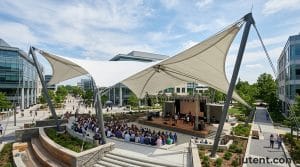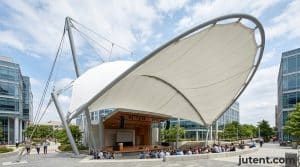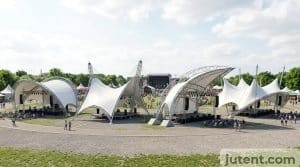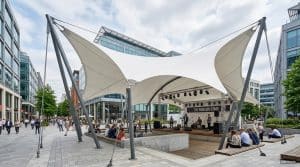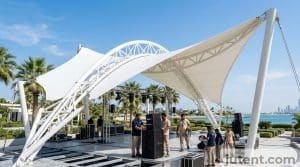

An outdoor stage canopy installation involves foundation work, steel erection, membrane tensioning, and rigging hardware installation. This guide clarifies what the manufacturer provides and what your site team needs to prepare.
Successfully installing an outdoor stage canopy requires precise coordination between the manufacturer and the contractor's site team. Before commencing any work, it's crucial to understand the distinct phases of the project and the responsibilities associated with each. This decision framework outlines the typical scope of work, ensuring your project progresses efficiently and safely. From site preparation and foundation construction to the final tensioning of the membrane, each step is critical. Missteps in early phases can lead to delays and increased costs, making a clear understanding of the division of labor essential for project managers and site supervisors. This guide will walk you through the necessary preparations and the support you can expect from a manufacturer like Jutent Engineering, helping you anticipate challenges and streamline your installation process.
The Four Phases of an Outdoor Stage Canopy Installation
An outdoor stage canopy installation, whether for a permanent venue or a semi-permanent event space, typically unfolds in four distinct phases. Understanding this sequence is fundamental for effective project management and resource allocation. The initial phase involves all necessary foundation work, which is critical for the structural integrity and longevity of the canopy. This includes excavation, rebar placement, and concrete pouring, all executed according to the manufacturer's detailed foundation drawings. Following this, the steel structure erection begins, where the primary framework of columns, beams, and trusses is assembled and secured. This phase requires specialized lifting equipment and skilled personnel to ensure accurate alignment and secure connections.
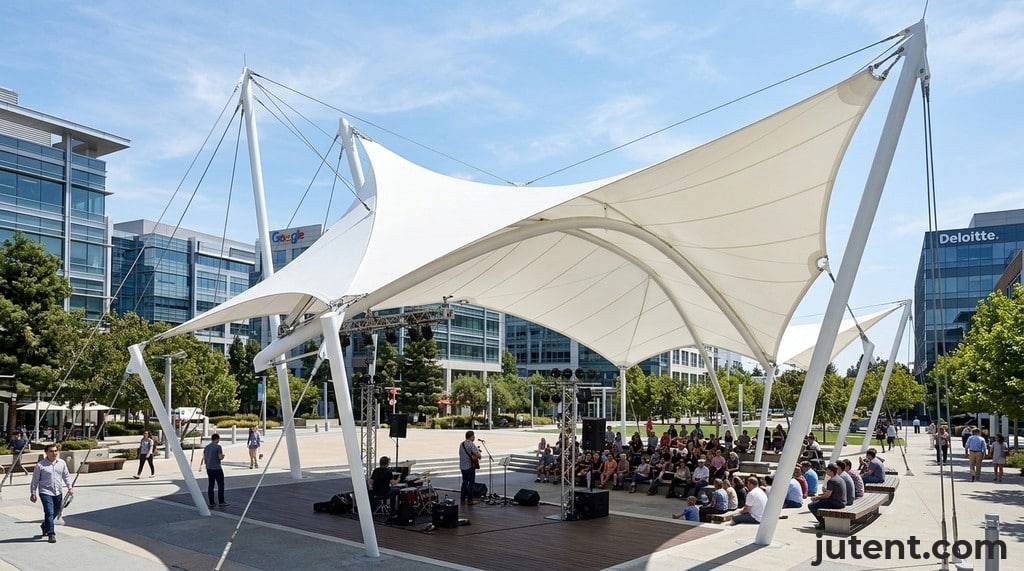
Once the steel framework is in place, the third phase focuses on the installation and tensioning of the membrane. This delicate process involves lifting the pre-fabricated membrane panels, attaching them to the steel structure, and then systematically tensioning them to achieve the designed form and stability. The final phase encompasses the installation of all rigging hardware, lighting, sound systems, and any other ancillary components required for the stage's full functionality. Each phase demands specific expertise and equipment, highlighting the importance of a well-coordinated team. Based on Jutent's experience across 400+ projects in 30+ countries, meticulous planning for each phase significantly reduces potential on-site complications. For more information on our product range, visit our Stage Covers page.
Foundation Work: What Your Civil Team Needs to Complete Before Delivery
The foundation work is arguably the most critical preliminary step for any outdoor stage canopy installation, directly impacting the structure's stability and safety. Your civil team is responsible for preparing the site and constructing the foundations well in advance of the steel and membrane delivery. This phase commences with thorough site surveying and excavation, ensuring the ground is level and stable. Detailed foundation drawings, provided by the manufacturer, will specify the exact dimensions, depths, and reinforcement requirements for each footing. These drawings are engineered to withstand the specific wind loads, snow loads, and seismic conditions of the project location, ensuring the long-term integrity of the structure.
Key tasks for your civil team include:
* Site Clearance and Leveling: Preparing the ground, removing obstructions, and ensuring a stable, level base.
* Excavation: Digging trenches and pits to the specified depths for footings and anchor points.
* Reinforcement Installation: Placing rebar cages according to the structural drawings, ensuring proper concrete cover.
* Formwork Construction: Building forms for concrete pouring that match the exact dimensions of the foundations.
* Anchor Bolt Placement: Precisely setting anchor bolts or plates into the concrete before it cures. These must be perfectly aligned and level to facilitate the subsequent steel erection.
* Concrete Pouring and Curing: Using the specified concrete mix and allowing adequate curing time before any structural loads are applied.
Failure to adhere strictly to the foundation drawings can compromise the entire structure. It is essential to verify all dimensions and alignments before concrete pouring. For a deeper understanding of the design considerations for these structures, refer to our Outdoor Stage Canopy Guide.
Steel Structure Erection: Sequence and Equipment Requirements
Once the foundations have cured and are ready to bear load, the steel structure erection can commence. This phase involves assembling the primary framework that will support the tensile membrane. The sequence of erection is crucial for safety and efficiency, typically starting with the main columns, followed by the primary beams, and then the secondary structural elements. Each component is fabricated off-site and delivered ready for assembly, often with pre-drilled holes for bolted connections.
Essential equipment for this phase includes:
* Cranes: Mobile cranes or telescopic handlers are indispensable for lifting heavy steel members into position. The crane's capacity and reach must be appropriate for the largest and heaviest components, considering the site layout and access.
* Scaffolding or Man Lifts: For safe access to connection points at height.
* Lifting Gear: Slings, shackles, and spreader bars designed for safe handling of steel sections.
* Torque Wrenches: For tightening high-strength bolts to specified torque values, ensuring secure connections.
* Surveying Equipment: Total stations or laser levels for verifying the plumb, level, and alignment of all steel members.
* Welding Equipment (if applicable): While most connections are bolted, some designs may require on-site welding.
The erection sequence typically involves:
1. Column Installation: Erecting and temporarily bracing the main support columns onto the anchor bolts in the foundations.
2. Primary Beam Assembly: Lifting and bolting the main horizontal or curved beams between the columns.
3. Secondary Structure and Bracing: Installing purlins, trusses, and cross-bracing to complete the structural frame.
4. Connection Verification: Double-checking all bolted connections for proper torque and ensuring all members are plumb and level.
Safety protocols are paramount during steel erection, including fall protection, proper rigging techniques, and clear communication among the crew.
Membrane Installation and Rigging Hardware: What Arrives Pre-Installed
The membrane installation is a specialized process that gives the tensile structure its distinctive form and function. The membrane panels, typically made from high-quality PVDF or PTFE material, are pre-fabricated in controlled factory environments to precise dimensions. For export projects, Jutent can provide design drawings, calculations, material specifications, installation manuals, and free remote guidance, subject to project scope and contract terms. These panels arrive on-site folded and packaged, ready for deployment.
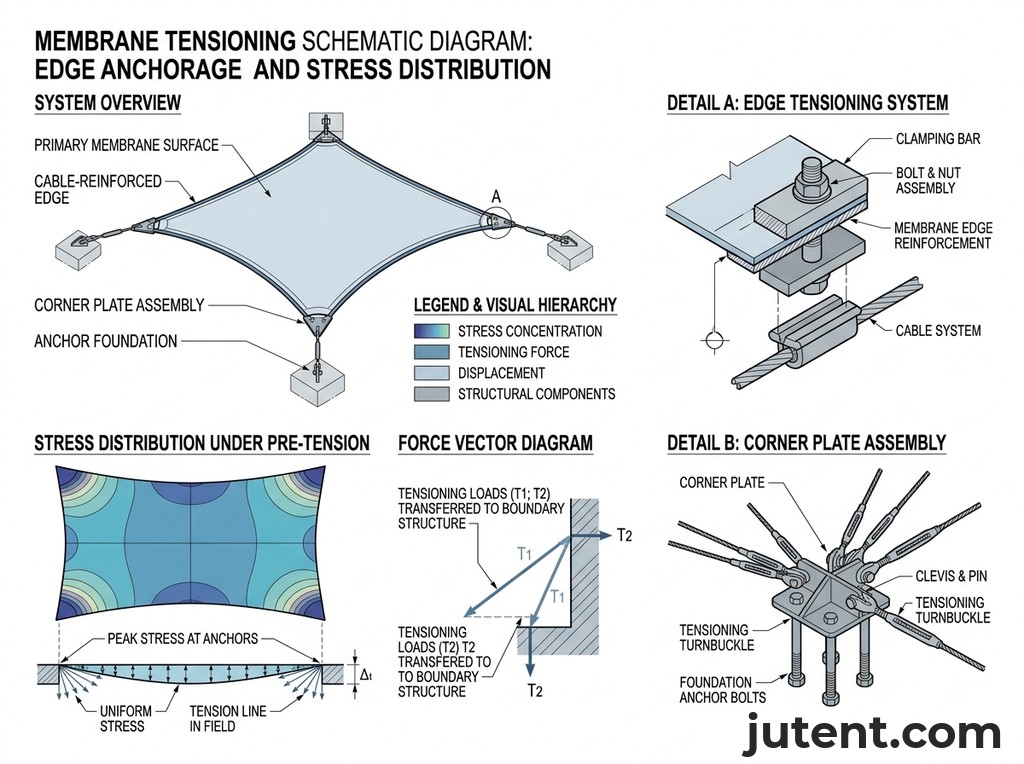
During this phase, the membrane panels are carefully lifted onto the steel structure using specialized lifting equipment and ropes, avoiding any sharp edges or abrasive surfaces that could damage the material. The panels are then progressively attached to the steel frame at designated connection points using a combination of clamps, cables, and specialized hardware. The critical step is the tensioning process, where the membrane is systematically pulled taut to achieve its designed curvature and structural stability. This often involves hydraulic jacks or turnbuckles, applied in a specific sequence to distribute tension evenly and eliminate wrinkles.
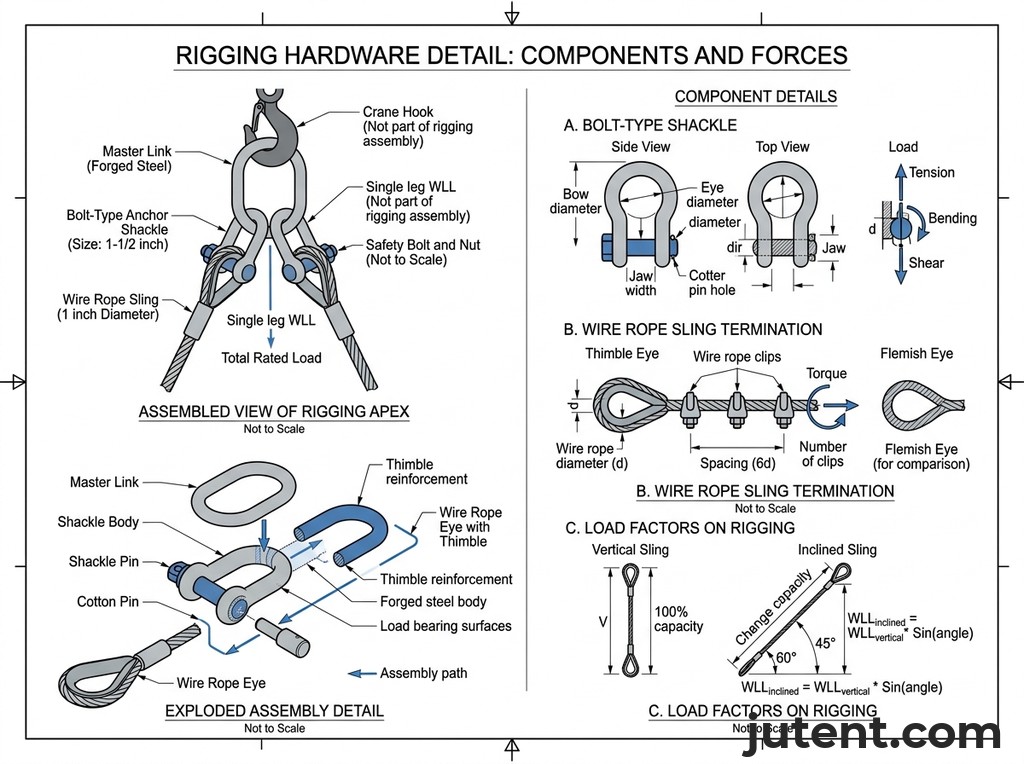
Regarding rigging hardware, Jutent Engineering ensures that many critical components arrive pre-installed or pre-assembled to streamline on-site work. This typically includes:
* Membrane Edge Cables: Often pre-threaded into the membrane's perimeter pockets or attached to the membrane edges.
* Corner Plates and Eyelets: Pre-welded or attached to the membrane for connection to the steel structure.
* Some Cable End Fittings: Swaged or crimped onto cables in the factory, ready for connection to turnbuckles or anchor points.
* Fabricated Steel Brackets: Any specialized brackets for membrane attachment that are integral to the steel structure will be supplied with the steel package.
This pre-installation reduces the complexity and time required for on-site assembly, allowing your team to focus on the precise positioning and tensioning of the membrane itself.
What Jutent Provides: Drawings, Instructions, and Remote Technical Support
Jutent Engineering is committed to supporting your installation team with thorough documentation and expert guidance throughout the project lifecycle. Our scope of work extends beyond manufacturing and delivery to ensure a smooth and successful installation.
We provide a complete package of technical documentation, which includes:
* Detailed Foundation Drawings: These specify all dimensions, reinforcement schedules, and anchor bolt layouts required for your civil team.
* Steel Structure Erection Drawings: These illustrate the assembly sequence, connection details, and component numbering for efficient steel erection.
* Membrane Installation Manuals: Step-by-step instructions for lifting, attaching, and tensioning the membrane, including specific tensioning sequences and values.
* Rigging Hardware Schematics: Diagrams detailing the placement and connection of all cables, turnbuckles, and other rigging components.
* Material Specifications: Documentation for all steel (Q235B, Q355B with epoxy zinc-rich primer + acrylic topcoat or hot-dip galvanizing) and membrane materials (1050 g/m² PVDF or PTFE, SS304 standard, SS316 optional upgrade).
* Structural Calculations: Engineering reports verifying the design's compliance with relevant codes and load requirements.
In addition to these critical documents, Jutent offers free remote technical support. Our engineering team is available to answer questions, clarify details, and provide guidance via phone or video conference, helping your site team troubleshoot any challenges that may arise during installation. For larger or more complex projects, on-site supervision is available as a paid service, providing direct expert oversight. Typical technical values should always be written conservatively and described as subject to project design. Our goal is to empower your team with the knowledge and support needed to install your outdoor stage canopy safely and efficiently, ensuring the final structure meets the highest standards of quality and performance.
FAQ
- Q: How long does it take to install an outdoor stage canopy?
- A: The installation duration for an outdoor stage canopy varies based on size, complexity, and crew experience. A typical 200m² stage canopy, for instance, can be installed by an experienced crew of 4–6 personnel within 4–7 days, assuming all foundation work is completed beforehand and weather conditions are favorable. Larger or more intricate designs, especially those with complex rigging, may require additional time. Proper planning and adherence to the installation sequence provided by Jutent are key to efficient completion.
- Q: Does Jutent provide on-site installation supervision for stage canopy projects?
- A: Yes, Jutent Engineering offers on-site installation supervision as a paid service for projects that require direct expert oversight. While we provide thorough installation manuals and free remote technical support for all projects, on-site supervision can be particularly beneficial for large or complex installations, especially for orders in Southeast Asia. This service ensures that the installation adheres strictly to design specifications and best practices, providing an extra layer of quality assurance and problem-solving expertise.
Request our stage canopy installation guide package — includes foundation drawings, erection sequence, and rigging hardware instructions.