Procuring a toll station canopy from an overseas manufacturer involves more steps than a local purchase. This checklist covers everything from RFQ to delivery, ensuring contractors and procurement managers navigate the complexities of toll station canopy procurement with confidence. This guide focuses on due diligence, technical verification, and supplier qualification, critical for successful toll station canopy sourcing.
Step 1: Define the Scope — Dimensions, Wind Zone, and Requirements
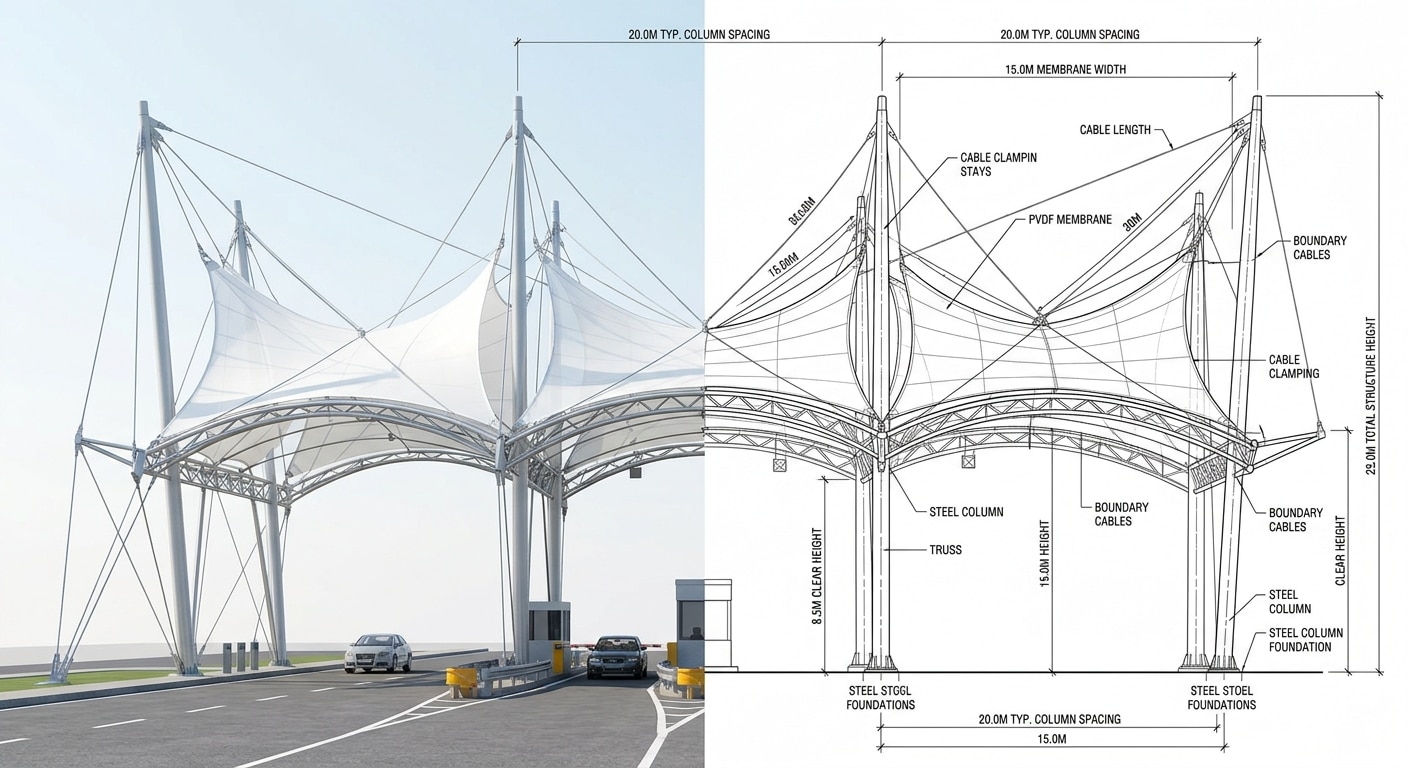
The foundational step in toll station canopy procurement is a precise definition of the project scope. This clarity prevents costly revisions and ensures accurate quotations. Begin by establishing the exact dimensions of the canopy, including length, width, and height clearances. Consider the number of lanes the canopy must cover and any specific architectural requirements.
Crucially, identify the local wind load requirements. This is often dictated by regional building codes and is a primary factor in structural design. Provide the manufacturer with the project location's wind speed (e.g., in km/h or m/s) and exposure category. A reputable manufacturer will then perform detailed wind load calculations to ensure structural integrity.
Beyond dimensions and wind, specify material preferences. For the membrane, PVDF is a common choice, offering a 10-year warranty and 15+ years service life, while PTFE provides a 15-year warranty and 25+ years service life. Standard membrane weight is typically 1050 g/m². For steel, specify grades like Q235B or Q355B. Surface treatment options include epoxy zinc-rich primer + fluorocarbon topcoat, or hot-dip galvanizing. Clearly state any aesthetic requirements, such as color or specific finishes.
Finally, outline any unique operational or environmental considerations. Does the canopy need to integrate with existing lighting or signage? Are there specific drainage requirements? Providing a thorough toll station canopy specification checklist at this stage streamlines the entire process.
Toll Gas Stations
Step 2: Evaluate Suppliers — What to Ask and What to Look For
Supplier evaluation is a critical phase in toll station canopy procurement. Beyond initial price comparisons, contractors and procurement managers must conduct thorough due diligence. Start by verifying the manufacturer's experience. Ask for a portfolio of similar projects, specifically toll station canopies or large-scale tensile structures. Based on Jutent's experience across 400+ projects in 30+ countries, a proven track record indicates reliability and expertise in complex engineering.
Inquire about their engineering capabilities. Do they have in-house structural engineers capable of performing wind load calculations and producing detailed shop drawings? Request sample engineering drawings and calculation reports from previous projects.
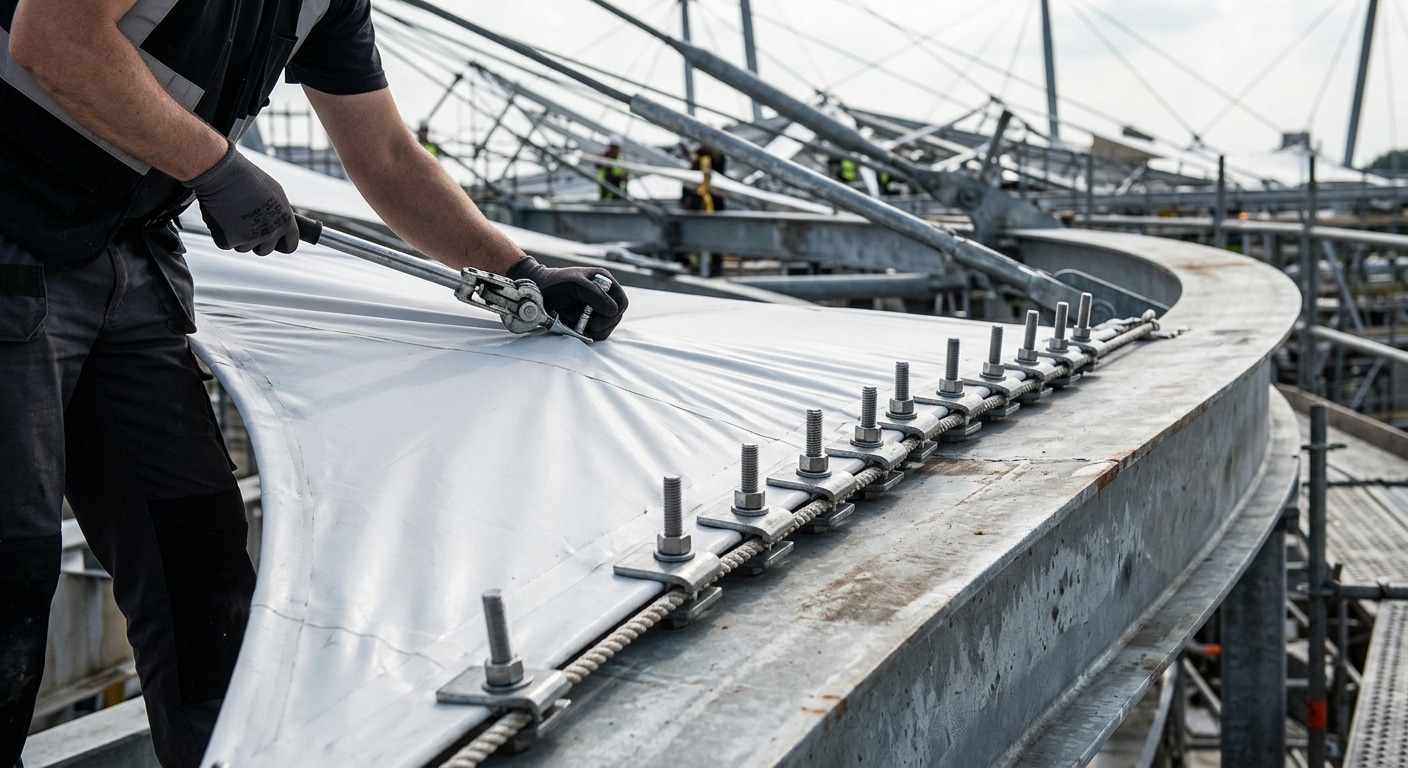
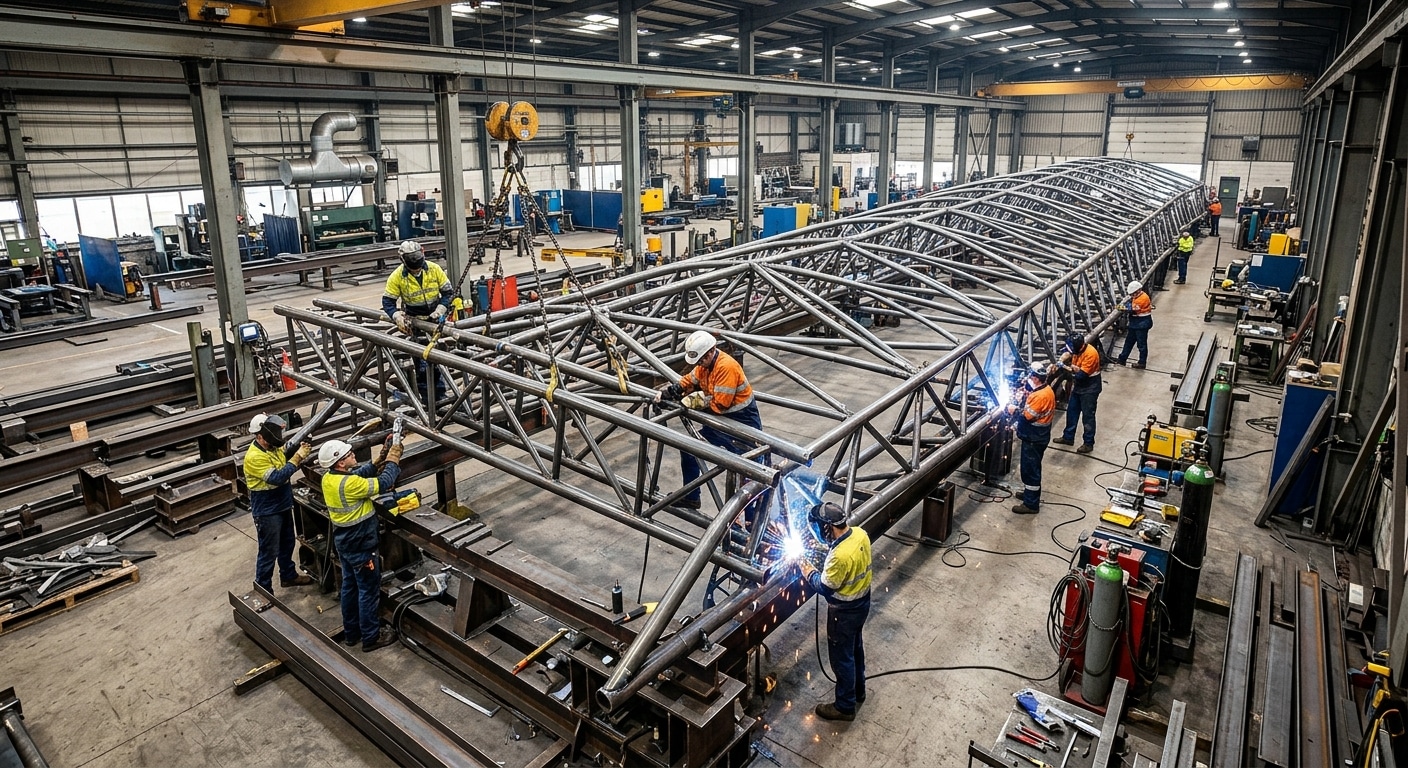
Assess their manufacturing facilities. While an on-site visit may not always be feasible for overseas suppliers, request production inspection photos or videos. Understand their quality control processes for both steel fabrication and membrane welding. Ask about their material sourcing and verification procedures for steel (e.g., mill certificates for Q235B, Q355B) and membrane (e.g., test certificates for 1050 g/m² PVDF or PTFE).
Crucially, clarify their export experience. An experienced exporter will understand international shipping logistics, customs procedures, and documentation requirements. Ask about their after-sales support, including installation guidance. For export projects, Jutent can provide design drawings, calculations, material specifications, installation manuals, and free remote guidance, subject to project scope and contract terms. On-site supervision is also available as a paid service.
[IMAGE: Production inspection photo]
About
Step 3: Review the Quotation — What Should and Shouldn't Be Included
A detailed quotation is the backbone of any toll station canopy tender. When reviewing a quote, ensure it is itemized and transparent, reflecting all agreed-upon specifications. A proper quotation for a tensile structure should clearly separate costs for design, materials, fabrication, and shipping.
What should be included:
- Detailed Bill of Materials (BOM): This should list steel grades (e.g., Q235B, Q355B), membrane type (e.g., 1050 g/m² PVDF or PTFE), and connection hardware (e.g., SS304 standard, SS316 optional).
- Surface Treatment Specification: Clearly state the chosen treatment (e.g., epoxy zinc-rich primer + fluorocarbon topcoat, hot-dip galvanizing).
- Engineering and Design Fees: Separate costs for structural analysis, shop drawings, and installation guides.
- Fabrication Costs: Per square meter pricing for the structure. For reference, a PVDF membrane, simple form structure might range from $40–$70/m², while a complex form could be $60–$90/m². PTFE membrane adds approximately $20/m² to these ranges. Note that minimum project scope is 100 m².
- Packing Details: Type of packaging (e.g., wooden crates, steel frames) and associated costs.
- Shipping Terms: Clearly state Incoterms (e.g., FOB, CIF) and estimated freight costs to the destination port.
- Warranty Information: Specify warranties for the steel structure (2 years), PVDF membrane (10 years), and PTFE membrane (15 years).
- Payment Schedule: Typical terms are 30–50% deposit, balance before shipment.
- Lead Time: Estimated production and delivery schedule.
What shouldn't be included (or should be clarified):
- Vague Descriptions: Avoid quotes that lack specific material grades or treatment details.
- Hidden Fees: Ensure all potential costs, including customs duties or local taxes, are clearly outlined or explicitly excluded.
- Unrealistic Pricing: Be wary of prices significantly lower than the market average, as this may indicate compromised quality.
- Installation Costs (unless specified): Clarify if installation supervision or labor is included, or if it's a separate service.
Step 4: Confirm the Order and Monitor Production
Once the quotation is thoroughly reviewed and all terms are agreed upon, the next step in toll station canopy procurement is order confirmation. This typically involves signing a formal contract and remitting the initial deposit. The contract should reiterate all technical specifications, payment terms, warranty details, and delivery schedules.
After order confirmation, proactive monitoring of the production phase is essential. Request a production schedule from the manufacturer, detailing key milestones such as steel cutting, fabrication, membrane cutting and welding, surface treatment, and final assembly checks.
Maintain regular communication with the supplier. Request progress updates, including photos or videos at various stages of fabrication. This allows for early detection of any potential issues and ensures that the manufacturing process adheres to the agreed-upon specifications. For critical components, consider requesting third-party inspection services at the factory, especially for steel structure welding and membrane quality checks.
Verify that all material certificates (steel mill certificates, membrane test reports) are being prepared and will be provided with the shipment. Confirm that the surface treatment process (e.g., epoxy zinc-rich primer + fluorocarbon topcoat) is being applied correctly and documented. Typical technical values should always be written conservatively and described as subject to project design. This ongoing oversight during production minimizes surprises upon delivery and ensures the final product meets the required quality and engineering standards for your toll station canopy RFQ.
Step 5: Receive, Inspect, and Install
The final stage of toll station canopy procurement involves receiving the shipment, conducting a thorough inspection, and managing the installation. Upon arrival at the port or site, immediately verify the contents against the packing list and Bill of Lading. Document any visible damage to packaging or components before accepting delivery.
Unpack the components carefully and perform a detailed inspection. Check all steel members for correct dimensions, surface treatment quality (e.g., hot-dip galvanizing), and any transit damage. Inspect the membrane panels for tears, punctures, or manufacturing defects. Verify that all connection hardware (e.g., SS304, SS316) and accessories are present and accounted for. Any discrepancies or damage should be immediately reported to the manufacturer and documented with photographic evidence.
For installation, refer to the manufacturer's provided installation guide. For export projects, Jutent can provide design drawings, calculations, material specifications, installation manuals, and free remote guidance, subject to project scope and contract terms. On-site supervision is also available as a paid service to ensure correct assembly and tensioning of the membrane. Proper installation is crucial for the structural integrity and longevity of the toll station canopy. Ensure all safety protocols are followed during the erection process. Upon completion, conduct a final quality check of the installed structure, confirming adherence to design specifications and overall aesthetic requirements.
FAQ
- What documents should a toll station canopy manufacturer provide with an order?
- A reputable manufacturer should provide a thorough set of documents to ensure compliance and facilitate installation. This includes detailed engineering drawings for fabrication and assembly, wind load calculations specific to the project site, membrane test certificates verifying material properties, and steel material certificates (mill certificates) for structural components. a packing list detailing all shipped items and a clear installation guide are essential for successful project execution.
- What payment terms are typical for a toll station canopy order from China?
- Standard payment terms for overseas manufacturing, particularly from China, typically involve a two-stage payment structure. An initial deposit of 30–50% of the total order value is usually required upon order confirmation to commence production. The remaining balance is then due before shipment, once the manufacturing process is complete and the goods are ready for dispatch from the factory. This structure provides security for both the buyer and the manufacturer.
Contact Jutent with your project details and we'll guide you through every step of the procurement process.