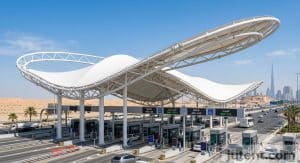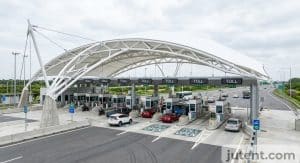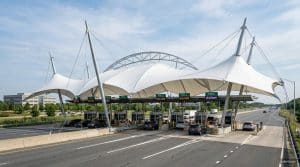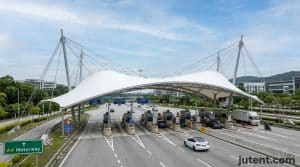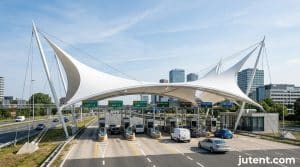

For contractors in Nigeria, Kenya, and South Africa, sourcing a toll station canopy locally often means limited options and high prices. Here's how importing from China works in practice.
Why African Contractors Source Toll Station Canopy from China
The demand for modern, durable infrastructure across Africa, particularly for essential services like toll stations, is rapidly growing. However, local fabrication options for specialized tensile structures, such as toll station canopies, often present significant challenges. These include limited access to high-grade materials, a scarcity of specialized fabrication expertise, and higher overall costs due to smaller production scales and less efficient supply chains. This reality drives many African contractors to look internationally, with China emerging as a primary sourcing hub.
Chinese manufacturers offer a compelling combination of competitive pricing, advanced manufacturing capabilities, and a proven track record in producing large-scale tensile structures. For a toll station canopy Africa project, this means access to a wider range of design options, superior material quality (such as 1050 g/m² PVDF or PTFE membranes), and the ability to meet stringent international standards. Based on Jutent's experience across 400+ projects in 30+ countries, importing from China ensures that contractors can deliver projects that are not only cost-effective but also built to last, capable of withstanding diverse African climates. This approach mitigates the risks associated with local sourcing limitations, providing a reliable path to project success for a toll station canopy South Africa, toll station canopy Nigeria, or toll station canopy Kenya installation. Toll Gas Stations
What to Specify When Importing: Membrane Grade, Steel, and Documentation
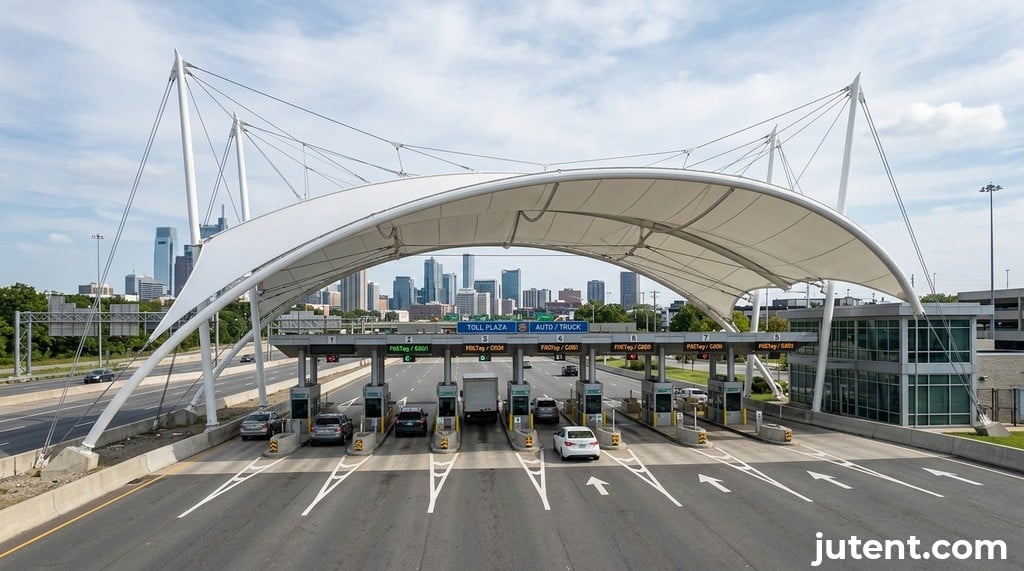
When importing a toll station canopy Africa structure, precise specifications are crucial to ensure the final product meets local requirements and environmental conditions. The primary components to focus on are the membrane grade, steel specifications, and thorough documentation.
For the membrane, PVDF (Polyvinylidene Fluoride) and PTFE (Polytetrafluoroethylene) are the industry standards for durability and longevity. A 1050 g/m² PVDF membrane offers a 10-year warranty and a 15+ years service life, making it suitable for most applications. For projects demanding extreme durability and a longer lifespan, a PTFE membrane provides a 15-year warranty and a 25+ years service life. These membranes are engineered to resist UV radiation, high temperatures, and heavy rainfall, common challenges in African climates.
Steel components, typically Q235B or Q355B grades, require specific surface treatments to prevent corrosion. Approved treatments include epoxy zinc-rich primer + acrylic topcoat, epoxy zinc-rich primer + fluorocarbon topcoat, or hot-dip galvanizing. These treatments are essential for the steel's service life in corrosive coastal or humid environments. For export projects, Jutent can provide design drawings, calculations, material specifications, installation manuals, and free remote guidance, subject to project scope and contract terms. This documentation is vital for local permitting and structural integrity verification. Specifying SS304 as standard, with SS316 as an optional upgrade for enhanced corrosion resistance, further ensures the longevity of critical fittings. Toll Station Canopy Guide
Shipping to African Ports: How Structures Are Packed
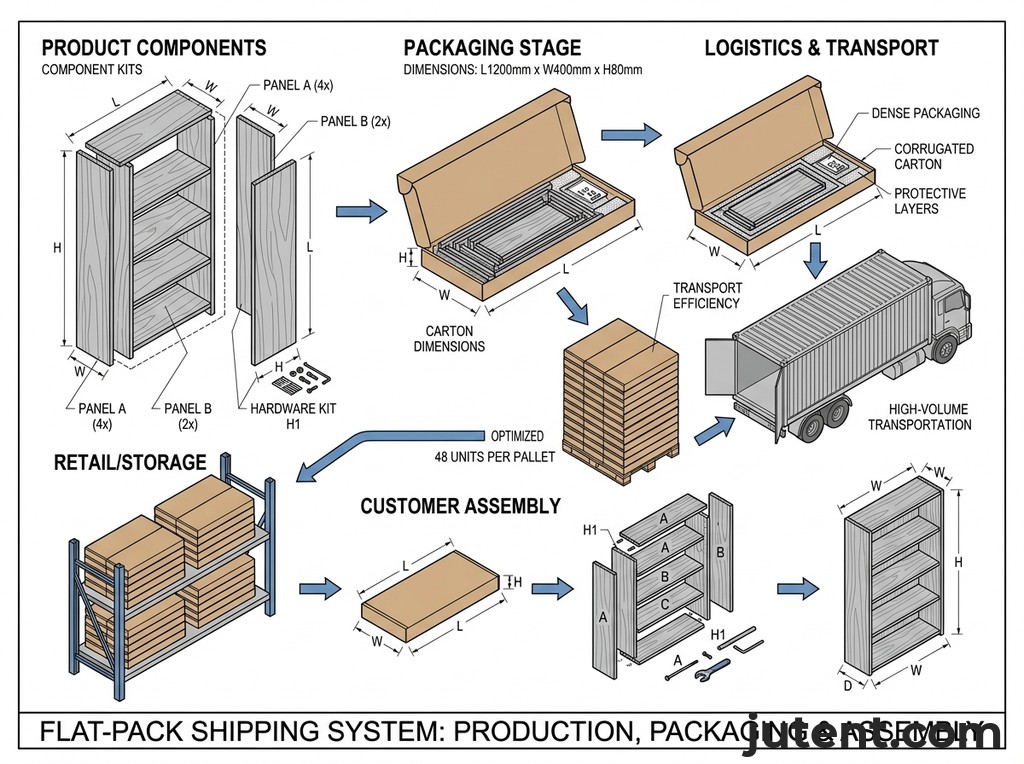
The logistics of shipping large tensile structures from China to African ports are meticulously planned to ensure safe and cost-effective delivery. The primary method involves flat-packing all steel components and carefully rolling membranes for containerization. This approach maximizes container space and minimizes shipping costs.
Steel structural elements, including columns, beams, and connection plates, are precisely fabricated, pre-drilled, and then disassembled for flat-packing. Each component is clearly marked according to the installation drawings, simplifying assembly on-site. Surface treatments, such as hot-dip galvanizing or multi-layer epoxy and fluorocarbon coatings, are applied before packing to protect against corrosion during transit and throughout the structure's service life. Smaller components like cables, clamps, and fasteners (typically SS304 or SS316) are securely boxed and labeled.
Membrane panels, whether PVDF or PTFE, are carefully folded or rolled and protected with reliable packaging materials to prevent damage from abrasion, moisture, or punctures. A standard 20ft container can typically carry a 150–300m² structure, depending on the complexity and steel weight. For larger projects, multiple 20ft or 40ft containers are utilized. Jutent works with experienced logistics partners to manage the entire shipping process, from factory loading to port delivery, ensuring all customs documentation for toll station canopy Africa import is prepared accurately. This streamlined process minimizes transit times and reduces the risk of damage, making the import process efficient for contractors.
Cost Comparison: Import vs Local Fabrication in Key African Markets
When considering a toll station canopy project in Africa, a detailed cost comparison between importing from China and local fabrication in markets like Nigeria, Kenya, and South Africa often reveals significant advantages for the import option. While initial perceptions might suggest local sourcing is cheaper due to proximity, the reality for specialized tensile structures is often quite different.
Local fabrication in many African countries faces challenges such as higher raw material costs (often imported themselves), limited access to advanced machinery, and a smaller pool of specialized labor. This can lead to higher per-square-meter costs, longer lead times, and potentially lower quality finishes compared to established Chinese manufacturers. For example, a simple PVDF membrane structure from China might range from $40–$70/m² (EXW), while a complex form could be $60–$90/m². PTFE membrane structures would add approximately $20/m² to these ranges. These prices are for a minimum project scope of 100 m².
In contrast, local fabrication in key African markets can often exceed these figures, especially when factoring in the cost of specialized materials and the expertise required for tensile structures. While local options might save on direct shipping costs, these savings are frequently offset by higher material procurement, fabrication overheads, and the potential for quality compromises. Importing from China, particularly from ISO 9001 and SGS certified manufacturers like Jutent, provides access to economies of scale, efficient production processes, and competitive pricing, ensuring a higher quality product within a predictable budget. This makes the toll station canopy Africa import a more financially viable and quality-assured solution for many contractors.
FAQ
- Q: How are toll station canopy structures shipped to Africa from China?
- A: Steel components are flat-packed after surface treatment (epoxy zinc-rich primer + acrylic topcoat, epoxy zinc-rich primer + fluorocarbon topcoat, or hot-dip galvanizing) and clearly marked for easy assembly. Membrane panels are carefully rolled or folded and protected. A standard 20ft container can typically carry a 150–300m² structure, depending on its design complexity and steel weight. All components are secured to prevent movement and damage during transit to African ports.
- Q: What import duties apply to toll station canopy structures in African countries?
- A: Import duties vary significantly by country across Africa. Factors such as the specific country's tariff schedule, trade agreements, and the classification of the goods (HS code) all influence the final duty rate. Jutent provides thorough HS code documentation and detailed packing lists to help contractors accurately assess and, where possible, minimise duty exposure. It is always recommended for contractors to consult with a local customs broker for precise duty calculations for their specific project location.
Tell us your project location in Africa and we'll provide a cost comparison and logistics plan.