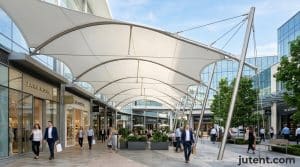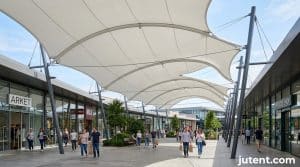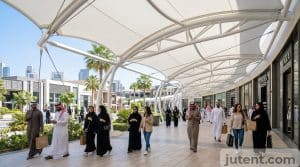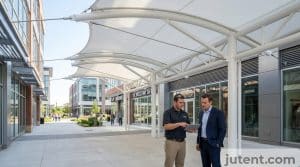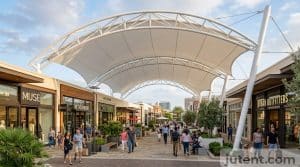

For contractors in Nigeria, Kenya, and South Africa, sourcing a retail walkway canopy locally often means limited options and high prices. The vision of a modern, weather-protected retail environment can be hampered by the scarcity of specialized tensile structure manufacturers, leading to compromises on design, material quality, or budget. Importing from China, however, presents a viable and often superior alternative, offering access to advanced engineering, diverse material choices, and competitive pricing. This article will guide African contractors through the practicalities of sourcing high-quality retail walkway canopies from experienced international manufacturers like Jutent Engineering, ensuring projects meet both aesthetic and structural demands.
Why African Contractors Source Retail Walkway Canopy from China
The demand for modern retail infrastructure across Africa, particularly in burgeoning economies like Nigeria, Kenya, and South Africa, is driving contractors to seek efficient and cost-effective solutions for projects. When it comes to a retail walkway canopy, local fabrication often falls short. Limited access to specialized tensile membrane materials, advanced fabrication machinery, and experienced structural engineers can result in higher costs, longer lead times, and designs that may not withstand the unique environmental challenges of the continent.
Chinese manufacturers, with their mature supply chains and economies of scale, offer a compelling alternative. They provide access to high-grade materials like 1050 g/m² PVDF and PTFE membranes, engineered steel (Q235B, Q355B), and advanced fabrication techniques. This translates into superior product quality, greater design flexibility, and often, a more attractive overall project cost. established manufacturers like Jutent Engineering, with 400+ projects in 30+ countries, bring a wealth of experience in designing structures for diverse climates, including the high temperatures, UV exposure, and heavy rainfall common in many African regions. This expertise ensures that a retail walkway canopy Africa-bound is engineered for durability and longevity.
Retail Walkways
What to Specify When Importing: Membrane Grade, Steel, and Documentation
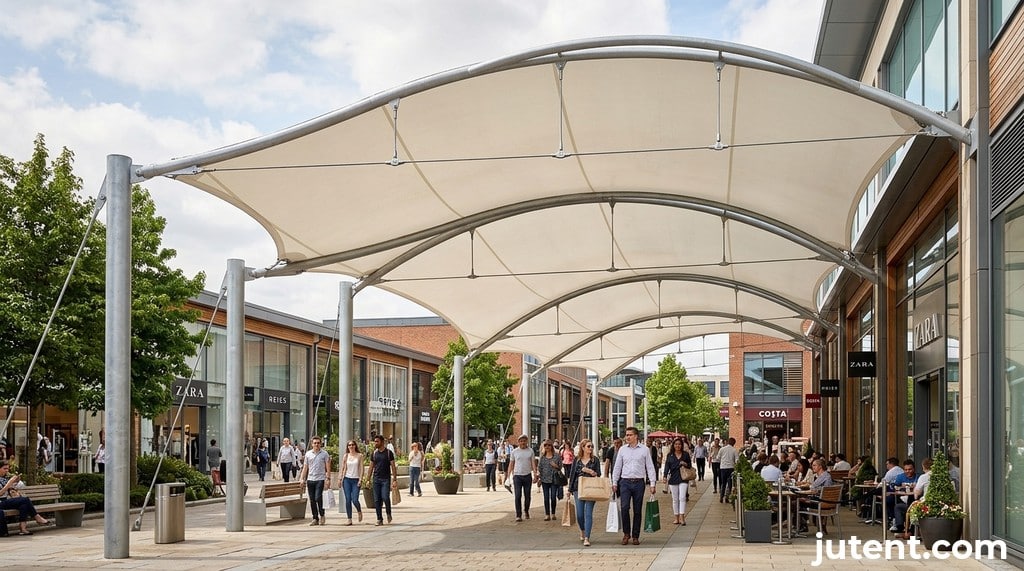
When importing a retail walkway canopy to Africa, precise specifications are crucial to ensure the structure meets local conditions and project requirements. The primary components to focus on are the membrane grade, steel specifications, and the necessary documentation for import and installation.
For the membrane, PVDF (Polyvinylidene Fluoride) and PTFE (Polytetrafluoroethylene) are the industry standards for tensile structures. PVDF membranes, typically 1050 g/m², offer excellent UV resistance and a 10-year warranty, with a service life exceeding 15 years, making them suitable for most retail walkway applications. For projects demanding extreme durability and a longer lifespan, PTFE membranes provide a 15-year warranty and a service life exceeding 25 years, albeit at a higher cost (add ~$20/m² to PVDF range). Always specify the required grammage and coating type.
Steel components, typically Q235B or Q355B, must be specified with appropriate surface treatments to combat corrosion in African climates. Approved options include epoxy zinc-rich primer + acrylic topcoat, epoxy zinc-rich primer + fluorocarbon topcoat, or hot-dip galvanizing. Fasteners should be SS304 as standard, with SS316 available as an optional upgrade for enhanced corrosion resistance.
Documentation is equally vital. For export projects, Jutent can provide design drawings, calculations, material specifications, installation manuals, and free remote guidance, subject to project scope and contract terms. These documents are essential for local permitting, customs clearance, and successful installation. Always ensure your supplier is ISO 9001 and SGS certified, indicating adherence to international quality standards.
Retail Walkway Canopy Guide
Shipping to African Ports: How Structures Are Packed
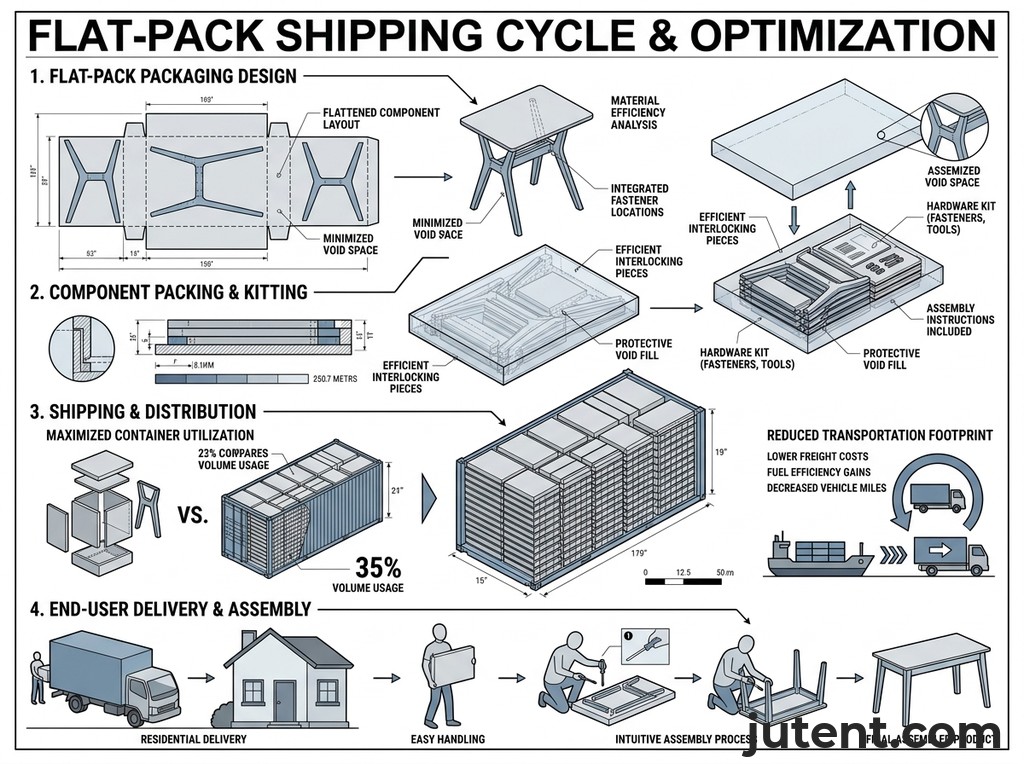
The logistics of shipping a retail walkway canopy from China to African ports like Durban, Lagos, or Mombasa are carefully managed to ensure the integrity of the components and optimize container space. Tensile structures, by their nature, are designed for efficient packing and transport.
Steel components, which form the structural framework, are meticulously flat-packed. This involves disassembling larger sections into manageable pieces that can be stacked efficiently within standard shipping containers. Each steel piece is typically wrapped or protected to prevent scratching and damage during transit. The membrane fabric, being flexible, is rolled and securely packaged in protective layers to prevent creasing, punctures, or environmental exposure. Smaller components like cables, connectors (SS304 standard, SS316 optional), and fasteners are carefully boxed and labelled.
A standard 20ft container can typically carry a 150–300m² structure, depending on the complexity and steel-to-membrane ratio of the design. For larger projects, multiple 20ft or 40ft containers may be utilized. Based on Jutent's experience across 400+ projects in 30+ countries, detailed packing lists and container loading plans are provided to facilitate smooth customs clearance and efficient unloading at the destination port. This systematic approach minimizes shipping costs and reduces the risk of damage, ensuring all components arrive ready for assembly on site.
Cost Comparison: Import vs Local Fabrication in Key African Markets
For contractors in retail walkway canopy South Africa, retail walkway canopy Nigeria, and retail walkway canopy Kenya, a direct cost comparison between importing from China and local fabrication often reveals significant advantages for the import option, especially for projects exceeding 100 m².
Local fabrication, while seemingly convenient, often faces challenges that drive up costs. These include higher material procurement costs for specialized tensile membranes and structural steel, limited access to advanced fabrication equipment, and a smaller pool of experienced labor for complex tensile structures. This can lead to higher per-square-meter costs, longer project timelines, and potentially lower quality finishes.
Importing from China, conversely, benefits from economies of scale and a highly competitive manufacturing environment. For a PVDF membrane, simple form retail walkway canopy, contractors can expect prices ranging from $40–$70/m² (EXW). For more complex designs, this might range from $60–$90/m². PTFE membranes would add approximately $20/m² to these ranges. These prices are for the manufactured structure, excluding shipping, duties, and local installation.
While shipping and import duties (which vary by country) add to the final cost, the initial manufacturing savings, coupled with the superior material quality (e.g., 10-year PVDF warranty, 15-year PTFE warranty) and advanced engineering, often result in a more cost-effective and durable solution overall. For example, a 200m² retail walkway canopy in South Africa, if locally fabricated, might incur significantly higher material and labor costs compared to the EXW price from China plus logistics. This makes retail walkway canopy Africa import a financially sound decision for many projects.
FAQ
- Q: How are retail walkway canopy structures shipped to Africa from China?
- A: Steel components are meticulously flat-packed and protected to optimize container space and prevent damage during transit. The tensile membrane fabric is rolled and securely packaged. Smaller parts like cables and fasteners are boxed. A standard 20ft container can typically carry a 150–300m² structure, depending on its design complexity. Detailed packing lists and loading plans are provided to ensure efficient handling at African ports.
- Q: What import duties apply to retail walkway canopy structures in African countries?
- A: Import duties on retail walkway canopy structures vary significantly by country across Africa. Factors such as the specific HS (Harmonized System) code, the country of origin, and bilateral trade agreements can influence the applicable tariffs. Jutent Engineering provides thorough HS code documentation for all shipments, assisting contractors in accurately calculating and, where possible, minimising their duty exposure in countries like Nigeria, Kenya, and South Africa.
Tell us your project location in Africa and we'll provide a cost comparison and logistics plan.