The late afternoon sun beats down on the aluminum bleachers, baking the metal and making the air shimmer above the empty seats. Soon, parents and students will arrive for the junior varsity soccer match, seeking any sliver of shade available. Without a dedicated structure, many will huddle under small umbrellas or retreat to the distant tree line, missing crucial moments of the game. This scenario is all too common at schools and community sports fields, where spectator comfort and protection from the elements are often overlooked in initial facility planning. A well-designed bleacher canopy, however, offers a practical, cost-effective solution, transforming uncomfortable viewing areas into inviting, protected spaces.
A bleacher canopy is the most cost-effective spectator shade solution for school and community sports facilities. This guide covers structural options, membrane grades, and what a realistic budget looks like.
What a Bleacher Canopy Is and How It Differs from a Full Grandstand Roof
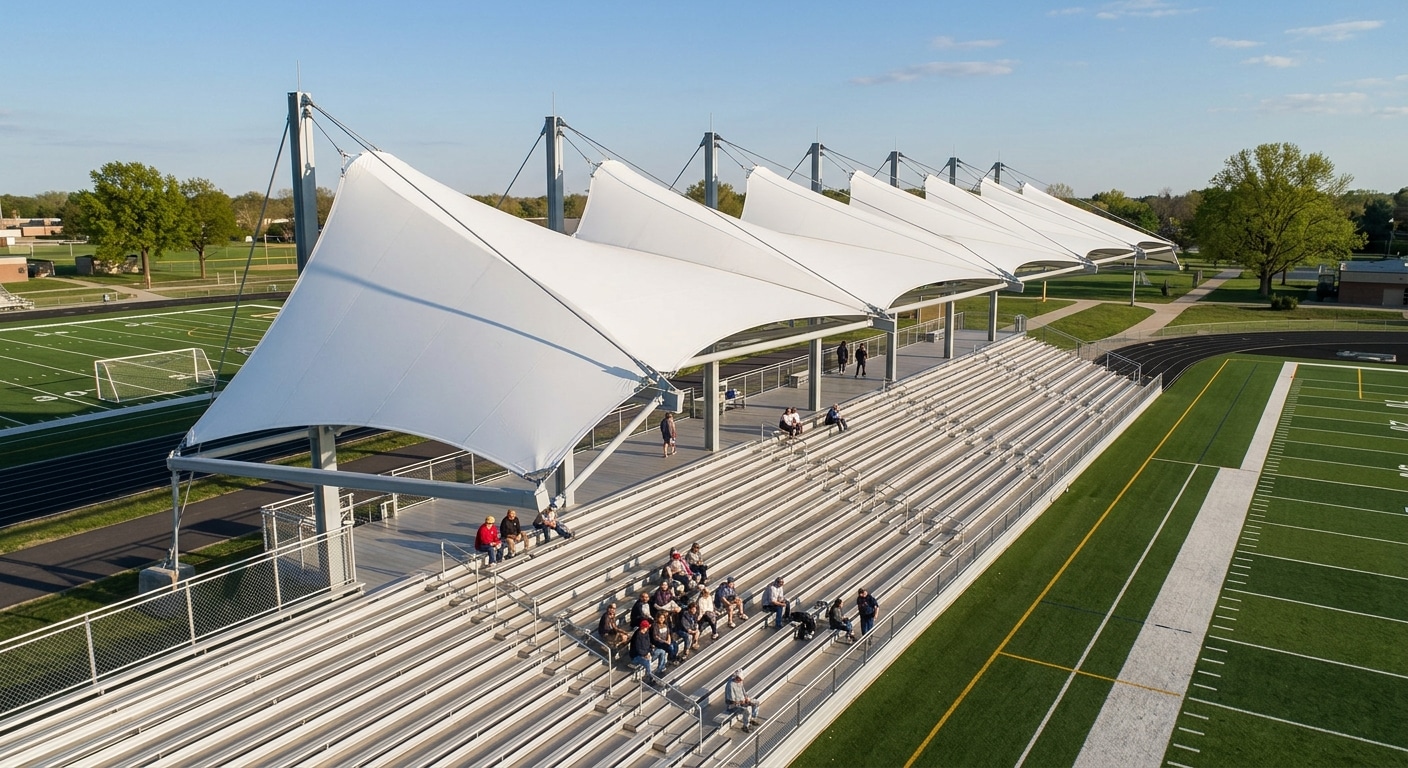
A bleacher canopy is a specialized tensile membrane structure designed to provide shade and weather protection specifically over spectator seating areas. Unlike a full grandstand roof, which typically integrates with a larger building structure and covers a broader range of facilities (such as changing rooms, press boxes, and VIP areas), a bleacher canopy is focused solely on the seating. Its primary function is to shield spectators from direct sunlight, UV radiation, and light rain, enhancing comfort and safety during sporting events, assemblies, or outdoor performances.
The key difference lies in scope and complexity. A bleacher canopy is generally a standalone or semi-standalone structure, often featuring a simpler design and lighter footprint. It prioritizes efficient coverage of the bleacher area without the extensive architectural integration and structural demands of a multi-purpose grandstand. This focused application allows for more streamlined engineering, quicker installation, and significantly lower material and construction costs compared to a full grandstand roof. For schools and community organizations operating with tighter budgets, a bleacher canopy offers a targeted solution that delivers substantial benefits without the overhead of a larger, more complex build. It's an ideal choice for upgrading existing facilities or incorporating shade into new, budget-conscious projects.
Structural Options for Bleacher Canopies: Post-and-Beam vs Cantilever
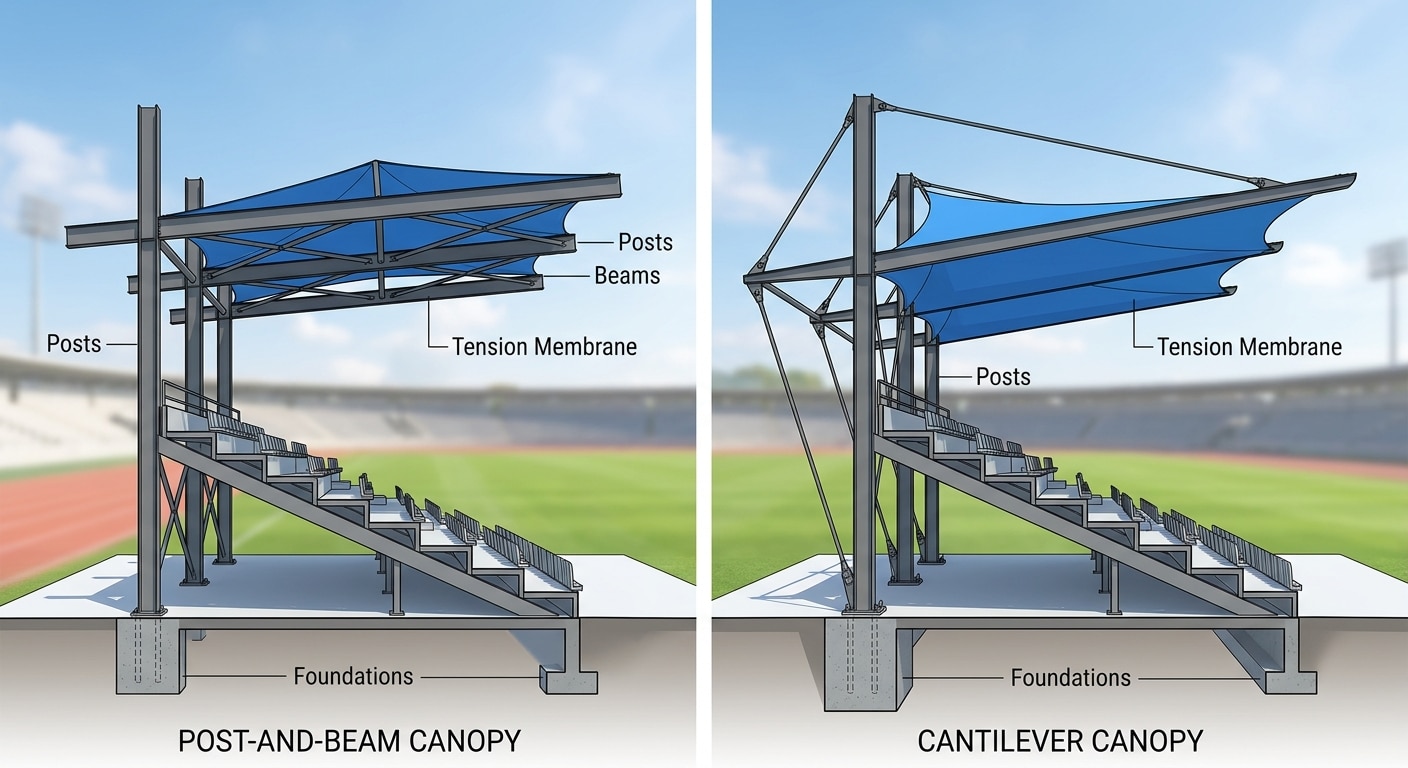
When designing a bleacher canopy, the choice of structural system significantly impacts aesthetics, functionality, and cost. The two primary options are post-and-beam and cantilever designs, each offering distinct advantages.
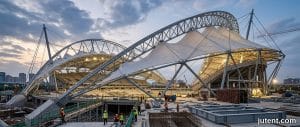
Post-and-Beam Structures: This traditional approach involves vertical columns (posts) supporting horizontal beams, which in turn support the tensile membrane. The posts are typically positioned behind or alongside the bleachers, bearing the primary load.
- Advantages:
- Cost-Effective: Generally the most economical option due to simpler engineering and material requirements.
- Structural Stability: Offers excellent stability, especially for larger spans or areas exposed to higher wind loads.
- Ease of Fabrication: Straightforward to manufacture and install, reducing overall project timelines.
- Considerations:
- Footprint: Requires ground space for the posts, which must be carefully integrated into the site layout to avoid obstructing pathways or views.
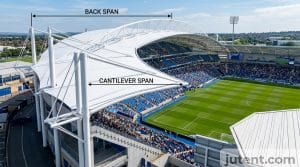
Cantilever Structures: A cantilever design features a structure that extends horizontally from a single point of support, with no additional supports at the outer edge. For bleacher canopies, this typically means columns are placed behind the bleachers, with the canopy extending forward over the seating area without any front supports.
- Advantages:
- Unobstructed Views: Eliminates front columns, providing completely clear sightlines for spectators.
- Aesthetics: Often perceived as more modern and visually striking due to its “floating” appearance.
- Space Efficiency: Maximizes usable space directly beneath the canopy by removing front supports.
- Considerations:
- Higher Cost: Requires more reliable engineering and heavier steel sections to manage the cantilevered loads, leading to higher material and fabrication costs.
- Foundation Requirements: Demands stronger foundations to counteract the overturning forces inherent in cantilever designs.
The decision between post-and-beam and cantilever often comes down to budget, aesthetic preference, and site-specific constraints. For projects prioritizing cost-effectiveness and straightforward implementation, post-and-beam is often the preferred choice. Where unobstructed views and a premium aesthetic are paramount, and the budget allows, a cantilever system delivers superior results. Based on Jutent's experience across 400+ projects in 30+ countries, both options are viable, with the final selection guided by a detailed assessment of project requirements.
Grandstand Canopy Structures Guide
Membrane Grade for Bleacher Canopies: When PVDF Is Worth the Premium
The choice of membrane material is critical for a bleacher canopy, influencing its durability, performance, and long-term cost-effectiveness. While various PVC-coated polyester fabrics are available, PVDF (Polyvinylidene Fluoride) coated membranes are the standard for high-quality, long-lasting tensile structures.
Standard PVC Membrane (without PVDF topcoat):
* Characteristics: Good initial strength, wide color range, lower upfront cost.
* Limitations: Shorter lifespan (typically 5-8 years), prone to quicker degradation from UV exposure, more susceptible to dirt accumulation and staining, requiring more frequent cleaning. The surface can become brittle over time.
PVDF Coated Membrane:
* Characteristics: A high-performance PVC membrane with an advanced PVDF lacquer applied to both sides. This coating provides a superior protective layer.
* Advantages:
* Extended Lifespan: Offers a significantly longer service life, typically 15+ years, with a standard 10-year warranty. This drastically reduces the need for premature replacement.
* Enhanced UV Resistance: The PVDF layer provides superior protection against UV radiation, preventing material degradation and color fading. This is crucial for outdoor structures exposed to constant sunlight.
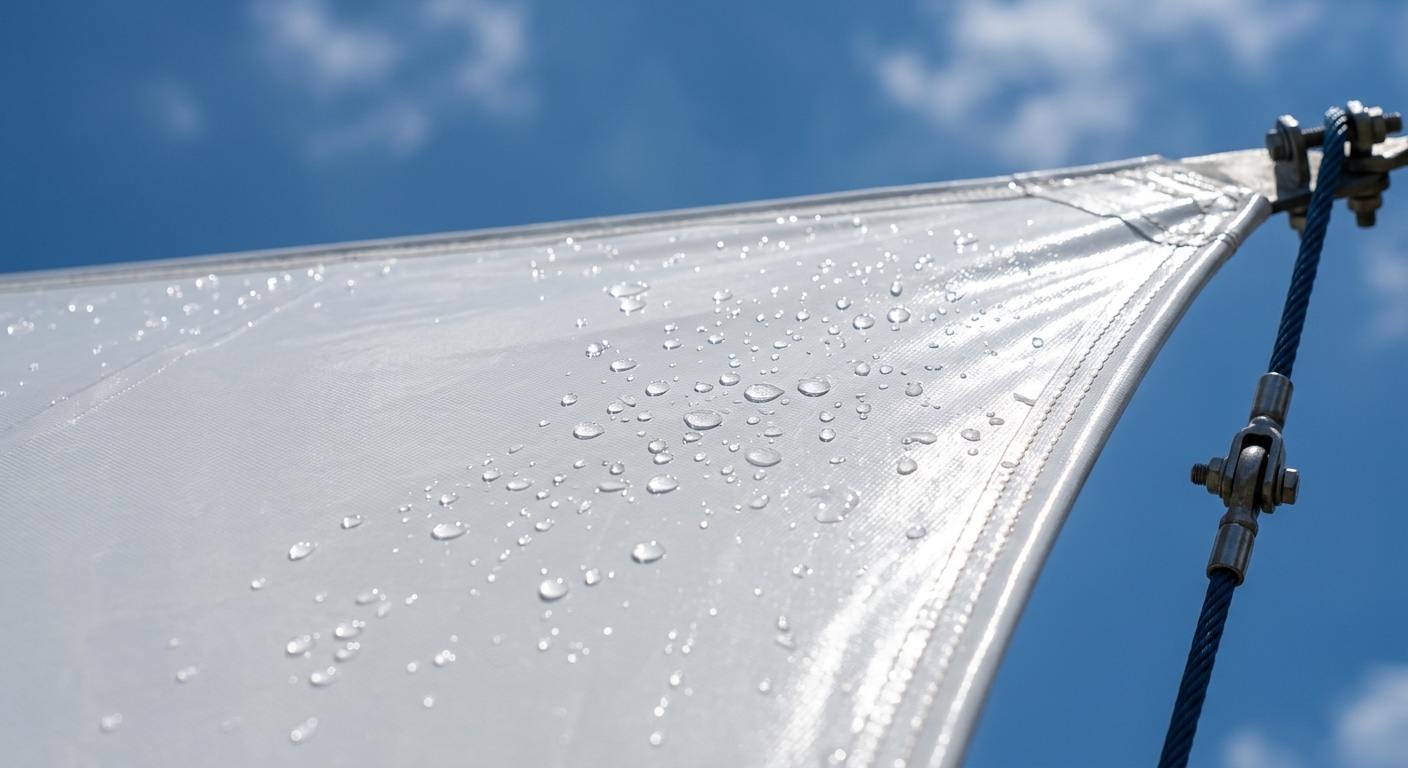
* Self-Cleaning Properties: The smooth, non-stick surface of PVDF resists dirt, dust, and environmental pollutants, making it easier to clean and maintaining its aesthetic appeal with minimal maintenance. Rain often washes away surface grime.
* Improved Fire Retardancy: PVDF membranes typically meet higher fire safety standards.
* Higher UPF Rating: Consistently achieves UPF 50+, offering superior sun protection.
When PVDF Is Worth the Premium:
For bleacher canopies, especially those at schools or community facilities, the premium for a PVDF membrane is almost always justified. The initial higher cost is offset by:
1. Lower Lifecycle Costs: The extended lifespan and reduced maintenance requirements translate to significant savings over the structure's lifetime. Avoiding premature replacement every 5-8 years is a major financial advantage.
2. Superior Performance: Consistent shade, UV protection, and aesthetic appeal are maintained for much longer, ensuring the facility remains attractive and functional.
3. Enhanced Safety and Comfort: The higher UPF rating provides better protection for spectators, aligning with health and safety recommendations for public spaces.
While a standard PVC membrane might seem appealing for its lower initial price, the long-term benefits of a PVDF-coated membrane — durability, low maintenance, and superior protection — make it the more economical and responsible choice for any bleacher canopy project intended for sustained public use. Jutent Engineering specifies 1050 g/m² PVDF membrane as standard for its projects, reflecting its commitment to quality and longevity.
Cost Benchmarks: What a Bleacher Canopy Costs to Supply and Install
Understanding the cost of a bleacher canopy involves considering several factors, including size, structural complexity, membrane grade, and installation logistics. Pricing for tensile membrane structures is typically quoted per square meter (m²) of covered area.
Supply Cost (Ex-Factory, per m²):
For a bleacher canopy, which generally features a simpler form and minimal steel compared to complex architectural structures, the supply cost (ex-factory) typically falls within the following ranges:
- Tensile Membrane Structure (minimal steel, simple form): $30–$50/m²
- PVDF Membrane, Simple Form: $40–$70/m²
- PVDF Membrane, Complex Form (e.g., larger spans, more intricate designs): $60–$90/m²
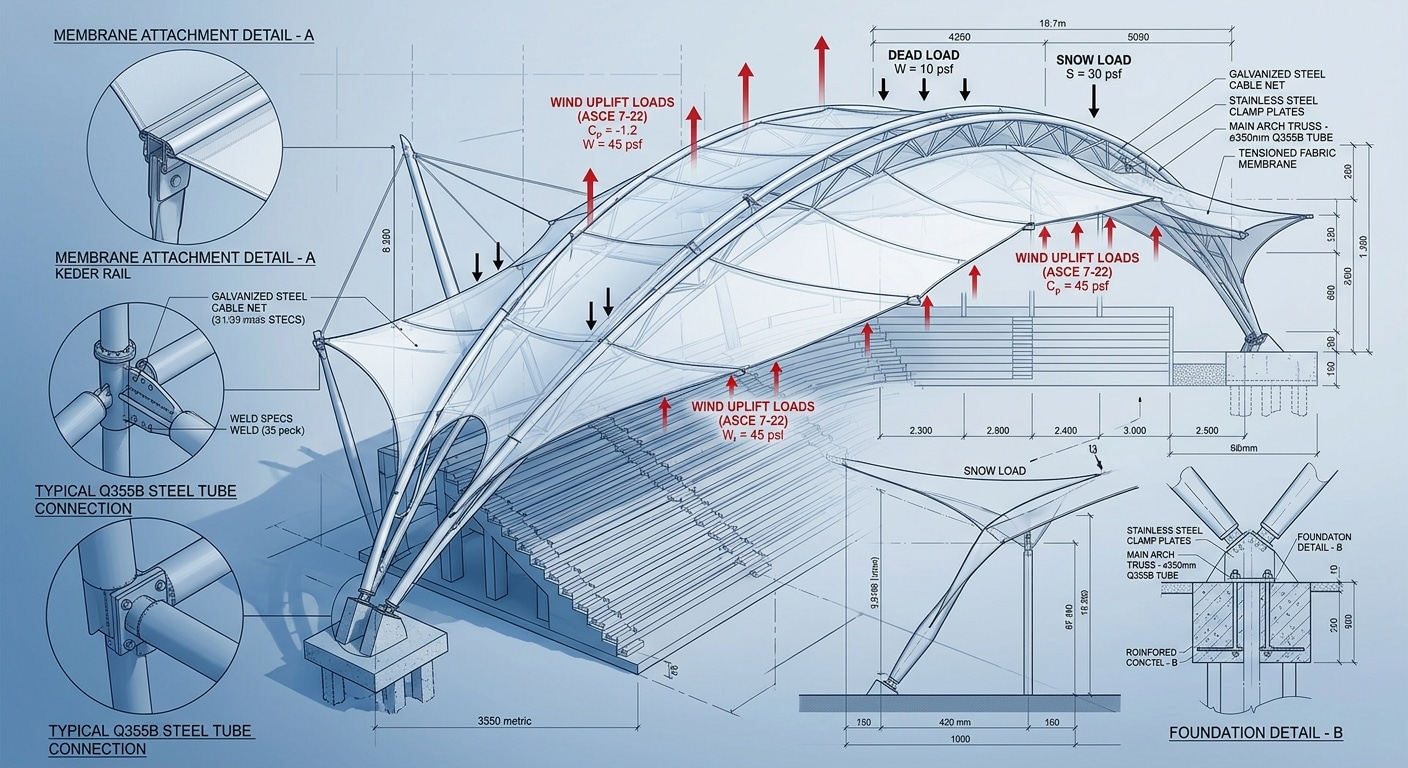
These figures represent the cost of manufacturing and packaging the structure, ready for shipment. They include the steel framework (Q235B or Q355B, with epoxy zinc-rich primer + acrylic topcoat or hot-dip galvanizing), the membrane (standard 1050 g/m² PVDF), and all necessary connection hardware (SS304 standard, SS316 optional upgrade).
Example Project Scope:
For a typical school bleacher canopy covering 80–150m², using a PVDF membrane and a simple post-and-beam structure, the supply cost would range from approximately $3,200 (80m² x $40/m²) to $10,500 (150m² x $70/m²). It's important to note that Jutent's minimum project scope is 100 m².
Installation Costs:
Installation costs are highly variable and depend on several factors:
- Location: Labor rates, equipment availability, and logistical challenges differ significantly by region and country.
- Site Conditions: Ease of access, ground stability for foundations, and proximity to utilities can impact installation time and cost.
- Complexity: While bleacher canopies are generally simpler, larger or more complex designs will require more specialized equipment and skilled labor.
- Local Regulations: Permitting, inspections, and specific safety requirements can add to the overall cost.
As a general guideline, installation can add anywhere from 50% to 150% of the supply cost, depending on the factors above. For export projects, Jutent can provide design drawings, calculations, material specifications, installation manuals, and free remote guidance, subject to project scope and contract terms. On-site supervision by Jutent engineers is also available as a paid service to ensure proper execution.
When budgeting for a bleacher canopy, it's crucial to obtain detailed quotes that separate supply and installation, allowing for a clear understanding of all expenditures.
UV Compliance for School Bleacher Canopies
Providing adequate UV protection is a paramount concern for school and community sports facilities, especially given the increasing awareness of skin cancer risks. A bleacher canopy serves as a critical barrier against harmful solar radiation, making UV compliance a non-negotiable aspect of its design and material selection.
The effectiveness of a shade structure in blocking UV radiation is measured by its Ultraviolet Protection Factor (UPF) rating. This rating indicates how much UV radiation a fabric blocks. For instance, a UPF 50+ fabric allows less than 1/50th (or 2%) of UV radiation to pass through, effectively blocking 98% or more.
Recommendations for School Shade Structures:
Leading health organizations, such as Cancer Council Australia, strongly recommend a minimum UPF 50+ rating for all shade structures in school environments. This standard ensures maximum protection for students, staff, and visitors who may spend extended periods under the canopy. Meeting this recommendation is not just about compliance; it's about fulfilling a duty of care and promoting long-term health.
Achieving UPF 50+ with Tensile Membranes:
High-grade tensile membranes, particularly those with a PVDF coating, are specifically engineered to provide superior UV protection. Jutent's standard 1050 g/m² PVDF membrane achieves a UPF 50+ rating as standard. This is due to the inherent properties of the material and the protective PVDF layer, which effectively filters out a significant portion of both UVA and UVB rays.
When specifying a bleacher canopy for a school or public facility, it is essential to:
1. Verify UPF Ratings: Always request and review the UPF rating documentation for the chosen membrane material.
2. Consider Membrane Quality: Opt for reputable, high-grade membranes like PVDF, which are designed for longevity and consistent UV performance. Cheaper, lower-grade materials may degrade faster, compromising their protective capabilities over time.
3. Ensure Proper Design: While the membrane itself provides protection, the overall design of the canopy must ensure sufficient coverage of the seating area throughout the day, accounting for sun angles.
By prioritizing UV compliance and selecting appropriate materials, schools and municipalities can ensure their bleacher canopies offer effective, long-term protection, contributing to a safer outdoor environment for everyone.
FAQ
- Q: What is the cost of a bleacher canopy for a school sports facility?
- A: For a small school bleacher (50–80 seats, approx. 80–150m²), supply cost typically ranges from $12,000–$30,000 USD ex-factory. This includes the steel structure (Q235B or Q355B with epoxy zinc-rich primer + acrylic topcoat or hot-dip galvanizing) and a 1050 g/m² PVDF membrane. Installation cost varies by location, site conditions, and complexity, often adding 50% to 150% to the supply cost. Typical technical values should always be written conservatively and described as subject to project design.
- Q: What UPF rating does a school bleacher canopy need to meet?
- A: Cancer Council Australia recommends UPF 50+ for school shade structures. High-grade PVDF membrane, such as Jutent's standard 1050 g/m² PVDF, achieves UPF 50+ as standard. This rating ensures that less than 2% of harmful UV radiation penetrates the canopy, providing excellent protection for spectators and aligning with health and safety guidelines for public and educational environments.
Send us your bleacher dimensions and we'll provide a specification and indicative cost within 48 hours.