
A school walkway canopy is not just a weather cover between buildings. For contractors and facility teams, it is a circulation and safety system that must combine UV protection, wind resistance, drainage control, pedestrian clearance, and installation practicality from the start. Specifying a school walkway canopy usually comes down to five decisions that affect tender risk the most: structural form, UPF compliance, membrane grade, wind-load design, and installation scope. This guide covers those decisions in a direct procurement sequence so project teams can compare quotations, reduce redesign, and keep covered access safe during daily campus use.
What Makes School Walkway Canopy Specification Different
School walkway canopies differ from general shade structures primarily because they must provide safe, durable, and UV-protective covered access between buildings, often in high-traffic environments. Unlike recreational shade, these canopies require a minimum clearance height of 2.4 meters to comply with pedestrian safety standards and must withstand local wind loads—commonly ranging from 90 to 150 km/h depending on the region.
Material selection is also critical: membranes must meet UPF 50+ standards to protect children and staff from harmful UV radiation throughout the school day. Structural elements such as columns and tensioning systems must be designed for long-term durability with minimal maintenance, often using galvanized or powder-coated steel with thicknesses of at least 3 mm for columns and 6 mm for primary beams.
Column placement is a key design factor. Walkways typically range from 1.5 to 3 meters in width, and columns must be positioned to avoid obstructing pedestrian flow while maintaining structural integrity. For longer spans over 10 meters, tensile membrane canopies are often preferred due to their ability to cover wide areas with fewer supports.
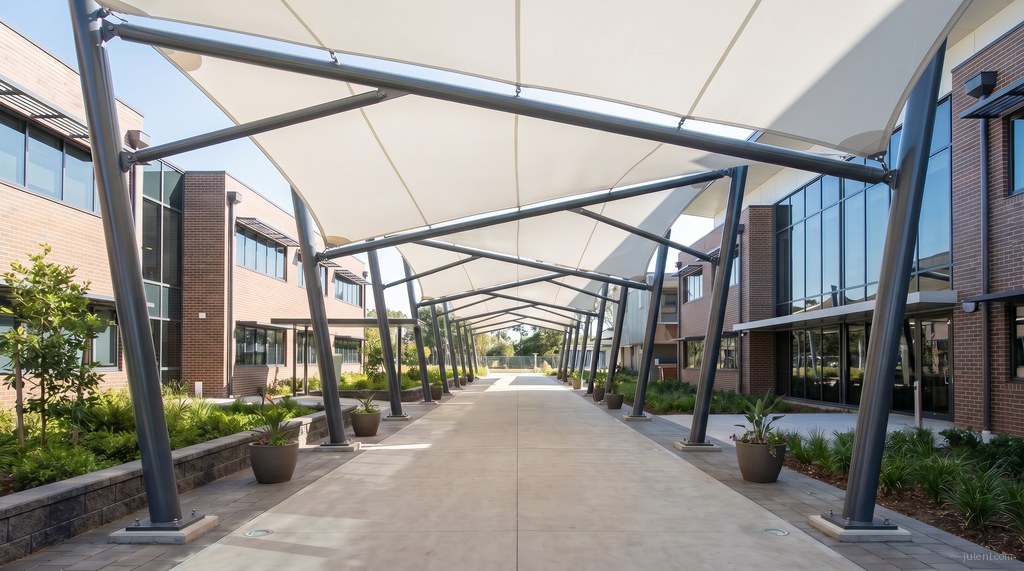
For a detailed overview of school walkway product options, see School Walkways.
UPF 50+ UV Protection: What Standards Require for School Walkways
The Australian Cancer Council recommends a minimum UPF 50+ rating for all school shade structures, including walkways. This rating ensures that at least 98% of UV radiation is blocked, significantly reducing skin cancer risk for students and staff.
To meet this standard, membranes must undergo rigorous laboratory testing for UV transmittance and durability. The membrane weight typically ranges from 650 to 1050 g/㎡, with heavier membranes offering longer service life and better UV resistance. For example, a 1050 g/㎡ membrane maintains tensile strength within 90% of its original capacity after 15 years of exposure in tropical climates.
Walkway canopies must also consider glare reduction and light diffusion to maintain safe, comfortable lighting conditions beneath the canopy. Membranes with a matte finish and light colors are preferred to minimize heat buildup and visual discomfort.
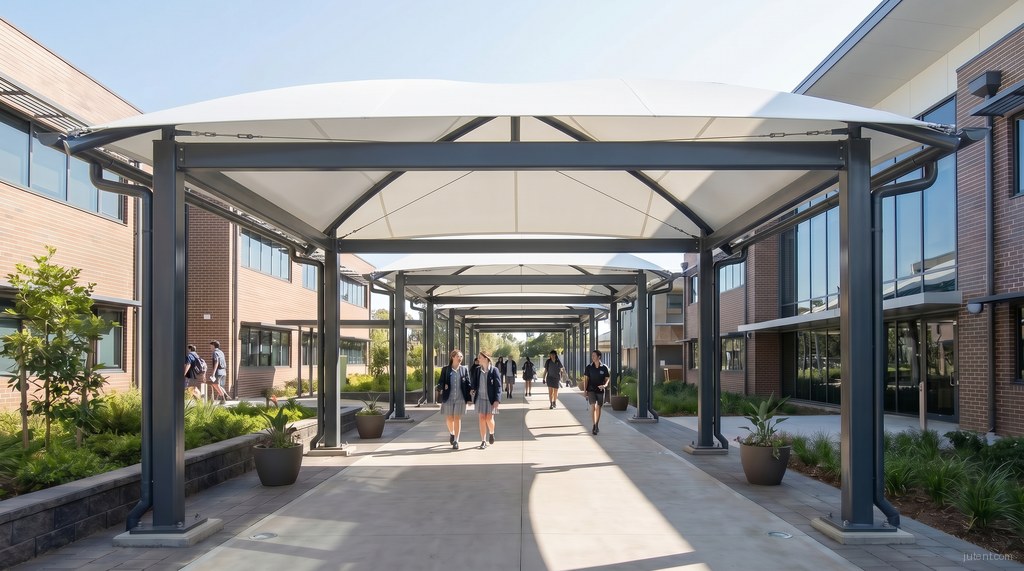
For a technical comparison of membrane types and coatings, see Pvdf Vs Ptfe Membrane Comparison.
Structural Forms: Tensile, Hip Roof, and Polycarbonate Walkway Options
Three primary structural forms dominate school walkway canopy design: tensile membrane canopies, hip roof canopies, and polycarbonate sheet structures. Each has distinct advantages and specification considerations.
| Structural Form | Typical Span (m) | Membrane/Material Weight (g/㎡) | Wind Load Capacity (km/h) | Clearance Height (m) | Fire Rating |
|---|---|---|---|---|---|
| Tensile Membrane | 6–15 | 650–1050 | Up to 150 | ≥ 2.4 | AS 1530.3 Group 1 |
| Hip Roof (Steel Frame) | 4–10 | N/A (metal roof) | Up to 180 | ≥ 2.4 | Non-combustible |
| Polycarbonate Sheet | 3–6 | 2.5–3.5 mm thickness | Up to 120 | ≥ 2.4 | AS 1530.3 Group 3 |
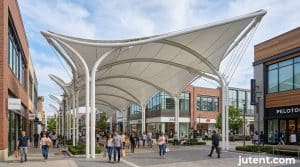
Tensile canopies offer the longest clear spans and the most design flexibility, with membranes tensioned over steel cables and columns. Hip roof canopies provide a traditional aesthetic and superior rainwater runoff but require more columns and heavier framing. Polycarbonate sheets are cost-effective for shorter spans but have limited UV protection and lower wind resistance.
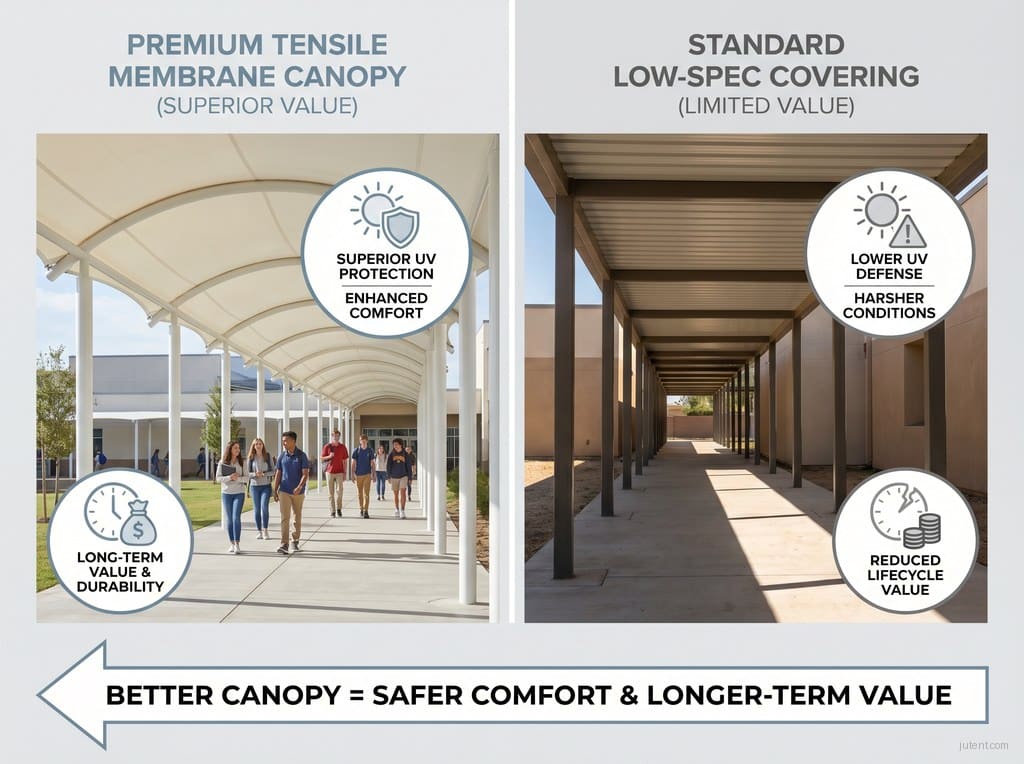
School Covered Walkway: When Tensile Is the Right Choice
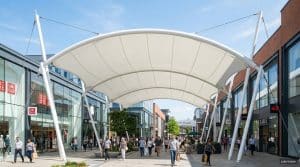
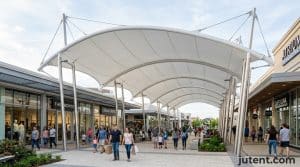
Tensile canopy systems are the preferred solution when the walkway span exceeds 8 meters or when column placement must minimize obstruction. Their lightweight membrane (typically 1050 g/㎡) combined with high-tensile steel cables allows for spans up to 15 meters without intermediate supports.
Column placement diagrams show that for a 12-meter walkway span, columns spaced at 6 meters on either side provide optimal tensioning and structural stability. Columns are usually 150×150×6 mm SHS steel, hot-dip galvanized and powder-coated for corrosion resistance.
Tensile canopies also excel in wind load performance, designed to withstand gusts up to 150 km/h with appropriate bracing and anchorage. The membrane is pre-stressed to avoid sagging and ponding, critical for maintaining canopy integrity and drainage.
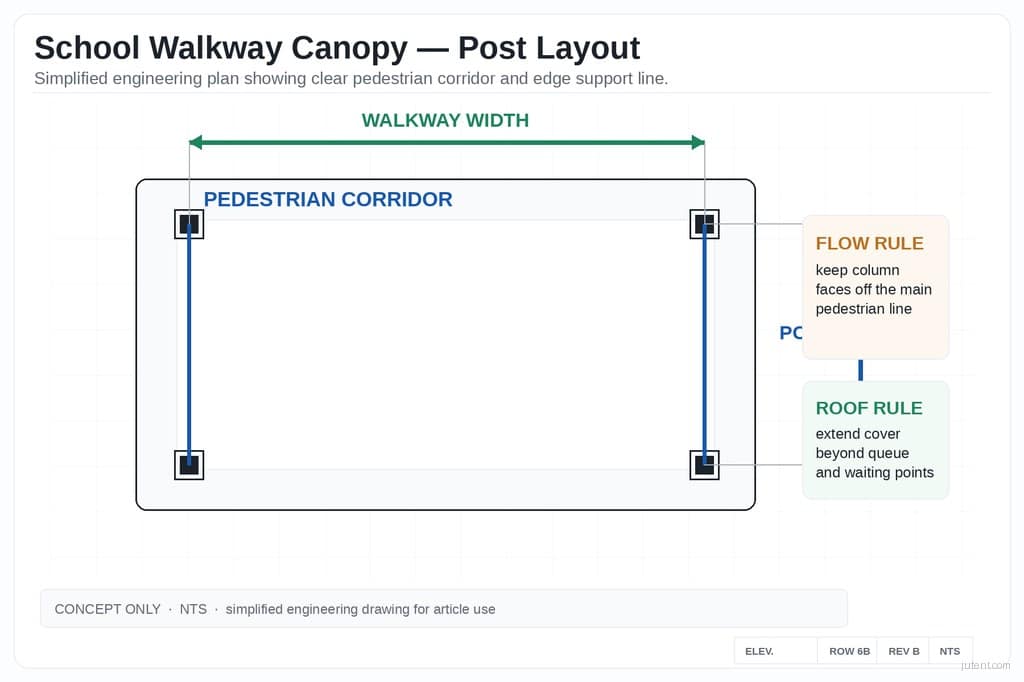
Campus Walkway Canopy: Considerations for Larger Educational Facilities
For larger campuses, walkway canopies must integrate with existing site infrastructure and accommodate high pedestrian volumes. Modular tensile systems facilitate phased installation and future expansion, with typical module sizes of 6 × 10 meters.
Wind zones and local building codes heavily influence structural design. For example, in Southeast Asia, a 120 km/h basic wind speed requires primary columns sized 150×150×6 mm SHS and secondary framing of 100×100×4 mm SHS. Drainage design must prevent water accumulation on membranes and avoid runoff onto pedestrian paths.
Lighting integration and electrical conduit routing are additional considerations for campus-wide canopy systems. Coordination with electrical and civil engineers is essential during specification to ensure compliance and functionality. Access for phased construction should also be planned early in active school environments.
School Walkway Canopy Cost: What Drives the Budget
School walkway canopy costs vary primarily based on span length, structural form, membrane grade, and installation complexity. Supply-only costs for tensile membrane canopies typically range from $180 to $280 per square meter, including membrane, steel framing, and hardware.
Key cost drivers include:
- Membrane Weight: Upgrading from 650 g/㎡ to 1050 g/㎡ increases material cost by approximately $4–6/㎡ but extends service life by 5–8 years.
- Column Quantity: More columns reduce span but increase foundation and installation costs.
- Wind Load Rating: Higher wind zones require thicker steel sections and heavier anchorage, increasing steel costs by 15–25%.
- Installation Access: Limited site access or working hours can add 10–15% to labor costs.
For a 100 m² tensile canopy in a 120 km/h wind zone, expect a total installed cost between $22,000 and $28,000 depending on site conditions.
What Jutent Provides: Factory Supply, Documentation, and Logistics
Jutent supplies school walkway canopies as factory-assembled kits, pre-cut and pre-drilled to minimize site welding and fabrication. Each kit includes:
- Structural steel components hot-dip galvanized to AS/NZS 4680 standards and powder-coated in school-approved colors.
- Membranes manufactured to UPF 50+ standards with documented tensile strength and fire rating certificates.
- Detailed engineering drawings stamped by a licensed structural engineer.
- Step-by-step installation manuals with component numbering for efficient assembly.
- Packaging optimized for sea freight with lead times of 20–35 days production plus 7–14 days shipping to Southeast Asia.
Jutent's quality control process includes load testing of tensioning systems and membrane pre-stress verification before dispatch, ensuring compliance and reducing on-site issues. This helps contractors move faster during school holiday installation windows.
FAQ
- What UPF rating is required for a school walkway canopy?
- For school walkway canopies, a UPF (Ultraviolet Protection Factor) rating of 50+ is strongly recommended. This aligns with the guidelines set by Cancer Council Australia for all school shade structures. Specifying UPF 50+ ensures maximum protection against harmful UV radiation, a critical consideration for student safety during outdoor transit. Contractors should prioritize membrane materials that demonstrably meet or exceed this standard to comply with health recommendations and provide a durable, protective solution for educational facilities.
- What is the typical lead time for a school walkway canopy from Jutent?
- For a typical school walkway canopy project, factory production generally spans 20 to 35 days, depending on the design complexity and current production schedule. Following production, sea freight to destinations within Southeast Asia usually takes an additional 7 to 14 days. Therefore, contractors and project managers should anticipate an overall lead time of approximately 5 to 8 weeks from order confirmation to delivery at the port of entry for most export projects. This timeframe allows for efficient planning and coordination of on-site installation.
- What clearance height is required under a school walkway canopy?
- A minimum clear height of 2.4 meters is generally required for pedestrian walkways beneath school canopies. However, contractors and specifiers must always verify this against local building codes, accessibility standards, and specific site conditions. Factors such as emergency vehicle access, potential for future landscaping, or the presence of overhead utilities can necessitate greater clearance. Always consult the relevant municipal bylaws and project-specific requirements to ensure full compliance and long-term functionality.
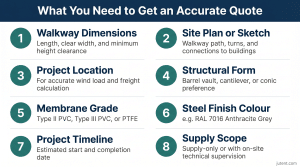
Send us your walkway dimensions and we'll provide a UPF-compliant specification and indicative cost within 48 hours.