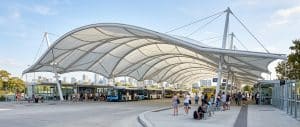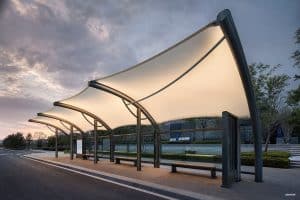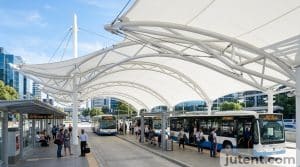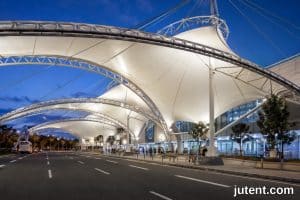

Procuring a bus station canopy from an overseas manufacturer involves more steps than a local purchase. This checklist covers everything from RFQ to delivery — so nothing falls through the cracks.
Step 1: Define the Scope — Station Dimensions, Wind Zone, and Passenger Volume
The initial phase of bus station canopy procurement requires a precise definition of the project scope. This foundational step ensures that all subsequent stages, from design to fabrication, align with the specific requirements of the site and local regulations. Begin by accurately measuring the proposed canopy area, considering both length and width, to determine the required square meterage. This directly impacts material quantities and overall cost.
Next, identify the local wind zone classification. This is a critical engineering parameter that dictates the structural integrity requirements of the canopy. Wind load calculations, based on local building codes and standards, will inform the steel frame design and membrane tensioning. Failure to account for appropriate wind loads can lead to structural failure and safety hazards. Similarly, seismic zone data is essential for regions prone to earthquakes, influencing foundation design and structural connections.
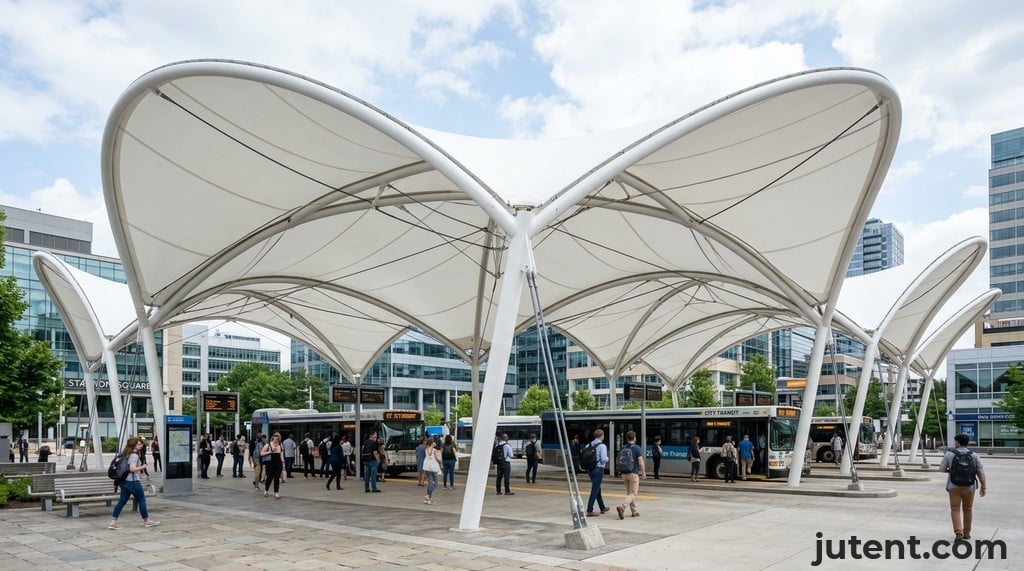
Consider the anticipated passenger volume and flow. A high-traffic bus station may require a larger, more reliable canopy with specific entry/exit points to manage pedestrian movement efficiently. This also influences the choice of membrane material, as areas with high UV exposure or potential for vandalism might benefit from more durable options. Finally, document any specific aesthetic requirements or architectural integration needs to ensure the canopy complements the surrounding urban environment. Transit Canopies
Step 2: Evaluate Suppliers — What to Ask and What to Look For
Supplier evaluation is paramount in bus station canopy procurement, especially when working with international manufacturers. Begin by requesting detailed company profiles, including their operational history, project portfolio, and certifications. Look for ISO 9001 certification, which indicates a commitment to quality management systems. Based on Jutent's experience across 400+ projects in 30+ countries, a manufacturer's project history in similar climates and with comparable project scales is a strong indicator of their capabilities.
When engaging with potential suppliers, ask specific questions regarding their engineering capabilities. Can they provide detailed structural calculations and design drawings compliant with international standards? Inquire about their material sourcing and quality control processes. For steel, confirm they use recognized grades like Q235B or Q355B, and for membranes, verify the use of reputable PVDF or PTFE materials, typically 1050 g/m² or higher. Request material test certificates for both steel and membrane.
investigate their manufacturing facilities. If possible, arrange for a factory audit or request third-party inspection reports (e.g., SGS certification). This verifies production capacity, quality control procedures, and adherence to safety standards. Ask about their export experience, including packaging, logistics, and customs clearance support. A manufacturer with extensive export experience will be better equipped to handle the complexities of international shipping. Finally, clarify their warranty policies: typically, a 1-year overall project warranty, 10-year for PVDF membranes (with 15+ years service life), and 15-year for PTFE membranes (with 25+ years service life). About
Step 3: Review the Quotation — What Should and Shouldn't Be Included
A thorough review of the quotation is crucial for successful bus station canopy procurement. The quotation should be comprehensive, itemizing all costs and specifications. It must clearly state the total square meterage and the corresponding unit price. For tensile membrane structures, expect pricing to range from $30–$50/m² for minimal steel designs, $40–$70/m² for PVDF membrane with simple forms, and $60–$90/m² for PVDF membrane with complex forms. PTFE membrane typically adds approximately $20/m² to the PVDF range. Always ensure the pricing is per square meter, not per linear meter, and that the project scope meets the minimum of 100 m².
The quotation should detail the membrane type (PVDF or PTFE), weight (e.g., 1050 g/m²), and color. Steel specifications must include the grade (e.g., Q235B, Q355B) and the surface treatment method. Approved surface treatments include epoxy zinc-rich primer + acrylic topcoat, epoxy zinc-rich primer + fluorocarbon topcoat, or hot-dip galvanizing. Fasteners should be specified as SS304 standard, with SS316 as an optional upgrade.
Crucially, the quotation should explicitly list what is included and excluded. Included items typically cover design, fabrication, packaging, and delivery terms (e.g., FOB, CIF). Exclusions might include import duties, local taxes, on-site installation, and foundation work. Any remote guidance or on-site supervision services should be clearly outlined, including whether they are free (remote guidance) or a paid service (on-site supervision). Ensure the payment terms are clearly stated, typically 30–50% deposit on order confirmation, with the balance before shipment.
Step 4: Confirm the Order and Monitor Production
Once the quotation is thoroughly reviewed and all terms are agreed upon, the next step is to formally confirm the order. This typically involves signing a detailed contract that incorporates all agreed-upon specifications, payment terms, delivery schedules, and warranty conditions. Ensure that the contract explicitly references the approved engineering drawings, material specifications, and any specific quality control protocols.
After contract signing and deposit payment, the manufacturer will commence production. It is advisable to establish a clear communication plan with the supplier, including regular progress updates. Request production photos or videos at key stages, such as steel fabrication, surface treatment, and membrane cutting. This allows for remote monitoring of the manufacturing process and helps identify any potential deviations early.
For export projects, Jutent can provide design drawings, calculations, material specifications, installation manuals, and free remote guidance, subject to project scope and contract terms. Consider arranging for a third-party inspection at critical production milestones, such as before surface treatment of steel or prior to final packaging. This independent verification provides an additional layer of quality assurance, ensuring that the manufactured components meet the specified standards before shipment. Confirm the packaging method, ensuring it is reliable enough for international transit to prevent damage to the steel frame and membrane.
Step 5: Receive, Inspect, and Install
Upon arrival of the bus station canopy components, a meticulous receiving and inspection process is essential. Compare the delivered items against the packing list and bill of lading to ensure all components are present. Immediately inspect all packages for any visible signs of transit damage. Document any discrepancies or damage with photographs and notify the freight forwarder and manufacturer promptly.
Unpack the components carefully and conduct a detailed inspection. Verify that the steel members match the approved drawings, including dimensions, hole alignments, and surface treatment quality. Check the membrane for any tears, punctures, or manufacturing defects. Ensure all fasteners and accessories are accounted for and are of the specified grade (e.g., SS304). Any issues identified at this stage must be communicated to the manufacturer for resolution before installation commences.
Installation should proceed according to the manufacturer's provided installation guide. If on-site supervision was part of the contract, the manufacturer's representative will guide the local installation team. If remote guidance is provided, ensure clear communication channels are established, often involving video calls and detailed photo/video sharing. Proper tensioning of the membrane is critical for both structural integrity and aesthetic appearance. Upon completion, conduct a final inspection to ensure the canopy is correctly assembled, secure, and meets all design specifications.
Step 6: FAQ: Bus Station Canopy Procurement
Q: What documents should a bus station canopy manufacturer provide with an order?
A: A reputable manufacturer should provide a thorough set of documents. This typically includes detailed engineering drawings for fabrication and installation, wind load calculations specific to the project's location, membrane test certificates verifying material properties, and steel material certificates confirming grade and composition. a detailed packing list for all components and a clear, step-by-step installation guide are essential for successful project implementation.
Q: What payment terms are typical for a bus station canopy order from China?
A: Standard payment terms for bus station canopy orders from Chinese manufacturers generally involve an initial deposit upon order confirmation, with the balance paid before shipment. A common structure is 30–50% deposit to initiate production, followed by the remaining 50–70% once manufacturing is complete and the goods are ready to leave the factory. This arrangement balances risk for both the buyer and the manufacturer, ensuring production commitment and payment security.
FAQ
- What documents should a bus station canopy manufacturer provide with an order?
- Engineering drawings, wind load calculations, membrane test certificates, steel material certificates, packing list, and installation guide.
- What payment terms are typical for a bus station canopy order from China?
- Standard terms are 30–50% deposit on order confirmation, balance before shipment.
Contact Jutent with your bus station project details and we'll guide you through every step of the procurement process.