
“`html
Bus Station Canopy: A Developer's Guide to Design & Functional Specification
When planning a new transit facility or upgrading an existing bus stop, a critical decision for developers and contractors is the choice of passenger shelter. A bus station canopy is a permanent covered structure designed to protect passengers from environmental elements such as UV radiation, rain, and heat while they wait for buses. This guide will explain the various types available, their typical cost ranges, and key specifications to consider, helping you make an informed decision that aligns with your project's functional and aesthetic requirements.
Bus Station Tensile Structure: What It Is and What It Isn't
A bus station canopy, at its core, is a structural solution for passenger comfort and safety. It provides essential shelter, enhancing the user experience at transit hubs. What it is is a purpose-built, engineered structure designed for longevity and specific environmental resistance. It typically features a steel framework and a durable membrane or rigid roofing material, engineered to withstand local wind loads and precipitation. These structures are not merely decorative; they are functional assets that contribute to the overall efficiency and appeal of a public transport system.
What a bus station canopy isn't is a temporary tent or a general-purpose shed. It requires professional design, engineering, and installation to meet safety standards and ensure a long service life. Unlike a simple awning, a bus station canopy is designed for public use, often incorporating lighting, signage, and sometimes even integrated seating or digital displays. Understanding this distinction is crucial for proper project planning and specification. Transit Canopies
Types of Bus Station Canopies: Tensile Membrane, Hip Roof, and Modular
The primary types of bus station canopies offer distinct advantages in design, function, and cost.
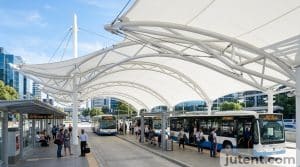
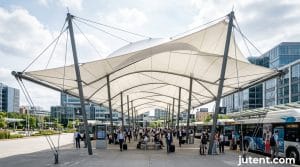
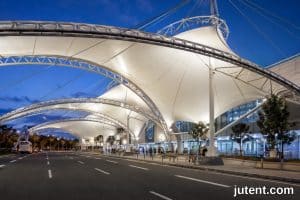
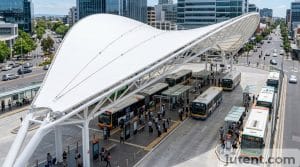
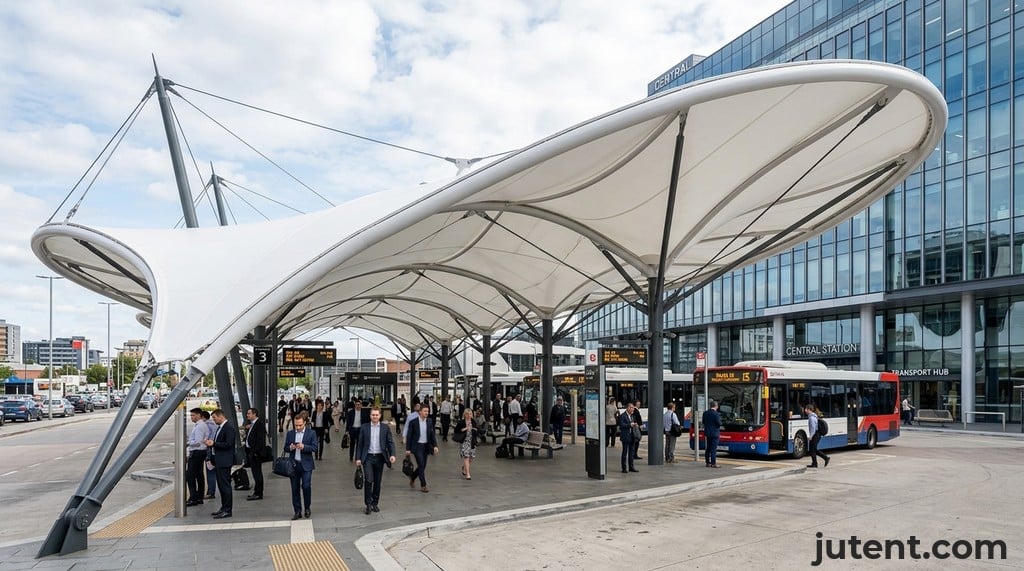
- Tensile Membrane Canopies: These structures utilize a high-strength fabric membrane, typically PVDF or PTFE, stretched over a steel framework. They are known for their lightweight appearance, architectural flexibility, and ability to cover large spans with minimal support columns. Tensile canopies are excellent for creating iconic, visually striking designs and are highly effective at shedding rainwater due to their inherent curvature.
- Hip Roof Canopies: Characterized by their sloping sides that meet at a ridge, hip roof canopies often use rigid roofing materials like metal panels or polycarbonate. They offer a more traditional aesthetic and can be integrated well into existing architectural styles. While less flexible in form than tensile structures, they provide reliable protection and can be designed for specific snow loads in colder climates.
- Modular Canopies: These are pre-engineered, often standardized units that can be combined to create larger shelters. Modular designs are typically cost-effective and quicker to install, making them suitable for projects with tight timelines or where a uniform look across multiple bus stops is desired. They often feature a simpler design, focusing on core functionality.
Each type has specific applications and cost implications, which are vital considerations for any transit development project. Bus Station Canopy Guide
What a Bus Station Canopy Costs: A Realistic Range
The cost of a bus station canopy is influenced by several factors, including the chosen material, design complexity, size, and installation requirements. All pricing is EXW (Ex Works) per square meter (m²), with a minimum project scope of 100 m².
- Tensile Membrane Structures (minimal steel): For designs emphasizing the membrane with a lighter steel framework, costs typically range from $30–$50/m². These are often simpler, more open designs.
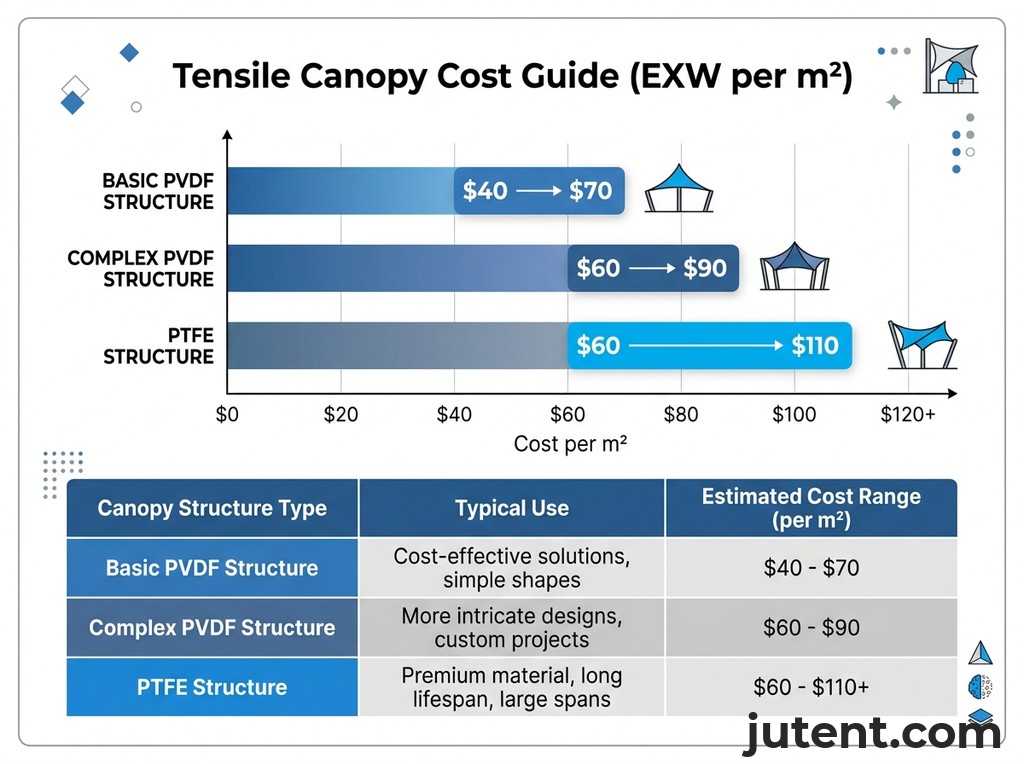
- PVDF Membrane, Simple Form: Canopies using PVDF membrane with a straightforward structural design generally fall within $40–$70/m². This is a common choice for its balance of durability and aesthetic appeal.
- PVDF Membrane, Complex Form: For more intricate or architecturally significant PVDF membrane designs, expect costs between $60–$90/m². These designs often involve more complex steel fabrication and engineering.
- PTFE Membrane: Opting for PTFE membrane, known for its exceptional longevity and self-cleaning properties, will add approximately $20/m² to the corresponding PVDF range. For example, a simple form PTFE canopy would be around $60–$90/m².
These ranges cover the manufacturing of the structure itself. Additional costs will include shipping, foundation work, and installation. For export projects, Jutent can provide design drawings, calculations, material specifications, installation manuals, and free
Get Your Bus Station Canopy Quote
“`