
“`html
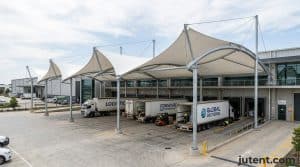
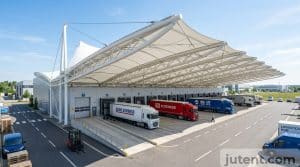
The climate across the Philippines, Malaysia, and Indonesia dictates a strict engineering baseline for industrial structures. When specifying a loading dock canopy, Southeast Asia requires engineers to account for two distinct extremes: Category 5 typhoon wind loads exceeding 250 km/h and year-round UV Index 12+ radiation. Standard commercial canopies designed for temperate zones routinely fail in this region within three years. Common failure modes include PVC membrane delamination, hydrostatic ponding under heavy monsoon downpours, and steel frame buckling under dynamic wind shear. For logistics operators, these structural failures disrupt supply chains, compromise moisture-sensitive freight, and create severe slip hazards for forklift personnel operating on wet concrete aprons.
Specifying a typhoon-rated structure requires precise aerodynamic load calculations, specialized material selection, and strict adherence to regional standards like the National Structural Code of the Philippines (NSCP) or Indonesia's SNI. Contractors cannot rely on generic, supply-only kits; the structural frame must be engineered for the site's specific coastal exposure category, soil bearing capacity, and operational clearances. This guide details the exact specifications contractors and facility managers need to procure a compliant, high-tensile canopy that protects cargo without obstructing heavy goods vehicles (HGVs) or dock leveler operations.
Typhoon Wind Load Requirements in Southeast Asia
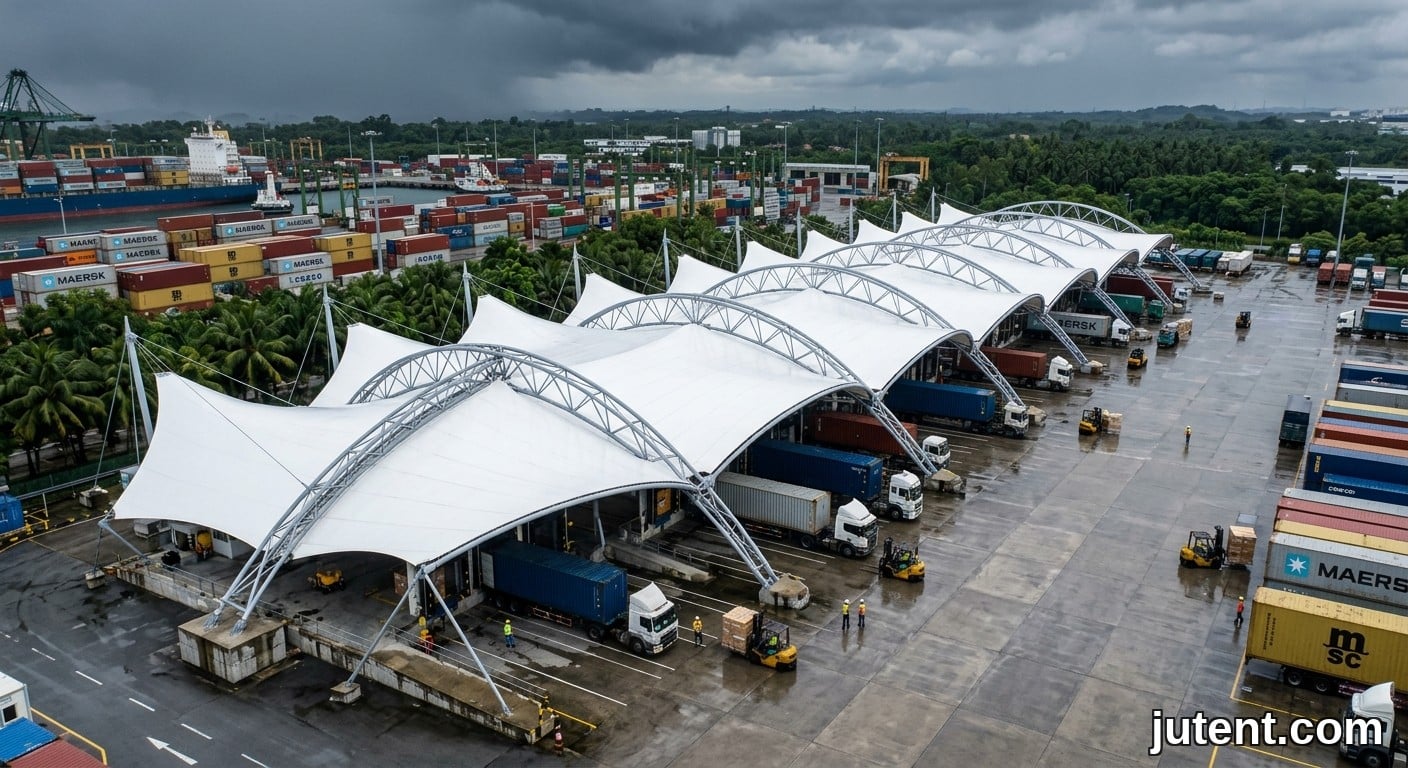
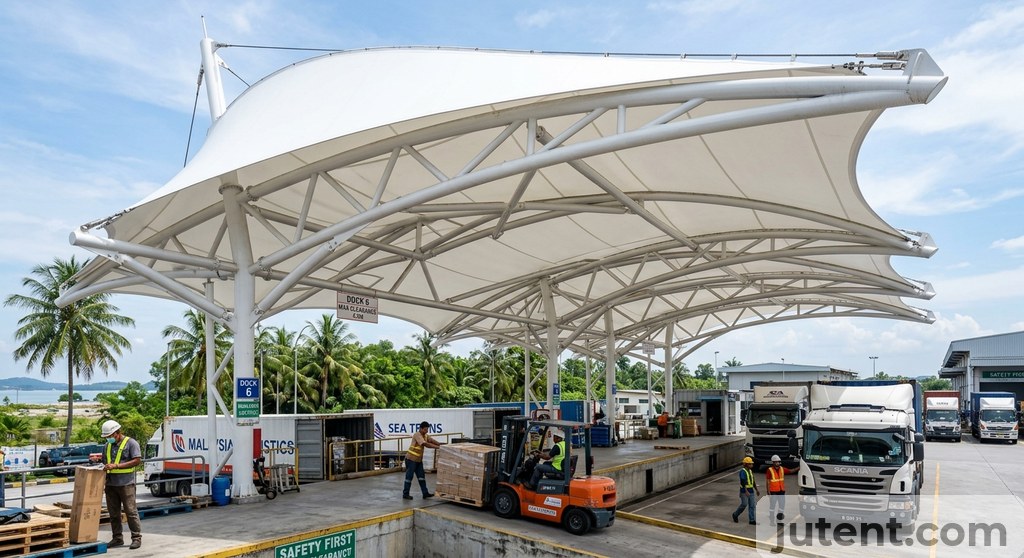
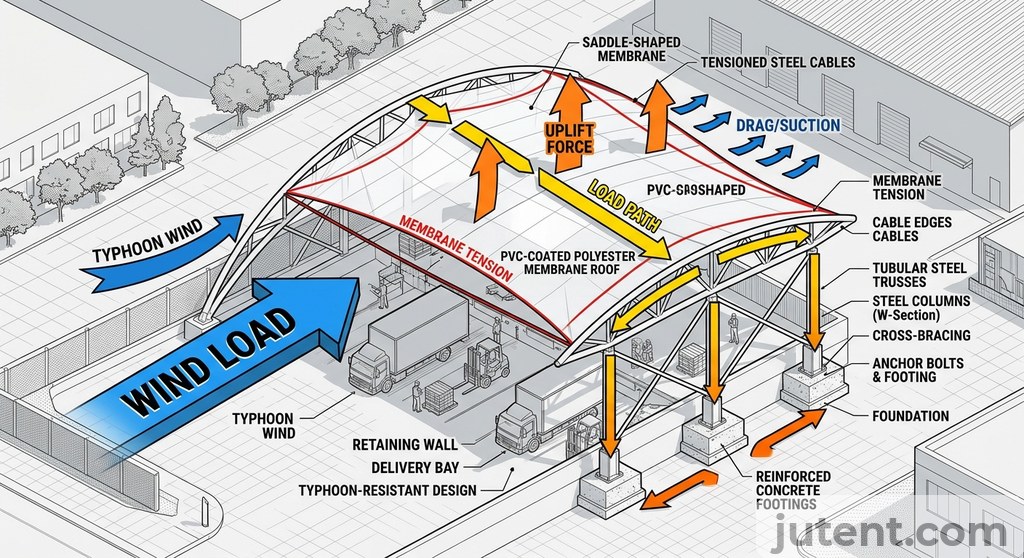
Wind load dictates the primary steel sizing for any loading dock canopy in the Philippines. The National Structural Code of the Philippines (NSCP) requires coastal industrial structures to withstand design wind speeds of 200 to 250 km/h. A loading dock canopy in Malaysia or Indonesia faces slightly lower baseline wind speeds, typically engineered to 120–160 km/h depending on coastal exposure, but sudden monsoon squalls still demand rigid moment connections and heavy-duty anchoring.
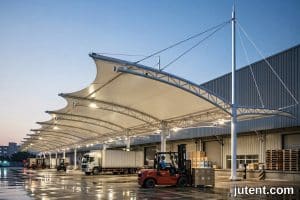
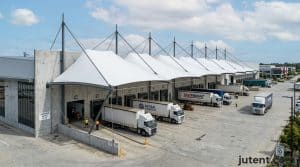
To meet these extreme loads without obstructing truck turning radii, the structural frame requires substantial steel profiles. A standard 20-meter wide multi-bay canopy requires primary columns using 200×200×8mm Square Hollow Sections (SHS) or equivalent I-beams, anchored with moment-connected base plates to reinforced concrete footings. Cable-braced tensile structures are highly effective here, as the tensioned membrane transfers wind shear efficiently to the primary steel framework rather than fighting the wind pressure statically.
Contractors must ensure the canopy design integrates directly with the existing Loading Docks without clashing with dock levelers, impact bumpers, or truck reversing zones. Standard clearance height is 5.5 meters to accommodate high-cube shipping containers. Specifying a typhoon rated loading dock canopy requires submitting site-specific wind calculations and finite element analysis (FEA) reports to local authorities before foundation pouring begins.
UV Protection in Tropical Climates: Membrane Grade Requirements
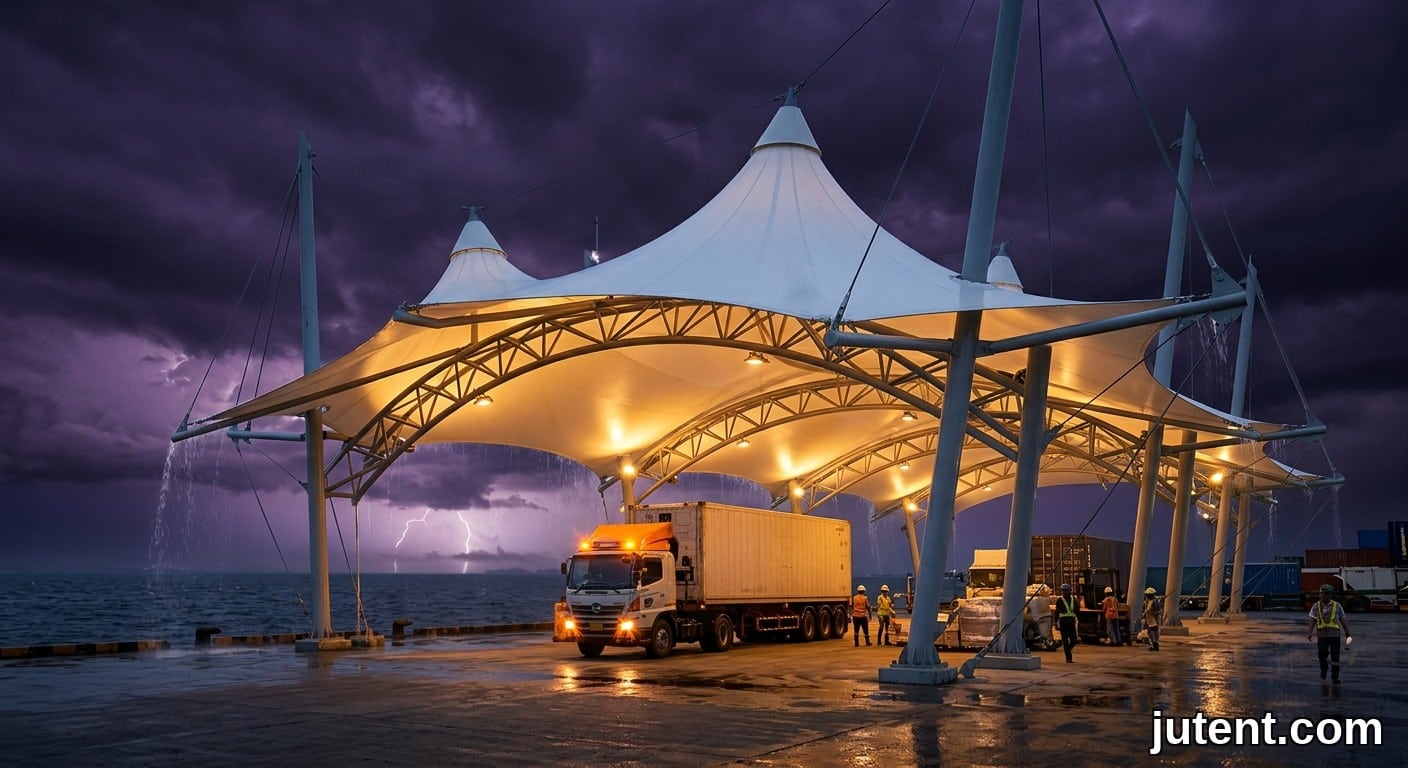
A 1050g/㎡ PVDF membrane — a type of tensile membrane structure with a fluorocarbon coating — is the minimum viable specification for tropical industrial applications. Unlike standard PVC fabric, PVDF reflects UV radiation rather than absorbing it, which is why it's the preferred material for loading dock canopies in high-UV regions.
The specification error we see most often in tropical climates is selecting 950g/㎡ PVDF instead of 1050g/㎡ to reduce initial capital expenditure. The price difference is approximately $3–5/㎡. The lifespan difference is 5–8 years. The math does not support the saving. At 1050g/㎡, the membrane maintains its tensile strength within 10% of the original specification after 15 years of equatorial sun exposure.
PVDF vs. PTFE: Which Tensile Membrane for Tropical Loading Docks?
PVDF is cost-effective for industrial canopies, offering excellent UV resistance and self-cleaning properties at a lower price point. PTFE, on the other hand, is a permanent, fire-rated structure that can last over 30 years but comes at a significantly higher cost. For most loading dock applications in Southeast Asia, PVDF provides the best balance of durability and budget, while PTFE is reserved for high-profile, fire-critical installations.
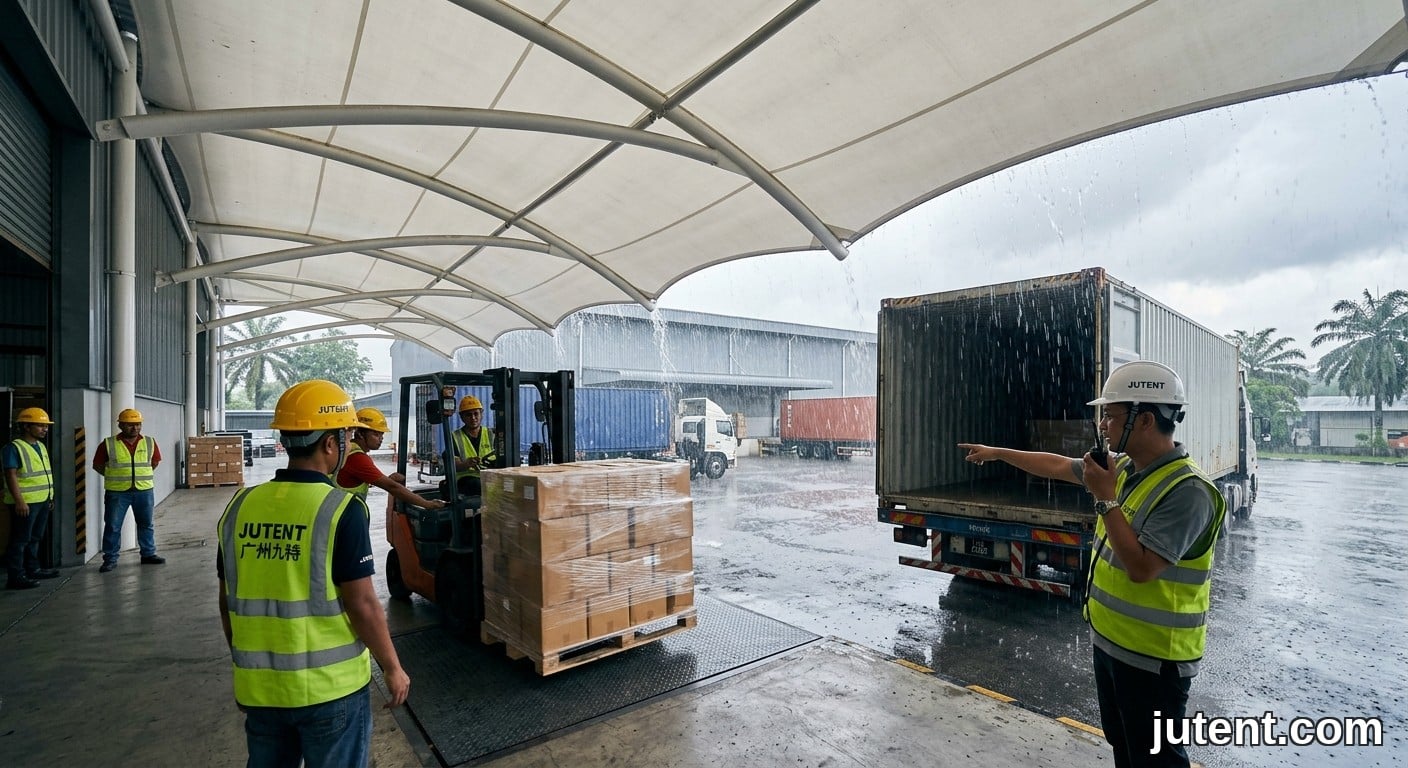
For a loading dock canopy in Indonesia, where high humidity pairs with intense sun, the self-cleaning properties of the PVDF topcoat prevent fungal growth and dirt accumulation from diesel exhaust. Contractors reviewing procurement options should consult our loading dock canopy tensile structure guide for detailed specifications to verify the exact membrane coating thickness and anti-wicking treatments. The fabric must be tensioned to a minimum of 2.5 kN/m to prevent wind flutter, which accelerates wear on the coating and compromises the structural integrity of the entire canopy system.
Drainage Design for High-Rainfall Environments
Monsoon seasons in Southeast Asia deliver rainfall intensities frequently exceeding 150mm per hour during peak weather events. A loading dock canopy must shed this water instantly to prevent membrane ponding, which adds catastrophic dead load to the steel structure. Water weighs 1,000 kg per cubic meter; even a 50mm deep pond over a standard 10m × 10m structural bay adds 5,000 kg of unintended dead load, enough to permanently yield the st
“`