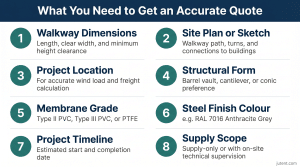

Wind load is the critical structural consideration for school walkway canopies — not just for safety, but for council approval. Understanding how wind load is calculated and what standards apply is essential before specifying.
For structural engineers and contractors tasked with designing or installing school walkway canopies, the initial decision framework must prioritize wind load analysis. Unlike dead loads or even live loads, wind forces are dynamic, complex, and can exert immense pressure, uplift, and torsion on a structure. A failure to accurately assess and design for these forces can lead to catastrophic structural failure, posing severe risks to students and staff, and resulting in significant financial and reputational damage. Beyond immediate safety, compliance with regional building codes and standards for wind resistance is a non-negotiable prerequisite for project approval and insurance. This article will guide you through the critical factors of school walkway canopy wind load, from calculation methodologies to compliance standards and the specific support Jutent Engineering provides.
Why Wind Load Matters More Than You Think for School Walkway Canopies
The seemingly simple structure of a school walkway canopy belies the complex engineering required to ensure its long-term stability, particularly against wind. Wind forces are not merely a static push; they involve dynamic pressures, uplift, suction, and turbulence that can act in multiple directions simultaneously. For canopies, the large surface area of the membrane or roofing material creates a significant sail effect, making them highly susceptible to these forces. An under-designed canopy can experience anything from membrane tearing and connection failures to complete structural collapse during high winds.
Beyond the obvious safety implications, inadequate wind load design can halt a project before it even begins. Building authorities and councils rigorously review structural calculations, especially for public infrastructure like schools. Without robust, compliant wind load analysis, permits will be denied, leading to costly delays and redesigns. insurance providers will scrutinize the design's adherence to wind standards, potentially refusing coverage or increasing premiums if risks are deemed too high. Based on Jutent's experience across 400+ projects in 30+ countries, we consistently observe that wind load is the single most challenging structural parameter for tensile structures, particularly those with large, exposed surfaces like school walkways. Prioritizing this aspect from the outset ensures not only safety but also project viability and regulatory compliance. School Walkways

How Wind Load Is Calculated for School Walkway Canopies
Calculating wind load for a school walkway canopy involves a multi-faceted approach, integrating site-specific data with established engineering principles and regional standards. The fundamental formula for calculating wind pressure (P) is often expressed as:
P = 0.5 * ρ * V² * C
Where:
* P is the design wind pressure (in Pascals or pounds per square foot).
* ρ (rho) is the air density (typically around 1.225 kg/m³ at standard atmospheric conditions, but can vary with altitude and temperature).
* V is the design wind speed (in m/s or mph), which is derived from basic wind speed data for the region, adjusted for factors like terrain category, topography, and shielding.
* C is the aerodynamic shape factor or pressure coefficient, which accounts for the geometry of the structure and how wind interacts with it (e.g., uplift, suction, drag). This factor is crucial for canopies, as their open nature and large surfaces can generate significant uplift forces.
Engineers must consider several critical factors to determine the design wind speed and pressure coefficients:
- Basic Wind Speed: This is the fundamental wind speed for a given geographical area, typically based on historical meteorological data and a specified recurrence interval (e.g., 1-in-50-year or 1-in-100-year event).
- Terrain Category: The roughness of the surrounding terrain significantly impacts wind speed. Open terrain (Category 1) will have higher wind speeds than suburban (Category 3) or urban (Category 4) areas due to less friction.
- Topographic Factor: Hills, ridges, and escarpments can accelerate wind flow, requiring an upward adjustment to the design wind speed.
- Shielding Factor: Adjacent buildings or structures can provide shielding, reducing wind loads on the canopy. However, this must be carefully assessed to avoid overestimation.
- Directional Factor: Wind loads can vary depending on the direction of the wind relative to the canopy's orientation.
- Dynamic Response: For flexible structures like tensile canopies, dynamic effects such as gust response factors and aeroelastic phenomena (e.g., flutter) may need to be considered, especially for larger spans.
These factors are meticulously applied according to specific regional building codes, which provide detailed methodologies and coefficients. School Walkway Canopy Guide
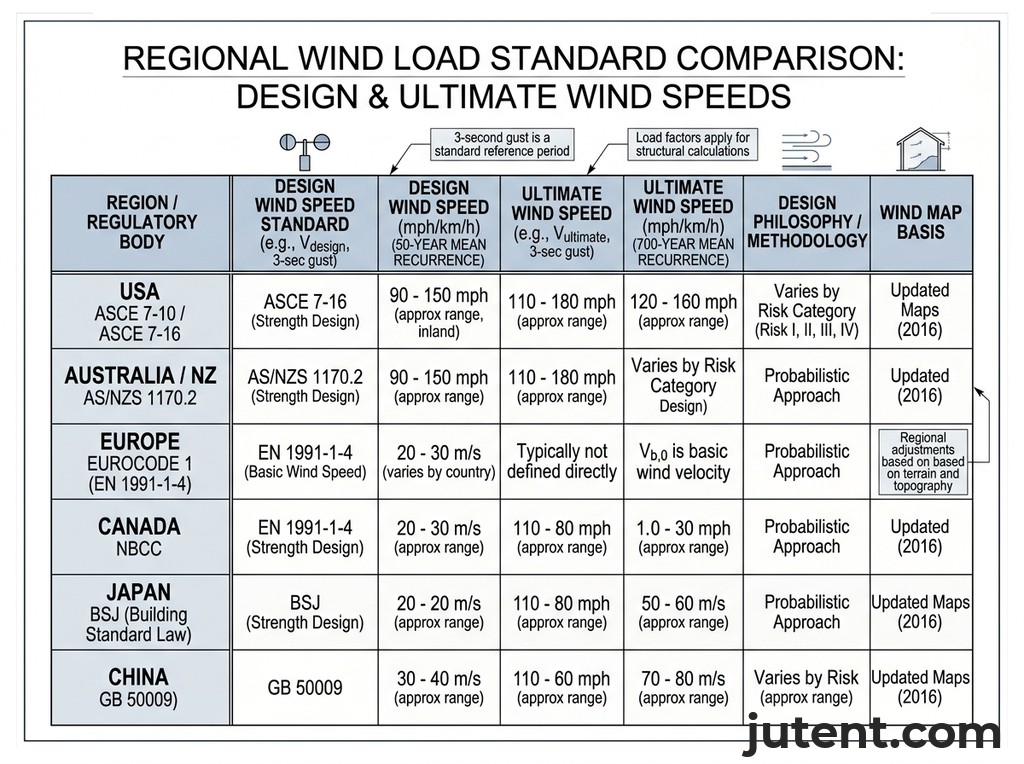
Regional Standards: AS/NZS, NSCP, SBC, and Other Applicable Codes
Adherence to regional building codes is paramount for any construction project, and school walkway canopies are no exception. These codes provide the specific methodologies, design parameters, and safety factors required for wind load calculations, ensuring structures can withstand anticipated environmental forces.
Australia and New Zealand (AS/NZS 1170.2: Structural design actions – Wind actions): This standard is widely adopted across Australia and New Zealand. It provides detailed procedures for determining characteristic wind speeds, terrain categories, shielding factors, and aerodynamic shape factors for various building types, including canopies. Engineers must apply the specified regional basic wind speeds and account for local topography and exposure conditions. The standard also covers dynamic response considerations for flexible structures.
Philippines (NSCP 2015 – National Structural Code of the Philippines, Volume 1, Chapter 2: Minimum Design Loads for Buildings and Other Structures): The NSCP, particularly its chapter on wind loads, is based on ASCE 7 (Minimum Design Loads for Buildings and Other Structures) with specific adaptations for the Philippine context, which is prone to typhoons. It defines basic wind speeds for different regions, terrain exposure categories, and procedures for calculating design wind pressures, including considerations for gust effects and pressure coefficients for various structural forms.
United Arab Emirates (SBC – UAE Building Code): The UAE Building Code, including the Dubai Building Code and Abu Dhabi International Building Code, often references international standards like IBC (International Building Code) and ASCE 7. These codes provide thorough guidelines for wind load determination, specifying basic wind speeds for different emirates, exposure categories, and detailed methods for calculating wind pressures on main wind-force resisting systems and components and cladding.
Other Applicable Codes: Depending on the project's location, other international or national codes may apply:
* Europe (Eurocode 1 – EN 1991-1-4: Actions on structures – General actions – Wind actions): This standard provides a harmonized approach across Europe, defining characteristic wind speeds, terrain categories, and pressure coefficients.
* United States (ASCE 7 – Minimum Design Loads for Buildings and Other Structures): Widely used globally, ASCE 7 offers detailed procedures for wind load calculations, including wind speed maps, exposure categories, and analytical methods for various building types.
* Singapore (SS EN 1991-1-4: Singapore National Annex to Eurocode 1): Singapore adopts Eurocode 1 with specific national annexes that tailor the parameters to local conditions.
For any project, the structural engineer must identify and strictly adhere to the prevailing local building code for wind load design. This ensures not only structural integrity but also legal compliance and project approval.
What Wind Load Data Jutent Provides with Every Walkway Project
At Jutent Engineering, we understand that precise wind load data is fundamental to the successful and compliant delivery of any tensile structure, especially for school walkway canopies. Our commitment to structural integrity and client support means we provide thorough engineering documentation tailored to your project's specific needs and location.
For every school walkway canopy project, Jutent Engineering provides:
- Detailed Design Drawings: These include architectural layouts, structural framing plans, connection details, and foundation requirements, all developed with wind load considerations integrated from the initial concept.
- Structural Calculations: Our in-house engineering team performs thorough structural analyses, including detailed wind load calculations. These calculations determine the forces acting on the membrane, steel framework (Q235B, Q355B), and connections (SS304 standard, SS316 optional upgrade), ensuring every component is adequately sized and designed to resist the specified wind pressures. We utilize advanced software to model the structure's response to dynamic wind forces.
- Material Specifications: We provide full specifications for all materials used, including the chosen membrane (1050 g/m² PVDF or PTFE), steel grades, and connection hardware, confirming their suitability for the calculated loads and environmental conditions. Our surface treatments, such as epoxy zinc-rich primer + acrylic topcoat or hot-dip galvanizing, are selected to ensure long-term durability against corrosion, further contributing to structural longevity.
- Installation Manuals: These manuals detail the proper erection procedures, emphasizing critical steps for securing the structure against wind forces during and after installation. For export projects, Jutent can provide design drawings, calculations, material specifications, installation manuals, and free remote guidance, subject to project scope and contract terms.
- Wind Load Reports: These reports summarize the design wind speed, terrain category, pressure coefficients, and resulting design loads applied to the structure, referencing the applicable regional building code. This documentation is invaluable for client review, internal quality assurance, and initial discussions with local authorities.
While Jutent provides these thorough engineering calculations, it's important to note that specific council or local authority submissions often require calculations to be stamped by a locally registered professional engineer. We actively collaborate with clients and their appointed local engineers to facilitate this process, ensuring our designs meet all local regulatory requirements. Our goal is to provide you with all the necessary technical information to confidently proceed with your school walkway canopy project, knowing it is engineered for safety and compliance.
FAQ
- What wind speed should a school walkway canopy be designed for?
- Design wind speed depends on location and the specific building code adopted by that region. For example, in the Philippines, canopies are typically designed for basic wind speeds ranging from 200–250 km/h (as per NSCP, considering typhoon exposure). In the UAE, design wind speeds often fall between 45–55 m/s (referencing SBC and ASCE 7). For Australia and New Zealand, AS/NZS 1170.2 specifies characteristic wind speeds that can range from 41–66 m/s, depending on the wind region and terrain category. These values are then adjusted for site-specific factors.
- Does Jutent provide stamped wind load calculations for council submission?
- Jutent Engineering provides thorough engineering calculations and detailed design documentation for all our projects, including thorough wind load analyses. These calculations are performed by our experienced in-house engineers. For projects requiring formal council submission or local authority approval, which often mandate stamped calculations, we work closely with our clients. We can provide our detailed calculations to a locally registered professional engineer appointed by the client, who can then review, verify, and stamp them in accordance with local regulations.
Tell us your project location and we'll provide wind load calculations specific to your region.