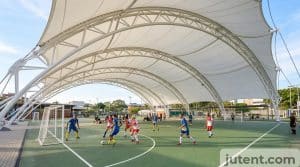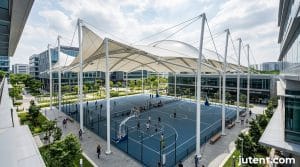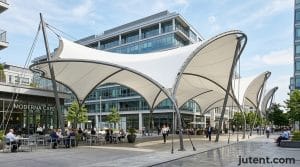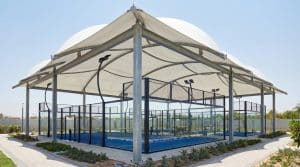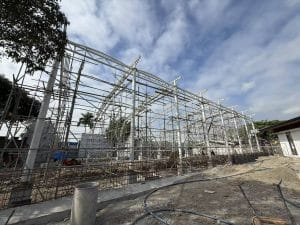

Tensile canopies and steel roofs are the two most common options for sports court shade. This honest comparison covers cost, weight, installation time, maintenance, and the scenarios where each option makes more sense.
Why This Comparison Matters: Different Projects Have Different Right Answers
Deciding between a tensile canopy and a traditional steel roof for a sports court is a critical choice for contractors and developers. The “best” option isn't universal; it depends heavily on project-specific factors like budget, desired aesthetic, local climate, and long-term operational costs. While both provide essential shade and weather protection, their fundamental design principles lead to significant differences in performance, cost implications, and installation complexity. Understanding these distinctions upfront can prevent costly redesigns, delays, and unexpected maintenance burdens down the line. This comparison aims to equip you with the technical insights needed to make an informed decision, ensuring the chosen structure aligns perfectly with your project's objectives and constraints. Based on Jutent's experience across 400+ projects in 30+ countries, we've seen firsthand how the right choice can enhance project success.
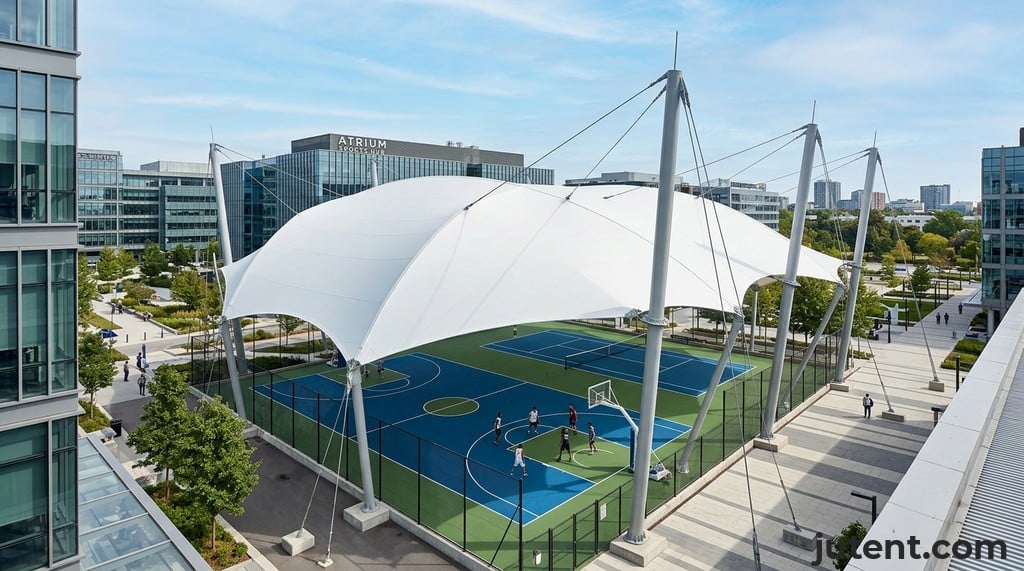
Sport Court Shade
Cost Comparison: Supply and Installation Cost per Square Metre
When evaluating the total project cost, it's essential to look beyond the initial material price and consider the supply and installation cost per square metre. For sports courts, which often require clear spans, tensile canopies frequently offer a more economical solution, especially for spans up to 20 metres. A simple form PVDF tensile membrane structure can range from $40–$70/m² EXW, while a more complex form might be $60–$90/m². PTFE membrane adds approximately $20/m² to these ranges. These figures are for the structure itself, excluding civil works.
In contrast, a conventional steel roof structure, including roofing sheets, typically starts at a higher price point for similar spans due to the greater material volume and fabrication complexity of rigid steel trusses. For spans up to 20m, tensile canopies are often 20–35% cheaper than equivalent steel roof structures. For larger spans (25m+), the cost difference narrows as the steel frame for tensile structures also becomes more substantial. Installation costs for tensile structures can also be lower due to lighter components and faster erection times, which we will discuss in a later section.
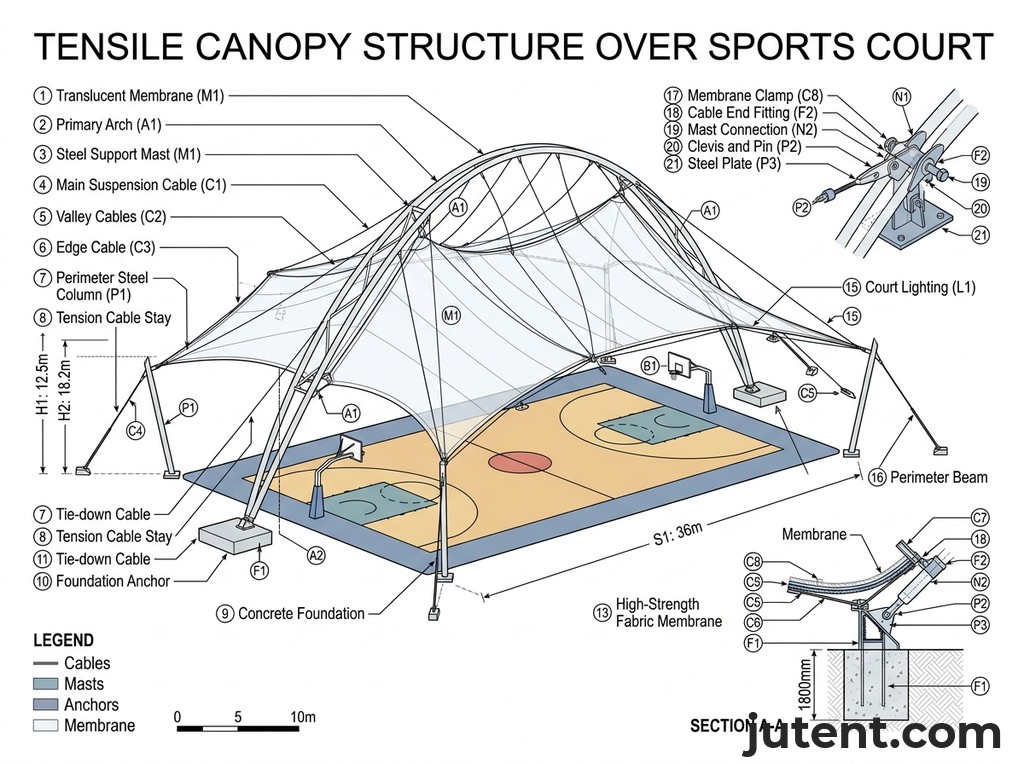
Tensile Shade Structures Sports Courts Guide
Weight and Foundation: How Structure Weight Affects Civil Cost
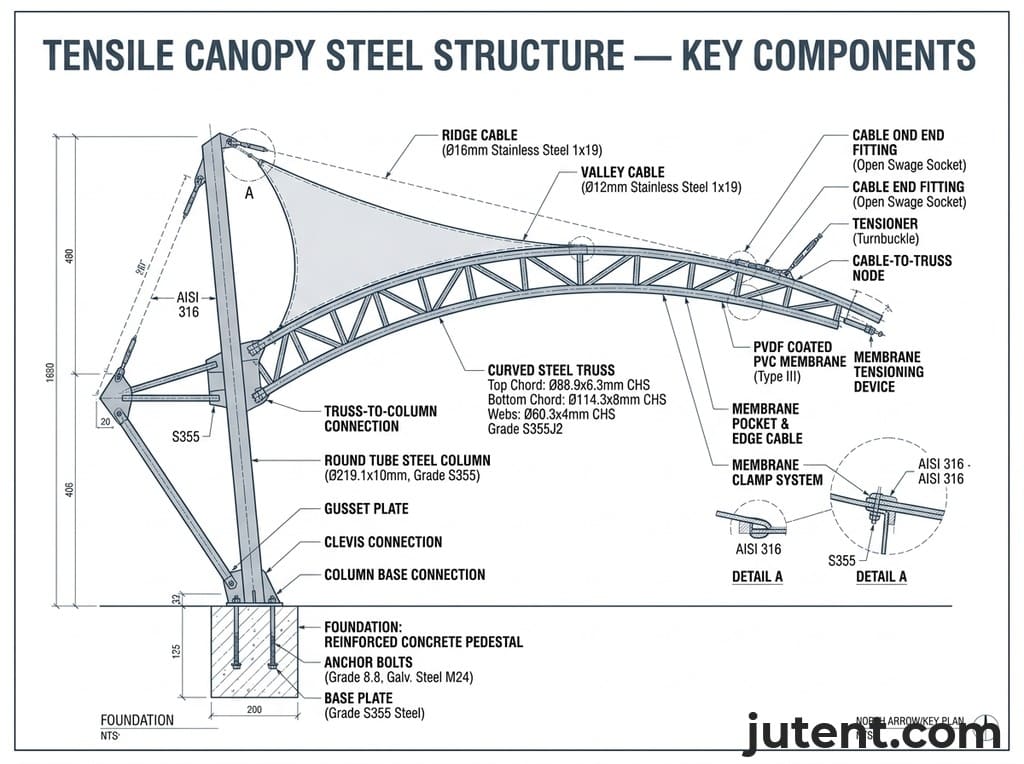
The structural weight of a sports court canopy has a direct and significant impact on the required foundation design and, consequently, the civil engineering costs. Tensile canopies are inherently lightweight structures. Their strength comes from the tensioned membrane working in conjunction with a minimal steel framework (typically Q235B or Q355B steel, with SS304 standard fittings). The membrane itself, even at 1050 g/m² PVDF, contributes very little to the overall dead load. This reduced weight translates into significantly lower loads transferred to the ground.
A traditional steel roof, on the other hand, relies on heavier steel trusses and purlins to support rigid roofing materials like metal sheets or tiles. This results in a much greater dead load, requiring more substantial foundations – deeper footings, larger concrete pads, or more extensive piling. These heavier foundations increase material costs, excavation work, and construction time for the civil portion of the project. For example, a tensile structure might require only a simple pad footing, whereas a steel roof of similar span could necessitate a much larger, reinforced concrete foundation, adding considerable expense to the overall project budget.
Installation Time: Which Is Faster to Erect on Site
Installation time is a critical factor for contractors, directly impacting project schedules and labor costs. Tensile canopies generally offer a significant advantage in terms of on-site erection speed. The fabrication of the steel framework and membrane panels occurs off-site in a controlled factory environment. Once on site, the lightweight steel components are erected, and the pre-fabricated membrane panels are tensioned into place. This process is often quicker than assembling a complex steel truss system and then installing individual roofing sheets.
For a typical sports court, a tensile canopy can often be erected in a matter of weeks, depending on the size and complexity. The membrane installation itself is a relatively fast process once the supporting structure is in place. In contrast, a traditional steel roof involves more intricate on-site assembly of heavier steel members, followed by the careful installation and sealing of roofing panels. This multi-stage process typically requires more time and specialized equipment, extending the overall construction schedule. Jutent provides free remote guidance for export projects, and on-site supervision is available as a paid service, further streamlining the installation process for tensile structures.
Maintenance: What Each Option Requires Over a 20-Year Lifespan
Considering the long-term maintenance requirements is crucial for understanding the total cost of ownership over a 20-year lifespan. Both tensile canopies and steel roofs require periodic maintenance, but the nature and frequency differ.
For tensile canopies, the primary maintenance involves cleaning the membrane and inspecting the tensioning system and steel framework. PVDF membranes (with a 10-year warranty and 15+ years service life) are relatively low-maintenance, often requiring only occasional cleaning to remove dirt and maintain aesthetic appeal. The steel structure (Q235B, Q355B) is treated with an epoxy zinc-rich primer and acrylic or fluorocarbon topcoat for corrosion protection, requiring visual inspection for any coating damage. The membrane itself has a finite lifespan, typically 15-20 years for PVDF and 25+ years for PTFE (with a 15-year warranty). However, the membrane is replaceable without needing to replace the entire steel structure, making the total lifecycle cost comparable to a steel roof.
Steel roofs, while having a longer structural lifespan (40+ years), require ongoing maintenance of their roofing materials and paint systems. Metal roofing sheets can dent, scratch, or corrode if the protective coatings are compromised. Repainting of the steel structure may be necessary every 10-15 years, depending on environmental conditions and the initial coating system. Leaks can also be a more common issue with steel roofs as sealants and fasteners degrade over time, requiring regular inspection and repair.
When Tensile Wins and When Steel Is the Better Choice
The optimal choice between a tensile canopy and a steel roof hinges on specific project priorities. Tensile canopies are often the superior choice when:
- Aesthetics and Design Flexibility are Key: Tensile structures offer unique, sculptural forms that can create iconic architectural statements. Their lightweight nature allows for creative designs not possible with rigid steel.
- Budget is a Primary Constraint for Spans up to 20m: For many sports court applications, the lower material weight, reduced foundation requirements, and faster installation of tensile structures lead to lower overall project costs.
- Speed of Construction is Critical: Pre-fabrication and lighter components mean quicker on-site erection, reducing project timelines.
- Seismic Activity is a Concern: The lightweight and flexible nature of tensile structures can perform better in seismic zones compared to heavier, rigid steel structures.
- Natural Light is Desired: Translucent membranes allow diffused natural light, reducing the need for artificial lighting during the day.
Steel roofs are generally the better choice when:
- Maximum Durability and Lifespan are Paramount: With a structural lifespan of 40+ years, a well-maintained steel roof offers long-term resilience.
- Future Expansion or Modification is Anticipated: Steel structures are often easier to modify or extend due to their modular nature.
- Heavy Loads Need to be Supported: If the roof needs to support heavy equipment, solar panels, or significant snow loads, the inherent rigidity of a steel structure is advantageous.
- A Traditional, Opaque Roof is Preferred: For projects where a solid, opaque roof is desired for specific light control or aesthetic reasons.
- Very Large Spans (25m+) are Required with Minimal Intermediate Supports: While tensile can achieve large spans, the cost advantage over steel may diminish for extremely large, simple spans where steel trusses are highly optimized.
FAQ
- Is a tensile canopy cheaper than a steel roof for a sports court?
- For spans up to 20m, tensile canopies are typically 20–35% cheaper than equivalent steel roof structures. For larger spans (25m+), the cost difference narrows. Tensile structures also have lower foundation loads, which can reduce civil cost. This cost-effectiveness stems from less material usage and faster installation, making them an attractive option for many sports court projects.
- Which is more durable: a tensile canopy or a steel roof?
- Steel roofs have a longer structural lifespan (40+ years vs 25–30 for steel frame + 15–20 for membrane). However, PVDF membrane is replaceable without replacing the steel structure, making the total lifecycle cost comparable. PTFE membranes offer an even longer service life of 25+ years. Both options, with proper maintenance, offer excellent long-term performance.
Tell us your project constraints and we'll provide an honest recommendation — tensile or steel — with cost data to support it.