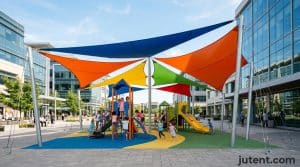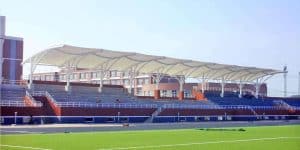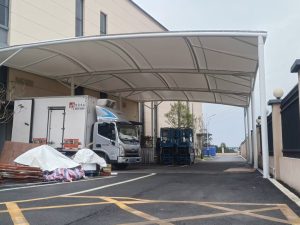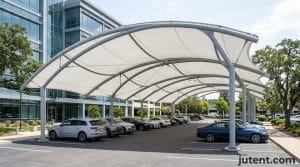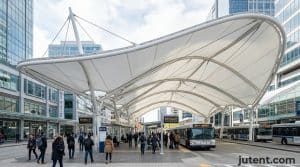

As urban infrastructure evolves to prioritize micro-mobility, the architectural demands on transit support facilities have drastically shifted. Traditional, rigid steel and polycarbonate enclosures are rapidly being replaced by advanced tensile structures. These systems do more than simply shelter bicycles; they leverage the principles of minimal surface geometry to create lightweight structures that are highly resistant to dynamic environmental loads, fundamentally upgrading the spatial aesthetics of public plazas and transit hubs.
At the core of this structural evolution is membrane architecture. By replacing heavy, load-bearing roof components with tensioned fabric supported by precise cable networks and galvanized steel frameworks, architects can span large areas with a fraction of the structural mass. This approach reduces foundation requirements, accelerates installation, and delivers an architectural statement that is both fluid and mathematically precise.
The Physics of Form-Finding and Structural Integrity
The engineering logic behind a tensile bicycle shade operates entirely on pre-stressed tension rather than compression or bending. During the design phase, non-linear structural analysis software (such as EASY or NDN) is deployed to conduct form-finding. This process ensures that the membrane surface reaches equalized tension across its entire geometry, eliminating localized stress points that could lead to material fatigue.
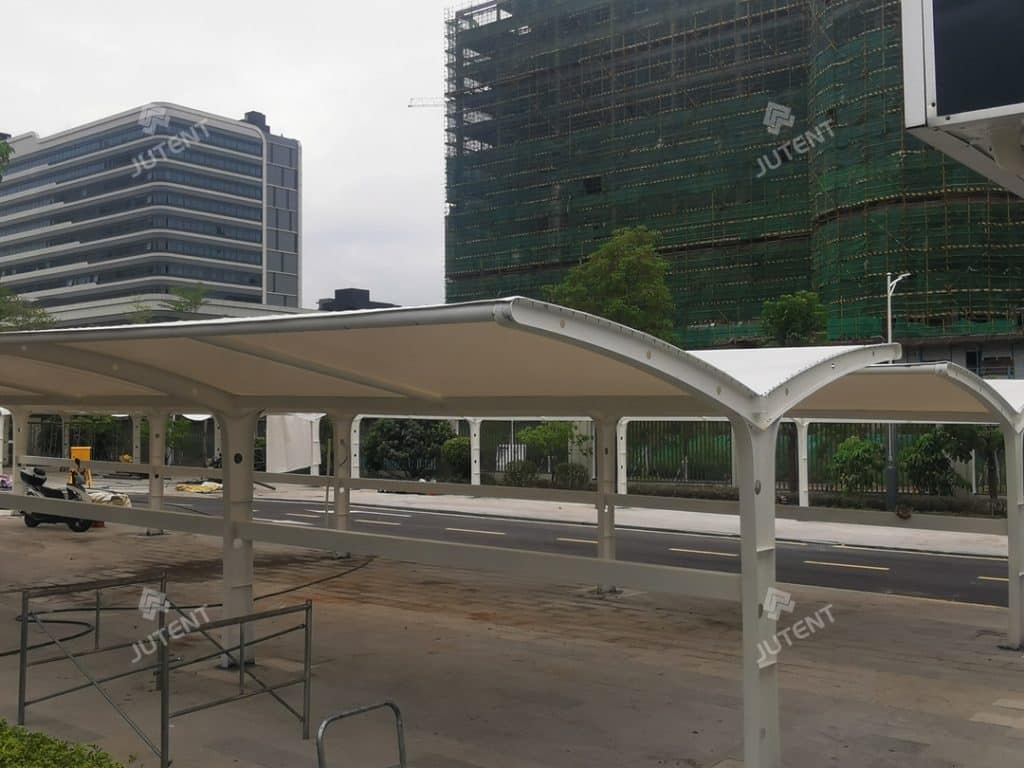
The primary load-bearing framework typically utilizes Q355B low-alloy, high-strength structural steel. To guarantee long-term performance in outdoor municipal settings, columns and cantilevered armatures undergo rigorous anti-corrosion treatments—usually hot-dip galvanization followed by an epoxy zinc-rich primer and polyurethane topcoat. This robust skeletal system anchors the high-tensile stainless steel cables that impart the required pre-stress to the structural membrane.
Material Specifications: PVDF, PTFE, and Fabric Roofing
Selecting the correct material is critical for defining the lifespan, light transmission, and maintenance cycle of the shade canopy. For most commercial shade sails and urban park projects, structural engineers specify highly engineered composite membranes rather than standard canvas.
Material Distinctions in Urban Canopy Design:
- Architectural PVC Membrane (PVDF-Coated): The industry standard for versatile plaza shading structures. Utilizing a high-strength polyester base cloth coated with PVC and finished with a PVDF (Polyvinylidene Fluoride) lacquer, this material offers excellent UV resistance, self-cleaning properties, and a service life exceeding 15 to 20 years.
- PTFE Fiberglass Membrane: Reserved for permanent, high-profile civic architecture. PTFE (Polytetrafluoroethylene) is completely non-combustible, chemically inert, and boasts a lifespan of over 30 years. It provides superior diffuse daylighting, reducing the need for artificial lighting underneath the canopy.
Wind Load Resilience and Environmental Adaptation
Outdoor bicycle enclosures are continuously subjected to lateral wind pressures and vertical uplift. Fabric roofing systems are engineered to deflect these forces through their hyperbolic paraboloid or conic curvatures. When wind hits the tensioned fabric, the double-curved geometry actively sheds the load rather than resisting it bluntly, mitigating the risk of structural failure during severe weather events.
Furthermore, proper detailing at the membrane edges—using heavy-duty aluminum extrusions or catenary cables—ensures controlled rainwater runoff. Unlike flat rigid roofs that are prone to ponding and subsequent structural sag, a well-engineered tensile plaza roof utilizes its geometric slope to direct water seamlessly to integrated column drainage systems, maintaining the area below dry and safe for commuters.
Maximizing ROI in Commercial and Civic Development
Integrating a structural membrane canopy into a commercial development or urban master plan yields immediate returns. Beyond protecting bicycles from UV degradation and weather damage, these sculptural forms act as wayfinding landmarks. Their high light reflectivity minimizes the urban heat island effect, aligning closely with modern sustainable building certifications.
For developers, architects, and city planners, specifying a custom membrane structure represents a shift toward intelligent, low-maintenance urban design. The synthesis of high-strength materials and exact engineering ensures that these lightweight structures remain functional and visually striking for decades.