
“`html
When planning a new aquatic facility or upgrading an existing one, the decision to incorporate shade is paramount. Beyond aesthetic appeal, the right shade structure offers critical protection and enhances the user experience. This guide will help aquatic facility developers and contractors understand the core components, benefits, and practical considerations of pool tensile shade structures, ensuring informed choices for long-term value and safety.
What a Pool Tensile Shade Structure Is and What It Isn't
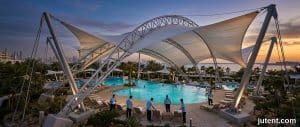
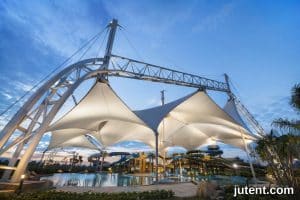
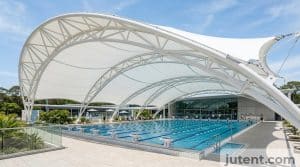
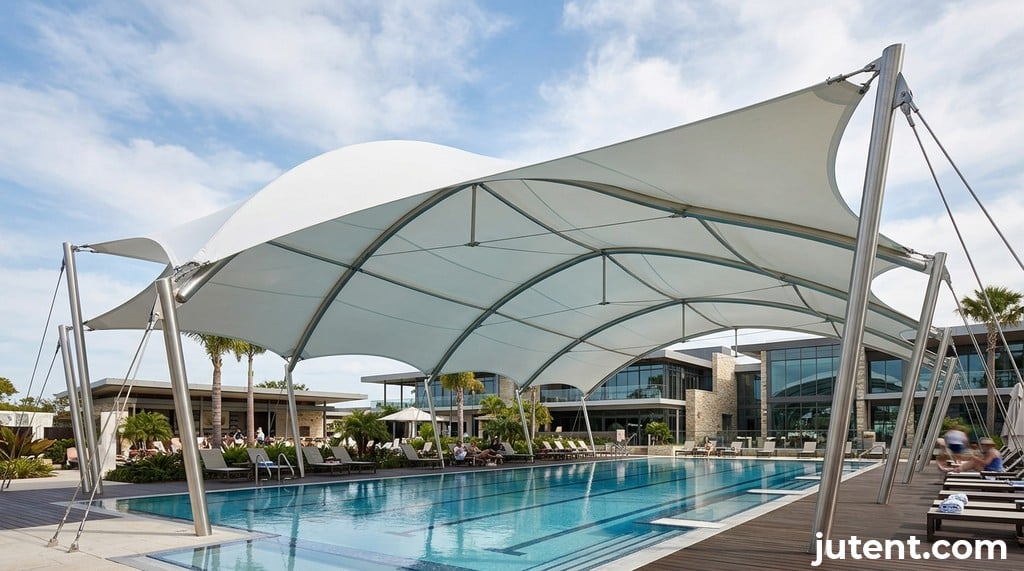
A pool tensile shade structure is a permanent, engineered architectural system designed to provide extensive overhead coverage for swimming pools and surrounding areas. At its core, it consists of a reliable steel framework supporting a tensioned membrane fabric. This combination creates a durable, weather-resistant canopy that offers significant UV protection, reduces glare, and allows for natural ventilation. Unlike temporary solutions such as umbrellas or retractable awnings, a tensile structure is a fixed installation, engineered to withstand specific wind loads and environmental conditions, ensuring consistent protection year-round. It is not a temporary fixture, nor is it a fully enclosed building; rather, it's an open-air, semi-permanent architectural feature that integrates seamlessly with the pool environment. Its primary function is to create a comfortable, sun-safe zone without impeding airflow or the feeling of being outdoors.
Pool Shade
How Pool Tensile Shade Structures Work: Steel, Membrane, and Drainage
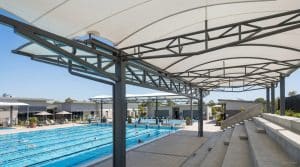
The functionality of a pool tensile shade structure hinges on the synergistic interaction of its primary components: the steel support structure, the tensioned membrane, and an integrated drainage system. The steel framework, typically fabricated from high-grade Q235B or Q355B steel (Chinese GB/T standard, equivalent to ASTM A36 and ASTM A572 Grade 50 respectively), provides the necessary strength and rigidity to support the membrane and resist environmental forces. This steel is treated with an epoxy zinc-rich primer followed by an acrylic or fluorocarbon topcoat, or hot-dip galvanizing, to ensure long-term corrosion resistance. The membrane, often a 1050 g/m² PVDF or PTFE fabric, is stretched taut across the steel frame, creating a dynamic, sculptural form. This tension is crucial for the membrane's stability, its ability to shed water, and its resistance to wind uplift.
Water management is critical. The inherent curvature and tension of the membrane are designed to direct rainwater towards specific low points or gutters, which then channel water away from the pool deck. This prevents pooling on the fabric and ensures efficient drainage, maintaining the structural integrity and longevity of the system. The engineering behind these structures accounts for various loads, including wind, snow (where applicable), and the weight of the structure itself, ensuring safety and performance over decades.
Pool Tensile Shade Structure Guide
Types of Pool Shade: Tensile Canopy, Hip Roof, and Sail Shade
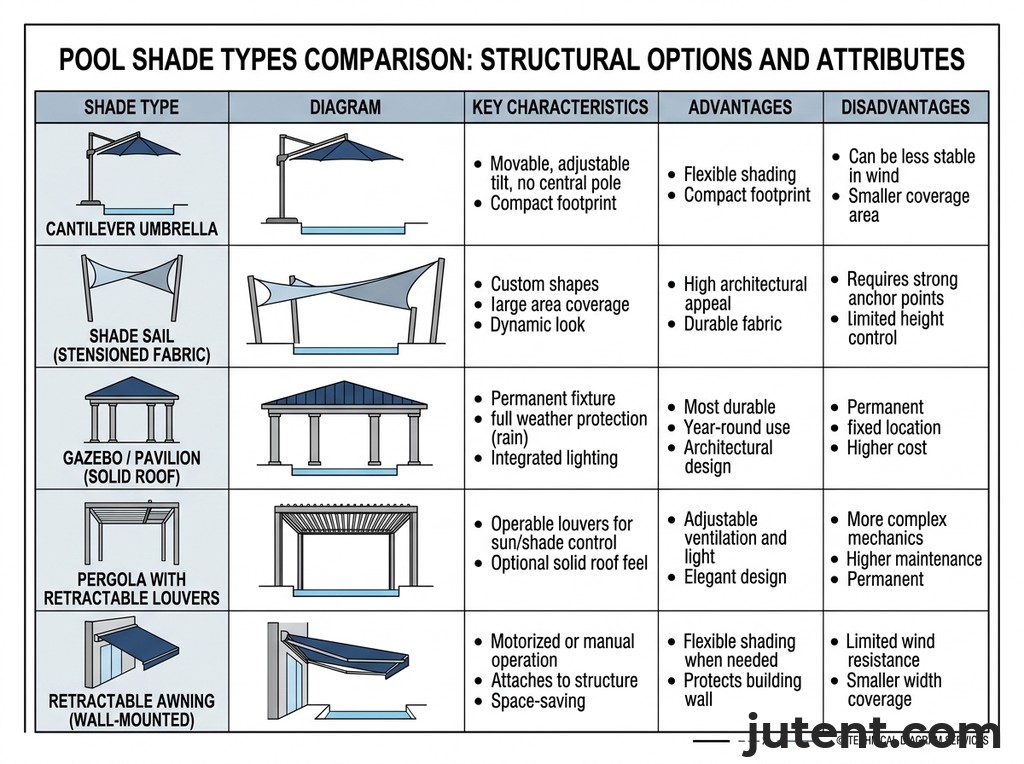
When considering pool shade options, several distinct types offer varying aesthetics, coverage, and structural characteristics. Understanding these differences is key to selecting the most appropriate solution for an aquatic facility.
Tensile Canopy Structures: These are the most architecturally dynamic and flexible. They utilize the tensioning of a membrane fabric over a steel frame to create expansive, often curvilinear forms. Tensile canopies are highly customizable in shape and size, making them ideal for covering large, irregularly shaped pool areas. They excel at providing broad, unobstructed shade while maintaining an open, airy feel. Their design allows for excellent natural ventilation and efficient rainwater runoff due to their inherent three-dimensional curvature.
Hip Roof Structures: While not strictly “tensile” in the same architectural sense, hip roof shade structures offer a more traditional, rectilinear aesthetic. They typically feature a four-sided roof that slopes downwards to the walls, supported by a steel frame. These structures provide consistent, uniform shade and are often chosen for their classic appearance and ease of integration with existing architecture. They are effective for rectangular pools and offer reliable protection, though they may not achieve the same expansive, column-free spans as some tensile designs.
Sail Shades: These are characterized by their minimalist design, using one or more pieces of tensioned fabric anchored at multiple points, often without a full perimeter frame. Sail shades evoke a nautical aesthetic and are excellent for creating partial or artistic shade patterns. While they offer flexibility in design and can be visually striking, they typically provide less comprehensive, continuous cove
“`