
“`html
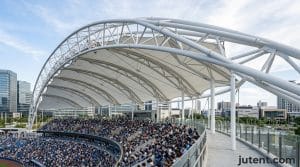
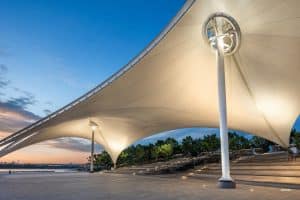
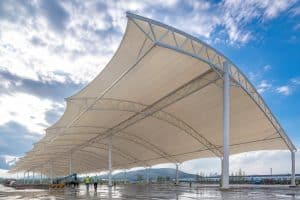
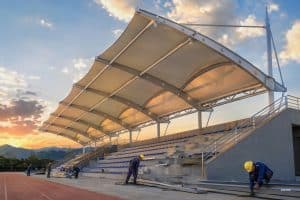
Grandstand shade structure design affects sightlines, acoustics, drainage, and wind performance — not just how it looks. These five decisions have the biggest impact on whether the structure actually works for spectators. For projects in high-sun regions like South Africa or Kenya, a properly designed grandstand shade structure is essential for spectator comfort. For architects and contractors, understanding these engineering considerations early in the design process is crucial for delivering a successful project. A well-designed grandstand canopy enhances the spectator experience, protects against the elements, and integrates aesthetically with the venue. Conversely, overlooked details can lead to costly revisions, compromised functionality, or even structural issues. This article outlines the key decisions that shape effective grandstand canopy design, drawing on practical engineering insights to optimize both form and function.
Decision 1: Canopy Depth — How Far Back the Cover Reaches
The depth of a grandstand canopy, or how far back it extends over the seating area, is a critical initial decision that directly impacts spectator comfort and protection. This dimension is not merely about covering seats; it's a complex interplay of sun path analysis, rain protection, and structural efficiency. A deeper canopy offers more thorough shade and rain protection, especially for spectators in the upper rows. However, increasing depth also means a larger membrane area, heavier structural steel, and potentially higher costs.
Engineers must consider the sun's angle throughout the day and across seasons at the specific geographic location. A canopy designed for a stadium in the tropics will require different depth considerations than one in a temperate zone. Similarly, prevailing wind directions and speeds influence how far rain might be driven under the canopy, necessitating a depth that accounts for these environmental factors.
From a structural perspective, greater depth often requires longer cantilevers or more extensive support structures, impacting the overall design's elegance and cost-effectiveness. The balance lies in providing adequate coverage without over-engineering. For example, a canopy designed primarily for sun protection in a dry climate might prioritize a shallower depth with a wider span, while a canopy in a region with frequent heavy rainfall would lean towards greater depth to ensure maximum rain deflection. Based on Jutent's experience across 400+ projects in 30+ countries, optimizing canopy depth often involves iterative design, balancing coverage requirements with structural feasibility and budget constraints.
Explore Jutent's completed grandstand canopy projects to see how we optimize depth for different climates. (Link to /projects/ or /gallery/)
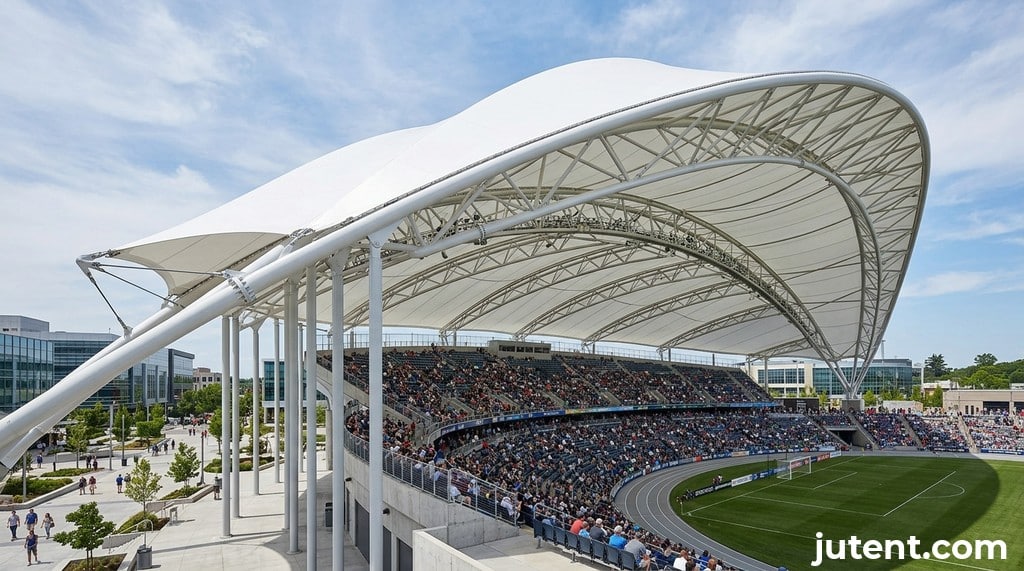
Decision 2: Fascia Height — Balancing Sightlines and Wind Exposure
The fascia height of a grandstand canopy refers to the vertical distance from the seating plane to the lowest point of the canopy's edge. This decision is paramount for two primary reasons: maintaining unobstructed spectator sightlines and managing wind performance. An improperly set fascia height can either block views of the field or expose the structure to excessive wind uplift.
For architects, the primary concern is often sightlines. The fascia must be high enough to ensure that spectators in the highest rows have a clear view of the entire playing area without the canopy edge obstructing their vision. This requires careful consideration of the stadium's geometry, seating rake, and the typical viewing angles. Engineering analysis, including 3D modeling, is essential to verify sightline clearance from every seat.
From an engineering standpoint, fascia height also significantly influences the canopy's wind performance. A lower fascia can create a larger “sail” effect, increasing wind loads and potentially leading to higher uplift forces, which demand more reliable steelwork and foundations. Conversely, a higher fascia might reduce some wind loads but could compromise rain protection if not paired with sufficient depth. The design must account for local wind codes and typical wind patterns. Jutent's structural engineers perform detailed wind load calculations, often utilizing computational fluid dynamics (CFD) analysis for complex geometries, to ensure the canopy can withstand extreme weather events. The goal is to find the optimal height that satisfies both aesthetic and functional requirements, ensuring spectator comfort and structural integrity.
Grandstand Canopy Structures Guide
Decision 3: Membrane Pitch — Drainage and Ponding Prevention
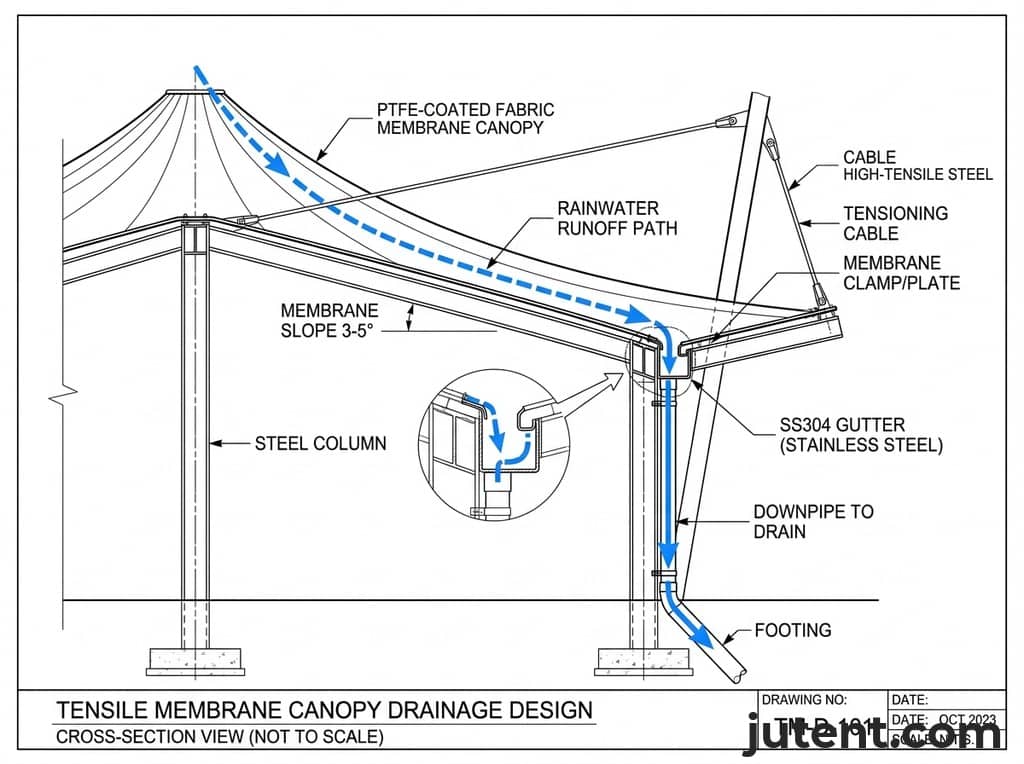
The membrane pitch, or the angle of the canopy's surface, is a critical engineering decision that directly impacts drainage and prevents water ponding. While seemingly straightforward, an insufficient pitch can lead to significant issues, including structural overload from accumulated water, accelerated membrane degradation, and even aesthetic problems like staining.
For tensile membrane structures, a minimum
Get Your Grandstand Canopy Quote
“`