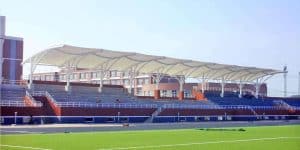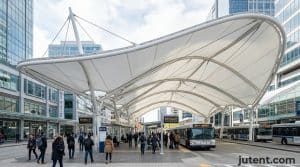

Ordering a grandstand canopy from a Chinese manufacturer can save 30–50% on supply cost — but only if you verify the right things before signing. Here are the five checks that separate reliable suppliers from the rest.
Why Manufacturer Verification Matters More for Grandstand Projects
Procuring a grandstand canopy is not merely a transaction; it’s an investment in a critical piece of infrastructure that must withstand significant environmental stresses and ensure public safety. Unlike simpler shade structures, a grandstand canopy is a large-scale, engineered system. Its structural integrity directly impacts the safety of hundreds, if not thousands, of spectators. This elevated risk profile means that due diligence in selecting a grandstand canopy manufacturer is paramount, especially when sourcing internationally.
The cost savings offered by Chinese manufacturers can be substantial, often ranging from 30% to 50% compared to local fabricators in regions like Southeast Asia or the Middle East. However, these savings are only realized if the quality meets project specifications and regulatory standards. A failure in engineering, material quality, or fabrication can lead to costly delays, structural compromises, and reputational damage. Verifying a manufacturer’s capabilities and quality control processes upfront mitigates these risks, ensuring that the initial cost advantage doesn’t translate into long-term liabilities. Based on Jutent’s experience across 400+ projects in 30+ countries, thorough verification is the single most important step in successful international procurement for grandstand projects. It’s about securing a reliable partner, not just a cheap supplier.
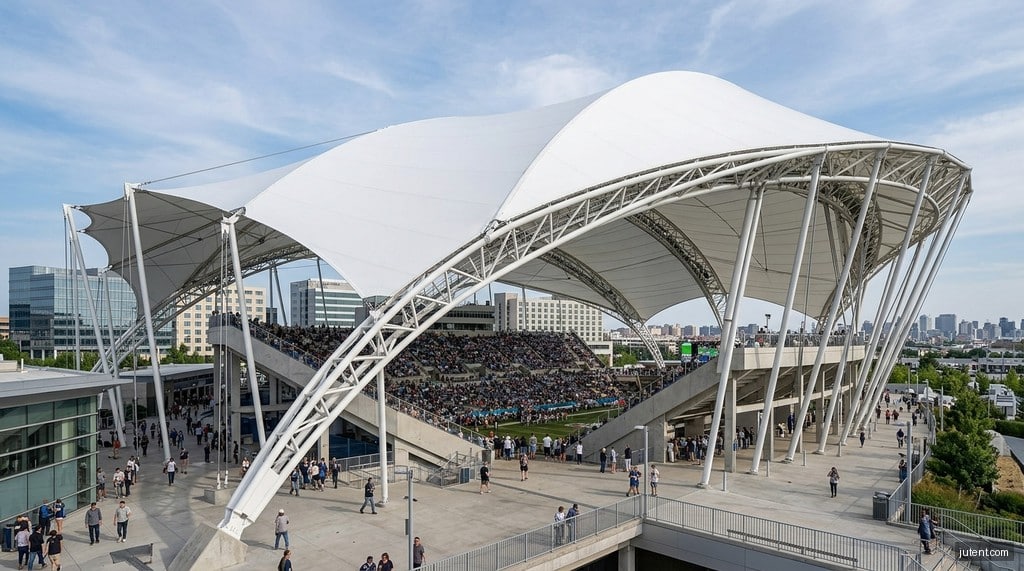
Grandstand Canopy
Check 1: Engineering Capability — Can They Calculate Wind Uplift for Your Location?
The structural integrity of a grandstand canopy hinges on precise engineering, particularly its ability to resist wind loads. Wind uplift, in particular, is a critical factor that varies significantly by geographical location and local building codes. A reputable grandstand canopy manufacturer must demonstrate reliable in-house engineering capabilities, not just rely on generic designs.
When evaluating a potential supplier, request detailed wind load calculations specific to your project’s exact location. This should include:
* Design Wind Speed: Confirm they can incorporate the specific design wind speed (e.g., 45 m/s or 162 km/h) relevant to your site.
* Exposure Category: Verify their understanding of terrain categories (e.g., urban, suburban, open country) and how they apply to your project.
* Topography Factors: Ensure they account for any hills, ridges, or escarpments that could amplify wind effects.
* Building Code Compliance: Ask which international or local building codes (e.g., ASCE 7, Eurocode, local standards) their calculations adhere to.
A manufacturer should be able to provide clear, professional engineering reports, often generated using specialized software, detailing these calculations. They should also explain their safety factors and how they ensure the structure can withstand extreme weather events. A manufacturer that struggles to provide location-specific wind uplift calculations or offers only generic data is a significant red flag. For export projects, Jutent can provide design drawings, calculations, material specifications, installation manuals, and free remote guidance, subject to project scope and contract terms.
About
Check 2: Membrane Brand and Test Certificates — What to Ask For
The membrane is the most visible and functionally critical component of a tensile grandstand roof supplier. Its durability, fire resistance, and UV stability directly impact the canopy’s service life and safety. Generic or uncertified membranes can fail prematurely, leading to costly replacements and potential hazards.
Always demand specific information regarding the membrane material:
* Brand Name: Reputable manufacturers use membranes from established international brands (e.g., Mehler, Serge Ferrari, Verseidag). Ask for the specific brand and product series.
* Material Type: Confirm whether it’s PVDF or PTFE. Standard PVDF membranes offer a 10-year warranty and 15+ years service life, while PTFE membranes typically come with a 15-year warranty and 25+ years service life.
* Weight (g/m²): A standard membrane for grandstand canopies is typically 1050 g/m² PVDF or PTFE. Lighter membranes may indicate cost-cutting that compromises durability.
* Test Certificates: Request copies of official test certificates for the specific membrane batch or product line. These should include:
* Tensile Strength: Demonstrates resistance to tearing.
* Tear Strength: Resistance to propagation of tears.
* Fire Rating: Essential for public safety (e.g., B1, M2, Class A).
* UV Resistance: Confirms longevity under sun exposure.
* Self-Cleaning Properties: For PVDF and PTFE, this indicates surface treatment effectiveness.
* ISO Certification: Verify the manufacturer’s overall quality management system, such as ISO 9001, which ensures consistent production quality.
A reliable grandstand shade structure supplier will readily provide these documents. Hesitation or the provision of vague “certificates” should prompt further investigation.
Check 3: Steel Grade and Fabrication Quality — How to Assess from a Distance
The steel framework provides the primary structural support for any stadium canopy manufacturer China. Its grade and fabrication quality are fundamental to the canopy’s long-term stability and safety. Assessing this from a distance requires a systematic approach to documentation and visual evidence.
Key areas to scrutinize:
* Steel Grade: Request confirmation of the steel grade used. Common grades for structural applications are Q235B and Q355B. Ensure the grade specified meets or exceeds your project’s structural requirements.
* Surface Treatment: This is crucial for corrosion resistance. Acceptable treatments include:
* Epoxy zinc-rich primer + acrylic topcoat
* Epoxy zinc-rich primer + fluorocarbon topcoat
* Hot-dip galvanizing (often preferred for maximum durability in harsh environments).
* Request detailed specifications for the coating thickness and application process.
* Welding Procedures: Ask for documentation on their welding processes and welder qualifications. While you can’t inspect welds in person, a manufacturer should be able to provide photos or videos of their welding bays, demonstrating clean, consistent welds. Look for evidence of proper joint preparation and finishing.
* Fabrication Tolerances: Inquire about their standard fabrication tolerances. Tight tolerances indicate precision manufacturing.
* Quality Control (QC) Documentation: Request QC reports for steel material incoming inspection, welding inspection, and surface treatment inspection. This might include material test reports (MTRs) for the steel, and thickness measurements for coatings.
* Visual Evidence: Ask for recent photos or videos of their steel fabrication workshop, showing ongoing projects. Look for organized workspaces, appropriate equipment, and skilled workers.
A manufacturer that is transparent about their steel sourcing, fabrication processes, and QC documentation is more likely to deliver a high-quality product.
Check 4: Factory Production Lead Time — What’s Realistic and What’s a Red Flag
Production lead time is a critical factor in project scheduling and overall delivery. While Chinese manufacturers can offer competitive pricing, unrealistic lead times can lead to project delays, cost overruns, and contractual disputes. Understanding what constitutes a realistic timeline is essential for procurement managers and contractors.
Factors influencing lead time for a grandstand canopy factory include:
* Project Size and Complexity: A larger or more intricate design will naturally require more time for engineering, material procurement, fabrication, and quality control. A simple PVDF membrane structure of 100 m² might take 3-4 weeks for fabrication, while a complex form PTFE structure of 1000 m² could take 8-12 weeks or more.
* Material Availability: While standard materials like 1050 g/m² PVDF membrane and Q235B/Q355B steel are generally readily available, specific colors, custom membrane types, or specialized steel sections might extend lead times.
* Current Factory Load: A busy factory will have longer lead times. Ask about their current production schedule and capacity.
* Shipping Time: This is separate from production and must be factored in. Sea freight from China to Southeast Asia or the Middle East can take 2-6 weeks depending on the destination.
What to look for:
* Detailed Production Schedule: A reputable manufacturer should provide a clear, itemized production schedule, breaking down each stage from design approval to packing and loading.
* Buffer Time: Realistic schedules include buffer time for unforeseen issues.
* Red Flags:
* Unusually Short Lead Times: If a manufacturer promises a significantly shorter lead time than competitors for a similar project, it could indicate corners being cut or an inability to accurately estimate.
* Lack of Transparency: Vague answers about production timelines or an unwillingness to provide a detailed schedule are concerning.
* No Contingency Planning: A manufacturer who doesn’t discuss potential delays or how they manage them might be overpromising.
Always compare quoted lead times with industry averages for similar projects and consider the manufacturer’s current workload.
Check 5: References from Similar Grandstand Projects
Verifying a manufacturer’s past performance is one of the most reliable indicators of future success. For a specialized product like a grandstand canopy, general references are insufficient. You need evidence of their experience with similar large-scale, public-facing structures.
When requesting references, be specific:
* Project Type: Ask for references specifically for grandstand canopies, stadium canopies, or large-span tensile structures for public venues.
* Project Location: Prioritize projects in your region or countries with similar climate conditions and building codes. This demonstrates their experience with relevant logistical and regulatory challenges.
* Project Scope: Inquire about projects of comparable size and complexity to your own. A manufacturer experienced in small shade structures may not have the engineering or production capacity for a large grandstand.
* Contact Information: Request contact details (email and phone) for the project owner, main contractor, or architect involved in those projects.
* Project Details: Ask for project names, completion dates, and photos.
What to do with references:
* Contact Them: Reach out to the provided contacts. Ask about the manufacturer’s communication, adherence to schedule, quality of materials and fabrication, and post-delivery support.
* Verify Claims: Cross-reference information provided by the manufacturer with the reference.
* Look for Consistency: A pattern of positive feedback across multiple references is a strong indicator of reliability. Conversely, difficulty in obtaining references or vague responses should raise concerns.
A manufacturer confident in their work will be eager to share relevant project references. This step is crucial for gaining confidence in their ability to deliver a high-quality grandstand canopy.
FAQ
- What is the advantage of sourcing a grandstand canopy from a Chinese manufacturer?
- Chinese manufacturers typically offer 30–50% lower supply cost than local fabricators in Southeast Asia or the Middle East, with comparable quality when the right supplier is selected. This significant cost reduction allows for more competitive project bids or greater budget allocation to other project components, without necessarily compromising on material or structural integrity, provided thorough due diligence is conducted to ensure supplier reliability and adherence to specifications.
- How do I verify that a Chinese grandstand canopy manufacturer is legitimate?
- To verify legitimacy, request thorough documentation including factory audit photos, ISO 9001 and SGS certifications, specific membrane test certificates (e.g., for tensile strength, fire rating, UV resistance), detailed wind load calculation samples tailored to your location, and verifiable references from completed grandstand projects in your target region. assess their transparency in providing information on steel grades, surface treatments (Epoxy zinc-rich primer + acrylic topcoat, Epoxy zinc-rich primer + fluorocarbon topcoat, or hot-dip galvanizing), and production processes.
Contact Jutent with your project details and we’ll provide all five verification items with documentation within 48 hours.