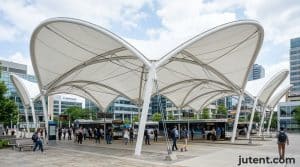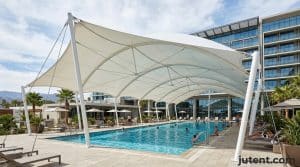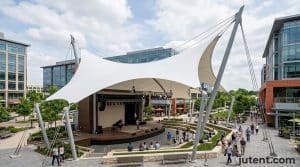

Những tiến bộ gần đây trong kiến trúc màng đã thay đổi cơ bản khả năng kết cấu của màng PVC composites, thiết lập chúng như một vật liệu kỹ thuật hàng đầu cho lightweight structures. Bằng cách tích hợp các lớp phủ trên cùng PVDF (Polyvinylidene fluoride) liên kết chéo cao với các sợi nền polyester có độ bền cao, độ co rút thấp, các hệ thống mái vải thường xuyên đạt được độ bền kéo vượt quá 8.000 N/5cm. Phân tích kỹ thuật này phác thảo các thông số cơ học, tiêu chí độ bền môi trường và cơ chế tạo ứng suất trước cần thiết để chỉ định một màng kiến trúc hệ thống có khả năng chịu được tải trọng động khắc nghiệt.
Tính chất Cơ học và Khả năng Chịu Tải Động
Cốt lõi của bất kỳ kết cấu màng vật liệu hiệu suất cao nào là vải dệt nền, thường được phân loại từ Loại I đến Loại V dựa trên năng suất cơ học và phân bố sợi dọc-sợi ngang. Các thiết kế kiến trúc hiện đại yêu cầu vải được thiết kế để thể hiện độ rão tối thiểu dưới ứng suất hai trục không đổi. Một vật liệu tổng hợp PVC Loại IV hoặc Loại V dựa trên lưới polyester mật độ cao giúp phân phối lực căng đều trên toàn bộ kết cấu.
Khi thiết kế một căng mái quảng trường hoặc các mái che nhịp lớn tương tự, các kỹ sư kết cấu phải tính đến các lực môi trường động. Vải PVC cao cấp được thiết kế với độ bền xé lên tới 1.500 N và được chứng nhận cho ngưỡng chịu gió 150km/h . Hơn nữa, việc tạo ứng suất trước được hiệu chỉnh cẩn thận—thường nằm trong khoảng từ 2,5 kN/m đến 4,0 kN/m—đảm bảo màng duy trì độ cong phản nghịch mà không bị đọng nước dưới tải trọng tuyết 130 kg/m².
Công nghệ phủ và độ bền môi trường
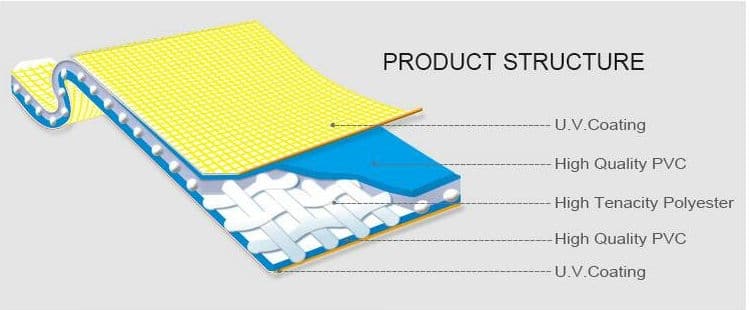
Đánh giá tác động của tia UV đến tuổi thọ màng là yếu tố hạn chế chính đối với các kết cấu vải ngoài trời. Để giảm thiểu sự phân hủy polymer, mái vải sử dụng hệ thống sơn bề mặt tiên tiến. Lớp phủ PVDF có thể hàn, được tăng cường bằng Titanium Dioxide (TiO2), hoạt động như một chất loại bỏ gốc tự do, ngăn chặn ma trận PVC bên dưới khỏi quá trình oxy hóa quang và di chuyển chất hóa dẻo.
Ngoài bức xạ UV, kiểm soát độ ẩm là rất quan trọng. Hiện tượng mao dẫn dọc theo các sợi polyester có thể dẫn đến tách lớp và phát triển vi sinh vật. Màng cao cấp có tính năng chống thấm được tiêm trực tiếp vào sợi trước khi dệt. Khi màng được neo bằng phần cứng chu vi được xử lý đến Lớp phủ cấp biển C5 tiêu chuẩn, toàn bộ hệ thống đảm bảo tuổi thọ vận hành dự kiến từ 20 đến 25 năm, ngay cả trong môi trường ven biển hoặc công nghiệp có tính ăn mòn cao.
So sánh Thông số Kỹ thuật
Để đánh giá một cách khách quan kết cấu căng, việc phân tích so sánh vật liệu với các hệ thống thay thế là cần thiết. Mặc dù màng PTFE (sợi thủy tinh phủ polytetrafluoroethylene) mang lại những ưu điểm riêng biệt về các thông số nhiệt và khả năng cháy cụ thể, nhưng màng PVC phủ PVDF hiện đại lại có khả năng chống mỏi uốn vượt trội và hiệu quả xử lý cao hơn trong quá trình chế tạo kết cấu.
| Thông số Kỹ thuật | Màng PVC Loại IV (Phủ PVDF) | Màng PTFE (Nền sợi thủy tinh) |
|---|---|---|
| Vật liệu Sợi Cơ bản | Polyester Cường độ Cao | Sợi thủy tinh dệt |
| Độ bền kéo (Sợi dọc/Sợi ngang) | 8,000 / 7,000 N/5cm | 9,000 / 8,000 N/5cm |
| Khả năng chống mỏi uốn | Cao (Chịu được gấp động liên tục) | Thấp (Dễ bị gãy giòn do sợi thủy tinh) |
| Truyền sáng | 7% - 15% (Mờ) | 10% - 20% (Rất mờ) |
| Nhiệt độ nứt lạnh | -30°C đến -40°C | -73°C |
| Hàn tần số cao (HF); chế tạo hiệu quả | Yêu cầu máy hàn PTFE nhiệt độ cao chuyên dụng |
Lắp đặt kỹ thuật và tìm hình dạng
Việc triển khai một kết cấu màng đáng tin cậy đòi hỏi phân tích phần tử hữu hạn phi tuyến (FEA) nghiêm ngặt. Vải phải được tạo hình với các giá trị bù chính xác—thường thu nhỏ mẫu cắt từ 1% đến 2,5%—để vật liệu có thể giãn ra thành hình dạng ứng suất trước cuối cùng. Sự bù này đảm bảo cân bằng kết cấu của hệ thống, truyền lực cắt khí động học một cách an toàn vào kết cấu thép chính bên dưới và tránh rung động màng.