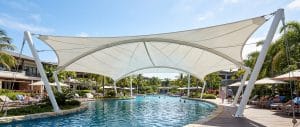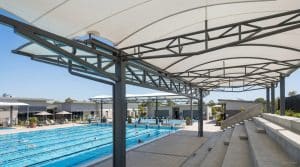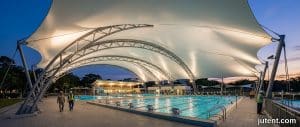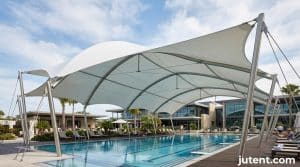

A tensile membrane structure for pool shade in Southeast Asia must be engineered not just for comfort and aesthetics, but for extreme durability against relentless UV radiation and formidable wind loads.
Contractors in the Philippines, Malaysia, and Indonesia understand the unique challenges of building in Southeast Asia. The region's intense tropical sun and frequent, powerful typhoons demand a different approach to outdoor structures, especially for aquatic facilities. A pool tensile shade structure Southeast Asia must be engineered not just for comfort and aesthetics, but for extreme durability against relentless UV radiation and formidable wind loads. Specifying the right materials and design principles is paramount to ensuring longevity, safety, and client satisfaction in this demanding environment.
Typhoon Wind Load Requirements for Pool Shade in Southeast Asia
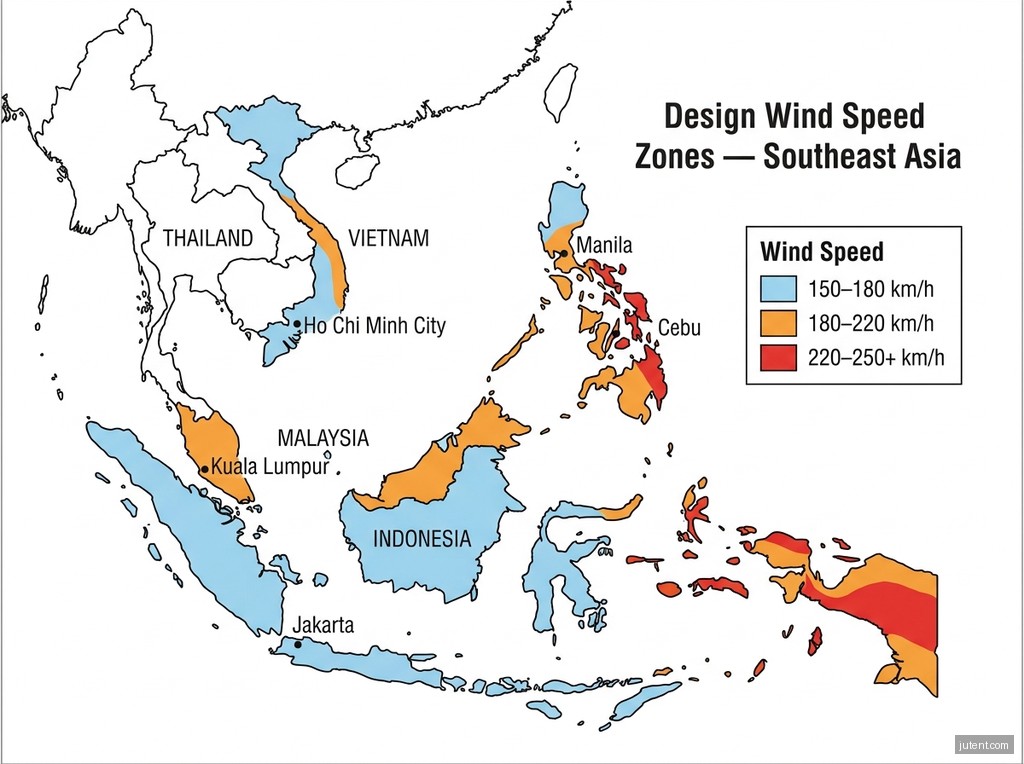
Designing a pool shade structure for Southeast Asia means confronting some of the world's highest wind speeds. The Philippines, in particular, is highly susceptible to typhoons, with average wind speeds often exceeding 200 km/h during major events. Malaysia and Indonesia, while generally less prone to direct typhoon landfalls, still experience significant cyclonic activity and monsoon winds that require reliable engineering.
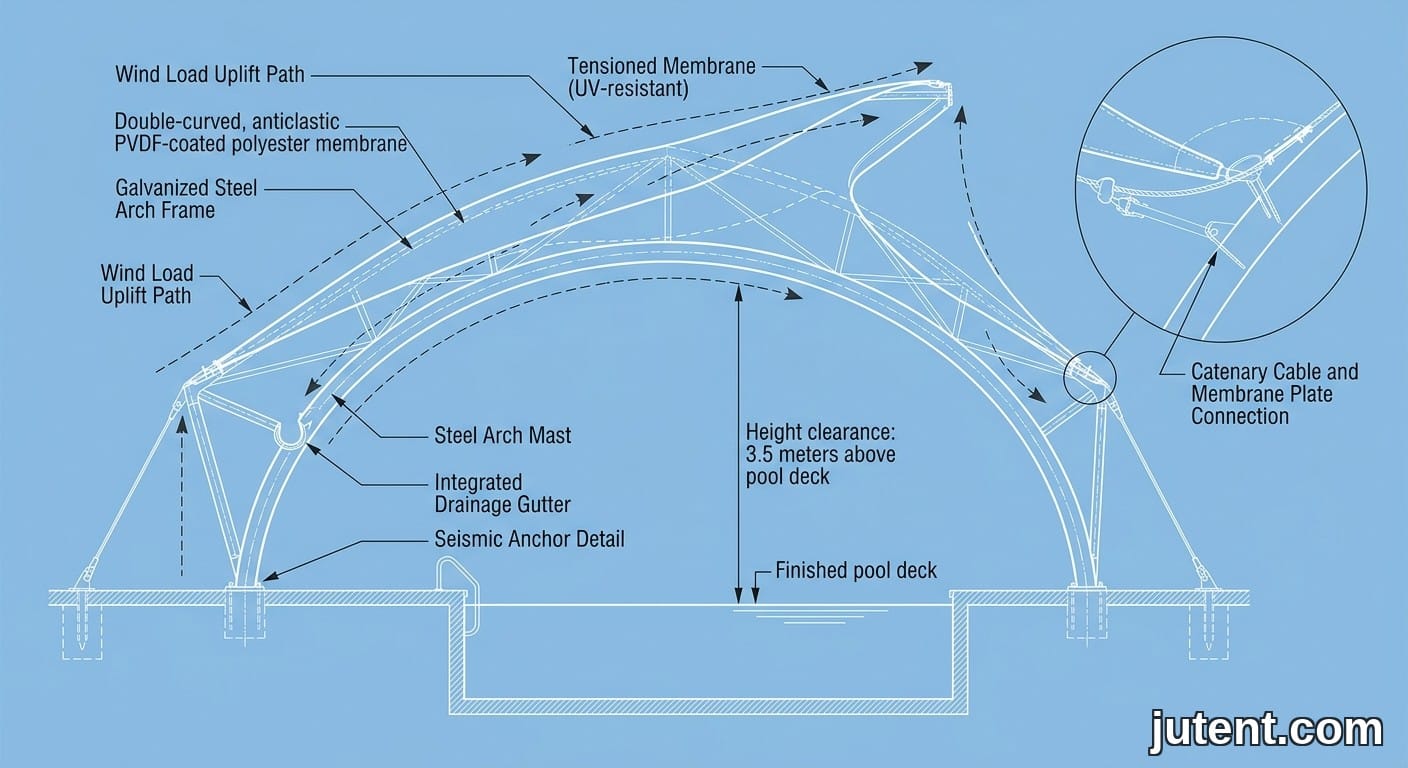
Local building codes, such as the National Structural Code of the Philippines (NSCP), specify stringent wind load requirements. These codes dictate the minimum design wind speeds and corresponding pressures that structures must withstand. For a pool shade Philippines project, this often means designing for ultimate wind speeds in the range of 200–250 km/h, depending on the specific location and exposure category. Similarly, a swimming pool canopy Malaysia or pool shade Indonesia must adhere to their respective national and regional standards, which typically account for high wind pressures.
Tensile structures, by their very nature, are highly efficient in distributing wind loads — learn more about our tensile structure design principles. However, this efficiency relies on precise engineering of the membrane tension, cable systems, and supporting steel framework. The steel structure, often fabricated from Q235B (equivalent to ASTM A36) or Q355B (equivalent to ASTM A572 Grade 50) grade steel, must be designed with sufficient strength and rigidity to prevent buckling or excessive deflection under extreme wind pressure. Connections are critical; bolted or welded joints must be meticulously detailed to transfer forces effectively. Based on Jutent's experience across 400+ projects in 30+ countries, we consistently specify structural designs that exceed minimum code requirements, providing an additional margin of safety.
Pool Shade
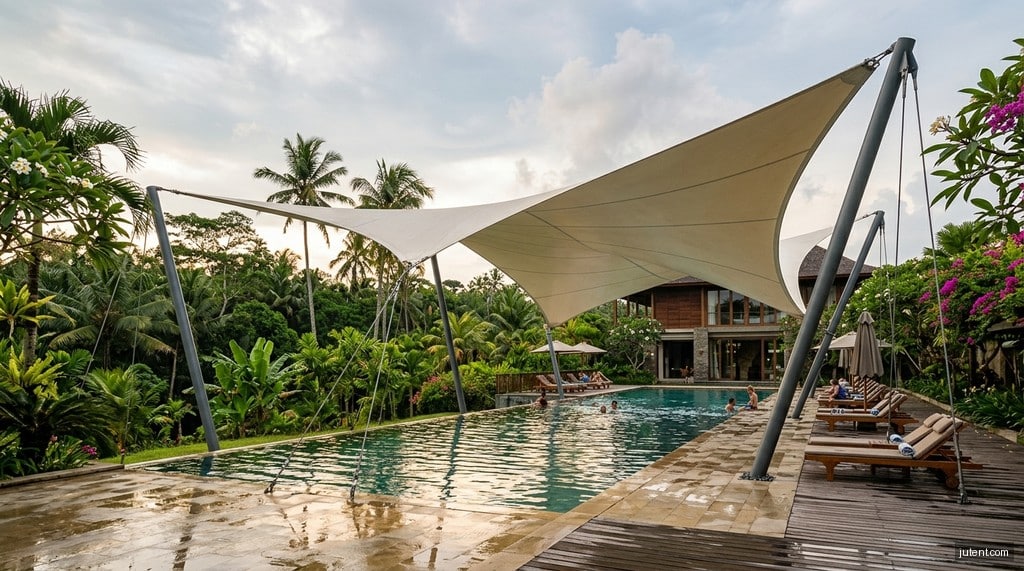
UV Protection in Tropical Climates: Membrane Grade for Pool Environments
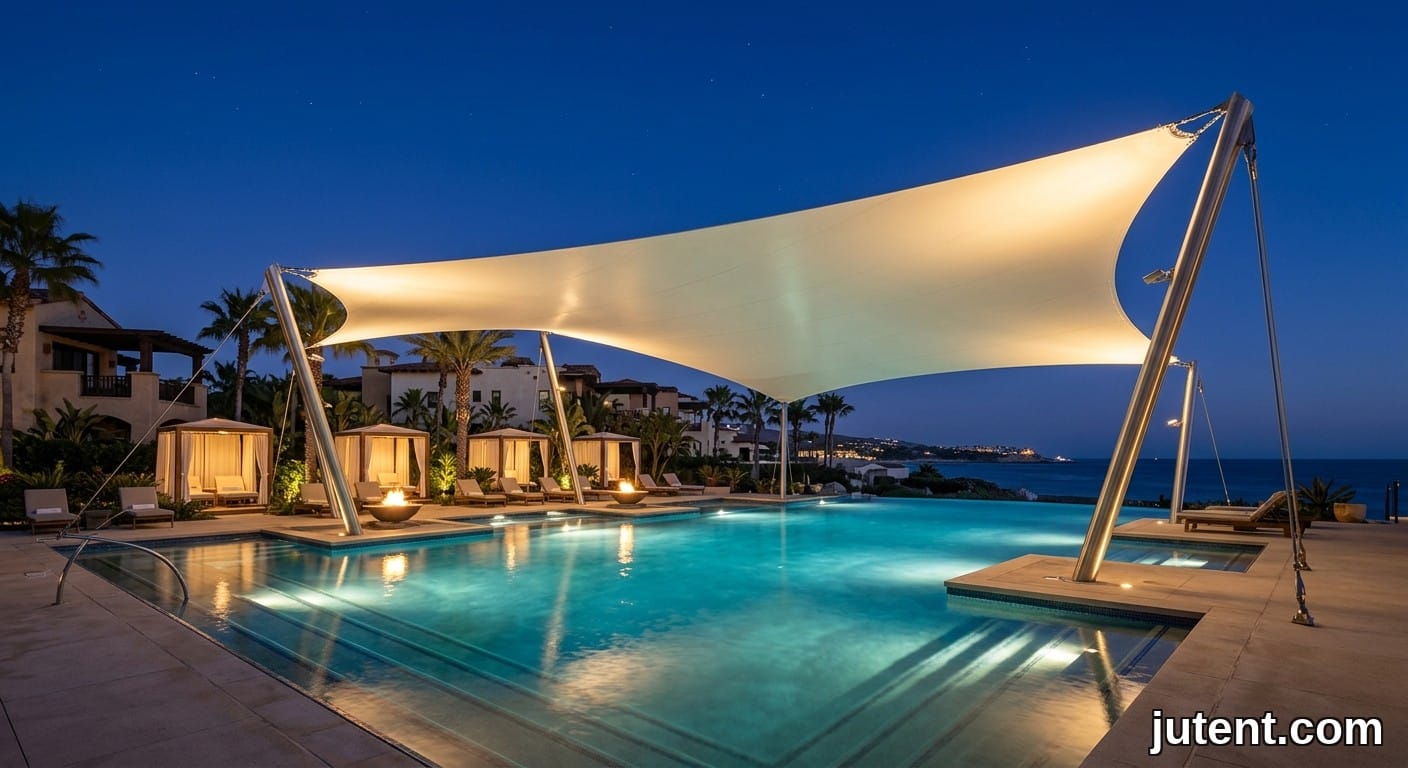
The tropical sun in Southeast Asia is notoriously intense, with high UV indices year-round. This relentless solar radiation poses a significant threat to the longevity of any outdoor material, especially the membrane of a tropical pool shade structure. Without adequate UV protection, membranes can degrade rapidly, leading to discolouration, loss of strength, and premature failure.
For a pool tensile shade structure Southeast Asia, the choice of membrane material is critical. Standard membranes like 1050 g/m² PVDF (Polyvinylidene Fluoride) coated polyester are highly recommended. PVDF coatings offer excellent UV resistance, reflecting a significant portion of solar radiation and preventing the underlying fabric from deteriorating. This translates to a longer service life and better colour retention. PVDF membranes typically come with a 10-12 year warranty and offer a service life of 15-20 years, making them a cost-effective choice for the region.
For projects demanding even greater longevity and performance, PTFE (Polytetrafluoroethylene) coated fibreglass membranes are the premium option. PTFE offers superior UV stability, chemical resistance, and non-combustibility. While the initial investment is higher (add ~$30–$50/m² to PVDF range), PTFE membranes boast a 20-year warranty and a service life exceeding 30 years, making them ideal for high-end or long-term public aquatic facilities.
For cost-conscious projects, a PVDF tensile membrane structure offers a balance of durability and affordability — typical pool shade structure costs range from $30–$60/m² installed, depending on span and complexity.
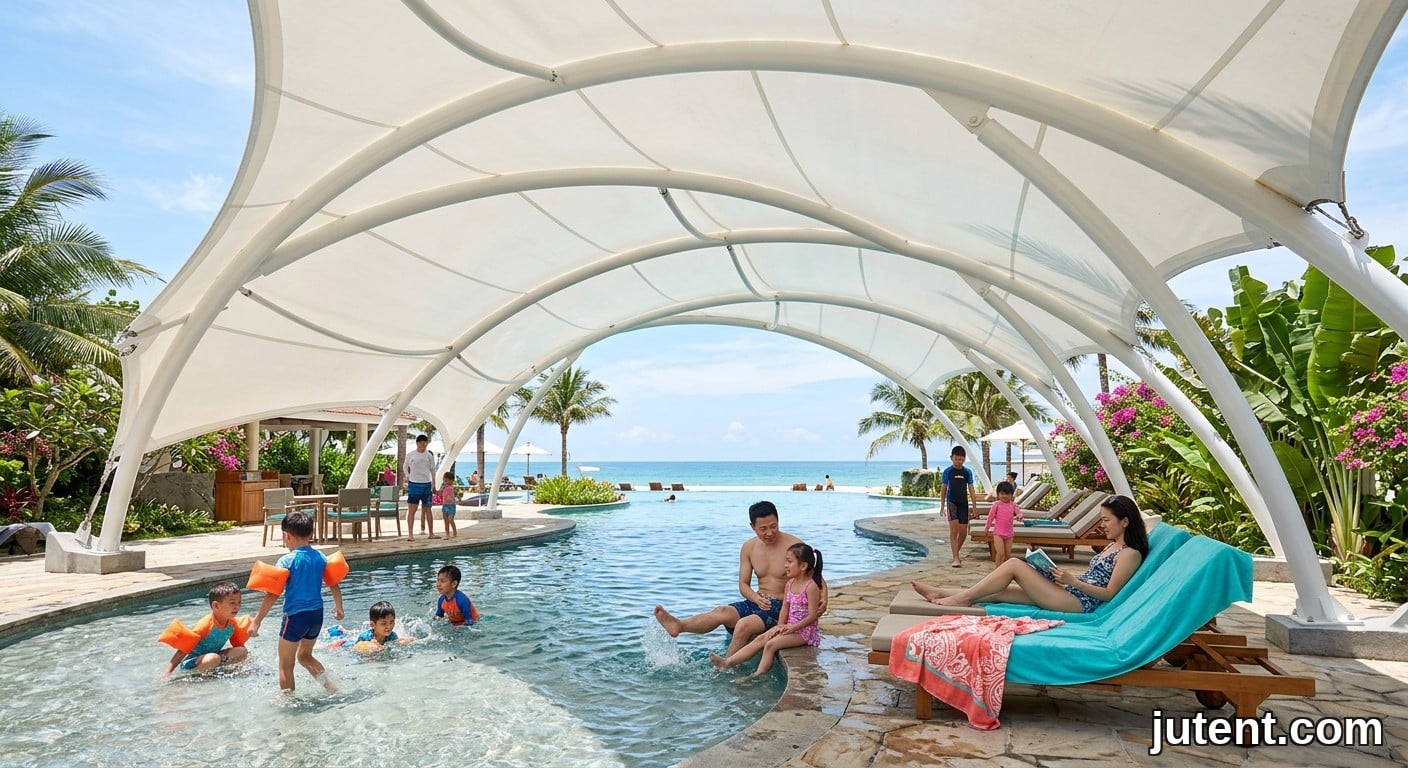
Beyond UV, the membrane must also withstand the humid, often corrosive environment of a swimming pool, including exposure to chlorine vapours. Both PVDF and PTFE membranes exhibit good chemical resistance, ensuring they remain structurally sound and aesthetically pleasing over time.
Pool Tensile Shade Structure Guide
Drainage Design for High-Rainfall Pool Environments
Southeast Asia is characterised by high annual rainfall, often delivered in intense, short bursts during monsoon seasons. This necessitates meticulous drainage design for any pool tensile shade structure Southeast Asia to prevent water ponding, which can lead to structural stress, membrane degradation, and aesthetic issues.
Effective drainage for a tensile membrane structure relies on two primary principles: form and collection. The inherent curvature of tensile membranes naturally sheds water. Designers must ensure a minimum slope of 5% to prevent any flat spots where water could accumulate. The slope of the membrane should be carefully calculated to direct rainwater efficiently towards collection points, with gutters sized for a 100-year rainfall event.