When Does Standard Shade Fail? Upgrading to Playground Membrane Architecture

10 Mins Reading
Tensile canopies are not always the right choice for playground shade — but when they are, they outperform shade sails on span, UV protection, and long-term durability. This guide explains when tensile makes sense for playground applications.

The afternoon sun beat down on the newly installed playground, its vibrant colors a stark contrast to the harsh, unshaded ground. A young architect, clipboard in hand, surveyed the scene, picturing the laughter and play that would soon fill the space. But a critical element was missing: shade. Not just any shade, but a solution that offered expansive coverage, superior UV protection, and the structural integrity to withstand years of energetic play. This wasn't a job for simple shade sails; this called for the engineered elegance and enduring performance of a .

When Tensile Canopies Outperform Shade Sails for Playground Shade

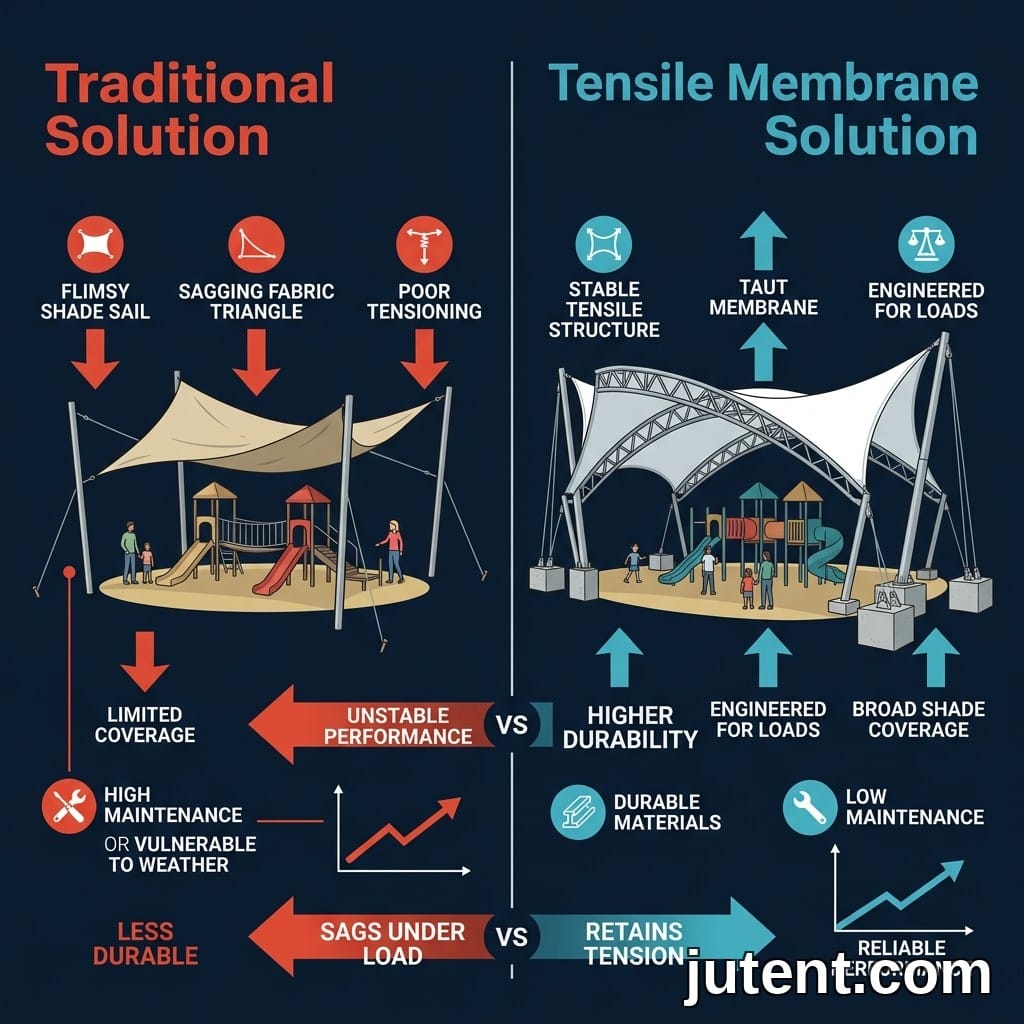
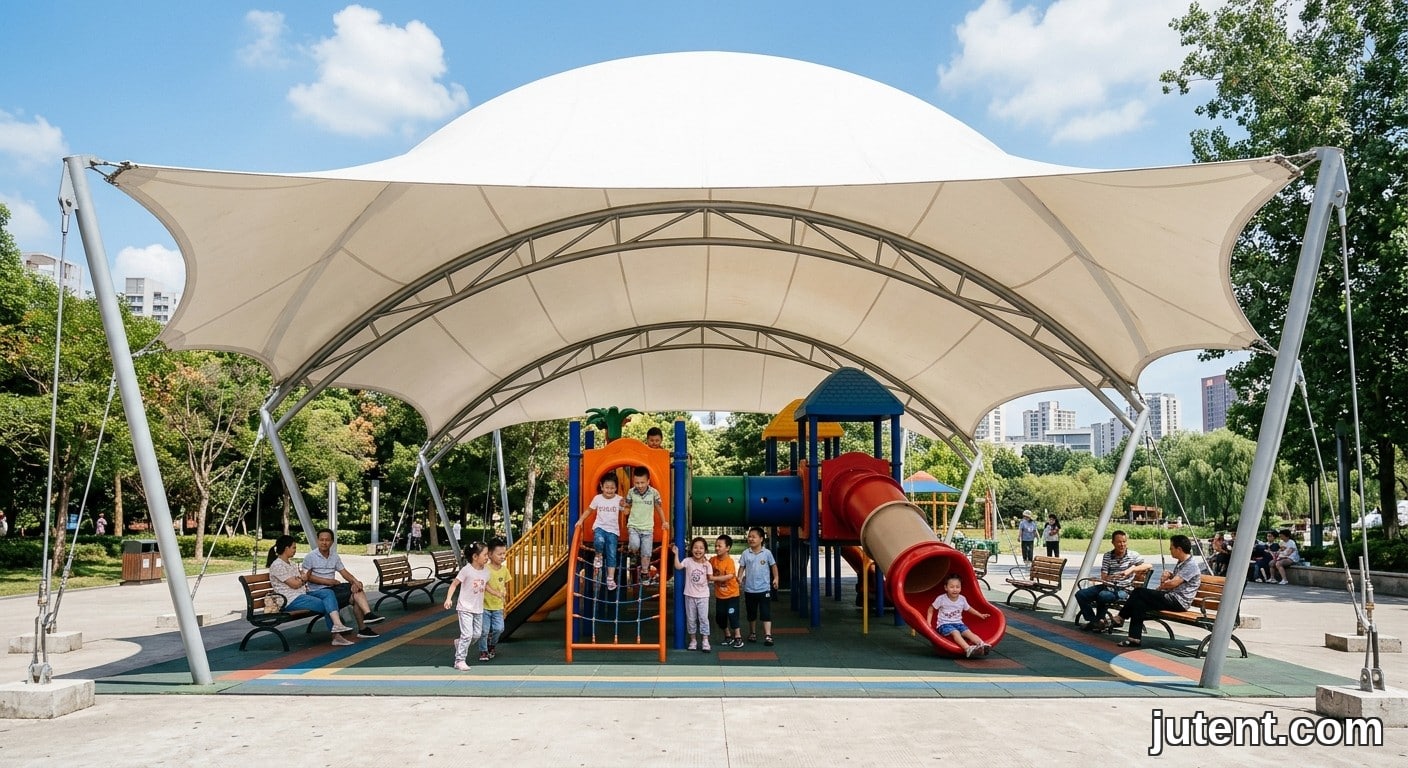
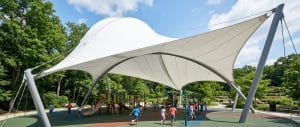
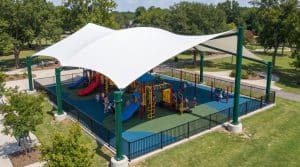
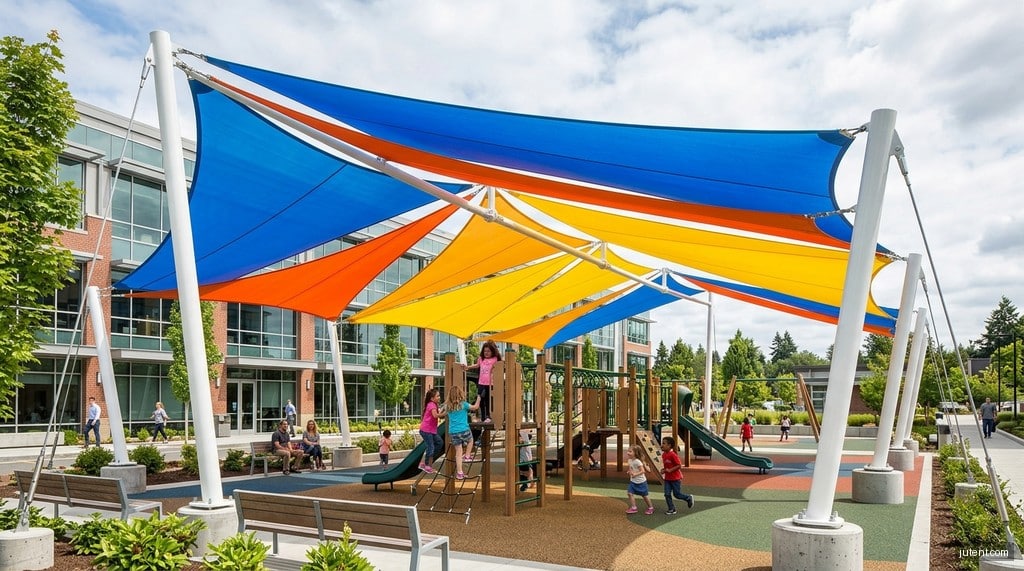
When designing a playground, the choice of shade structure is paramount for child safety and comfort. While shade sails offer a quick and often more budget-friendly initial solution, playground tensile canopies present a compelling alternative, particularly for larger, more complex, or high-traffic play areas. Tensile canopies are engineered structures, designed for specific wind loads, snow loads (where applicable), and long-term performance, making them a more durable and reliable choice for commercial applications. They excel in providing expansive, uninterrupted shade, which is crucial for protecting children from harmful UV radiation during peak play hours. Unlike shade sails, which rely on tensioned fabric between multiple attachment points, tensile canopies feature a more rigid structural framework, typically steel, supporting a tensioned membrane. This design allows for greater control over the shaded footprint and superior resistance to environmental factors. Based on Jutent's experience across 400+ projects in 30+ countries, tensile canopies consistently deliver on longevity and aesthetic integration for demanding public spaces.
Playground Shade
Span Options: What Tensile Canopies Can Cover That Shade Sails Can't

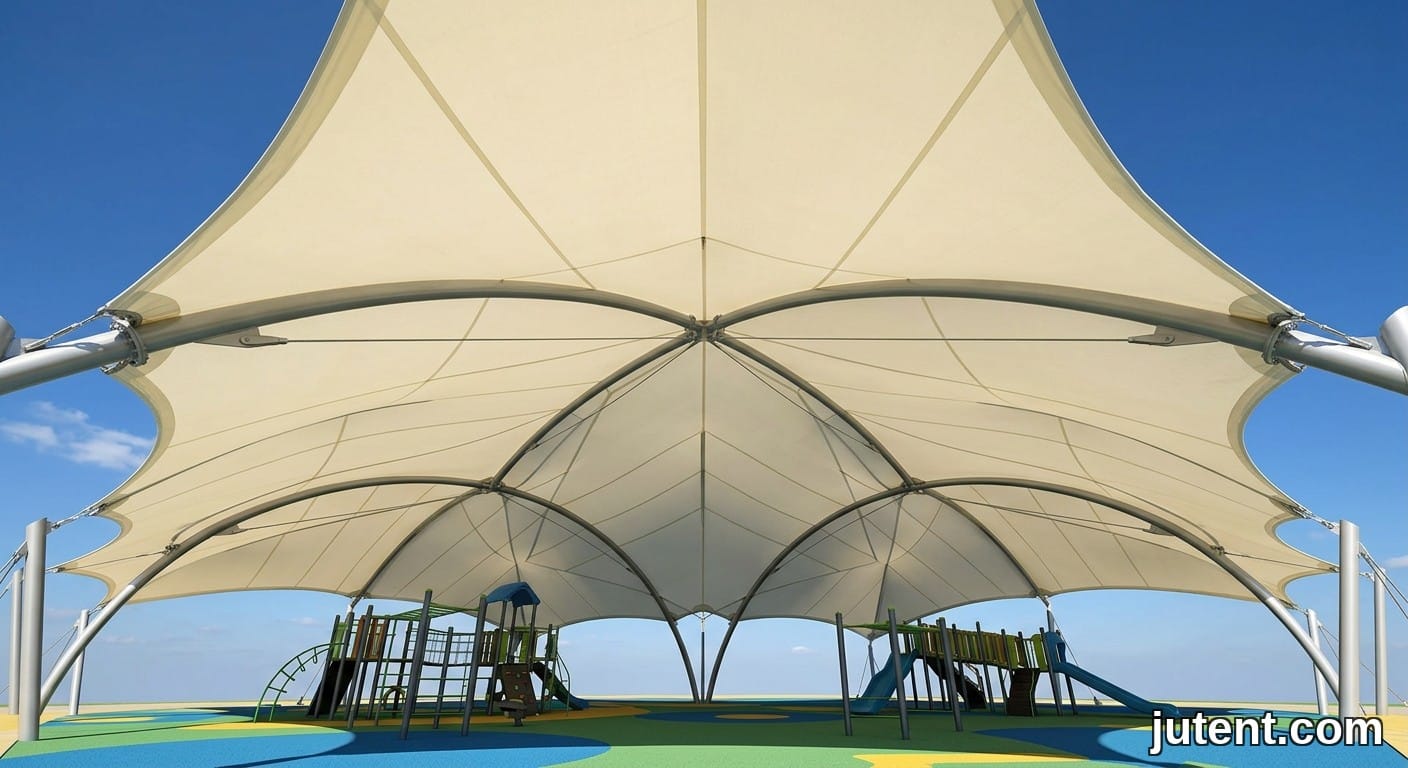
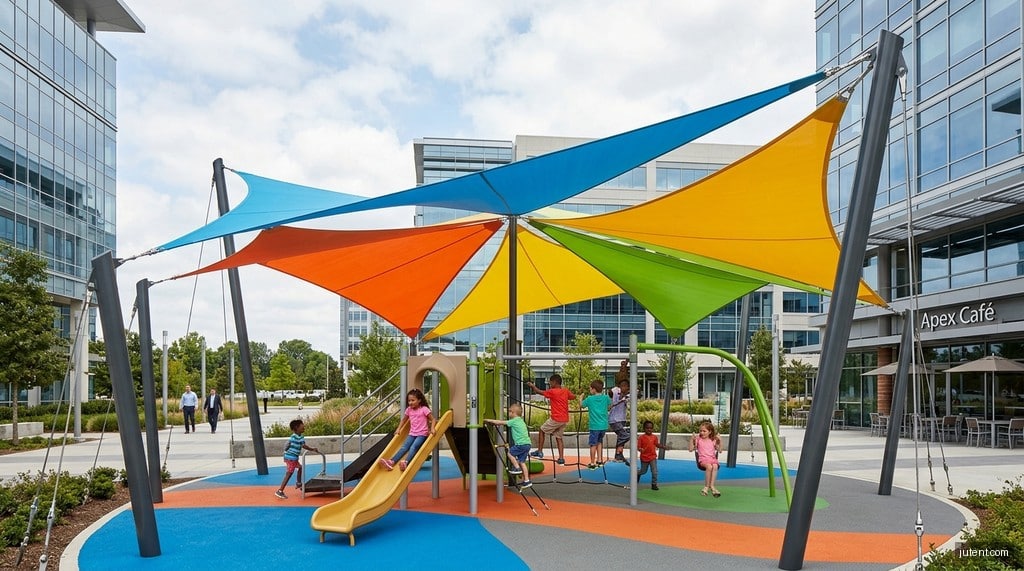
The ability to cover significant areas without intermediate supports is a primary advantage of a playground tensile canopy over traditional shade sails. Shade sails, by their nature, are limited by the distance between their anchor points and the inherent sag of the fabric. To cover a large playground, multiple shade sails are often required, leading to overlapping shadows, increased complexity in rigging, and a less cohesive aesthetic. A tensile playground shade, conversely, can achieve impressive clear spans, often exceeding 10–20 meters in a single bay, and much larger areas with multi-bay configurations. This capability is critical for covering extensive play equipment, sandpits, or entire activity zones, ensuring children can move freely without encountering unshaded patches or structural obstructions. The engineered framework of a tensile membrane structure distributes loads efficiently, allowing for fewer, strategically placed columns that minimize interference with play activities. This means a single, well-designed tensile canopy can often replace numerous smaller shade sails, offering a cleaner design and superior functionality.
Playground Shade Structures Guide
Membrane Grade for Playground Tensile Canopies: PVDF vs Shade Cloth

The choice of membrane material is a critical design decision for a playground tensile canopy, directly impacting UV protection, durability, and maintenance. For commercial playground applications, the primary considerations are PVDF-coated architectural membrane and specialized shade cloth.

PVDF (Polyvinylidene Fluoride) Coated Membrane:
This is Jutent's standard recommendation for playground tensile membrane structures. PVDF membranes, typically 1050 g/m², offer superior performance characteristics:
* UV Protection: Provides near 100% UV block, crucial for child safety.
* Durability: Exceptional tear strength, weather resistance, and a service life of 15+ years, backed by a 10-year warranty.
* Maintenance: Self-cleaning properties due to the smooth, non-porous surface, reducing long-term upkeep.
* Aesthetics: Available in a range of colors, maintaining vibrancy over time.
* Fire Rating: Often meets stringent fire safety standards.

Shade Cloth:
While common for residential shade sails, commercial-grade shade cloth for tensile structures is less frequent.
* UV Protection: Offers varying degrees of UV block (typically 80–95%), which may not be sufficient for prolonged exposure in playgrounds.
* Durability: Generally has a shorter service life than PVDF, and is more susceptible to environmental degradation and tearing.
* Maintenance: Can accumulate dirt and debris, requiring more frequent cleaning.
* Aesthetics: May fade over time and can stretch or sag, impacting the structure's appearance.

For optimal shade, longevity, and minimal maintenance in a playground setting, PVDF membrane is the preferred choice, offering a superior return on investment compared to shade cloth.

Design Considerations: Post Placement and Equipment Clearance

Effective design of a tensile design requires careful consideration of post placement and equipment clearance to ensure safety, functionality, and an unobstructed play experience. The goal is to maximize shaded area while minimizing potential hazards and maintaining clear pathways.

Post Placement:
* Perimeter Placement: Ideally, support posts should be located around the perimeter of the play area, outside the fall zones of equipment. This keeps the central play space clear.
* Foundation Requirements: Posts require reliable foundations to withstand wind uplift and lateral forces. Soil conditions and local building codes dictate foundation depth and size.
* Visibility: Strategic placement can enhance sightlines for supervising adults, allowing for an unobstructed view of children at play.
* Aesthetics: Post design and finish (e.g., epoxy zinc-rich primer + acrylic topcoat or hot-dip galvanizing) should complement the overall playground aesthetic.

Equipment Clearance:
* Vertical Clearance: The lowest point of the tensile membrane must be sufficiently high to clear all play equipment, including swings at their highest arc, slides, and climbing structures, with an adequate safety margin. This prevents accidental contact and allows for future equipment modifications.
* Horizontal Clearance: Posts and their foundations must be positioned far enough from equipment to prevent children from climbing on them or encountering them during active play. Fall zones, as defined by playground safety standards, must be respected.
* Accessibility: Ensure that the canopy design does not impede access for maintenance, emergency services, or children with disabilities.

Careful planning in these areas ensures the playground tensile canopy enhances, rather than detracts from, the play environment.

Cost Comparison: Tensile Canopy vs Shade Sail for Playground Applications

When evaluating shade solutions for playgrounds, understanding the cost implications of a tensile canopy versus a shade sail is essential for contractors and architects. While shade sails often present a lower initial purchase price, a holistic view of lifetime costs, performance, and durability reveals a different picture for commercial applications.

Shade Sails:
* Initial Cost: Generally lower, ranging from $15–$30/m² for basic commercial-grade sails, excluding installation.
* Installation: Can be simpler, but still requires reliable anchor points and professional tensioning.
* Durability: Shorter lifespan (typically 5–10 years), more susceptible to wind damage, tearing, and UV degradation.
* Maintenance: May require more frequent re-tensioning, cleaning, and eventual replacement.
* Coverage: Often requires multiple sails for large areas, leading to complex rigging and potential gaps in shade.

Playground Tensile Canopies:
* Initial Cost: Higher upfront investment due to engineered steel structures and advanced membranes.
* Tensile membrane structure (minimal steel): $30–$50/m²
* PVDF membrane, simple form: $40–$70/m²
* PVDF membrane, complex form: $60–$90/m²
* PTFE membrane: add ~$20/m² to PVDF range
* (Minimum project scope: 100 m²)
* Installation: More involved, requiring specialized expertise for steel erection and membrane tensioning. Jutent offers free remote guidance and paid on-site supervision.
* Durability: Superior lifespan (PVDF 15+ years, PTFE 25+ years), with a 10-year (PVDF) or 15-year (PTFE) warranty on the membrane and a 1-year overall project warranty. Steel structures, finished with epoxy zinc-rich primer + acrylic topcoat or hot-dip galvanizing, offer decades of service life.
* Maintenance: Lower long-term maintenance due to self-cleaning membrane properties and reliable construction.
* Coverage: Achieves large, uninterrupted spans with fewer supports, offering more effective and consistent shade.

While the initial outlay for a playground tensile canopy is greater, its extended service life, superior performance, and reduced maintenance costs often result in a lower total cost of ownership over the project's lifespan, making it a more economical and sustainable choice for commercial playgrounds.

FAQ

Q: What is the maximum span for a playground tensile canopy?
A: Single-bay tensile canopies can span 10–20m, offering expansive, column-free shade for significant play areas. For even larger playgrounds or multi-zone coverage, multi-bay configurations can be engineered to cover much more extensive areas, providing continuous protection without compromising structural integrity. The exact maximum span is subject to specific design, local wind loads, and engineering calculations.
Q: Is a tensile canopy safer than a shade sail for a playground?
A: Tensile canopies are generally considered safer for commercial playground applications due to their engineered design and reliable construction. They utilize high-grade steel structures (Q235B, Q355B) and durable membranes, designed to withstand specific environmental loads. Unlike shade sails, which can sag or flap in high winds if not properly maintained, tensile structures maintain their form and tension, reducing potential hazards.

Send us your playground dimensions and we'll recommend the most appropriate shade structure type with a cost comparison.

Get a Playground Shade Quote

Need a Technical Proposal?

Send us your site dimensions and our engineers will provide a free 3D design and quotation.
Inquiry Form Portfolio
Request a
Project Quote

Share your tensile architecture requirements with us. Our engineering specialists will review your project and provide a tailored preliminary solution within 24 hours.

Tell us about your project

Inquiry Form Pop Up

100% Secure & Confidential

×
Support
Support Team
               

Hello! 👋 How can we help you today?

WhatsApp
Call Us Now
Email Support
WhatsApp Call Inquiry Email