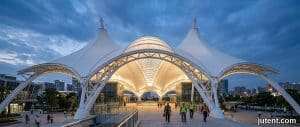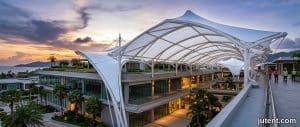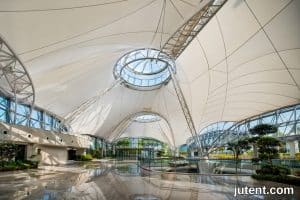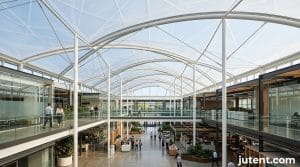

Procuring an atrium tensile skylight from an overseas manufacturer involves a more intricate process than a local purchase. This checklist covers everything from the initial Request for Quotation (RFQ) to final delivery, ensuring due diligence for procurement managers and contractors alike. Navigating atrium tensile skylight procurement effectively requires a structured approach to supplier evaluation, technical verification, and logistical coordination.
Step 1: Define the Scope — Dimensions, Wind Zone, and Requirements
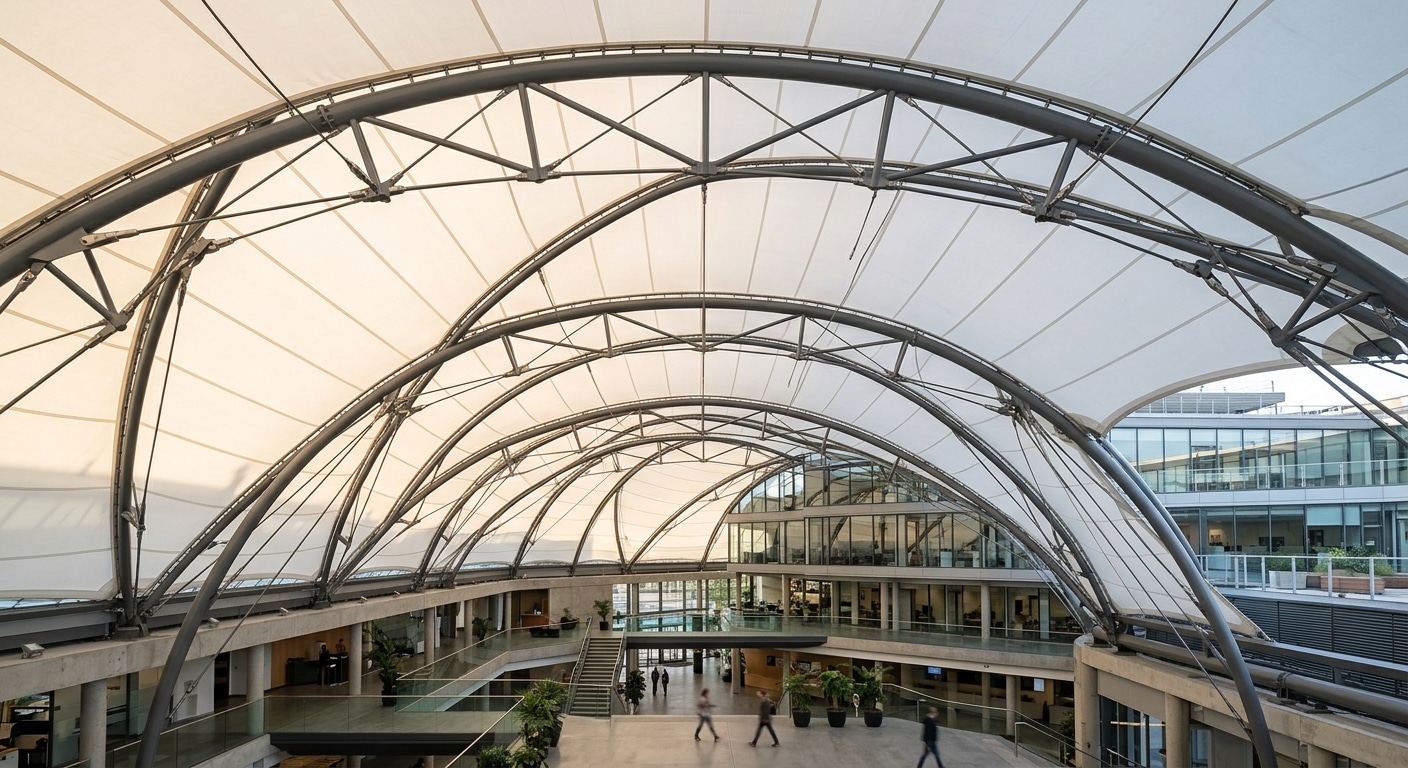
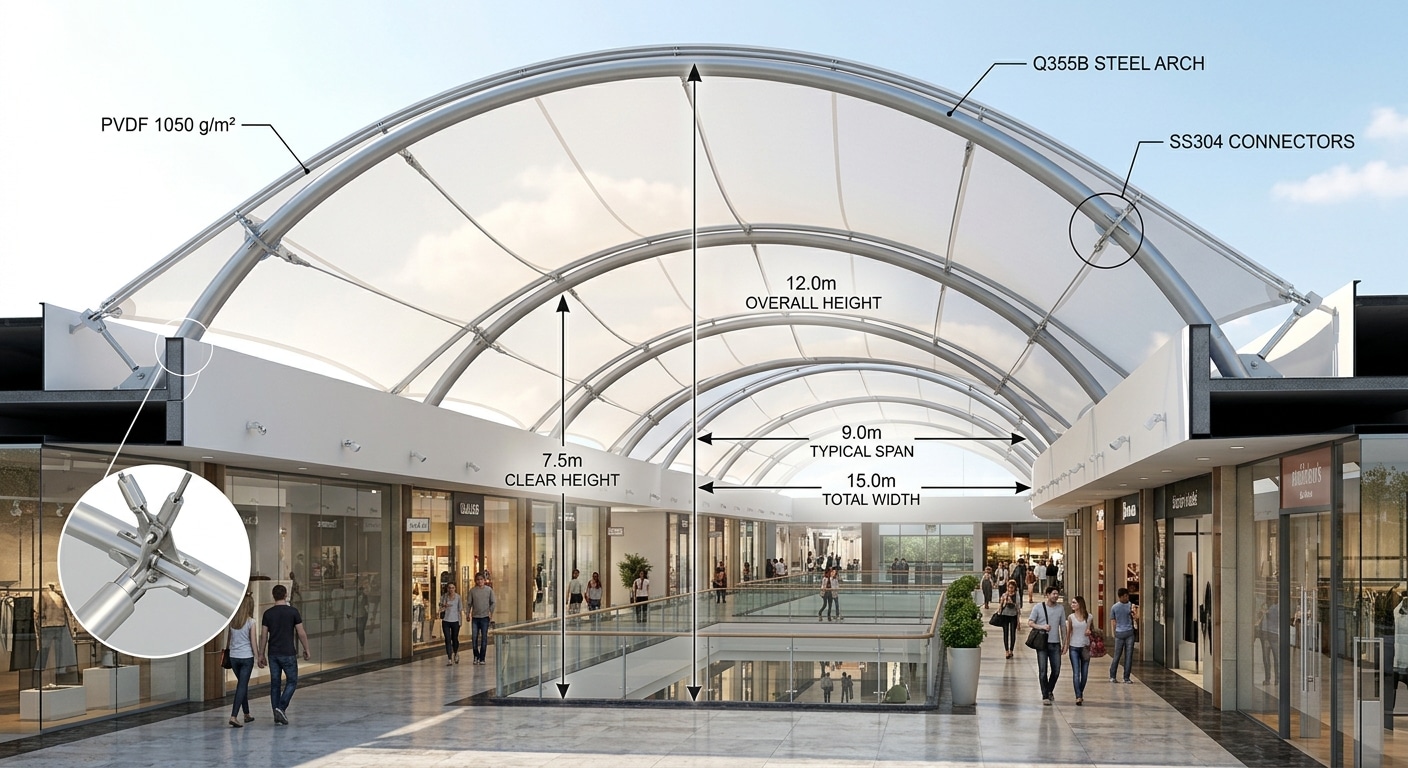
The foundation of successful atrium tensile skylight sourcing is a clear, detailed project scope. Begin by accurately defining the physical parameters of the skylight. This includes precise dimensions (length, width, height, and any complex geometries), the desired form (e.g., conic, hyperbolic paraboloid, arch), and the specific membrane material. PVDF is a common choice, offering a 10-year warranty and 15+ years service life, while PTFE provides a 15-year warranty and 25+ years service life, often adding approximately $20/m² to the PVDF range.
Crucially, identify the project's wind zone and local building codes. These dictate the structural design and material specifications. A manufacturer will require this information to perform accurate wind load calculations and ensure the structure's integrity. Specify any aesthetic requirements, such as membrane translucency, color, or specific steel finishes (e.g., epoxy zinc-rich primer + fluorocarbon topcoat (galvanizing available on request), epoxy zinc-rich primer + fluorocarbon topcoat, or hot-dip galvanizing).
Consider the intended function: Is it purely for natural light, weather protection, or does it need to integrate with HVAC systems? Detail any requirements for drainage, access for maintenance, and integration with existing building structures. A thorough specification checklist at this stage minimizes ambiguities and rework later. Remember, the minimum project scope for a tensile structure is 100 m².
Step 2: Evaluate Suppliers — What to Ask and What to Look For
Supplier qualification is paramount in atrium tensile skylight procurement. Beyond initial pricing, focus on a manufacturer's experience, technical capabilities, and quality control.
Key Questions to Ask Potential Suppliers:
- Experience: How many similar atrium tensile skylight projects have they completed? Can they provide case studies or references for projects of comparable scale and complexity? Based on Jutent's experience across 420+ projects in 30+ countries, a proven track record is a strong indicator of reliability.
- Design & Engineering: Do they have in-house engineering capabilities? Can they provide detailed structural analysis, wind load calculations, and fabrication drawings? Request examples of their engineering documentation.
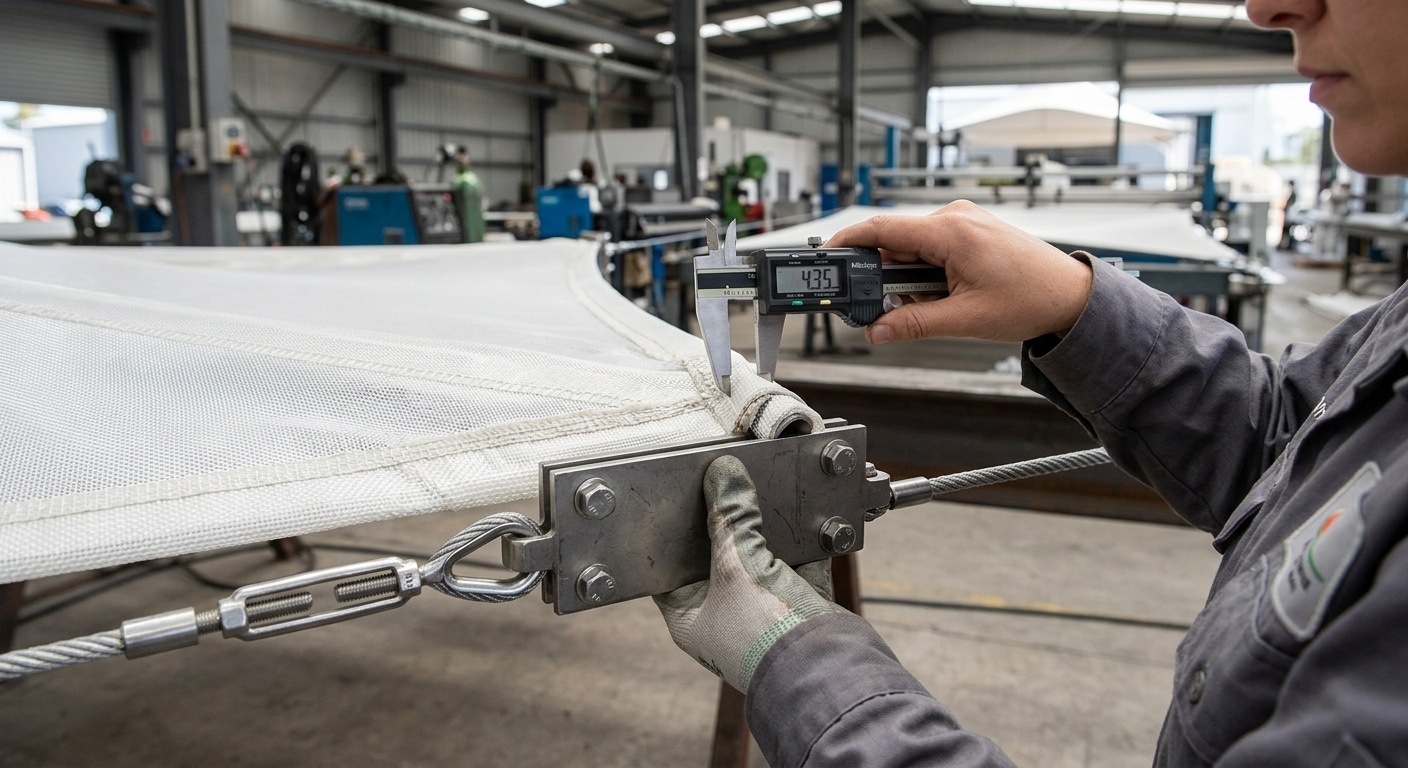
- Manufacturing Standards: What quality control processes do they follow? Do they follow a documented quality control system? (Jutent employs rigorous incoming material inspection, welding procedure qualification, and pre-shipment assembly audits.) What steel grades do they typically use (e.g., Q235B, Q355B)? What is their standard membrane weight (e.g., 1050 g/m² PVDF or PTFE)?
- Material Sourcing: Can they provide material test certificates for both membrane and steel? This verifies the quality and origin of components.
- Logistics & Installation Support: What are their typical lead times? How do they handle packaging for international shipment? Do they offer installation guidance (e.g., free remote guidance, or paid on-site supervision)?
- Warranty: What warranties do they offer on the overall project, membrane, and steel? (Steel structure: 2-year warranty; PVDF membrane: 10-year warranty; PTFE membrane: 15-year warranty.)
What to Look For:
- Documentation: A professional manufacturer will readily provide certifications, project portfolios, and detailed technical specifications.
- Transparency: Be wary of manufacturers unwilling to share details about their processes, materials, or past projects.
- Communication: Effective communication is vital, especially when dealing with overseas suppliers. Assess their responsiveness and clarity.
About
Step 3: Review the Quotation — What Should and Shouldn't Be Included
A detailed quotation is more than just a price list; it's a contract proposal. When reviewing an atrium tensile skylight RFQ response, scrutinize every line item.
What Should Be Included:
- Detailed Scope of Work: A clear description of what is included (design, engineering, fabrication, materials, packaging, freight terms like EXW, FOB, CIF).
- Material Specifications: Explicit mention of membrane type (PVDF, PTFE), weight (e.g., 1050 g/m²), steel grade (e.g., Q235B, Q355B), and surface treatment (e.g., hot-dip galvanizing, epoxy zinc-rich primer + fluorocarbon topcoat). Specify SS304 standard or SS316 optional upgrade for fittings.
- Pricing Breakdown: Itemized costs for design, fabrication, materials, and any optional services. Pricing for tensile membrane structures typically ranges from $30–$50/m² for minimal steel, $40–$70/m² for PVDF simple forms, and $60–$90/m² for PVDF complex forms. PTFE adds approximately $20/m² to these ranges. Always confirm the pricing is per square meter.
- Payment Terms: Standard terms for overseas orders are typically 30–50% deposit on order confirmation, with the balance due before shipment.
- Lead Time: A realistic timeline for design, fabrication, and readiness for shipment.
- Warranty Information: Clear statements on warranties for the overall structure, membrane, and steel components.
- Exclusions: Any items not covered by the quotation should be explicitly stated to avoid future disputes.
- Validity Period: The duration for which the quoted prices are guaranteed.
What Shouldn't Be Included (or should raise red flags):
- Vague Descriptions: Ambiguous material specifications, generic “high-quality steel” without grade, or unspecified membrane types.
- Hidden Costs: Unitemized “miscellaneous” fees or lack of clarity on freight and customs responsibilities.
- Unrealistic Pricing: Quotes significantly lower than market averages (e.g., below $30/m² for a minimal steel structure) often indicate compromises in material quality or engineering.
- Lack of Engineering Detail: No mention of design calculations or structural analysis.
- Unusual Payment Terms: Requests for 100% upfront payment or terms that deviate significantly from industry standards.
Step 4: Confirm the Order and Monitor Production
Once the quotation is reviewed and negotiations are complete, the next step is formal order confirmation and diligent monitoring of the production process.
Order Confirmation:
- Contract: Ensure a legally binding contract is in place, detailing all agreed-upon specifications, pricing, payment terms, lead times, and warranties. For export projects, Jutent can provide design drawings, calculations, material specifications, installation manuals, and free remote guidance, subject to project scope and contract terms.
- Technical Drawings: Before fabrication begins, review and approve final engineering drawings. These should include detailed dimensions, material call-outs, connection details, and anchor point requirements. Any discrepancies must be resolved at this stage.
- Payment: Initiate the agreed-upon deposit payment as per the contract terms.
Production Monitoring:
- Progress Updates: Request regular updates from the manufacturer on the production status. This can include photos or videos of key fabrication stages (e.g., steel cutting, welding, membrane patterning, heat sealing).
- Quality Control Checks: If feasible, consider a third-party inspection at critical stages of production. This is particularly important for large or complex atrium tensile skylight projects. Verify material traceability, welding quality, and membrane fabrication accuracy.
- Material Verification: Request copies of material test certificates for the specific batches of steel and membrane used in your project. This confirms that the materials supplied match the specifications in the contract.
- Packaging Plan: Discuss the packaging strategy for shipment. Tensile structures require reliable packaging to prevent damage during transit, especially for overseas shipping. Ensure components are clearly labeled for easy identification upon arrival.
- Shipping Logistics: Coordinate with the manufacturer on shipping arrangements. Confirm the Incoterms (e.g., FOB, CIF) and ensure all necessary export documentation is prepared.
Step 5: Receive, Inspect, and Install
The final stage involves receiving the shipment, conducting thorough inspections, and proceeding with installation. This phase requires careful coordination and attention to detail to ensure the project's successful completion.
Receiving and Inspection:
- Documentation Check: Upon arrival, verify that all shipping documents (packing list, bill of lading, customs declarations) match the physical shipment and the order details.
- Damage Assessment: Immediately inspect all packages for visible signs of damage during transit. Document any damage with photographs and note it on the delivery receipt before signing.
- Component Verification: Unpack and cross-reference all components against the packing list and installation guide. Ensure all steel members, membrane panels, cables, and connection hardware are present and accounted for.
- Quality Check: Conduct a visual inspection of all components. Check steel for proper surface treatment (e.g., no signs of rust, consistent coating), membrane for tears or defects, and hardware for completeness and correct sizing. Typical technical values should always be written conservatively and described as subject to project design.
Installation:
- Preparation: Ensure the installation site is prepared according to the manufacturer's specifications, including foundation work and anchor points.
- Installation Guidance: Utilize the provided installation guide and any remote guidance offered by the manufacturer. For complex projects, consider the paid on-site supervision service.
- Safety: Adhere strictly to all safety protocols during installation, especially when working at height and with heavy components.
- Post-Installation Inspection: After installation, conduct a final inspection to ensure the structure is erected correctly, tensioned appropriately, and all connections are secure. Verify that the atrium tensile skylight meets all aesthetic and functional requirements.
- Maintenance Plan: Establish a routine maintenance plan for cleaning the membrane and inspecting the steel structure and connections to ensure the longevity of the skylight.
FAQ
- What documents should an atrium tensile skylight manufacturer provide with an order?
- A reputable manufacturer should provide a thorough set of documents. This typically includes detailed engineering drawings for fabrication and installation, wind load calculations specific to the project site, membrane test certificates verifying material properties, steel material certificates confirming grade and composition, a precise packing list for shipment verification, and a clear, step-by-step installation guide to assist with on-site assembly. These documents are crucial for project verification and compliance.
- What payment terms are typical for an atrium tensile skylight order from China?
- For atrium tensile skylight orders from China, standard payment terms usually involve two main stages. An initial deposit of 30–50% of the total order value is typically required upon order confirmation to commence design and fabrication. The remaining balance is then due before shipment, once the manufacturing is complete and often after a final inspection or approval of production photos. This structure provides security for both the buyer and the manufacturer.
Contact Jutent with your project details and we'll guide you through every step of the procurement process.