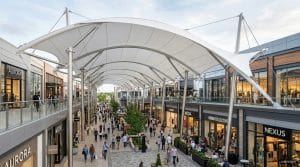

Procuring a retail walkway canopy from an overseas manufacturer involves more steps than a local purchase. This checklist covers everything from RFQ to delivery, ensuring contractors and procurement managers can navigate the process efficiently and mitigate risks. Understanding the nuances of international sourcing, from technical specifications to logistical considerations, is crucial for a successful project.
Step 1: Define the Scope — Dimensions, Wind Zone, and Requirements
The initial phase of retail walkway canopy procurement demands precise definition of the project scope. This includes accurate dimensions, which are fundamental for both design and cost estimation. Beyond simple length and width, consider the desired height, clearance requirements, and any specific architectural integrations with existing structures. The structural integrity of the canopy is paramount, making the wind zone classification of the installation site a critical factor. This data directly influences the structural design, material thickness, and anchoring solutions. Always provide the local building code requirements, including snow load (if applicable), seismic zone, and any specific material fire ratings.
Specify the desired membrane type. PVDF (Polyvinylidene Fluoride) coated polyester is a common choice, offering excellent durability and UV resistance with a 10-year warranty and 15+ years service life. For enhanced longevity and self-cleaning properties, PTFE (Polytetrafluoroethylene) coated fiberglass can be considered, typically offering a 15-year warranty and 25+ years service life. Standard membrane weight is 1050 g/m². Clearly state any aesthetic preferences, such as membrane colour or translucency. For the steel structure, specify the required finish: hot-dip galvanizing for superior corrosion resistance in harsh environments, or an epoxy zinc-rich primer followed by an acrylic or fluorocarbon topcoat for a durable and aesthetically pleasing finish. Based on Jutent's experience across 400+ projects in 30+ countries, detailed initial specifications prevent costly revisions later.
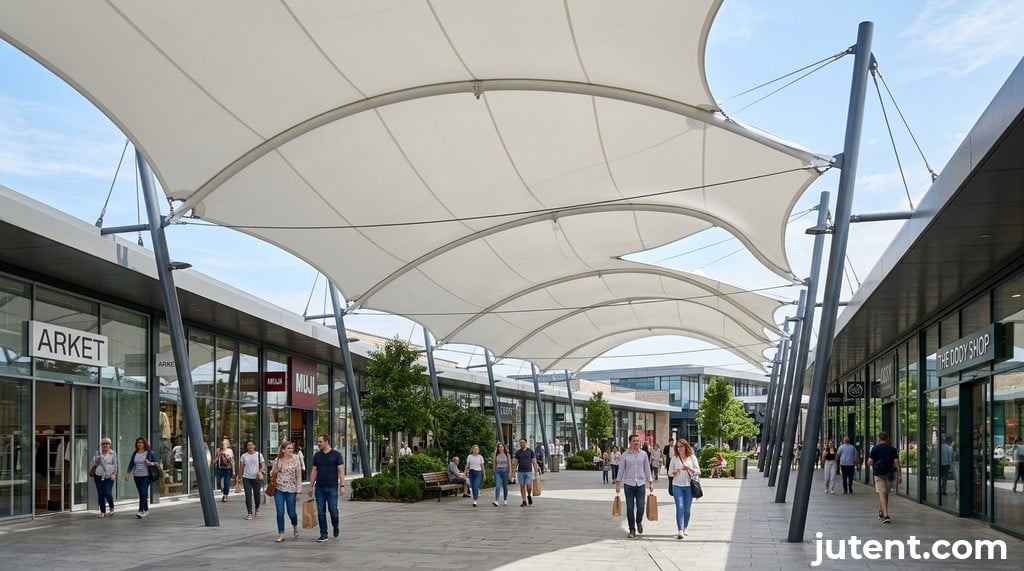
Retail Walkways
Step 2: Evaluate Suppliers — What to Ask and What to Look For
Supplier evaluation is a critical step in retail walkway canopy sourcing. Begin by verifying the manufacturer's experience with similar projects. Inquire about their project portfolio, specifically focusing on retail or commercial walkway canopies. Request references from previous international clients to assess their reliability and communication effectiveness. A reputable manufacturer should be able to provide evidence of quality management systems, such as ISO 9001 certification, and third-party inspection reports (e.g., SGS certification) for their materials and processes.
Ask about their engineering capabilities. Do they have in-house structural engineers capable of performing wind load calculations and producing detailed shop drawings? Confirm their adherence to international engineering standards relevant to your project's location. Inquire about their material sourcing and quality control procedures for both steel and membrane. For steel, confirm they use standard grades like Q235B or Q355B and can provide material certificates. For membrane, request test certificates verifying tensile strength, tear resistance, and UV stability. Understand their production capacity and lead times, especially for larger or multiple-unit orders. For export projects, Jutent can provide design drawings, calculations, material specifications, installation manuals, and free remote guidance, subject to project scope and contract terms. This level of support is a strong indicator of a qualified supplier.
About
Step 3: Review the Quotation — What Should and Shouldn't Be Included
A thorough quotation for retail walkway canopy procurement should clearly itemize all costs and specifications. It should detail the membrane type (e.g., 1050 g/m² PVDF), steel grade (e.g., Q235B), and surface treatment (e.g., hot-dip galvanizing or epoxy zinc-rich primer + fluorocarbon topcoat). The quotation should specify the total area in square meters and the corresponding unit price. For a PVDF membrane, simple form, expect prices in the range of $40–$70/m², while complex forms might range from $60–$90/m². PTFE membrane structures typically add approximately $20/m² to these ranges. Remember, the minimum project scope for most manufacturers is 100 m².
The quotation must include the scope of supply, detailing exactly what components are included (e.g., steel structure, membrane, cables, connectors, fasteners). It should also clearly state what is not included, such as foundation work, local permits, or on-site installation labour (beyond remote guidance or paid supervision). Shipping terms (e.g., FOB, CIF) and estimated freight costs should be outlined. Payment terms are crucial; standard terms for overseas orders often involve a 30–50% deposit upon order confirmation, with the balance due before shipment. The warranty period for the overall project (typically 1 year), membrane (10 years for PVDF, 15 years for PTFE), and steel structure service life should be explicitly stated. Any exclusions or limitations to the warranty must also be noted.
Step 4: Confirm the Order and Monitor Production
Once the quotation is thoroughly reviewed and all terms are agreed upon, the next step is to confirm the order. This typically involves signing a formal contract or purchase order and remitting the initial deposit. Ensure all specifications, including dimensions, materials, finishes, and delivery timelines, are accurately reflected in the final agreement. Any changes made during the negotiation phase must be formally documented.
After order confirmation, maintaining communication with the manufacturer throughout the production phase is essential. Request regular updates on the manufacturing progress. Many reputable manufacturers will provide production photos or even video calls to show the fabrication process, from steel cutting and welding to membrane patterning and sealing. This transparency allows for early identification of any potential issues and ensures the project stays on track. Verify that the specified materials are being used and that quality control checks are being performed at each stage. For example, ensure steel components are undergoing the correct surface treatment process (e.g., hot-dip galvanizing or multi-layer epoxy/fluorocarbon coating) and that membrane seams are properly welded. Confirm that all necessary components, including SS304 standard fasteners (or SS316 if upgraded), are being prepared for shipment. Typical technical values should always be written conservatively and described as subject to project design.
Step 5: Receive, Inspect, and Install
Upon arrival of the retail walkway canopy components, a thorough receiving inspection is paramount. Compare the received goods against the packing list and bill of lading to ensure all items are present and accounted for. Visually inspect all packages for any signs of transit damage. Document any discrepancies or damage with photographs and notify the shipping carrier and manufacturer immediately. Unpack components carefully and inspect individual items for manufacturing defects, incorrect dimensions, or surface finish imperfections. Verify that the steel structure's surface treatment is consistent and undamaged, and that the membrane is free from tears, punctures, or discolouration.
Installation should proceed according to the manufacturer's provided installation guide. For complex structures, consider Jutent's paid on-site supervision service, which can significantly streamline the process and ensure correct assembly. Alternatively, free remote guidance is typically available, offering support via video calls and technical documentation. Ensure all safety protocols are followed during installation. After installation, conduct a final inspection to confirm structural integrity, proper membrane tensioning, and overall aesthetic appeal. Any post-installation issues should be documented and reported to the manufacturer for resolution under the warranty terms.
FAQ
- What documents should a retail walkway canopy manufacturer provide with an order?
- A reputable manufacturer should provide a thorough set of documents. This includes detailed engineering drawings for fabrication and installation, wind load calculations specific to the project site, and test certificates for the membrane (e.g., tensile strength, UV resistance). Steel material certificates (e.g., for Q235B or Q355B) confirming grade and quality are also essential. Finally, a detailed packing list and a clear, step-by-step installation guide are critical for successful project execution.
- What payment terms are typical for a retail walkway canopy order from China?
- For overseas retail walkway canopy orders, particularly from China, standard payment terms typically involve an initial deposit upon order confirmation. This deposit usually ranges from 30% to 50% of the total project value. The remaining balance is then due before the goods are shipped from the manufacturer's facility. This structure protects both the buyer and the seller, ensuring production costs are covered and final payment is secured prior to dispatch.
Contact Jutent with your project details and we'll guide you through every step of the procurement process.