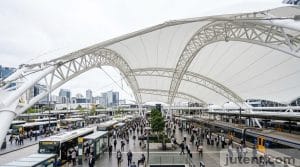

The sweltering heat and sudden, torrential downpours are a daily reality for commuters across the Philippines, Malaysia, and Indonesia. Bus stations, as vital hubs of public transport, often leave passengers exposed to these harsh elements. Providing adequate shelter isn't just about comfort; it's about safety, durability, and compliance with local building codes. For contractors in Southeast Asia, specifying a bus station canopy means navigating the unique challenges of typhoon wind loads, intense tropical UV radiation, and heavy rainfall. This guide covers the essential considerations for transit facility projects in this dynamic region, ensuring your structures stand the test of time and weather.
Typhoon Wind Load Requirements for Bus Station Canopies in Southeast Asia
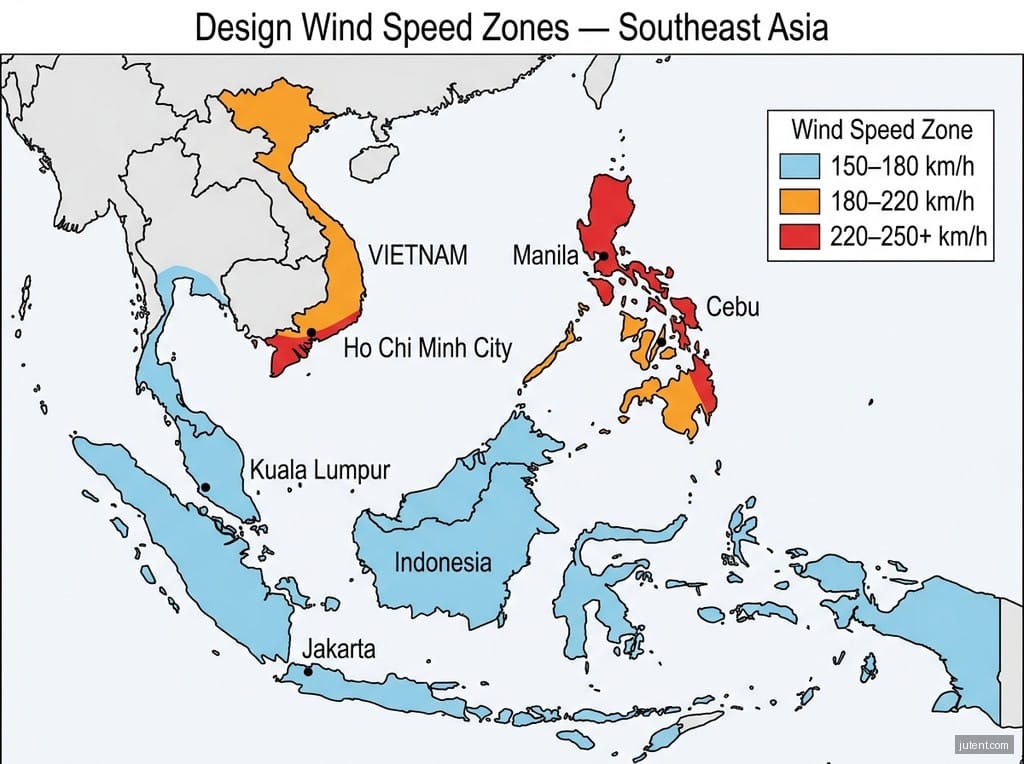
Designing a bus station canopy in Southeast Asia necessitates a rigorous approach to wind load engineering, primarily due to the frequent and powerful typhoons that impact the region. Countries like the Philippines, with its National Structural Code of the Philippines (NSCP), and Indonesia, with SNI standards, have specific requirements for wind pressure calculations. These codes often mandate design wind speeds ranging from 200 km/h to 250 km/h, depending on the specific location and its proximity to coastal areas or known typhoon paths. Malaysia also experiences significant wind events, particularly during monsoon seasons, requiring careful consideration of structural integrity.
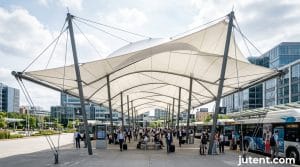
Tensile membrane structures offer inherent advantages in high-wind environments due to their lightweight nature and ability to distribute forces efficiently. However, this demands precise engineering of both the membrane and the supporting steel framework. Steel grades such as Q235B and Q355B are commonly specified for their strength and ductility. The structural design must account for uplift pressures, dynamic wind effects, and potential fatigue. Based on Jutent's experience across 400+ projects in 30+ countries, detailed wind tunnel analysis or computational fluid dynamics (CFD) simulations are often employed for larger or more complex canopy designs to accurately predict wind behavior and optimize structural elements. Proper anchorage and foundation design are equally critical to prevent catastrophic failure during extreme weather events. Transit Canopies
UV Protection in Tropical Climates: Membrane Grade for Transit Facilities
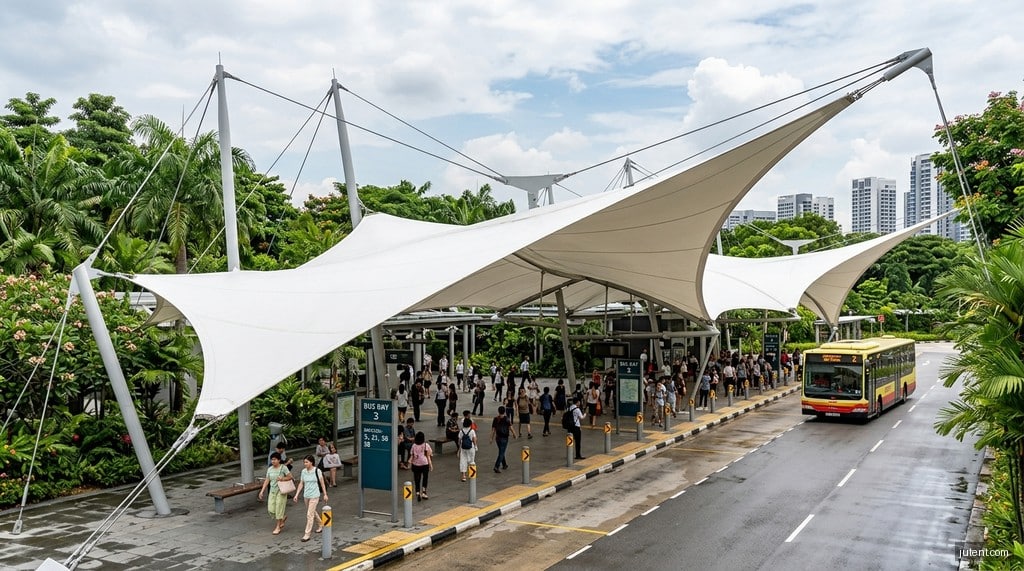
The equatorial sun in Southeast Asia delivers some of the highest UV indexes globally, posing a significant challenge for any outdoor structure, especially bus station canopies designed for long-term public use. Prolonged exposure to intense UV radiation can degrade conventional materials, leading to discoloration, embrittlement, and premature failure. Therefore, selecting the correct membrane material is paramount for the longevity and aesthetic appeal of a transit facility canopy.
High-grade PVDF (Polyvinylidene Fluoride) coated membranes are a standard choice for their excellent UV resistance, anti-fungal properties, and ease of cleaning. A typical 1050 g/m² PVDF membrane offers a 10-year warranty and a service life exceeding 15 years, making it a cost-effective solution for the region. For projects demanding even greater durability and a longer service life, PTFE (Polytetrafluoroethylene) membranes are an excellent upgrade. PTFE membranes come with a 15-year warranty and boast a service life of 25+ years, offering superior resistance to UV degradation, extreme temperatures, and chemical exposure. While PTFE adds approximately $20/m² to the cost compared to PVDF, its extended lifespan often justifies the initial investment for critical infrastructure. For export projects, Jutent can provide design drawings, calculations, material specifications, installation manuals, and free remote guidance, subject to project scope and contract terms. Bus Station Canopy Guide
Drainage Design for High-Rainfall Transit Environments
Southeast Asia is characterized by its tropical monsoon climate, bringing heavy and often sudden downpours. Effective drainage design for bus station canopies is not merely a convenience; it's a critical safety and maintenance consideration. Inadequate drainage can lead to several problems:
* Water Ponding: Accumulation of water on the membrane surface, adding significant load to the structure and potentially causing membrane deformation or failure.
* Overflow: Water cascading off the canopy edges, drenching passengers and creating slippery surfaces on platforms and walkways.
* Structural Corrosion: Prolonged exposure to standing water can accelerate corrosion of steel components, even with protective coatings.
* Foundation Erosion: Uncontrolled runoff can erode surrounding soil, compromising the integrity of the canopy's foundations.
A well-designed drainage system for a tensile membrane canopy typically involves a combination of factors. The membrane's form itself is crucial; hyperbolic paraboloid or conical shapes naturally shed water towards low points. These low points are then equipped with internal or external gutters and downspouts. For high-rainfall areas, larger diameter downspouts and reliable gutter systems are essential to handle peak flow rates. Materials for gutters and downspouts, such as SS304 (standard) or SS316 (optional upgrade for enhanced corrosion resistance), should be specified to withstand the tropical climate. The system must also be designed to prevent blockages from leaves and debris, often incorporating leaf guards or larger grates. Regular maintenance schedules for cleaning gutters and downspouts are also vital to ensure long-term performance.
Case Reference: Bus Station Canopy Projects in Southeast Asia
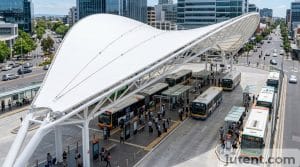
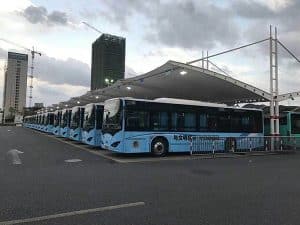
Jutent Engineering has extensive experience delivering high-performance tensile membrane structures across Southeast Asia, including numerous bus station and transit facility canopies. Our projects in the region consistently address the unique climatic and regulatory challenges. For instance, a recent bus terminal shade project in Malaysia involved a large-span PVDF membrane structure designed to provide ample shade and rain protection for multiple bus bays. The design incorporated a series of inverted cones to efficiently channel rainwater to central downspouts, preventing ponding and ensuring passenger comfort during heavy rains. The steel structure received an epoxy zinc-rich primer + fluorocarbon topcoat for superior corrosion resistance against the humid coastal environment.
In the Philippines, a bus station canopy project required specific adherence to NSCP wind load requirements, necessitating a reliable steel framework with Q355B grade steel and meticulously engineered membrane connections. The PTFE membrane specified for this project offered maximum UV protection and a 25+ year service life, crucial for a high-traffic public facility. The project also included a thorough drainage system with oversized gutters and downspouts to manage the region's intense rainfall. These projects, ranging from simple forms at $40–$70/m² for PVDF membranes to more complex designs at $60–$90/m², demonstrate Jutent's capability to deliver durable, aesthetically pleasing, and code-compliant solutions for transit infrastructure in Southeast Asia. Minimum project scope for these specialized structures is 100 m².
FAQ
- Q: What wind speed should a bus station canopy in the Philippines be designed for?
- A: The National Structural Code of the Philippines (NSCP) mandates specific design wind speeds depending on the project's location. For most areas in the Philippines, particularly coastal and typhoon-prone regions, bus station canopies should be designed to withstand wind speeds typically ranging from 200 km/h to 250 km/h. This ensures the structural integrity and safety of the canopy during severe weather events. Typical technical values should always be written conservatively and described as subject to project design.
- Q: How does tropical humidity affect a bus station canopy steel structure?
- A: Tropical humidity, especially in coastal areas, significantly increases the risk of corrosion for steel structures. To combat this, Jutent specifies advanced surface treatments. Hot-dip galvanizing provides a durable zinc coating for thorough protection. Alternatively, an epoxy zinc-rich primer followed by an acrylic topcoat or a fluorocarbon topcoat offers excellent corrosion resistance and a long-lasting finish, crucial for the service life of the steel framework in Southeast Asian projects.
Tell us your bus station project location in Southeast Asia and we'll provide a typhoon-rated specification.