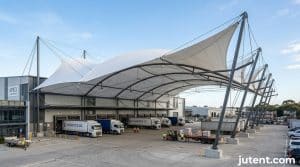

Not every tensile structure manufacturer can deliver a warehouse tensile canopy with the wind rating and documentation your project requires. Here's what to verify before signing.
Selecting the right warehouse tensile canopy manufacturer is a critical decision for any contractor or procurement manager. The structural integrity, longevity, and compliance of your project hinge on the supplier's capabilities. This guide outlines the essential due diligence steps to ensure you partner with a warehouse tensile canopy supplier that meets your project's technical, logistical, and budgetary requirements. From engineering verification to material certification and logistical support, understanding these aspects will mitigate risks and ensure a successful installation.
Why Warehouse Tensile Canopy Manufacturer Selection Matters
A warehouse tensile canopy is more than just a roof; it's a critical structural asset designed to withstand specific environmental loads and provide reliable shelter for years. Choosing an unqualified warehouse tensile canopy manufacturer can lead to significant project delays, cost overruns, and, most importantly, structural failures. Incorrect engineering, substandard materials, or poor fabrication can compromise safety and lead to expensive rectifications or even complete replacement. For example, a canopy designed without adequate wind load calculations for its specific location risks catastrophic failure during severe weather events.
Contractors must prioritize manufacturers who demonstrate a clear understanding of international building codes and project-specific requirements. This includes verifying their experience with similar structures, their quality control processes, and their ability to provide thorough documentation. A reputable manufacturer will offer transparent communication regarding their capabilities, material sourcing, and production timelines. Based on Jutent's experience across 400+ projects in 30+ countries, we've seen firsthand how crucial this initial vetting process is for long-term project success and client satisfaction. Investing time in due diligence upfront saves considerable trouble down the line. Warehousing
Engineering Capability: Wind Load and Structural Calculations
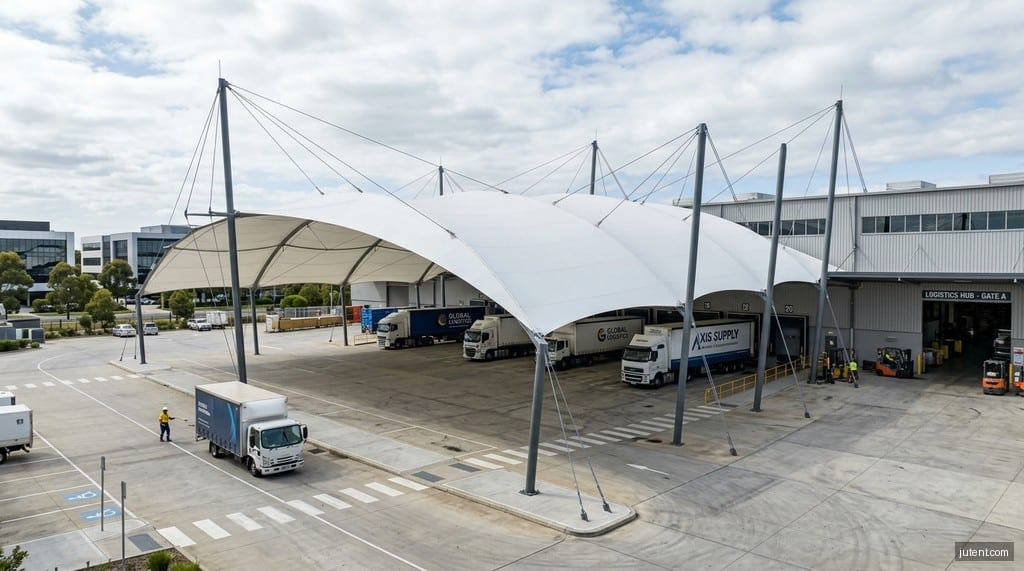
The structural integrity of a warehouse tensile canopy is paramount, making the warehouse tensile canopy manufacturer‘s engineering capability a non-negotiable factor. The primary concern is always wind load. Every project location has specific wind speed requirements, and the canopy design must account for these forces, including uplift, drag, and dynamic pressures. Requesting detailed structural calculations is the first step. These calculations should be performed by qualified structural engineers and based on recognized international standards (e.g., ASCE 7, Eurocode, local building codes).
Verify that the manufacturer can provide:
* Detailed engineering drawings: These should include plan views, elevations, sections, and connection details.
* Structural analysis reports: These reports should outline the design loads, material properties, and stress analyses for all structural components (steel framework, membrane, connections).
* Wind tunnel test reports or CFD analysis: For complex geometries or high-wind regions, these can provide additional assurance of the design's performance.
* Material specifications for steel and membrane: Ensure the steel grades (e.g., Q235B, Q355B) and membrane types (e.g., 1050 g/m² PVDF or PTFE) meet or exceed project requirements. Steel should be treated with epoxy zinc-rich primer + acrylic topcoat or hot-dip galvanizing for corrosion resistance.
When sourcing from a warehouse tensile canopy manufacturer China, it's common practice to have a local registered engineer review and stamp the provided calculations to ensure compliance with local building codes. This dual verification process adds a crucial layer of safety and compliance. About
Membrane Brand and Test Certificates: What to Ask For
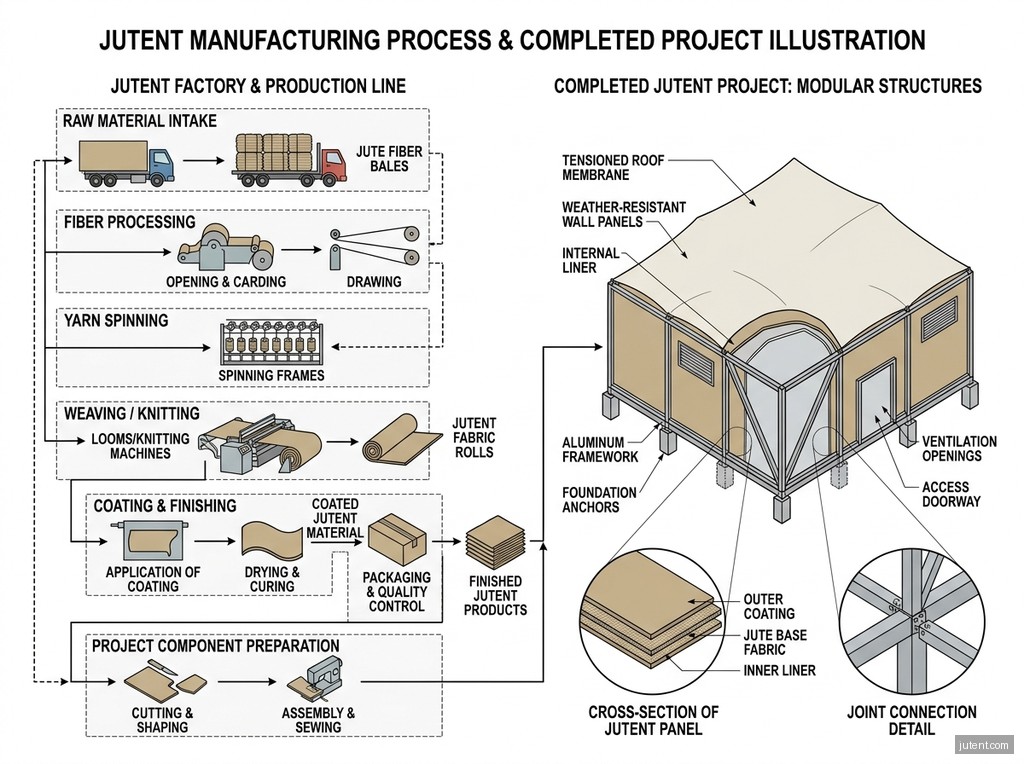
The membrane is the skin of your warehouse tensile canopy, and its quality directly impacts the structure's lifespan, performance, and aesthetic. Not all membranes are created equal, and a reputable warehouse tensile canopy factory will be transparent about their membrane sourcing and provide thorough documentation.
When evaluating a warehouse tensile canopy OEM, always inquire about the specific membrane brand and request relevant test certificates. Key certificates to look for include:
* Tensile Strength Test Reports: Verifies the membrane's ability to withstand pulling forces without tearing.
* Tear Strength Test Reports: Measures resistance to tearing once a cut or puncture has occurred.
* Fire Retardancy Certificates: Essential for safety and compliance, confirming the membrane meets fire resistance standards (e.g., B1, M2).
* UV Resistance Test Reports: Demonstrates the membrane's ability to resist degradation from ultraviolet radiation, crucial for longevity.
* Anti-Fungal/Self-Cleaning Properties: For PVDF and PTFE membranes, these properties contribute to lower maintenance and better aesthetics over time.
* Warranty Information: A standard PVDF membrane typically comes with a 10-year warranty and a 15+ year service life, while PTFE membranes offer a 15-year warranty and 25+ year service life.
Always ask for the original certificates from the membrane manufacturer, not just a copy from the tensile structure supplier. This ensures authenticity and provides direct verification of the material's properties. Typical technical values should always be written conservatively and described as subject to project design.
Production Lead Time and Logistics
Timely delivery is critical for any construction project. A warehouse tensile canopy manufacturer must not only produce a quality product but also deliver it within the agreed-upon schedule. Understanding their production capacity and logistical capabilities is essential for project planning.
Key questions to ask regarding production and logistics:
* Typical Production Lead Time: How long does it take from design approval to factory gate for a project of your scope? This can vary significantly based on the manufacturer's current workload and the complexity of your design.
* Factory Capacity: Does the manufacturer have the capacity to handle your project size without compromising quality or schedule?
* Packaging Standards: How will the steel structure and membrane be packaged for international shipping? Proper packaging is crucial to prevent damage during transit.
* Shipping Experience: Does the warehouse tensile canopy manufacturer China have experience with international freight, customs clearance, and delivering to your specific region?
* Logistical Support: Do they offer EXW, FOB, or CIF terms? Can they assist with freight forwarding or recommend reliable logistics partners?
* Installation Support: What level of installation support do they provide? Jutent, for example, offers free remote guidance and on-site supervision as a paid service.
A clear understanding of these aspects will help you manage project timelines and avoid unexpected delays or costs. For export projects, Jutent can provide design drawings, calculations, material specifications, installation manuals, and free remote guidance, subject to project scope and contract terms.
References from Similar Projects
Past performance is a strong indicator of future reliability. A reputable warehouse tensile canopy supplier should be able to provide references from similar projects they have completed, especially those involving comparable scale, complexity, or environmental conditions. This allows you to verify their claims and assess their track record directly.
When requesting references, ask for:
* Project Details: Location, size, type of structure, and specific challenges overcome.
* Client Contact Information: Permission to contact the previous client directly to discuss their experience.
* Photos and Case Studies: Visual evidence of their work and detailed accounts of project execution.
When speaking with references, inquire about:
* Communication: How responsive and transparent was the manufacturer throughout the project?
* Quality of Product: Did the delivered canopy meet expectations in terms of materials and fabrication?
* Adherence to Schedule: Was the project delivered on time and within budget?
* Problem Resolution: How effectively did the manufacturer handle any issues or unforeseen challenges that arose?
* Post-Installation Support: Was the manufacturer available for questions or support after the project was completed?
This direct feedback from other contractors or procurement managers provides invaluable insight into the manufacturer's reliability, quality, and customer service. It helps confirm that the warehouse tensile canopy OEM can deliver on their promises.
FAQ
- What is the advantage of sourcing a warehouse tensile canopy from a Chinese manufacturer?
- Chinese manufacturers typically offer 30–50% lower supply cost than local fabricators due to economies of scale, efficient production processes, and competitive labor costs. This cost advantage allows contractors to optimize project budgets without necessarily compromising on quality, provided thorough due diligence is conducted on engineering, materials, and certifications. Many Chinese factories, including Jutent, are ISO 9001 and SGS certified, ensuring adherence to international quality management standards.
- How do I verify wind load compliance for a warehouse tensile canopy from China?
- To verify wind load compliance, request thorough engineering calculations and design drawings from the Chinese manufacturer. These documents should detail the design loads, material specifications (e.g., Q235B, Q355B steel, 1050 g/m² PVDF membrane), and structural analysis. Subsequently, engage a local registered structural engineer in your project's region to review and stamp these calculations. This ensures the design meets local building codes and specific environmental conditions, providing a critical layer of safety and approval.
Contact Jutent with your project details and we'll provide full verification documentation within 48 hours.