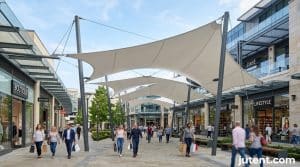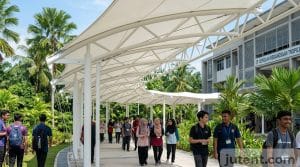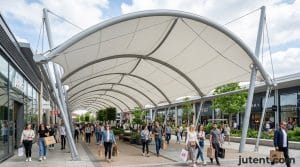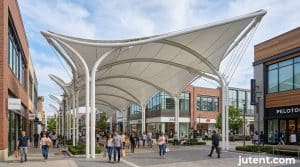

For contractors in Nigeria, Kenya, and South Africa, sourcing a school walkway canopy locally often means limited options and high prices. The local market for specialized tensile structures like school covered walkways can be fragmented, leading to inconsistent quality, limited design choices, and extended lead times. This reality often pushes project managers to look beyond national borders for solutions that meet both budget and quality requirements. Importing from China, specifically, has emerged as a practical strategy for delivering high-quality, durable, and cost-effective school walkway canopies. This approach allows contractors to access a wider range of designs and materials, ensuring that the final structure not only provides essential shade and shelter but also stands the test of time in challenging African climates. Understanding the nuances of this import process, from specification to shipping and installation, is key to successful project delivery.
Why African Contractors Source School Walkway Canopies from China
The demand for school walkway canopies in Africa is driven by the need to protect students and staff from harsh sun, heavy rains, and strong winds. However, local manufacturing capabilities for specialized tensile structures can sometimes fall short in terms of scale, material availability, and competitive pricing. This is where importing from China becomes a compelling option for contractors in regions like South Africa, Nigeria, and Kenya. Chinese manufacturers, including Jutent Engineering, offer a significant advantage through economies of scale, access to a wide array of high-grade materials, and advanced fabrication technologies. This translates into more competitive pricing per square meter, often ranging from $40–$70/m² for a PVDF membrane, simple form structure, or $60–$90/m² for a complex form, with PTFE options adding approximately $20/m² to these ranges. These prices are for projects with a minimum scope of 100 m².
Chinese suppliers can provide a greater variety of designs and customization options, ensuring that the school walkway canopy perfectly fits the architectural style and functional needs of the educational institution. The ability to source high-quality PVDF or PTFE membranes, coupled with reliable steel structures (Q235B, Q355B) treated with epoxy zinc-rich primer and fluorocarbon topcoat or hot-dip galvanizing, guarantees longevity and minimal maintenance. Based on Jutent's experience across 400+ projects in 30+ countries, the quality and durability of imported structures often surpass locally available alternatives, offering a 10-year warranty for PVDF membranes (15+ years service life) and a 15-year warranty for PTFE membranes (25+ years service life), along with a 1-year overall project warranty. This combination of cost-effectiveness, quality, and design flexibility makes importing an attractive proposition for delivering essential infrastructure for schools across Africa.
School Walkways
What to Specify When Importing: Membrane Grade, Steel, and Documentation
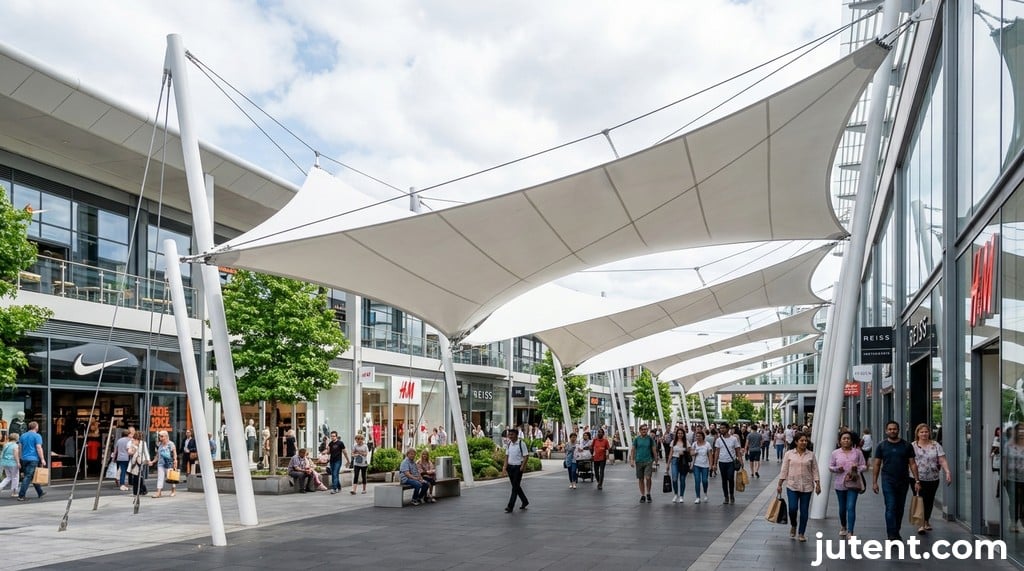
When importing a school walkway canopy to Africa, meticulous specification is crucial to ensure the structure meets local requirements, withstands environmental conditions, and complies with international standards. The primary considerations revolve around membrane grade, steel specifications, and thorough documentation.
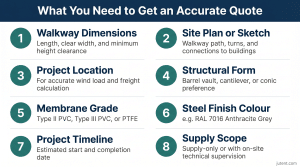
For the membrane, PVDF (Polyvinylidene Fluoride) and PTFE (Polytetrafluoroethylene) are the industry standards due to their durability, UV resistance, and self-cleaning properties. A standard 1050 g/m² PVDF membrane is suitable for most school walkway shade applications, offering excellent performance and a 10-year warranty. For projects demanding superior longevity and extreme weather resistance, PTFE membranes are the preferred choice, boasting a 15-year warranty and a service life exceeding 25 years. The choice between PVDF and PTFE will impact the per m² cost, with PTFE adding approximately $20/m² to the PVDF range.
Steel specifications are equally vital. Jutent Engineering utilizes high-grade steel such as Q235B and Q355B, which provide the necessary structural integrity. The surface treatment is critical for corrosion protection in diverse African climates. Approved treatments include epoxy zinc-rich primer followed by an acrylic or fluorocarbon topcoat, or hot-dip galvanizing. These treatments ensure the steel components have a long service life, resisting rust and degradation. All standard connections use SS304, with SS316 available as an optional upgrade for enhanced corrosion resistance.
Documentation is paramount for smooth import and installation. For export projects, Jutent can provide design drawings, calculations, material specifications, installation manuals, and free remote guidance, subject to project scope and contract terms. These documents are essential for customs clearance, local building permits, and ensuring correct assembly on site. Typical technical values should always be written conservatively and described as subject to project design, ensuring that all specifications are tailored to the specific project's needs and local regulations.
School Walkway Canopy Guide
Shipping to African Ports: How Walkway Structures Are Packed
The logistics of shipping a school walkway canopy from China to African ports like Durban, Lagos, or Mombasa requires careful planning and specialized packing to ensure all components arrive safely and intact. Tensile structures, by their nature, consist of large yet often modular components, making efficient and secure packing a critical step in the import process.
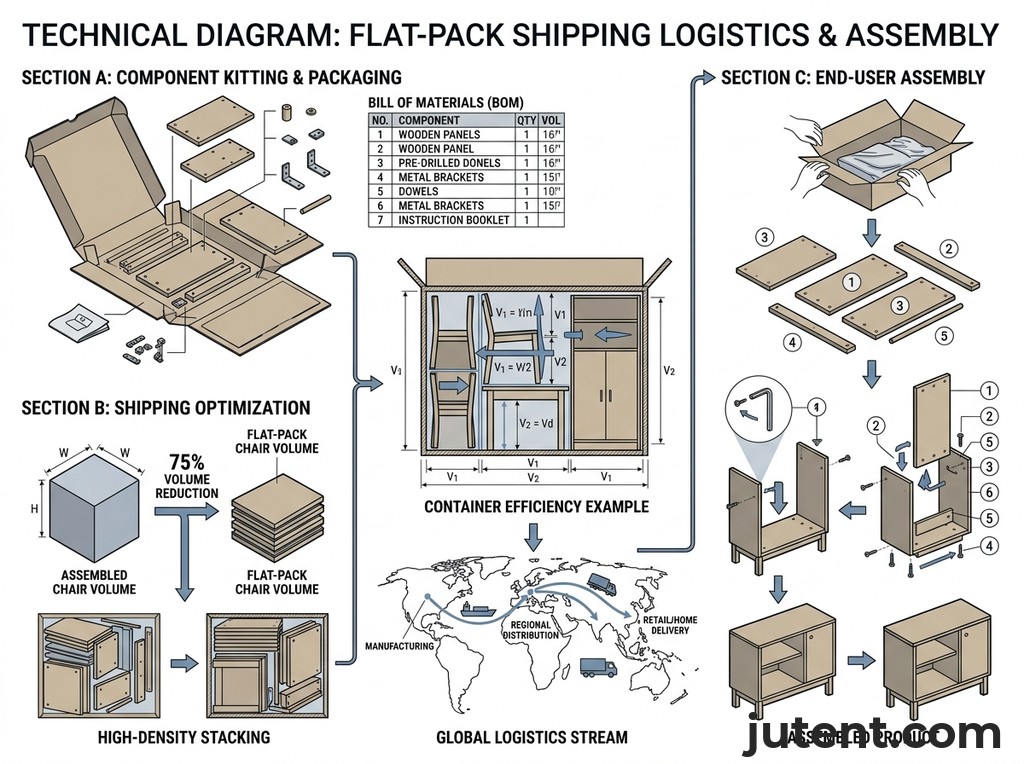
Steel posts and frames, which form the skeletal structure of the school covered walkway, are meticulously flat-packed. This method optimizes space within shipping containers, reducing freight costs and minimizing the risk of damage during transit. Each steel component is typically wrapped and bundled, with protective padding placed between pieces to prevent scratching or denting. Smaller components like connection plates, bolts, and cables are carefully organized and packed into sturdy crates or boxes, often labeled for easy identification upon arrival.
The tensile membrane itself, whether PVDF or PTFE, is rolled onto large, reliable cores and then securely wrapped in multiple layers of protective material. This prevents creasing, punctures, or exposure to moisture and contaminants during the long sea journey. The membrane rolls are then carefully loaded into the container, often positioned to avoid direct contact with heavy steel components.
A standard 20ft shipping container can typically accommodate a significant length of walkway canopy, often between 30 to 60 meters, depending on the design complexity and component dimensions. For larger projects, 40ft containers or multiple containers may be utilized. Jutent Engineering, with its ISO 9001 and SGS certifications, adheres to stringent packing standards, ensuring that all components are prepared for the rigors of international shipping. This attention to detail in packing is vital for minimizing potential delays and additional costs associated with damaged or missing parts, ultimately contributing to a smoother project timeline for the contractor in Africa.
Cost Comparison: Import vs Local Fabrication in Key African Markets
For contractors in key African markets such as South Africa, Nigeria, and Kenya, the decision to import a school walkway canopy versus fabricating it locally often boils down to a detailed cost-benefit analysis. While local fabrication might seem appealing due to proximity, the reality often reveals significant advantages to importing from specialized manufacturers like Jutent Engineering.
Local fabrication of a school walkway canopy in Africa can face several challenges that drive up costs. These include higher material procurement costs for specialized tensile membranes and high-grade steel, limited access to advanced fabrication machinery, and potentially higher labor costs for skilled welders and fabricators specializing in tensile structures. the local market might offer fewer design options, leading to compromises on aesthetics or functionality, and may not always provide the same level of warranty or material certification as international suppliers.
When importing from China, the initial per m² cost for the structure itself is often more competitive. For instance, a PVDF membrane, simple form structure, can range from $40–$70/m² (for projects 100 m² and above), which can be significantly lower than local quotes for comparable quality. While import duties, freight, and local logistics add to the overall cost, the economies of scale and efficient production processes of Chinese manufacturers often offset these additional expenses.
Consider a project for a 150 m² school walkway canopy. A local fabricator might quote a higher per m² rate due to material scarcity and smaller production runs. An imported solution, even with shipping and duties, benefits from bulk material purchasing and optimized manufacturing. the long-term value of an imported structure, backed by a 10-year PVDF membrane warranty and a 1-year overall project warranty, often outweighs the perceived short-term savings of a potentially lower-quality local option. The availability of free remote guidance and optional paid on-site supervision from Jutent further supports successful installation, providing a complete solution that is often more cost-effective in the long run for school walkway shade projects.
FAQ
- Q: How are school walkway canopies shipped to Africa from China?
- A: Steel posts and frames are meticulously flat-packed to optimize container space and protect components during transit. The tensile membrane, typically PVDF or PTFE, is rolled onto sturdy cores and securely wrapped to prevent damage. A standard 20ft container can typically carry a 30–60m walkway canopy, depending on the design and component size. All parts are carefully labeled for easy identification upon arrival at African ports.
- Q: What import duties apply to school walkway canopies in African countries?
- A: Import duties vary significantly by country across Africa. Factors such as the specific Harmonized System (HS) code for the components, trade agreements between China and the destination country, and local tax regulations all influence the final duty amount. Jutent provides thorough HS code documentation and material specifications to help contractors accurately assess and minimise duty exposure, ensuring a transparent and predictable import cost.
Tell us your project location in Africa and we'll provide a cost comparison and logistics plan.