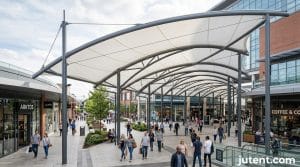

A school walkway canopy is a permanent covered structure designed to protect students, staff, and visitors from the elements as they move between buildings. These essential additions to school infrastructure offer crucial protection from harmful UV radiation, heavy rain, and intense heat, ensuring a safer and more comfortable environment. For facilities managers and council planners, understanding the various types, their benefits, and the fundamental specifications is key to making informed decisions. This guide will explain what constitutes a school walkway canopy, the different options available, typical costs, and the practical implications of a UPF 50+ rating.
What a School Walkway Canopy Is and What It Isn't
A school walkway canopy is a purpose-built, permanent overhead structure that connects school buildings, playgrounds, or car parks, creating sheltered pathways. Its primary function is to provide environmental protection, allowing students to transition between classes, lunch areas, or buses without exposure to sun, rain, or wind. These structures are typically engineered with durable materials like steel frames and high-performance membranes, designed for longevity and minimal maintenance. They are an integral part of a school's infrastructure, enhancing safety and comfort.
What a school walkway canopy isn't, however, is a temporary tent, a retractable awning, or a simple shade sail. While those options offer some level of protection, they lack the structural integrity, permanence, and reliable weather resistance required for a busy school environment. A true school walkway canopy is a fixed asset, designed to withstand local weather conditions, meet safety standards, and provide consistent, reliable shelter year-round. It's an investment in student well-being and the functionality of the school campus. School Walkways
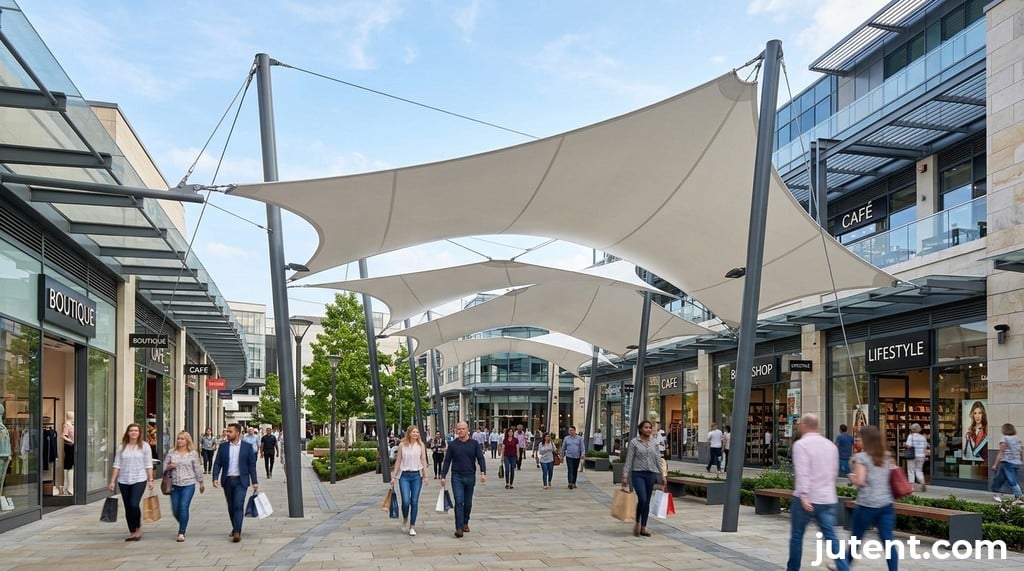
Types of School Walkway Canopies: Tensile, Hip Roof, and Polycarbonate
When considering a school walkway canopy, facilities managers and council members typically evaluate three main types: tensile membrane structures, traditional hip roof designs, and polycarbonate canopies. Each offers distinct advantages in terms of aesthetics, performance, and cost.
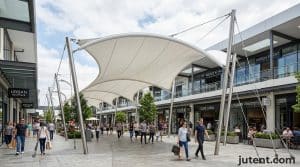
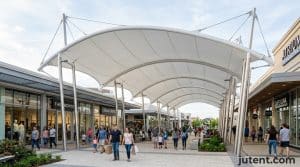
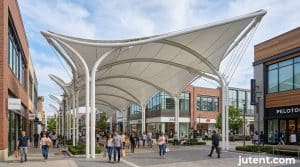
Tensile Membrane Structures utilize a fabric membrane, often PVDF or PTFE, stretched over a steel framework. These are highly versatile, allowing for creative, flowing designs that can complement modern architectural styles. They are excellent for large spans and offer superior UV protection, especially with UPF 50+ rated membranes. The lightweight nature of the membrane can also reduce the overall structural load.
Hip Roof Canopies feature a more conventional, pitched roof design, often covered with metal sheeting or similar opaque materials. These provide reliable protection from rain and sun and can be integrated seamlessly with existing building aesthetics. While less flexible in form than tensile structures, they offer a classic, sturdy appearance.
Polycarbonate Canopies use transparent or translucent polycarbonate panels supported by a steel or aluminum frame. These are ideal for areas where natural light is desired, such as over walkways where adjacent classrooms might otherwise be darkened. While they block UV rays, they can allow heat to pass through more readily than opaque membranes.
Each type serves the fundamental purpose of shelter, but their material properties and design flexibility cater to different aesthetic and functional requirements. School Walkway Canopy Guide
What UPF 50+ Means and Why It Matters for School Walkways
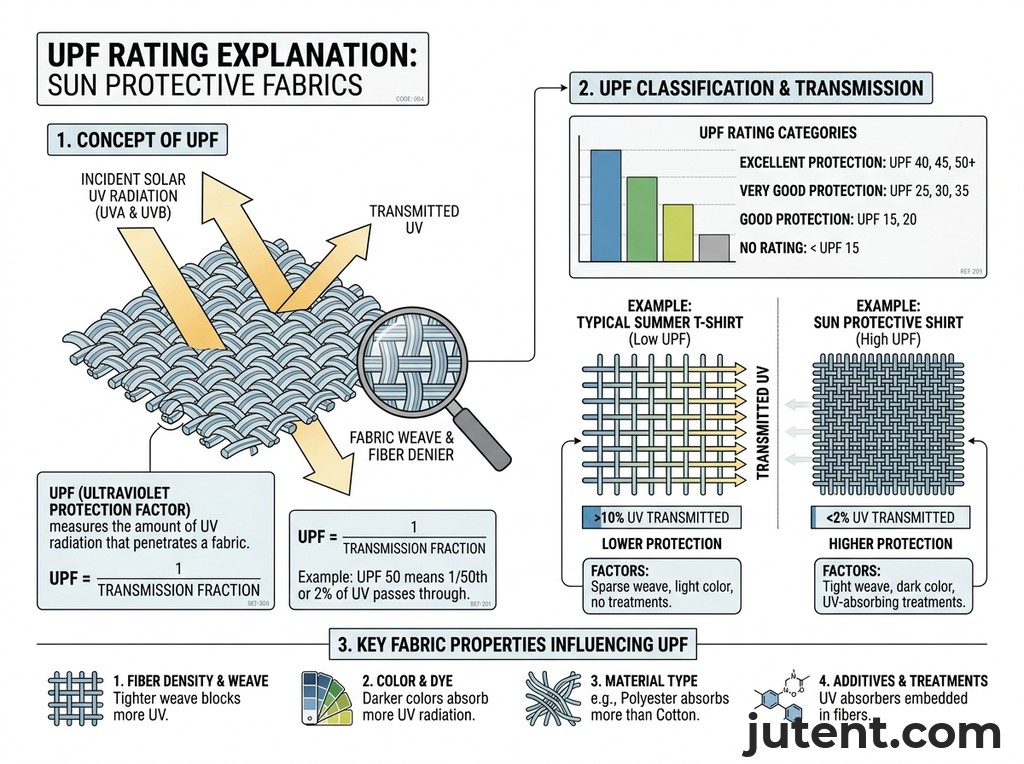
Understanding the Ultraviolet Protection Factor (UPF) rating is crucial when selecting a school walkway canopy, particularly for regions with high UV indexes. UPF 50+ is the highest achievable rating for fabrics and indicates that the material blocks over 98% of harmful UVA and UVB radiation. This means that only 1/50th (or less) of the sun's UV rays can penetrate the fabric.
For school walkways, this level of protection is paramount. Children spend significant time outdoors, and cumulative sun exposure during childhood is a major risk factor for skin cancer later in life. A UPF 50+ canopy provides an effective barrier, significantly reducing the risk of sunburn and long-term skin damage as students move between buildings. It creates a genuinely safe environment, aligning with health recommendations from organisations like Cancer Council Australia, which advocates for UPF 50+ for all school shade structures.
Beyond direct health benefits, a UPF 50+ canopy also contributes to a more comfortable learning environment. By blocking intense UV radiation, it helps keep shaded areas cooler, making transitions between classes more pleasant, especially during hot weather. This commitment to superior UV protection demonstrates a school's dedication to student well-being and provides peace of mind for parents and staff.
What a School Walkway Canopy Costs: A Realistic Range
The cost of a school walkway canopy is influenced by several factors, including the chosen material, design complexity, size, and site-specific installation requirements. It's important to think in terms of cost per square metre (m²) for accurate budgeting. Based on Jutent's experience across 400+ projects in 30+ countries, here's a realistic range for EXW (Ex Works) pricing per m² for different types of tensile structures, assuming a minimum project scope of 100 m²:
- Tensile Membrane Structure (minimal steel frame): For very simple designs where the membrane is the dominant structural element, expect to pay approximately $30–$50/m².
- PVDF Membrane, Simple Form: For more common, straightforward PVDF membrane structures, the cost typically ranges from $40–$70/m². This covers most standard walkway designs.
- PVDF Membrane, Complex Form: For intricate designs, larger spans, or custom shapes requiring more complex steel fabrication and membrane patterning, the cost can be $60–$90/m².
- PTFE Membrane: If opting for the higher durability and longer lifespan of PTFE membrane, add approximately $20/m² to the corresponding PVDF range. For example, a simple PTFE form would be around $60–$90/m².
These figures represent the cost of the structure itself, EXW. Additional costs will include shipping, local installation, and any necessary site preparation. For export projects, Jutent can provide design drawings, calculations, material specifications, installation manuals, and free remote guidance, subject to project scope and contract terms. On-site supervision is also available as a paid service.
When to Choose Each Type for Your School
Selecting the right school walkway canopy depends on a balance of aesthetic goals, functional requirements, budget, and desired lifespan.
Tensile Membrane Structures (PVDF or PTFE) are often the preferred choice for schools looking for modern aesthetics, large clear spans, and superior UV protection. They are excellent for creating striking architectural features and can cover irregular pathways or large open areas. Choose PVDF for a balance of cost-effectiveness and excellent performance (10-year warranty, 15+ years service life), or PTFE for the ultimate in durability and longevity (15-year warranty, 25+ years service life) in challenging climates. Their flexibility in design makes them suitable for custom solutions.
Hip Roof Canopies are ideal when a more traditional, robust, and permanent-looking structure is desired, or when the canopy needs to seamlessly match existing building architecture. They offer excellent rain and sun protection and are generally very low maintenance once installed. They are a solid, no-nonsense choice for straightforward linear walkways.
Polycarbonate Canopies are best suited for areas where maintaining natural light underneath the canopy or into adjacent buildings is a priority. While they block UV, their transparency means they can transmit more heat than opaque membrane structures. They are a good option for connecting buildings where daylighting is critical, but perhaps less so for long stretches over playgrounds where maximum shade and cooling are paramount.
Ultimately, the decision should align with the school's long-term vision, budget constraints, and specific environmental protection needs.
FAQ
- Q: What is UPF 50+ and why does it matter for school walkway canopies?
- A: UPF 50+ is the highest rating for fabric sun protection, meaning the material blocks over 98% of harmful UVA and UVB radiation. This is critical for school walkway canopies because it provides maximum protection for students from sun exposure as they move between buildings. Cancer Council Australia, among other health organizations, strongly recommends UPF 50+ for all school shade structures to mitigate the risk of skin cancer and ensure a safe outdoor environment for children.
- Q: How long does a school walkway canopy last?
- A: The lifespan of a school walkway canopy depends on the materials used. A high-quality PVDF membrane typically has a service life of 15–20 years, backed by a 10-year warranty. PTFE membranes offer even greater longevity, with a service life often exceeding 25 years and a 15-year warranty. The steel framework, especially when treated with hot-dip galvanising (which provides a superior protective layer compared to other surface treatments), can last 25–30 years, ensuring the overall structure remains sound for decades.
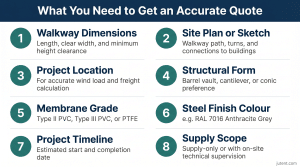
If you're considering a school walkway canopy, send us your project brief for a free consultation.