
Not every shade structure manufacturer can deliver a bus station canopy with the wind rating, documentation, and lead time that transit projects require. Here's what to verify before signing.
Why Bus Station Canopy Manufacturer Selection Is Different
Selecting a bus station canopy manufacturer demands a more rigorous vetting process than for typical commercial shade structures. Transit infrastructure projects, by their nature, involve public safety, strict regulatory compliance, and often operate under tight deadlines and budgets. A bus station canopy is not merely an aesthetic addition; it is a critical piece of infrastructure designed to protect commuters from environmental elements, withstand significant wind loads, and integrate with existing urban planning.
The consequences of selecting an unqualified transit canopy supplier can range from project delays and cost overruns to structural failures and reputational damage. Unlike private sector projects, public transit installations are subject to intense scrutiny and require meticulous documentation for permitting, engineering approvals, and long-term maintenance. Contractors and procurement managers must prioritize manufacturers with a proven track record in similar public works, demonstrating not only manufacturing capability but also a deep understanding of the specific engineering, material, and logistical requirements unique to transit environments. This includes adherence to international standards, reliable quality control, and the ability to provide thorough technical support throughout the project lifecycle. Transit Canopies
Engineering Capability: Wind Load and Structural Calculations
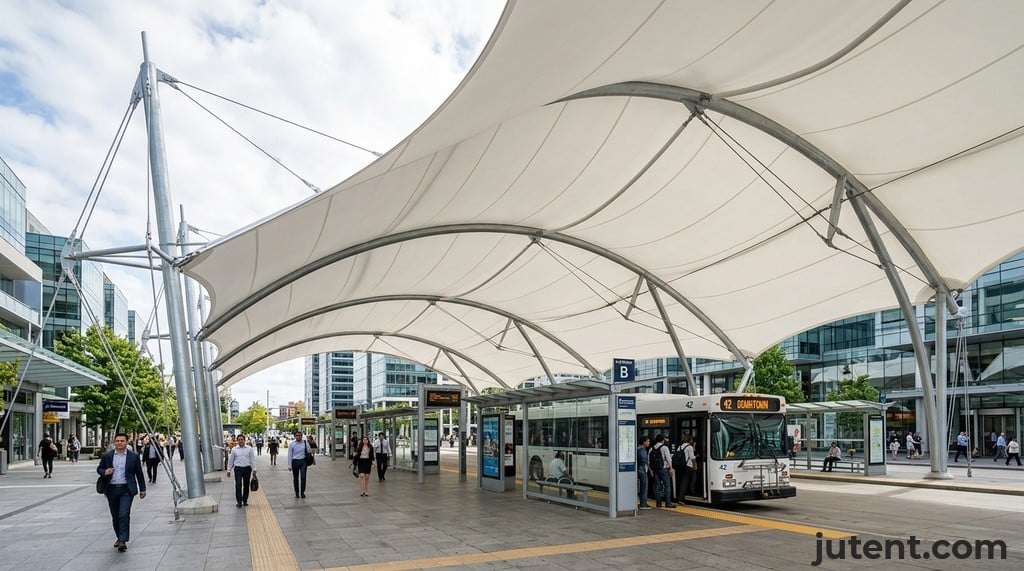
The structural integrity of a bus station canopy is paramount, directly impacting public safety and longevity. This begins with reliable engineering capability, specifically the manufacturer's ability to perform and provide detailed wind load and structural calculations. Bus station canopies, particularly those in exposed urban or coastal areas, must be engineered to withstand specific local wind speeds, snow loads, and seismic activity as defined by project codes. A reputable bus station canopy manufacturer will provide thorough structural analysis reports, typically prepared by licensed engineers.
These reports should detail the design parameters, material specifications (e.g., Q235B or Q355B steel grades), connection details, and safety factors. For international projects, it is crucial to verify that these calculations can be adapted or stamped by a local registered engineer if required for permitting. Based on Jutent's experience across 400+ projects in 30+ countries, we emphasize that a manufacturer's engineering department should be able to clearly articulate their design methodology, demonstrate their use of advanced structural analysis software, and provide examples of how they address complex geometries or site-specific challenges. Always request a sample set of engineering drawings and calculations for a comparable project to assess their thoroughness and compliance with relevant standards. About
Membrane Brand and Test Certificates: What to Ask For
The performance and longevity of a tensile bus station canopy are heavily dependent on the quality of its membrane. It is essential to inquire about the specific membrane brand and request thorough test certificates. A reliable transit canopy OEM will typically offer high-quality PVDF or PTFE membranes, with standard options often around 1050 g/m².
Key documentation to request includes:
* Material Data Sheets (MDS): These should detail the membrane's physical properties, such as tensile strength, tear resistance, fire rating, UV resistance, and coating type.
* Brand Certification: Verify the membrane manufacturer's reputation and certifications. Reputable brands provide consistent quality and performance.
* Warranty Information: A standard PVDF membrane should come with a 10-year warranty and a service life of 15+ years, while PTFE membranes typically offer a 15-year warranty and 25+ years service life.
* Fire Rating Certificates: Especially critical for public spaces, ensure the membrane meets relevant fire safety standards.
* UV Resistance Test Reports: Confirm the membrane's ability to withstand prolonged sun exposure without degradation.
* Self-Cleaning Properties: For PVDF and PTFE, inquire about their low-maintenance characteristics.
Do not accept generic “tensile fabric” descriptions. Demand specific brand names and the corresponding technical documentation to ensure the membrane meets the project's performance and durability requirements.
Production Lead Time and Logistics
Efficient project execution hinges on predictable production lead times and reliable logistics. When evaluating a bus station canopy factory, contractors and procurement managers must scrutinize their capacity to meet deadlines and their experience in managing international shipments. Inquire about the manufacturer's typical production schedule for projects of similar scope and complexity. This includes the time required for design finalization, material procurement, fabrication of steel components (with surface treatments like epoxy zinc-rich primer + acrylic topcoat or hot-dip galvanizing), and membrane cutting and welding.
A transparent manufacturer will provide a detailed production timeline and communicate any potential bottlenecks. For export projects, Jutent can provide design drawings, calculations, material specifications, installation manuals, and free remote guidance, subject to project scope and contract terms. Discuss packaging methods to prevent damage during transit, and clarify shipping terms (e.g., EXW, FOB, CIF). Understand their process for customs clearance documentation and their network of logistics partners. Delays in any of these stages can significantly impact project schedules and budgets, making a manufacturer's logistical expertise as critical as their production capability. Always confirm their ability to handle minimum project scopes, typically 100 m² for tensile structures.
References from Similar Transit Projects
One of the most reliable indicators of a bus station canopy manufacturer's competence is their portfolio of completed projects, particularly those within the transit sector. Requesting references from similar transit projects allows contractors and procurement managers to verify claims of expertise and assess real-world performance. A manufacturer with extensive experience will readily provide a list of past clients and project details.
When reviewing references, focus on:
* Project Scale and Complexity: Have they handled projects comparable in size and design complexity to yours?
* Geographic Reach: Do they have experience delivering and supporting projects in diverse climates and regulatory environments?
* Client Satisfaction: If possible, contact previous clients to inquire about their experience with the manufacturer's communication, adherence to timelines, product quality, and post-delivery support.
* Documentation Quality: Ask if the manufacturer provided thorough documentation, including engineering calculations, material certificates, and installation guides.
* Problem Resolution: How did the manufacturer handle unforeseen challenges or issues during the project?
A manufacturer with a strong track record, like Jutent with 400+ projects in 30+ countries, demonstrates not only technical capability but also reliability and a commitment to successful project delivery. This due diligence step is crucial for mitigating risks and ensuring a smooth procurement process.
FAQ
- Q: What is the advantage of sourcing a bus station canopy from a Chinese manufacturer?
- A: Chinese manufacturers typically offer 30–50% lower supply cost than local fabricators, primarily due to economies of scale in material procurement and efficient production processes. This cost advantage allows contractors to optimize project budgets without compromising on quality, especially for large-scale transit infrastructure. established Chinese manufacturers often possess extensive experience in international logistics and project documentation for global export.
- Q: How do I verify wind load compliance for a bus station canopy from China?
- A: To verify wind load compliance, request detailed engineering calculations from the manufacturer, prepared by qualified structural engineers. These calculations should specify the design wind speed, load factors, and material stresses. For projects requiring local approval, it is advisable to engage a local registered engineer to review and stamp these calculations, ensuring they meet specific regional building codes and regulations. Always confirm the manufacturer's ability to provide these documents in a format acceptable to local authorities.
Contact Jutent with your bus station project details and we'll provide full verification documentation within 48 hours.